TikTok Upgrades Symphony AI Suite With Advanced Dreamina Seedance Video Models and Expanded API Integration

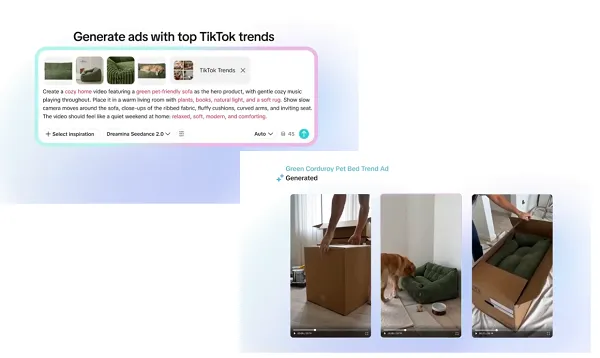
The landscape of digital marketing and social media advertising is undergoing a profound transformation as platforms increasingly integrate generative artificial intelligence into their core business tools. TikTok, one of the world’s most influential short-form video platforms, has announced a significant upgrade to its artificial intelligence-powered Symphony ad creation suite. This comprehensive update introduces advanced video generation capabilities driven by the latest Dreamina Seedance models, an updated Symphony API designed for streamlined enterprise workflows, and broader international access to AI usage tokens via BytePlus.
As brands continuously search for scalable, cost-effective methods to produce high-engagement video content, these enhancements provide advertisers with powerful new mechanisms to conceptualize, iterate, and deploy commercial campaigns. Timed strategically ahead of the high-stakes peak shopping season—which includes critical retail milestones such as Black Friday, Cyber Monday, and the broader winter holiday rush—these features aim to lower the technical barriers of video production while elevating the visual quality of automated ad creation.
Main Facts and Core Upgrades to the Symphony Suite
The latest iteration of TikTok Symphony brings several substantive technical enhancements to the platform’s ad creation ecosystem. Most notably, the integration of the updated Dreamina Seedance AI model within the Symphony Agent tool drastically expands what advertisers can achieve through text and multimodal prompts.
Under the previous iteration of the platform, advertisers faced notable constraints regarding prompt inputs and output durations. The updated system directly addresses these limitations by introducing the following key modifications:
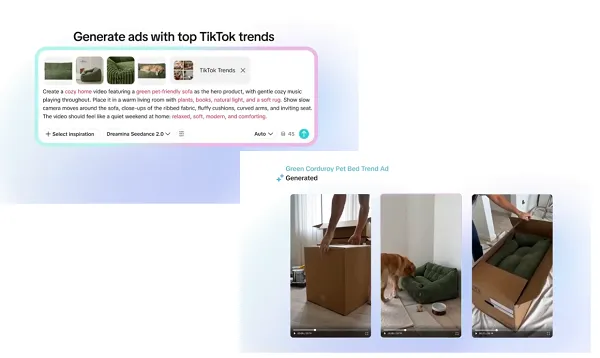
- Expanded Multimodal Reference Capacity: Advertisers can now upload up to 50 multimodal references—including a combination of source images, reference videos, and audio clips—representing a massive leap from the previous limit of just 9 reference files. This allows the AI to better understand brand guidelines, stylistic preferences, and specific product attributes.
- Extended Video Generation Length: The maximum duration for AI-generated video clips per prompt has doubled from 15 seconds to 30 seconds. This extension provides marketers with the necessary runtime to develop more complete narratives, detailed product demonstrations, and cohesive commercial arcs without needing to manually stitch shorter clips together.
- Enhanced Visual Fidelity and Consistency: Powered by the newest generation of Dreamina Seedance models, the software is now capable of producing sharper, more photorealistic imagery. Furthermore, the system offers superior lighting management and significantly improved character consistency across sequential video frames, reducing the uncanny valley effect often associated with early generative video tools.
Alongside these creative enhancements, TikTok has rolled out an updated Symphony API. This application programming interface enables enterprise advertisers and agencies to integrate Symphony’s automated generation tools directly into their proprietary creative management systems and internal software stacks. By bridging the gap between external digital asset management platforms and TikTok’s native AI infrastructure, brands can automate large-scale localized video production without navigating multiple separate interfaces.
Furthermore, TikTok has expanded the commercial availability of BytePlus tokens. Starting November 9, advertisers located outside of North America gained the ability to purchase BytePlus tokens to fuel their use of the Dreamina Seedance AI models within Symphony. BytePlus, the enterprise technology arm of TikTok’s parent company, ByteDance, manages the underlying artificial intelligence infrastructure and cloud services that power these advanced tools. This tokenized system allows international brands to scale their usage dynamically, paying for high-speed processing, enhanced formats, and superior output quality as their campaign requirements dictate.
Background Context and the Evolution of Generative AI in Advertising
To fully understand the significance of TikTok’s latest announcement, it is necessary to examine the rapid evolution of generative artificial intelligence within the digital advertising sector over the past several years. When generative AI models first entered the mainstream commercial consciousness around 2022 and 2023, their utility for high-end video production was severely limited. Early tools struggled with temporal consistency—meaning characters, objects, and backgrounds would frequently warp, morph, or disappear entirely between frames—making them largely unusable for professional marketing campaigns where brand safety and visual stability are paramount.
Simultaneously, the cost of producing native short-form video content has remained a major pain point for brands. Unlike traditional television commercials, which require massive upfront budgets and lengthy production schedules, platforms like TikTok thrive on constant creative iteration. Successful marketing on the platform demands that brands publish multiple unique videos weekly, tailoring their messaging to fast-moving internet trends, audio memes, and niche subcultures. For many small-to-medium enterprises and even large multinational corporations, maintaining this relentless pace of content creation has strained internal creative teams and inflated agency costs.
Recognizing this market friction, major technology companies began funneling billions of dollars into foundational video models. ByteDance, leveraging its extensive technological footprint in Asia and globally, developed advanced proprietary models under the Dreamina and Seedance banners. These models were specifically trained to understand the dynamic, fast-paced visual language characteristic of short-form video platforms.

TikTok first introduced the Symphony suite as a centralized solution to streamline scriptwriting, translation, and basic video editing. By integrating advanced Dreamina Seedance technology directly into Symphony, TikTok is effectively bridging the gap between raw algorithmic generation and professional commercial production. The platform is positioning itself not merely as a distribution channel for advertisements, but as an end-to-end creative studio capable of generating market-ready media autonomously.
Chronology of TikTok’s AI Advertising Initiatives
The rollout of these advanced Symphony features represents the culmination of a deliberate, multi-stage product strategy executed by TikTok and its parent company, ByteDance. A review of the timeline highlights how the platform has systematically built out its artificial intelligence capabilities:
- Early 2023: ByteDance begins ramping up internal research and development on multimodal generative video models, laying the groundwork for the proprietary technologies later branded as Dreamina.
- Mid-2023: TikTok initiates early testing of AI-assisted copywriting and basic asset generation tools for select enterprise advertising partners, gathering foundational data on advertiser needs and prompt behaviors.
- Early 2024: TikTok formally announces the broader rollout of the Symphony ad creation suite, unifying various standalone AI tools into a single ecosystem designed to assist with script generation, video translation, and automated asset assembly.
- Mid-2024: The platform introduces initial versions of AI-powered avatar generation and automated video editing features, though early iterations remain constrained by short runtimes and limited multimodal reference inputs.
- Late 2024: ByteDance releases updated iterations of the Dreamina Seedance models, boasting dramatically improved temporal consistency, higher resolution outputs, and extended duration capabilities.
- November 2024: TikTok officially integrates the latest Dreamina Seedance models into the Symphony Agent tool, expands multimodal reference limits to 50 files, extends maximum video generation lengths to 30 seconds, rolls out the updated Symphony API, and expands BytePlus token access for international markets outside North America.
This accelerated timeline demonstrates the aggressive pace at which social media platforms are operationalizing cutting-edge artificial intelligence research, transforming experimental laboratory models into commercial products within a matter of months.
Supporting Data and Technical Specifications
A closer examination of the metrics associated with the new Symphony update reveals the scale of the performance improvements delivered to advertisers. These quantifiable changes illustrate how the platform has overcome previous technical bottlenecks:
- Reference Input Expansion: The increase from 9 to 50 multimodal reference files represents a 455% expansion in the system’s ability to ingest contextual data. This allows brands to supply comprehensive brand guidelines, extensive product catalogs, and diverse stylistic examples in a single prompt session.
- Duration Doubling: Moving from a 15-second maximum to a 30-second cap removes a major structural barrier for advertisers. On TikTok, where the standard ad format can range from 5 to 60 seconds, a 30-second window accommodates traditional commercial storytelling arcs—hook, problem, solution, and call-to-action—within a single AI-generated asset.
- Global Token Availability: By opening BytePlus token purchases to markets outside North America starting November 9, ByteDance is ensuring that global brands operating in Europe, Latin America, Asia-Pacific, and other regions can leverage the same high-performance infrastructure without regional latency or access restrictions.
- Infrastructure Synergy: Operating via BytePlus, the enterprise division of ByteDance, ensures that the underlying cloud architecture can handle the immense computational load required for real-time, high-resolution video generation. Training and running multimodal models of this scale demand massive GPU clusters, which BytePlus manages centrally to guarantee low-latency output for enterprise clients.
Industry Implications and Strategic Analysis
The introduction of these advanced features carries significant implications for the digital advertising ecosystem, influencing creative agencies, enterprise brands, and the broader social media economy.
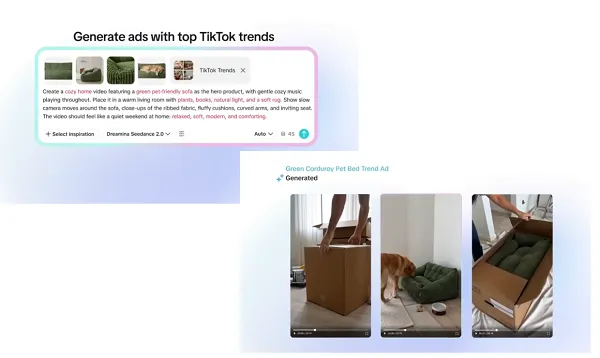
From the perspective of enterprise brands, the primary benefit lies in operational efficiency and cost reduction. Producing dozens of localized, highly targeted video variants for international markets traditionally required coordinating multiple production crews, actors, voiceover artists, and editing suites. With Symphony’s enhanced Dreamina Seedance integration, a marketing team can upload a core set of product images and brand assets, input detailed prompt instructions, and generate a diverse library of 30-second video ads in a fraction of the time and at a significantly lower cost.
However, industry analysts note that the viability and effectiveness of AI-generated video will vary significantly depending on the product category and campaign strategy. While generative AI excels at producing dynamic background visuals, product showcases, and stylized montages, human oversight remains critical. Advertisers must carefully review AI outputs to ensure cultural nuance, emotional resonance, and absolute brand safety. Over-reliance on generic prompts without strong creative direction risks producing homogenized advertising content that fails to capture consumer attention in a crowded feed.
For creative agencies and digital marketing firms, the updated Symphony API represents both a tool and a challenge. By allowing agencies to integrate TikTok’s AI generation capabilities directly into their internal workflow management software, the platform is empowering professionals to scale their output. Rather than replacing human creatives, tools of this caliber are increasingly shifting the role of the marketer from manual execution to strategic curation, prompt engineering, and performance analysis.
As the peak shopping season approaches, these technological updates arrive at an opportune moment. Retailers and consumer brands facing compressed timelines and high competitive pressure now have access to advanced generative tools capable of accelerating campaign deployment. Whether these capabilities translate directly into higher return on ad spend (ROAS) will depend on how effectively brands integrate the new features into their overarching media strategies. Nevertheless, TikTok’s latest Symphony upgrade signals a clear direction for the future of digital advertising—one where artificial intelligence is deeply embedded at every stage of the creative process.