Percy Jackson and the Olympians Season 3 Premiere: A Darker, Higher-Stakes Turn for the Disney+ Fantasy Hit

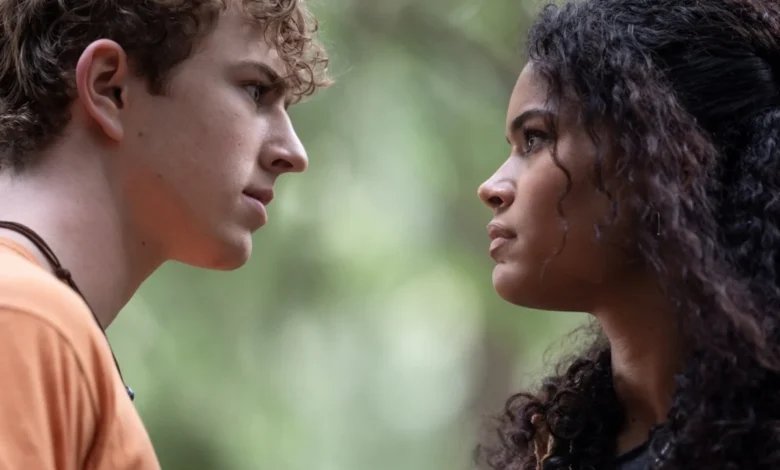
The fantasy television landscape on streaming platforms has continuously evolved to mirror the maturing audiences that consume serialized adaptations of beloved young adult literature. Nowhere is this maturation more evident than in the third season premiere of Disney+’s Percy Jackson and the Olympians. Based on Rick Riordan’s acclaimed third novel in the franchise, The Titan’s Curse, the newly debuted season opener thrusts its central demigod heroes into an atmosphere considerably heavier, more perilous, and more emotionally complex than anything the series has presented in its previous iterations.
While earlier chapters of the television adaptation relied heavily on the lighthearted banter, whimsical mythological encounters, and a rotating roster of comedic supporting actors to offset the looming threat of the Titan army, the Season 3 premiere signals a distinct shift. The stakes have transcended simple planetary survival; the narrative now grapples with personal betrayal, profound loss, and the psychological toll of an escalating divine war.
Main Facts of the Season 3 Premiere
The narrative thrust of the third season picks up with the eternal conflict between the Olympian gods and their primordial predecessors, the Titans, growing increasingly volatile. The episode opens with a solemn voiceover from Percy Jackson, portrayed by Walker Scobell, reflecting on the cosmic divide before dropping the viewer directly into a tense operational mission.
Percy and his longtime half-blood companion, Annabeth Chase (played by Leah Sava Jeffries), rendezvous at a nondescript parking garage. Their objective is to recruit Thalia Grace (Tamara Smart), the formidable daughter of Zeus who was recently liberated after spending six years trapped in the physical form of a pine tree. The trio aims to infiltrate a strict military boarding school to extract two unregistered demigod siblings, Bianca and Nico Di Angelo (portrayed by Olive Abercrombie and Levi Chrisopulos, respectively), before the rogue demigod Luke Castellan (Charlie Bushnell) can manipulate them into serving the Titan lord Kronos.
However, the rescue mission is immediately fraught with tension. Despite Thalia’s immense raw power as a daughter of the king of the gods, Percy harbors deep reservations regarding her loyalty. Having missed years of geopolitical and mythological developments while petrified, Thalia is unacquainted with the full spectrum of atrocities committed by Luke in the service of Kronos.
Upon reaching the school, the rescue party connects with Grover Underwood (Aryan Simhadri), the satyr who has been working deep undercover to monitor the Di Angelo siblings. Complicating matters further, the infiltration coincides with a school winter dance, placing the undercover heroes under the direct scrutiny of the suspicious headmaster, Dr. Thorn (David Costabile). During the dance, amid an underlying tension highlighted by students swaying to Billy Joel’s “Just the Way You Are,” Annabeth delivers news to Percy that threatens to fracture their alliance.
The operation quickly devolves into chaos as Grover and Thalia clash with Dr. Thorn’s monstrous henchmen. The skirmish broadens into a full-scale battle involving Artemis (Dafne Keen) and her elite cadre of immortal Hunters. The episode reaches its tragic climax when Annabeth is violently abducted, leaving Percy and the surviving allies to reckon with a devastating loss.
Background Context and Chronological Evolution of the Franchise
To understand the weight of the third season’s opening narrative, one must examine the chronological trajectory of the Percy Jackson and the Olympians television universe since its greenlight by Disney+. Developed for television by creators Jonathan E. Steinberg, Dan Shotz, and Craig Silverstein, in close collaboration with author Rick Riordan, the series was designed from its inception to correct the pacing and faithfulness issues that plagued the 20th Century Fox feature film adaptations of the 2010s.
Season 1 introduced audiences to the foundational lore of Camp Half-Blood, establishing Percy’s divine parentage as the son of Poseidon and detailing his quest to recover Zeus’s stolen master bolt. That initial chapter leaned heavily into the fish-out-of-water comedy inherent in modern teenagers discovering they are the offspring of ancient Greek deities. Season 2 expanded the geographical and mythological scope, adapting The Sea of Monsters and testing the infrastructural integrity of the magical camp against the encroaching forces of the underworld and the Titan remnants.
By Season 3, the characters have aged out of their initial naivety. Having fully realized their combat capabilities and the catastrophic weight of their heritage, the core trio of Percy, Annabeth, and Grover are no longer just accidental heroes stumbling through divine interventions. They are active combatants in an existential war. This thematic evolution mirrors the structural progression of Riordan’s original literary pentalogy, wherein each subsequent book darkens in tone, increases the mortality rate of supporting characters, and forces the protagonists to confront moral gray areas.
Production Insights and Character Dynamics
The transition toward a more somber tone is visually and structurally evident in the season premiere. While moments of levity remain—such as Percy’s mother, Sally (Virginia Kull), neurotically checking to ensure her son packed hand warmers before stepping into a battle zone—the overarching atmosphere is one of business-like urgency.
Critics and industry analysts have noted that this heightened seriousness reflects the characters’ maturation. Leah Sava Jeffries delivers a particularly commanding performance as Annabeth Chase, projecting an air of supreme confidence that signals the character’s complete acceptance of her tactical brilliance and divine lineage. Similarly, Walker Scobell grounds the series with a weary resolve, portraying a teenage hero who is acutely aware that every decision could result in permanent casualties.
The inclusion of Tamara Smart as Thalia Grace introduces a volatile dynamic to the ensemble. Thalia’s independent streak and immense divine authority create friction with Percy, establishing a compelling character study in trust and leadership under fire. Meanwhile, Dafne Keen’s introduction as the goddess Artemis broadens the mythological tapestry, setting the stage for future ideological clashes regarding gender, immortality, and divine duty within the pantheon.
Implications and Future Outlook for the Series
The premiere’s cliffhanger—culminating in the abduction of Annabeth Chase and Percy’s haunting parting admission to Artemis, "It wanted you. And me. It wanted me"—lays heavy thematic groundwork for the remainder of the season.
From an industry perspective, the successful execution of The Titan’s Curse is critical for Disney+. Fantasy adaptations geared toward family audiences often struggle to retain viewers as the source material ages up its characters and themes. By maintaining the foundational heart of the franchise while permitting the narrative stakes to darken, the production team appears to be successfully capturing a dual demographic: younger viewers who gravitated toward the whimsical mythology of Season 1, and older fans who grew up reading Riordan’s novels in the 2000s.
As Percy, Grover, Thalia, and the newly rescued Di Angelo siblings make their perilous journey toward the relative safety of Camp Half-Blood, the primary question for the remainder of Season 3 is whether the creative team can balance its newfound cinematic grit with the trademark humor that defined the franchise’s origins. For now, early indicators suggest that the journey through the Titan’s curse will demand every ounce of resilience these young demigods possess.
Related posts: