Why Grand Theft Auto VI is Generating Billions and Why Hollywood Adaptation Remains Unlikely

The global entertainment landscape has a new financial heavyweight, and its numbers dwarf traditional Hollywood blockbusters. Rockstar Games and its parent company, Take-Two Interactive, are witnessing an unprecedented commercial phenomenon with the launch of Grand Theft Auto VI. According to recent market intelligence reports from Sensor Tower, the highly anticipated title has already generated an astounding $1.84 billion in global sales.
To put this figure into perspective, this initial haul surpasses the entire worldwide theatrical run of Christopher Nolan’s cinematic epic The Odyssey, which grossed approximately $1.80 billion globally. Yet, the most staggering aspect of this financial milestone is that the data is likely already outdated. Sensor Tower’s tracking figures, updated midweek, reflect pre-sales data compiled only through Tuesday. Consequently, this $1.84 billion estimate does not account for the surge of consumer purchases on the day critical reviews went live, nor does it include the official release day itself. Industry analysts suggest that current cumulative sales for Grand Theft Auto VI have easily crossed the $2 billion threshold.
A breakdown of the early revenue streams indicates a 75 percent distribution from PlayStation 5 sales, with the remaining 25 percent coming from Xbox platforms. This heavy concentration on current-generation consoles highlights the massive hardware adoption rates among core gamers eager to experience Rockstar’s latest open-world masterpiece.
A Legacy of Longevity: The GTA Business Model
Understanding the financial trajectory of Grand Theft Auto VI requires examining the staggering longevity of its predecessor, Grand Theft Auto V. Released over a decade ago in 2013, GTA V has accumulated an estimated $5.4 billion in lifetime direct game sales. Alongside this figure, GTA Online has generated an equal amount, bringing the franchise’s total revenue from the 2013 title to over $10 billion, according to data analyzed by The Wall Street Journal.
The staying power of the franchise defies traditional entertainment metrics. Over the last four years alone, GTA V has continued to average roughly $400 million in annual sales. For comparison, Disney’s animated mega-hit Frozen reigned as the top-grossing film of 2013, bringing in $1.28 billion during its theatrical window. The anomaly of the Grand Theft Auto model is that if Frozen were subjected to the same consumer behavior, it would still be pulling in $400 million a year a decade after its premiere.
Given this historical performance, industry experts agree that Grand Theft Auto VI is merely at the beginning of a multi-year, highly lucrative lifecycle that will span hardware generations and continuously evolve through digital updates.
The Hollywood Question: Why No Movies or TV Shows?
Given the massive cultural footprint and narrative depth of the franchise, fans and media analysts frequently pose a singular question: Why hasn’t Rockstar Games licensed Grand Theft Auto for a feature film or a prestige television series?
The answer lies in a combination of strict corporate control, creative risk management, and simple mathematics. For a studio generating billions of dollars in baseline software sales, a traditional film or television licensing deal represents a relatively small fraction of their overall revenue potential. More importantly, it introduces significant brand risk.
In the modern media ecosystem, video game adaptations have experienced a renaissance, with high-profile projects like The Last of Us and The Super Mario Bros. Movie achieving both critical acclaim and box office success. However, adapting a satirical, sprawling, open-world crime epic like Grand Theft Auto carries immense creative peril. Misinterpreting the tone, alienating the core fanbase, or delivering a subpar narrative could dilute the prestige of one of the most valuable intellectual properties in global entertainment.
Take-Two Interactive’s Corporate Stance
Rockstar’s parent company, Take-Two Interactive, has maintained a notoriously selective approach to expanding its intellectual property beyond interactive media. Addressing these strategic decisions earlier this month on The David Rubenstein Show, Take-Two CEO Strauss Zelnick offered insight into the company’s philosophy regarding line extensions and adaptations.
"We’re very careful about line extensions because this is a creative company and our goal is to make the best entertainment on earth, entertainment we’re always proud of," Zelnick stated during the interview. He emphasized that any transition into film or television would require authentic creative alignment rather than a pure cash-grab mentality.
"We would make a movie or television show based on our intellectual property if our creative teams were passionate about it, if they thought they would somehow engage and delight our consumers. It’s a high bar to do that. And of course, there’s always a risk of failure. So we don’t rule it out, but we’re very, very selective."
This cautious posture explains why Hollywood executives have largely been left empty-handed when pursuing the franchise. While other publishers routinely license their portfolios to streaming services and major studios to maximize short-term gains, Rockstar operates with the luxury of financial autonomy, allowing them to prioritize long-term brand integrity over immediate cross-media expansion.
Chronology of a Blockbuster Rollout
The path to the current $2 billion milestone has been carefully orchestrated by Rockstar Games over several years, marked by strategic communications and immense public anticipation.
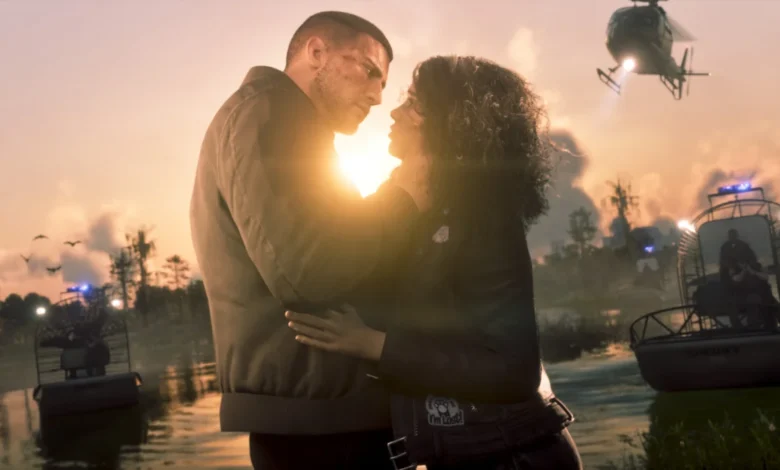
- December 2023: Rockstar Games releases the official debut trailer for Grand Theft Auto VI, breaking internet traffic records and garnering hundreds of millions of views within days. The trailer confirms the return to Vice City and introduces the series’ first modern dual protagonists, Lucia and Jason.
- Throughout 2024 and 2025: Rockstar maintains a largely silent marketing campaign, allowing public speculation and anticipation to build organically while refining the game’s technical performance for current-generation hardware.
- Early May 2025: Pre-orders officially go live globally across PlayStation 5 and Xbox Series X/S platforms, immediately shattering digital storefront traffic records and driving the staggering pre-sale figures later captured by Sensor Tower.
- Mid-May 2025: Global media outlets publish their reviews, universally praising the game’s technical ambition, satirical writing, and immersive open-world design.
- Official Release Day: Millions of players flood digital and physical retailers, pushing day-one engagement metrics to historic highs and cementing the title’s status as the largest entertainment launch of the decade.
Market Implications and Future Outlook
The financial success of Grand Theft Auto VI reinforces a broader shift within the entertainment economy: interactive software has permanently outpaced traditional cinema and television in both scale and revenue generation. While a blockbuster film requires a tightly controlled two-hour window to recoup its production and marketing budgets, modern AAA video games function as persistent digital ecosystems that retain consumer attention for years, if not decades.
For Rockstar Games, the triumph of Grand Theft Auto VI validates their decade-long development cycle. It proves that consumers are willing to wait for premium quality, and that the financial rewards for getting it right far outweigh the pressure to churn out annual sequels or rushed multi-media adaptations.
As the gaming community dives deeper into the fictional streets of Leonida, the financial reports will continue to update, likely rewriting industry records day by day. Yet, amidst the billions of dollars changing hands, the core strategy of Rockstar remains unchanged: focus on the interactive medium, protect the brand at all costs, and leave Hollywood on the outside looking in.