Means If You See A Blue & White Checkered Flag Flying Over A Striped Flag On A Boat
The maritime world relies on a sophisticated, highly structured visual language that has evolved over centuries to ensure safety, navigation, and clear communication across vast expanses of water. While modern technology introduces advanced tools such as satellite communication, GPS positioning, and automated very high frequency (VHF) radio distress systems, traditional methods of communication remain vital. Among these enduring systems is the International Code of Signals (ICS), a standardized international system of signals for use by vessels to communicate messages regarding safety of navigation and related matters. Within this global lexicon of flags, pennants, and shapes, specific combinations carry urgent, life-or-death implications. One such critical combination involves flying a blue and white checkered flag positioned directly above a multi-colored striped flag. When spotted on the water, this distinct pairing serves as an unequivocal call for immediate emergency assistance.
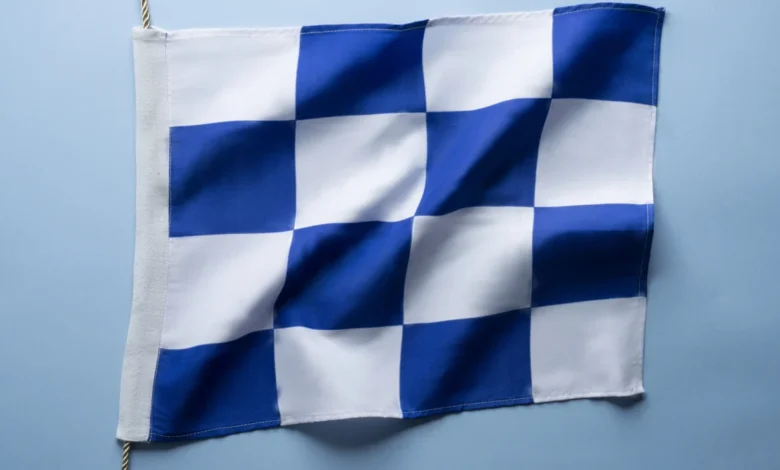
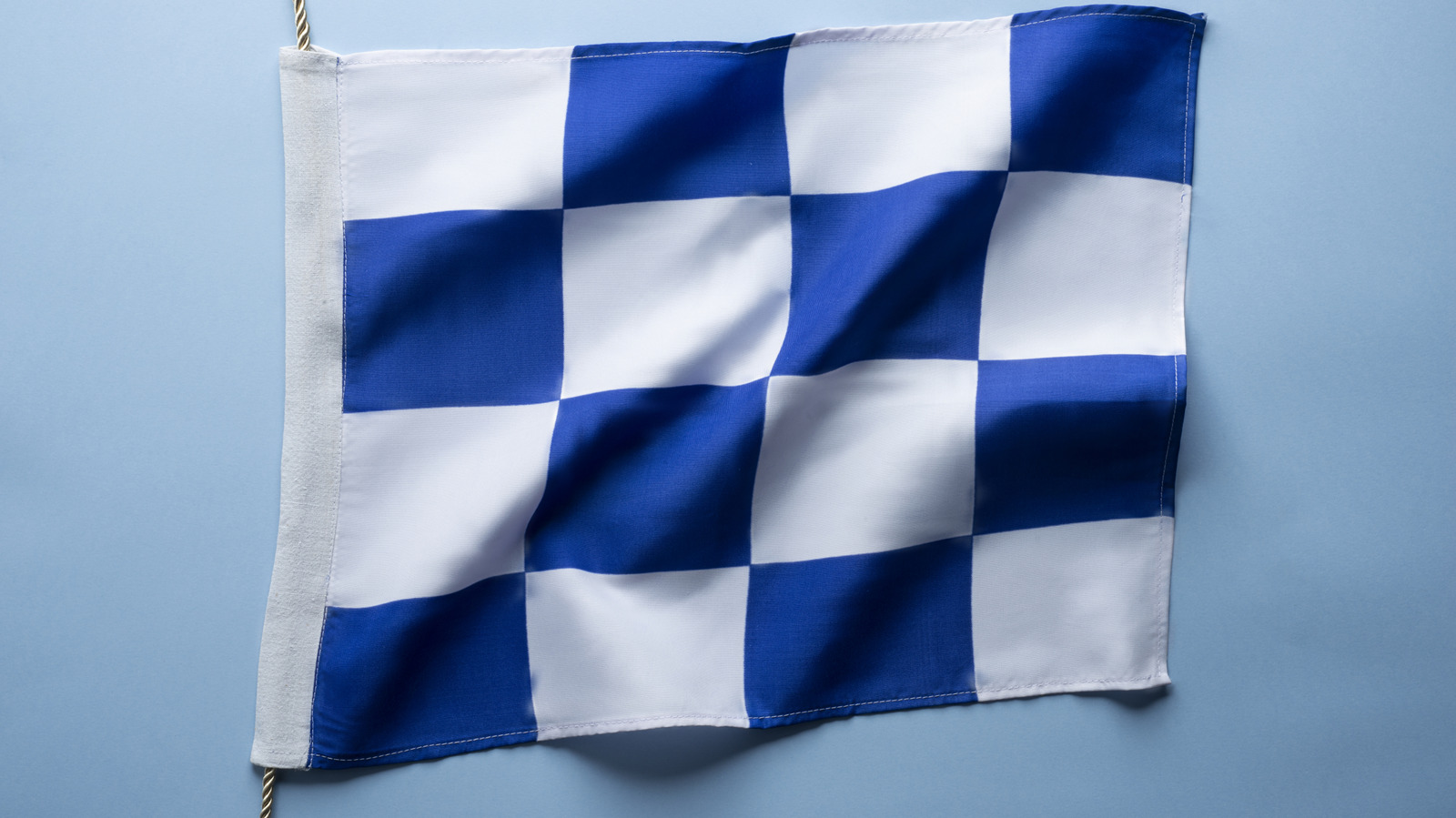
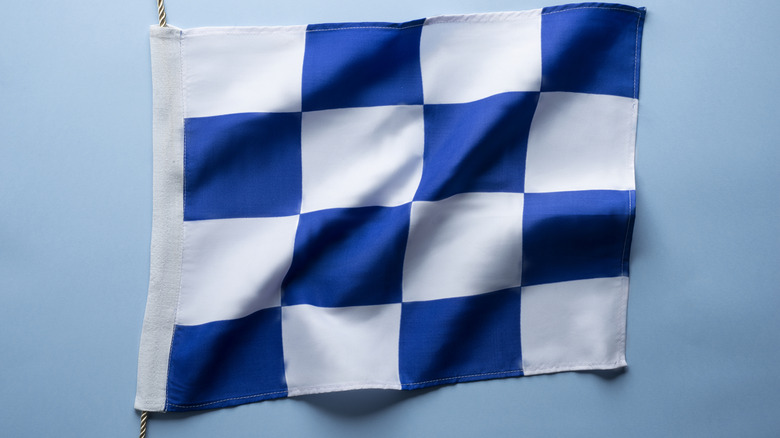
Understanding the components of this distress signal requires looking at the individual flags that comprise the international maritime alphabet. The upper flag, characterized by a distinct blue and white checkered pattern, represents the letter "November" within the phonetic alphabet used by mariners and aviators alike. Below it, the striped flag features five horizontal bands arranged in a specific sequence of colors: blue, white, red, white, and blue from top to bottom. This flag represents the letter "Charlie." When flown together in a vertical hoist—with November positioned over Charlie, commonly abbreviated as the "NC" signal—they communicate that the vessel displaying them is in grave distress and requires immediate help. The design of these markers is intentional, utilizing high-contrast geometry and color palettes to ensure they remain clearly visible across considerable distances, even under challenging weather or lighting conditions.
The History and Evolution of the International Code of Signals
To fully appreciate the significance of the NC distress signal, one must examine the historical context of maritime communication. Before the advent of reliable radio telephony and digital transponders, ships relied entirely on visual signals to communicate with one another and with shore stations. Early systems varied widely by nation and naval fleet, creating dangerous communication barriers during international trade and multi-national naval operations. Recognizing the need for a unified global standard, the British Board of Trade, in cooperation with the French government and other maritime nations, introduced the first iteration of the Commercial Code of Signals in 1857. This initial system utilized 18 flags to represent approximately 70,000 phrases and individual words.
Over the subsequent decades, the code underwent multiple revisions to accommodate the rapid expansion of global shipping, technological advancements, and the standardization of international maritime law. The 1901 revision expanded the system significantly, but it was not until the adoption of the modern International Code of Signals in 1965 by the Inter-Governmental Maritime Consultative Organization (IMCO)—which later became the International Maritime Organization (IMO)—that the system was streamlined into its current form. Today, the ICS is published in nine languages and is recognized universally by commercial fleets, military vessels, and recreational boaters. Within this comprehensive framework, single-flag signals generally convey urgent or maneuvering information, two-flag combinations typically denote distress and navigational emergencies, and three-flag signals cover general medical, geographical, and meteorological categories.
Deciphering Maritime Signals: November and Charlie
The individual flags making up the NC signal hold specific meanings when flown independently, though their primary utility is realized when combined for emergency purposes. The "November" flag (N), featuring its 16-square blue and white checkerboard pattern, historically signifies "No" when used in single-flag signaling, operating as the negative response to questions posed by other vessels. Conversely, its counterpart, the "Charlie" flag (C)—with its alternating blue, white, red, white, and blue horizontal stripes—traditionally indicates "Yes" or "Affirmative."
However, maritime protocol dictates that when these two flags are hoisted together with November positioned directly over Charlie, their individual affirmative and negative meanings are entirely superseded. The combined "NC" signal transitions from a routine conversational query into a categorical distress signal. This methodology of combining alphabetical flags to represent emergency conditions is a cornerstone of visual maritime safety. It allows a vessel that may have suffered total electrical failure, loss of engine power, or compromised radio communications to broadcast its peril to nearby mariners without needing to rely on voice transmission.
Comparing Visual Distress Signals in Modern Boating
The NC signal is just one of several visual indicators utilized on the water to communicate distress, hazards, or specific operational states. Modern recreational and commercial boaters are expected to be familiar with a wide array of flags to ensure safe navigation. For instance, a red flag featuring a white diagonal stripe—commonly known as the Diver Down flag—alerts nearby vessels that scuba divers or snorkelers are submerged in the vicinity, mandating that passing boats maintain a safe distance and reduce speed. Similarly, a rigid Alfa flag, which features a white and blue swallowtail design, indicates that a vessel has divers down and requires other traffic to keep clear at a slow speed.
Other flags carry medical or operational urgency. A flag featuring a blue background with central red and white squares often denotes that individuals on board require medical assistance, functioning similarly to an urgent medical call on land. When evaluating these diverse signals, emergency responders and fellow mariners must assess the context and specific configuration. While electronic distress systems like Digital Selective Calling (DSC) and emergency position-indicating radio beacons (EPIRBs) have transformed modern search and rescue operations, the enduring reliance on physical flags ensures that a baseline of communication survives even the most catastrophic onboard power failures.
Action Protocol: What to Do Upon Sighting the NC Signal
For any captain, crew member, or recreational boater who spots a vessel flying the November flag over the Charlie flag, immediate and decisive action is required. Because the signal indicates general distress rather than a specific emergency—such as a fire, sinking, or medical crisis—observers must assume the situation is critical. The primary protocol upon identifying an NC signal is to contact maritime authorities without delay.
In the United States, this responsibility falls primarily upon the United States Coast Guard. Witnesses should immediately tune their marine radios to VHF Channel 16, which operates on the international distress frequency of 156.8 MHz. This channel is continuously monitored by Coast Guard stations and commercial vessels alike. Alternatively, individuals within cellular coverage can dial 911 to connect with local emergency dispatchers who maintain direct communication lines with marine rescue coordination centers. Both communication methods are officially endorsed by maritime safety agencies as the primary conduits for reporting on-water emergencies.
Communicating with Authorities and Providing Essential Details
When contacting emergency dispatchers or Coast Guard personnel after spotting an NC signal, the reporting party must convey precise and structured information to facilitate a rapid and effective response. Essential details to provide include:
- Positive Identification: Clearly state that a vessel has been observed flying the November flag over the Charlie flag, confirming the presence of the international distress signal.
- Location Data: Provide the exact coordinates of the distressed vessel if GPS is available, or offer a reliable geographic description relative to prominent landmarks, buoys, or navigational markers.
- Vessel Description: Describe the size, hull color, superstructure, and type of the distressed craft (e.g., sailboat, motor cruiser, commercial fishing vessel) to help rescuers identify the target.
- Environmental and Situational Factors: Report weather conditions, sea state, visibility, and any observable hazards surrounding the distressed vessel, such as proximity to rocks, shallow water, or heavy shipping traffic.
- Onboard Status: Detail whether any people can be seen on deck, whether life rafts have been deployed, or if there are signs of fire, smoke, or taking on water.
Furthermore, authorities frequently request that the reporting party maintain communication and, if safe to do so, remain in the vicinity of the distressed craft until rescue units arrive. Maritime situations are inherently dynamic; weather can deteriorate rapidly, and a vessel’s structural integrity can fail unexpectedly. Updates provided by a nearby observing vessel can significantly alter search and rescue deployment strategies, ensuring that specialized assets—such as rescue helicopters, heavy weather lifeboats, or specialized salvage pumps—are dispatched in accordance with the evolving crisis.
The Broader Implications of Maritime Visual Signals in the Digital Age
The persistence of the International Code of Signals in an era dominated by satellite navigation and digital communications underscores a fundamental principle of maritime safety: redundancy. Electronic systems are inherently vulnerable to environmental interference, lightning strikes, EMP events, generator failures, and simple battery depletion. When a vessel suffers a catastrophic electrical failure miles offshore, high-tech communication arrays can instantly become useless. In such worst-case scenarios, analog solutions—such as paper charts, magnetic compasses, and fabric signal flags—provide an infallible backup.
Maritime regulatory bodies, including the International Maritime Organization and national coast guards, continue to mandate training in visual signaling for commercial mariners and strongly encourage recreational boaters to familiarize themselves with these protocols. Educational courses offered by organizations such as the U.S. Coast Guard Auxiliary and America’s Boating Club routinely incorporate the International Code of Signals into their curricula. By maintaining a working knowledge of flags like November and Charlie, the global boating community preserves a vital safety net that bridges cultural, linguistic, and technological divides, ensuring that help can always be signaled, seen, and understood when disaster strikes on the open water.