18 Strategic Approaches to Scaling Your YouTube Shorts Content for Sustainable Channel Growth

YouTube Shorts have evolved from a supplementary feature into a primary growth engine for creators, yet the transition from long-form production to the rapid-fire pacing of vertical video remains a significant hurdle. As of November 2026, data suggests that the most successful creators are not those who experiment randomly, but those who adopt repeatable, data-driven frameworks. By categorizing content strategy into actionable segments—ranging from repurposing existing assets to leveraging niche-specific trends—creators can mitigate the high production demands of the format.
The Evolution of the Shorts Ecosystem
Since its inception, YouTube’s Shorts platform has sought to compete directly with TikTok and Instagram Reels. The format, which allows for videos up to 60 seconds (with some features extending to three minutes), prioritizes high-retention, loop-friendly content. However, industry analysis indicates that the "shotgun approach"—where creators post random, uncoordinated clips—often leads to low audience retention and stagnant subscriber growth.
Professional creators are increasingly moving toward a "hub-and-spoke" model. In this configuration, long-form videos serve as the intellectual hub, while Shorts act as the spokes that drive discovery. Data from cohort studies suggests that creators utilizing analytical tools to identify high-engagement segments experience up to 86% higher view counts compared to those who manually curate their uploads without performance-based insights.
Repurposing Long-Form Content as a Foundation
The most efficient strategy for established channels is the systematic clipping of high-performing long-form assets. This method reduces the need for original production while simultaneously marketing a creator’s deeper catalog.
When selecting content for truncation, creators should prioritize "high-velocity" moments: declarative statements, surprising reveals, or technical mistakes. For example, a 30-second segment detailing a specific "beginner mistake" in a niche like woodworking or coding often performs better as a standalone Short than a generalized tutorial. By linking these clips directly to the parent video using the "Related Video" feature in YouTube Studio, creators create a seamless funnel for viewers to transition into more substantive, long-form content.
Strategies for Audience Engagement and Niche Dominance
For channels in the growth phase, engaging with the audience directly through video replies has proven to be a highly effective retention strategy. When a creator replies to a comment with a Short, the original comment is highlighted as a sticker, providing social proof and fostering a sense of community. This format is particularly effective for educational niches, where creators can address specific questions in under 60 seconds.
Furthermore, "Myth vs. Fact" segments serve as an authority-building tool. By identifying widely held misconceptions within a specific industry—such as misconceptions regarding sourdough fermentation or software optimization—and providing a rapid, fact-based rebuttal, creators can establish credibility. The effectiveness of this approach relies on the visual demonstration of proof, such as side-by-side comparisons or time-lapse experiments, which transcend language barriers and increase watch time.
The "Faceless" Content Paradigm
A significant portion of successful Shorts content does not feature the creator’s face. This "faceless" strategy is particularly prevalent in instructional or craft-based niches. Techniques such as the "hands-only" perspective allow the viewer to focus entirely on the execution of a skill, such as calligraphy, electronics repair, or culinary arts.
Data shows that these videos often achieve higher "rewatchability" scores because the focus remains on the process. Similarly, screen recordings for software tutorials or voiceover-driven B-roll for travel and storytelling provide a professional, polished aesthetic that does not require expensive lighting or on-camera presentation skills. This approach democratizes content creation, allowing experts to share knowledge without the logistical overhead of traditional studio filming.
Chronology of Growth: The Series-Based Approach
Consistency is the primary predictor of long-term success. Creators who implement a "series" format—such as "Day 1 of learning X" or a weekly news roundup—effectively train their audience to anticipate specific content. This reduces the cognitive load on the creator regarding ideation, as the format is pre-defined.
A notable case study involves creators who document a 30- or 100-day journey toward mastering a skill. By releasing daily installments, these creators capture a serialized audience. The data indicates that while individual daily segments may have modest view counts, the cumulative effect of the series often leads to a high-performing summary video. This "recap" content acts as a major discovery tool, often reaching viral status by condensing months of progress into a single, high-impact narrative.
Data-Driven Optimization and Analytical Feedback Loops
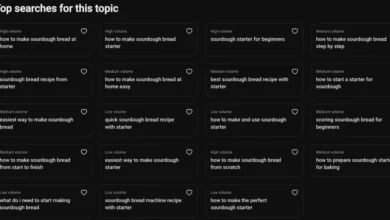
Before committing to a production schedule, creators must validate their ideas through market analysis. The most successful channels utilize tools like "Content Outliers"—a feature that identifies which specific topics are outperforming a channel’s historical average.
The validation process follows a clear sequence:
- Identify high-interest topics through keyword search volume and competitor analysis.
- Produce a test batch of three Shorts using a consistent format.
- Analyze retention metrics: If viewers drop off within the first two seconds, the hook requires adjustment. If they stay but do not finish, the pacing of the core content is likely too slow.
- Scale successful formats into long-form videos.
Financial Implications and Future Outlook
While the YouTube Partner Program (YPP) allows for revenue sharing on Shorts, the payout per million views is significantly lower than that of long-form content. As of current estimates, earnings for 1 million views can be as low as $32, depending on ad inventory and geography. Consequently, the primary value proposition of Shorts is not immediate monetization but audience acquisition and funneling.
Looking toward 2027, the thresholds for the YouTube Partner Program remain a critical consideration for emerging creators. As the platform matures, the emphasis on quality over quantity is expected to intensify. The "Shorts flood" method—where a high volume of related clips is published to boost the visibility of a long-form video—is likely to remain a dominant strategy. However, the success of this method is entirely dependent on the creator’s ability to maintain high production standards.
Conclusion
The most effective YouTube Shorts strategy is one that prioritizes repeatability and audience data. By focusing on niche-specific trends, leveraging existing long-form content, and utilizing analytical tools to refine the "hook" of every video, creators can build a sustainable, scalable channel. The goal is to move beyond the "lottery ticket" mentality of chasing viral trends and instead build a library of content that provides consistent value to the viewer. As the platform evolves, the creators who succeed will be those who view Shorts not as a standalone product, but as a sophisticated tool for long-term audience development.