How to Determine if Your YouTube Niche is Saturated Using Data-Driven Analysis

The persistent question of whether a specific YouTube niche has reached its saturation point is a primary barrier for both aspiring creators and veteran content strategists. Often, creators arrive at a negative conclusion based on anecdotal evidence—scrolling through a homepage crowded with millions-of-views content and assuming the market is closed to new entries. However, subjective observation is a poor indicator of market health. In the digital economy of online video, a niche is only truly saturated when the supply of new content consistently exceeds the audience’s demand. Understanding the difference between a crowded market and a saturated one is the key to identifying viable opportunities for growth.

The Distinction Between Crowded and Saturated Markets
To perform a professional analysis of a YouTube niche, one must move beyond the "gut feeling" approach and utilize quantitative metrics. A market is considered "crowded" when there are many active channels competing for the same audience. This is not necessarily a negative indicator; in fact, a high volume of competitors often signals a high, consistent demand for content. Conversely, "saturation" describes a state where the algorithm and the audience have already identified their preferred sources, and new, identical content fails to find a meaningful reach.
The objective test for this involves analyzing the performance of recent uploads. If a niche has dozens of established creators but only five-year-old videos in the top search results, it is likely saturated. If new, smaller channels are consistently breaking through to achieve high view counts within the last 30 days, the niche remains open for entry.

A Comparative Chronology: Minecraft vs. Sourdough
To illustrate the diagnostic process, consider two distinct categories: "Minecraft survival tips" and "sourdough for beginners." Both are perennial favorites, yet their current market dynamics offer starkly different conclusions for new entrants.
In an analysis conducted in October 2026, the two niches were subjected to a performance audit. The "sourdough for beginners" category, while popular, revealed signs of stagnation. An audit of 20 recent uploads showed that not a single video reached the 100,000-view threshold within the month, and nearly half of the content failed to surpass 1,000 views. The top search results were dominated by high-authority, legacy food channels with videos dating back two to eight years. This indicates that the audience is satisfied with existing, high-quality "evergreen" content, and the barrier to entry for a new creator attempting to replicate that content is exceptionally high.

In contrast, the "Minecraft survival tips" category exhibited high levels of "churn." Among 20 recent uploads, 40% had surpassed 100,000 views. Crucially, the top-performing content was not exclusively owned by major channels; mid-sized creators with fewer than 150,000 subscribers were successfully capturing significant traffic. This suggests that the Minecraft niche remains dynamic, driven by constant game updates and shifting player requirements, allowing for new creators to gain traction by providing timely, relevant information.
Seven Analytical Checks for Niche Viability
For creators looking to conduct their own due diligence, the following seven-step framework provides a robust method for evaluating a potential niche:

- Incognito Search Analysis: Always perform searches in an incognito or private browser window. YouTube’s personalization algorithm tailors results to user history, which masks what a prospective new viewer would actually see. A healthy niche should show a mix of video ages; if the top 20 results are all over 12 months old, the niche is likely stagnant.
- The Breakout Factor: A "breakout" is defined as a video performing significantly better than the channel’s historical average. By using professional analytics tools like TubeBuddy’s Content Outliers, creators can identify if the audience is receptive to new content or if they are ignoring new uploads in favor of legacy material.
- Distribution of Success: Determine if the "wins" in a category are concentrated in the hands of three or four "mega-channels" or spread across a wider ecosystem. A healthy niche has a diverse leaderboard.
- Recent Upload Performance: Filter search results by "This Month" to determine the success rate of current content. If the majority of videos uploaded in the last 30 days have low view counts, it serves as a strong signal of supply-side over-saturation.
- Demand Measurement: Utilize the YouTube Studio Trends tab and keyword exploration tools to assess search volume. A niche with high competition but high search volume is often more sustainable than a "blue ocean" niche with no search demand whatsoever.
- Keyword Saturation: Examine how many of the top-ranking videos actually utilize the primary keyword in their title and metadata. If the top results do not explicitly target the search term, there is a clear opportunity for a well-optimized, targeted video to capture that traffic.
- The "Sameness" Test: This final, subjective check asks the creator to look at their proposed content and ask: "Is this identical to the 50 videos already ranking?" If the content offers no unique value proposition, the niche is effectively saturated for that specific format.
The Role of Data in Strategic Growth
The transition from a "lottery" approach to a strategic approach is what separates sustainable channels from those that burn out. According to platform data, creators who employ analytical tools to inform their content strategy see, on average, 86% more views than those who rely purely on intuition. This is because data-driven content creation allows for the identification of "content gaps"—specific, underserved queries within a larger, crowded topic.
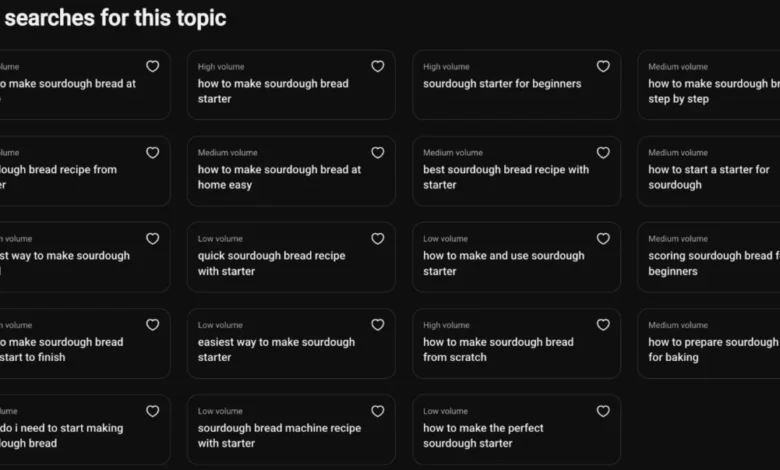
For example, in the saturated sourdough market, a data analysis might show that while "sourdough for beginners" is flooded with tutorials, there is a specific, high-volume search trend for "sourdough without a Dutch oven" or "scoring techniques for high-hydration loaves." By pivoting from a broad, saturated term to a specific, high-intent query, a creator can bypass the competition and build a dedicated audience.

Broader Implications and Strategic Pivoting
When a creator discovers that their chosen niche is indeed saturated, the professional response is not to abandon the topic, but to "niche down." This involves applying a more granular focus that the incumbent, high-level channels are ignoring.
Industry experts note that the most successful channels often begin by targeting a very specific demographic or problem before expanding their scope. If a channel focuses on "cooking," they are competing with every major media outlet in the world. If they focus on "baking bread for urban apartment dwellers with limited counter space," they are serving a specific, under-catered community.

Conclusion
The "saturation" of YouTube is a myth often perpetuated by those who fail to account for the ever-changing nature of viewer intent. While certain high-level search terms may be effectively closed to new competition, the platform remains highly fluid. By systematically applying the seven checks outlined above, creators can move from guessing to knowing, transforming their content strategy into a deliberate, data-backed enterprise. The key to long-term success is not finding a "vacant" topic, but finding a specific, defensible position within a crowded one, and providing value that the current top-ranking videos do not.