Native Instruments Unveils Super*Saw, a Revolutionary Synthesizer Co-Created with PC Music Founder A.G. Cook

The landscape of electronic music production and sound design has long been defined by the unmistakable grit and expansive power of the stacked sawtooth wave. Originating during the virtual analog revolution of the mid-to-late 1990s—pioneered most notably by hardware flagships like the Roland JP-8000—the supersaw quickly established itself as the sonic backbone for everything from underground rave anthems and euphoric Eurodance to modern wall-of-sound pop music. Building upon this rich three-decade heritage, audio software and hardware giant Native Instruments has officially announced the launch of Super*Saw, a brand-new, purpose-built virtual synthesizer developed in close collaboration with visionary artist, producer, and PC Music founder A.G. Cook.
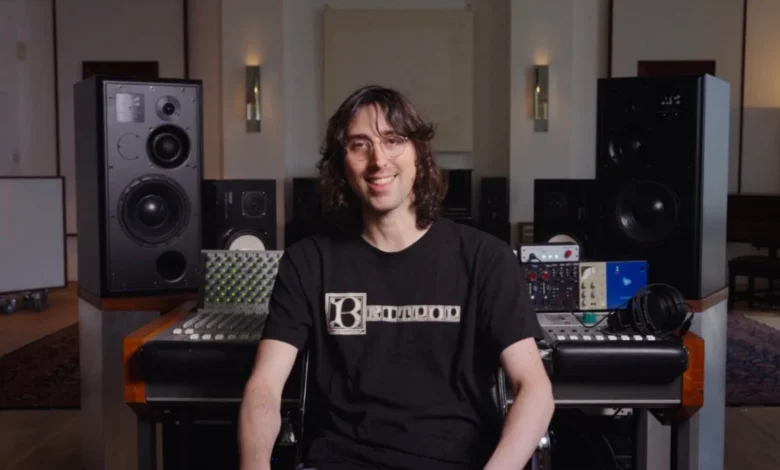
Pronounced "SuperStarSaw," the instrument represents a significant milestone in software design, merging Cook’s idiosyncratic, hyper-detailed production ethos with Native Instruments’ engineering prowess. To mark the release, the companies convened at the historic Baltic Studios in London for an exclusive retrospective and deep dive into the philosophy guiding the instrument’s development. The resulting software aims to streamline workflows that historically required complex chains of DAW routing, audio bouncing, and tedious manual automation, consolidating them into a single, highly expressive, and tactile interface.
The Evolution of the Supersaw: From 90s Hardware to Modern Software
To fully understand the significance of Super*Saw, one must examine the technical constraints and breakthroughs that gave birth to the original supersaw sound. In the 1990s, the transition from purely analog synthesizers to digital virtual-analog architecture unlocked unprecedented polyphony and processing power. Sound designers discovered that by detuning multiple sawtooth oscillators simultaneously within a single voice, they could create a dense, shimmering, and aggressive wall of sound that cut effortlessly through busy club mixes.
Over the subsequent decades, this aesthetic became foundational to multiple genres. However, achieving professional-grade, hyper-layered supersaw textures in modern digital audio workstations (DAWs) often involved cumbersome workarounds. Producers frequently had to duplicate instrument tracks, manually draw automation curves for fine-tuning, and stack disparate third-party plugins to achieve the desired motion and thickness.
A.G. Cook, known universally for his decade-long imprint on contemporary pop and electronic music—including extensive production work with international pop star Charli XCX, critically acclaimed solo projects such as 7G and Apple, and his 2024 record Britpop—frequently encountered these exact workflow bottlenecks. In the development of tracks like "Stargon" and "Superstar," Cook utilized elaborate multi-plugin chains to build dense chord progressions, a process he has openly described as tedious and detached from genuine musical performance.
The collaboration with Native Instruments sought to eradicate these friction points. By limiting the synth’s core architecture exclusively to sawtooth waves, Super*Saw forces creators to explore the outer limits of a single waveform family, transforming what was once a technical chore into an intuitive, real-time creative experience.
Architectural Breakdown: Dual 8-Voice Layers and the 4-Corner Morpher
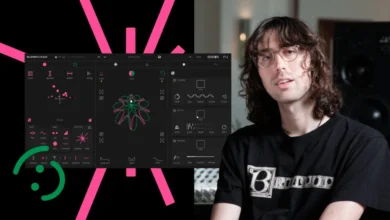
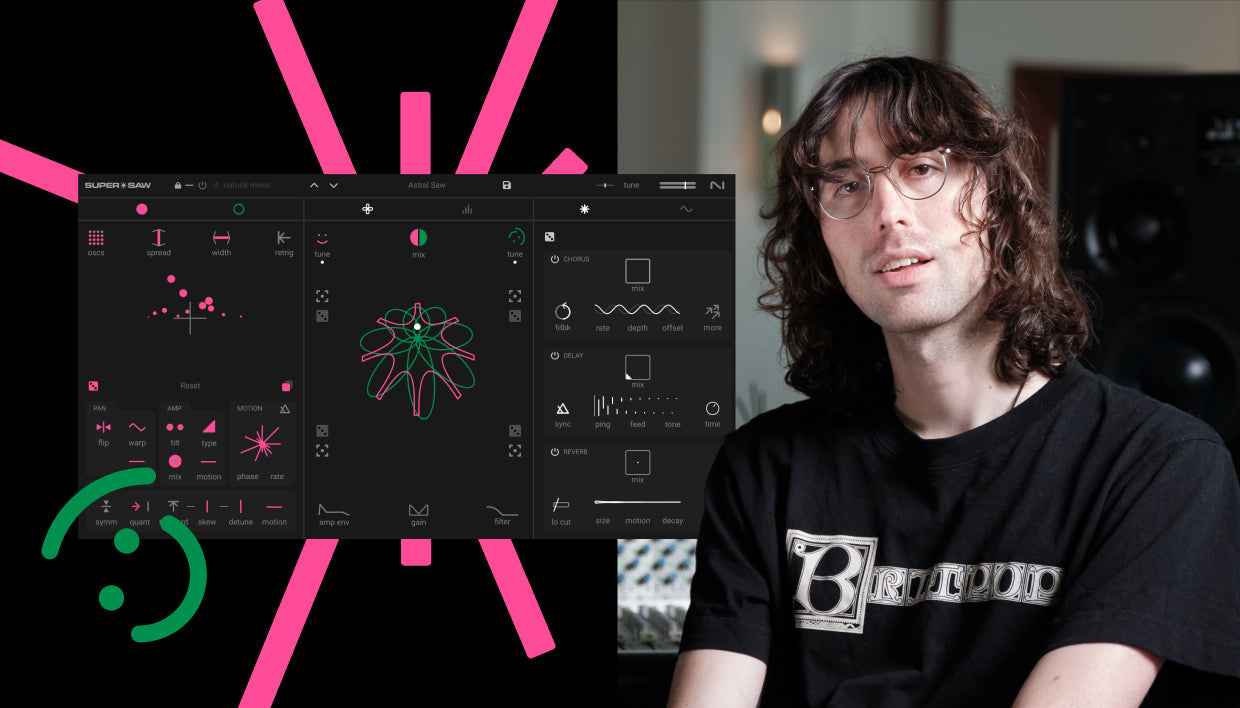
At the technical core of Super*Saw is a sophisticated dual 8-voice sawtooth oscillator system. This system is visually and functionally divided into two distinct, color-coded layers: pink and green. According to design notes and demonstrations from Cook, this bifurcation was intentional, mimicking the way he mentally structures complex arrangements in his own productions. By assigning contrasting sonic behaviors to each layer—such as utilizing one for a heavy, anchored fundamental bassline and the other for an erratic, modulated chord progression—producers can achieve a dynamic interplay reminiscent of a musical dialogue.

The interface moves away from static, pre-programmed automation, favoring real-time physical interaction. Central to this is the 4-corner Morpher, a performance control that allows users to smoothly transition between disparate chord shapes, detuning rates, and modulation states on the fly. Furthermore, the instrument features a star-shaped modulator capable of being mapped directly to parameters such as stereo panning, amplitude, and pitch spread.
Users can also leverage randomization features, including an instantaneous patch generator activated via a virtual dice roll, allowing both professional sound designers and bedroom producers to generate complex, evolving textures with a single click. These architectural choices reflect a broader industry trend toward instruments that prioritize tactile, improvisational control over menu-diving.
Industry Implications and Broader Market Impact
The release of Super*Saw arrives at a time of significant maturation within the virtual instrument market. As digital audio workstations become increasingly saturated with standard wavetable synths and generic emulation plugins, software developers are finding success through artist-led, ideology-driven hardware and software hybrids. By attaching the instrument directly to the creative philosophy and visual branding of A.G. Cook—whose signature pink-and-green aesthetic heavily informed the plugin’s graphical user interface—Native Instruments has positioned the product not merely as a utilitarian tool, but as a cultural artifact bridging underground electronic experimentation with commercial pop production.
Market analysts note that niche, highly specialized synthesizers tend to resonate strongly with contemporary producers who favor immediate sonic identity over endlessly flexible, Swiss-Army-knife workstations. By narrowing the scope of the instrument strictly to the physics of stacked sawtooth waves, Native Instruments and A.G. Cook have effectively built a definitive workstation for a very specific, highly influential sonic palette.

A Closing Chapter and Future Horizons
For Cook, the release of SuperSaw serves as a poignant career milestone. Described by the artist himself as a sort of "coda, epilogue, or final chapter" to his extensive discography as a solo artist, the plugin encapsulates the sonic worlds of 7G, Apple, and Britpop* into a redistributable format. Rather than simply compiling his signature sounds into a static sample pack—a common promotional route for legacy artists—Cook opted to distill his production methodology into an interactive instrument capable of being reinterpreted by a global community of musicians.
As electronic music continues to cycle through nostalgic nods to the late 20th century while aggressively pushing digital boundaries, tools like Super*Saw offer a bridge between eras. Whether deployed for shimmering, ethereal pop harmonies, aggressive club leads, or heavy, noise-adjacent percussive blocks of sound, the instrument provides an uncompromising exploration into the maximum limits of the sawtooth wave.
Super*Saw is available now through the Native Instruments official online store, complete with a suite of artist presets, video walkthroughs, and technical documentation designed to integrate the instrument seamlessly into modern production environments.