
Laika’s Wildwood demonstrates remarkable theatrical endurance with strong second-weekend box office hold


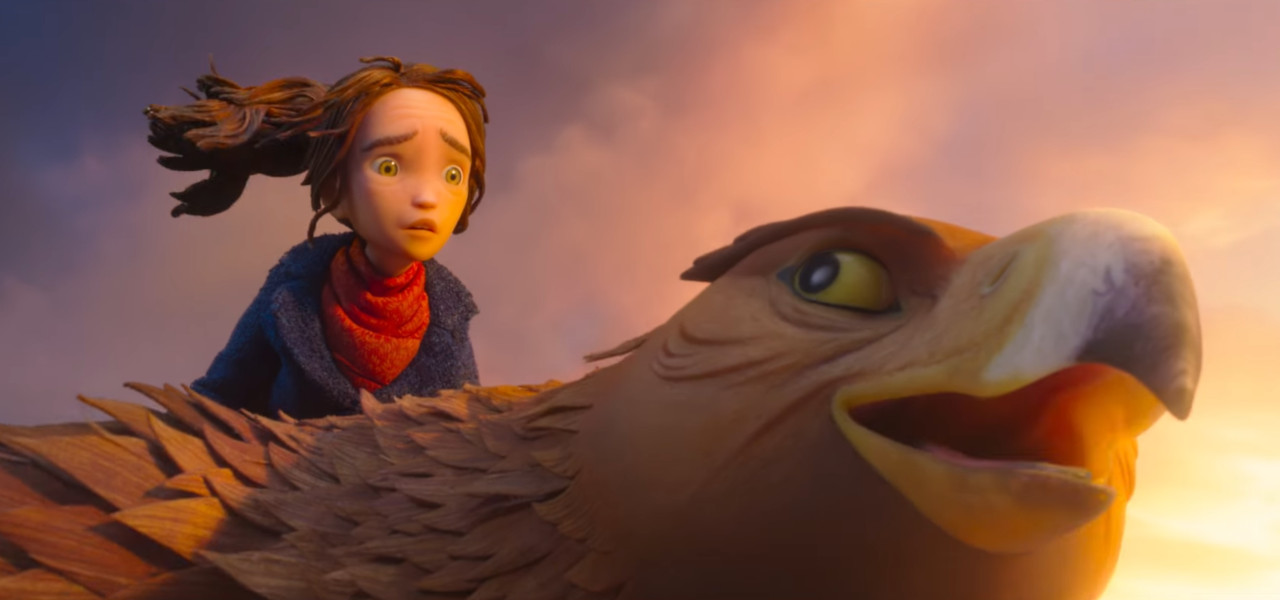
Laika’s latest stop-motion masterpiece, Wildwood, has solidified its position as a significant player in the current theatrical landscape, grossing an estimated $9 million during its second weekend of domestic release. According to updated figures provided by distributor Fathom Entertainment, the film experienced a modest 27% decline from its opening frame, a performance that places it in a favorable position compared to the studio’s historical portfolio. This second-weekend performance brings the film’s 10-day domestic total to $27.4 million, signaling that the project is resonating deeply with audiences in an increasingly competitive cinematic climate.
A Chronology of the Opening Run
The trajectory of Wildwood since its debut has been defined by steady, organic growth rather than a volatile opening-weekend spike. Following its premiere, the film garnered attention for its visual fidelity and the characteristic technical ambition expected of the Laika team. During the most recent weekend, the film generated approximately $2.4 million on Friday, followed by a robust $2.7 million on Halloween Saturday.
The momentum accelerated significantly on Sunday, which saw a 38% increase in ticket sales compared to the previous day. This Sunday surge, which actually outperformed the film’s opening Sunday by 2%, proved pivotal in allowing Wildwood to surpass initial box office projections. By holding the second-highest daily total for that Sunday—trailing only major industry competitors—the film demonstrated a rare "legs-based" performance that analysts typically associate with high-quality, family-oriented features that benefit from positive word-of-mouth.
Comparative Analysis of Laika’s Portfolio
To understand the significance of this 27% week-over-week drop, it is necessary to examine the historical performance of Laika’s previous feature films. Laika has consistently maintained a niche but dedicated following, with films that prioritize long-term cultural impact over immediate, high-volume opening weekends.
For instance, the studio’s 2016 release, Kubo and the Two Strings, saw a 37.8% decline in its second weekend. Similarly, 2012’s ParaNorman dropped 38.7%, and 2014’s The Boxtrolls fell by 30.7%. Wildwood’s 27% decline represents the most stable sophomore performance in the studio’s recent history. This stability is particularly impressive given that Fathom Entertainment expanded the film’s footprint by 150 screens, bringing the total number of locations to 3,103. By scaling the theatrical release in response to demand rather than over-saturating the market, the studio has successfully managed the film’s distribution lifecycle.
Data-Driven Audience Reception
The success of Wildwood is not merely reflected in currency, but in the qualitative data gathered through audience polling. According to PostTrak results, 96% of surveyed theatergoers rated the film as "excellent" or "very good." Perhaps more importantly for the film’s longevity, 87% of viewers indicated they would "definitely recommend" the film to others.
This high recommendation rate has translated directly into ticket sales. Nearly one-third of the weekend’s audience cited positive word-of-mouth as their primary motivation for attending a screening. In an era where digital marketing and social media discourse often dictate the shelf-life of a film, this reliance on organic, peer-to-peer recommendation suggests that Wildwood is becoming a "must-see" cultural event rather than just another title in the multiplex rotation.
Official Perspectives and Industry Strategy
The executive leadership behind the film has expressed cautious optimism regarding these metrics. David Burke, Laika’s chief marketing and operations officer, highlighted the alignment between the studio’s artistic vision and the public’s reception. "Wildwood’s strong second-weekend hold is an encouraging sign of the staying power behind its exceptional audience response," Burke stated. He noted that the creative team, led by director Travis Knight, has succeeded in crafting a narrative that compels audiences to act as brand ambassadors.
Fathom Entertainment, which has deepened its relationship with Laika over the last decade, views the performance of Wildwood as a cornerstone of its current business strategy. Jason Brenek, CEO of Fathom Entertainment, noted that the film is tracking to meet or exceed the success of the 2024 re-release of Coraline, which served as a landmark anniversary event. "Wildwood represents a landmark achievement for Fathom Entertainment," Brenek remarked, emphasizing that the film’s "theatrical staying power" and "exceptional audience reaction" confirm its status as a cinematic work of high artistic merit.
Economic Context and Future Outlook
While the film’s $100 million production budget remains a significant threshold to cross, the current theatrical climate requires a shift in how success is measured. Laika is a studio that has historically operated with a long-term view, often prioritizing the "fan favorite" status of its library over immediate, quarterly-focused returns.
The financial implications of a 27% drop are clear: the film is not suffering from a "front-loaded" audience base. Instead, it is capturing a consistent segment of the market that values the craftsmanship of stop-motion animation. If the film continues to track at its current rate, it is poised to become a staple of the studio’s catalog.

The broader implication for the industry is the continued viability of the medium-budget animated feature. As major studios pivot toward massive, high-risk blockbuster spectacles, Laika’s ability to sustain a 3,000-plus screen run while maintaining a low decay rate proves that there is still a significant, underserved audience for high-quality, artisanal animation.
Implications for the Animation Sector
The success of Wildwood serves as a case study for how independent-leaning animation houses can compete in a market dominated by large-scale franchises. By leveraging a slow-burn strategy, maintaining tight control over production values, and utilizing strategic distribution partnerships, the studio has managed to turn a challenging second-weekend window into a testament to the film’s quality.
Looking ahead, the next several weeks will be critical. The film must now navigate the incoming wave of late-year holiday releases. However, based on the current exit polling and the consistent growth of Sunday ticket sales, Wildwood is well-positioned to maintain its presence in theaters through the remainder of the season. As more moviegoers discover the film, the studio’s strategy of building a "long-term fan favorite" appears to be working exactly as intended.
In conclusion, Wildwood’s performance is a validation of the studio’s commitment to quality. While the path to profitability involves more than just the second-weekend figures, the data suggests that the film has successfully cleared the most difficult hurdles of the theatrical release cycle. With high audience satisfaction and a distribution strategy that prioritizes endurance over exhaustion, Laika has once again demonstrated that artistic integrity can, and often does, translate into sustainable commercial success. The film’s trajectory is a positive indicator for the health of stop-motion as a viable, profitable, and culturally significant medium in the modern film industry.