TenPix Cloth brings high-performance GPU-accelerated simulation to 3ds Max workflows

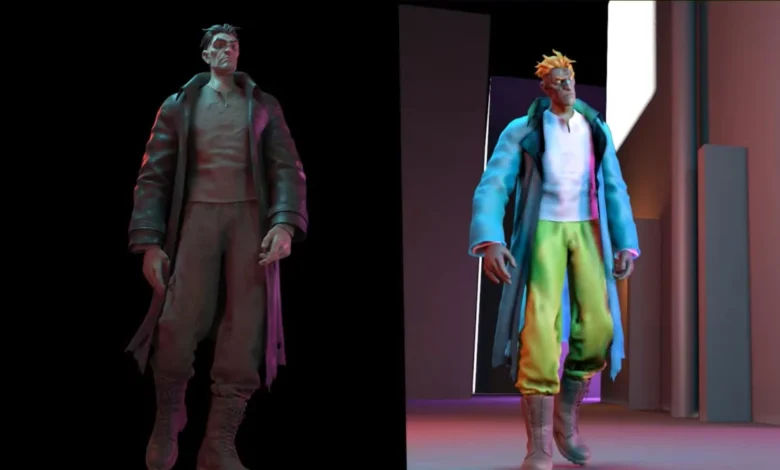
The landscape of 3D animation and architectural visualization has long been defined by the struggle between simulation fidelity and computational efficiency. Cloth simulation, in particular, has historically been a bottleneck in production pipelines, often requiring significant CPU overhead that slows down iterative creative processes. The release of TenPix Cloth, a new GPU-accelerated cloth simulation system designed specifically for Autodesk 3ds Max, represents a significant shift in how artists approach fabric physics. Developed by Alireza Akhbariarabani, the tool leverages the parallel processing power of NVIDIA RTX hardware to move heavy calculations from the CPU to the GPU, promising real-time or near-real-time feedback for complex fabric scenarios.
Technical Foundations and Architectural Integration
At its core, TenPix Cloth functions as a non-destructive modifier stack within 3ds Max. Unlike standalone simulation packages that often require exporting meshes to external software, TenPix Cloth integrates directly into the native 3ds Max environment. Users apply it as they would standard modifiers like "Bend" or "Skin." By utilizing the CUDA cores found in NVIDIA RTX architecture—ranging from the 20-series to the latest 50-series cards—the plugin offloads the complex differential equations required for cloth collision, friction, and mass-spring dynamics.
This integration is critical for production environments where time-to-render is a primary metric of success. By keeping the simulation within the viewport, artists can make adjustments to geometry, seams, and physical properties without waiting for lengthy cache baking processes. This "what you see is what you get" approach is intended to streamline the creation of character garments, complex drapery, and environmental props that require consistent physical interaction.
The Evolution of Cloth Simulation in 3D Production
To understand the relevance of TenPix Cloth, one must look at the historical trajectory of fabric simulation in the CG industry. In the early 2000s, cloth simulation was a luxury reserved for high-end film production, requiring massive server farms to calculate even simple draping. Over the last two decades, CPU-based solvers became standard, but they remained slow and often unstable when dealing with multiple layers of clothing or high-polygon meshes.
The shift toward GPU acceleration began in earnest around 2015, as graphics cards became general-purpose computing devices. However, many GPU-based tools remained locked behind proprietary engines or required bridge software that disrupted the 3ds Max workflow. TenPix Cloth addresses this by bridging the gap between high-fidelity physics engines and the day-to-day requirements of 3ds Max artists, providing a dedicated solution that operates within the constraints of the existing Autodesk ecosystem.
Performance Metrics and Hardware Requirements
The dependency on NVIDIA RTX hardware is a deliberate design choice that aligns with current industry standards in workstation hardware. The decision to limit support to the 20-series through 50-series cards ensures that the solver can take full advantage of hardware-accelerated ray tracing and tensor cores, which are increasingly being utilized for non-rendering physics tasks.
Internal testing suggests that by utilizing the GPU, TenPix Cloth can handle significantly higher vertex counts than traditional CPU-bound modifiers before experiencing frame-rate degradation. In scenarios involving layered outfits—where collisions between a shirt, a jacket, and a character mesh create exponential computational complexity—the parallel nature of the GPU allows the simulation to maintain stability. This is particularly relevant for production houses that require "tearable" cloth assets or complex drapery that must react dynamically to character movement or environmental triggers.
Market Positioning and Strategic Pricing
The product’s launch strategy reflects a competitive entry into the 3ds Max plugin market. Currently offered at a discounted introductory price of $150, the software is positioned as an accessible alternative to high-cost enterprise simulation suites. This pricing structure is set to expire on December 31, 2026, at which point the cost will increase to $200.
For individual freelancers and small-to-medium studios, this pricing model is intended to remove the barrier to entry for advanced simulation tools. By offering a free trial version, Alireza Akhbariarabani is providing potential users with the ability to benchmark the tool against their existing workflows before committing to a purchase. This transparency is common among successful boutique plugin developers who rely on community adoption to drive software maturity.
Broader Implications for the 3ds Max Ecosystem
The introduction of TenPix Cloth highlights a broader trend in the 3D industry: the "democratization of simulation." Tools that were once the domain of specialized technical directors are increasingly becoming accessible to generalist artists. As 3ds Max continues to be a primary tool for architectural visualization, product design, and game asset creation, the demand for realistic, physical interaction has never been higher.
The implications for production pipelines are threefold:
- Iterative Speed: The ability to simulate within the viewport reduces the "trial and error" time. Artists can adjust parameters such as fabric stiffness, gravity, and wind resistance and see immediate results, allowing for a more creative, intuitive design process.
- Workflow Consolidation: By keeping the simulation in 3ds Max, studios avoid the "black box" of external software. This ensures that assets remain compatible with native 3ds Max shaders, lighting setups, and animation controllers.
- Hardware Optimization: As studios continue to upgrade their workstations with modern NVIDIA GPUs for rendering (using V-Ray, Arnold, or Corona), they gain a "free" performance boost for their physics simulations, effectively increasing the return on investment for their hardware refresh cycles.
Challenges and Future Considerations
While the promise of GPU-accelerated cloth simulation is significant, the software must contend with the challenges of compatibility and stability. Supporting 3ds Max versions from 2024 through 2027 indicates a focus on forward-looking development. However, the reliance on NVIDIA-specific technology means that users with AMD or Intel-based GPU setups are currently excluded from this workflow. As competition in the GPU market intensifies and standards like Vulkan or OpenCL gain broader support for physics calculations, developers like Akhbariarabani will face pressure to maintain hardware-agnostic solvers.
Furthermore, the complexity of fabric simulation—specifically regarding "seam holding" and complex collision handling—remains a difficult computational hurdle. Whether TenPix Cloth can reliably manage extremely high-density geometry without "exploding" (a common issue in physics solvers) will be the true test of its market longevity. Early demonstrations suggest a robust handling of these issues, but long-term production usage will provide the definitive verdict.
Conclusion
TenPix Cloth represents a sophisticated, timely addition to the 3ds Max toolkit. By focusing on the specific bottlenecks of garment and fabric work, and by leveraging the latent power of modern NVIDIA RTX hardware, it provides a practical solution to a persistent industry problem. As the professional 3D market moves toward increasingly complex simulations, tools that prioritize performance, integration, and user accessibility will continue to define the standard. With its current introductory pricing and a clear focus on the needs of the 3ds Max community, TenPix Cloth is positioned to become a staple for artists looking to enhance the physical realism of their digital environments. Prospective users are encouraged to utilize the trial version to evaluate the plugin’s efficacy against their specific scene requirements, ensuring that the software integrates seamlessly into their established production pipelines.
Related posts: