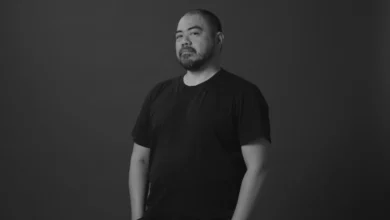
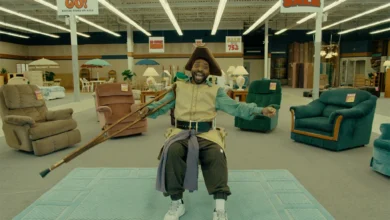
Lucas Durkheim and Eddy Team Up for TRASH: A Gritty Animated Western Visualizing French Rapper Saïf’s New EP

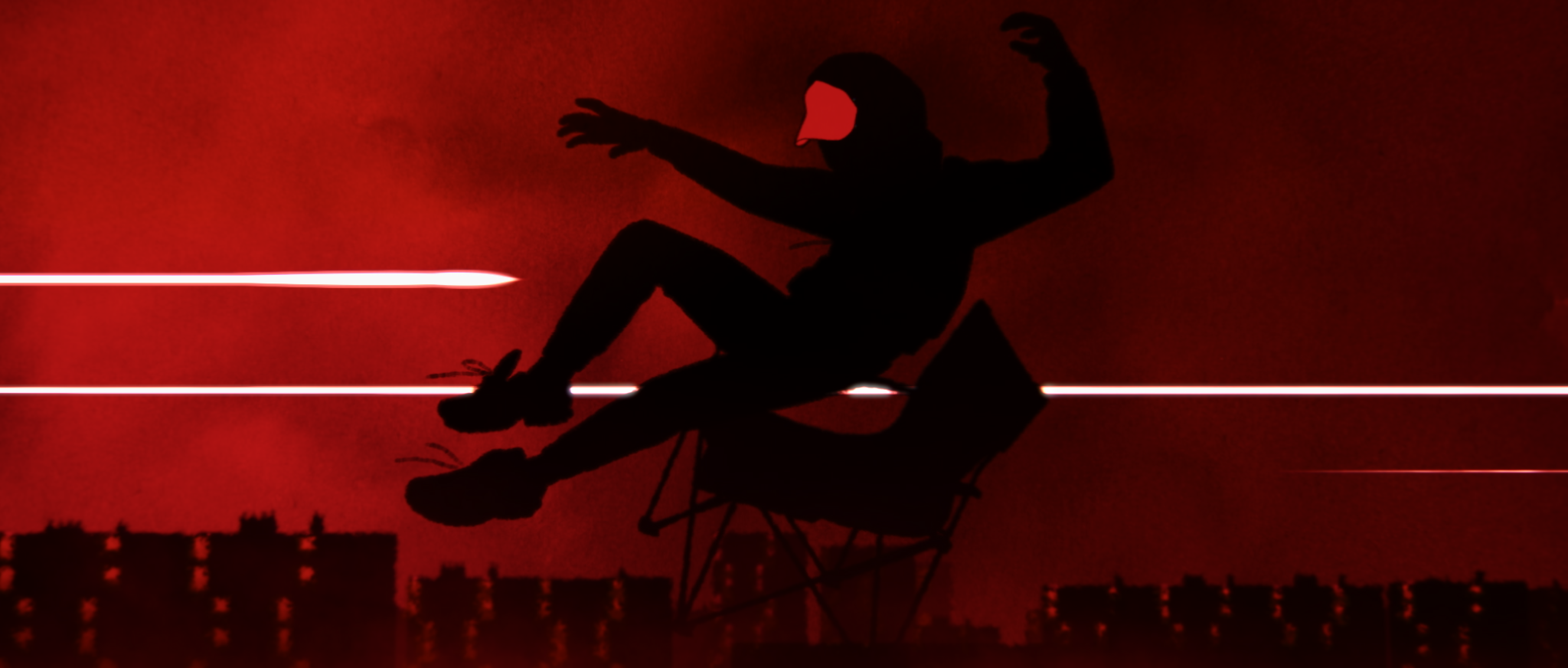
The intersection of contemporary rap music, cinematic storytelling, and high-craft animation has yielded a striking new project titled TRASH. Directed by filmmaker Lucas Durkheim in collaboration with production powerhouse Eddy, the project spans 24 relentless hours in the life of Adel, a young drug lookout operating within a high-density housing estate in the sun-baked landscapes of the south of France. Conceived as a feverish, incandescent modern western, the short film functions as an extended visual accompaniment to Si vous saviez (If Only You Knew), the sophomore extended play (EP) by emerging French rapper Saïf, released under the joint banner of 84 City and Warner Music France.
By merging traditional 2D character animation with raw, textured 16mm live-action cinematography, the production team has constructed a brutalist urban fable. Much like the classical cinematic westerns that inspired its pacing and tone, TRASH operates on an inevitable trajectory, bound to the ticking of a clock and culminating in inevitable violence. Beyond its narrative punch, the release marks a notable collaborative effort between the French independent music sector and high-end European animation studios, showcasing how visual art can elevate modern hip-hop culture into cinematic territory.
Main Facts of the Production
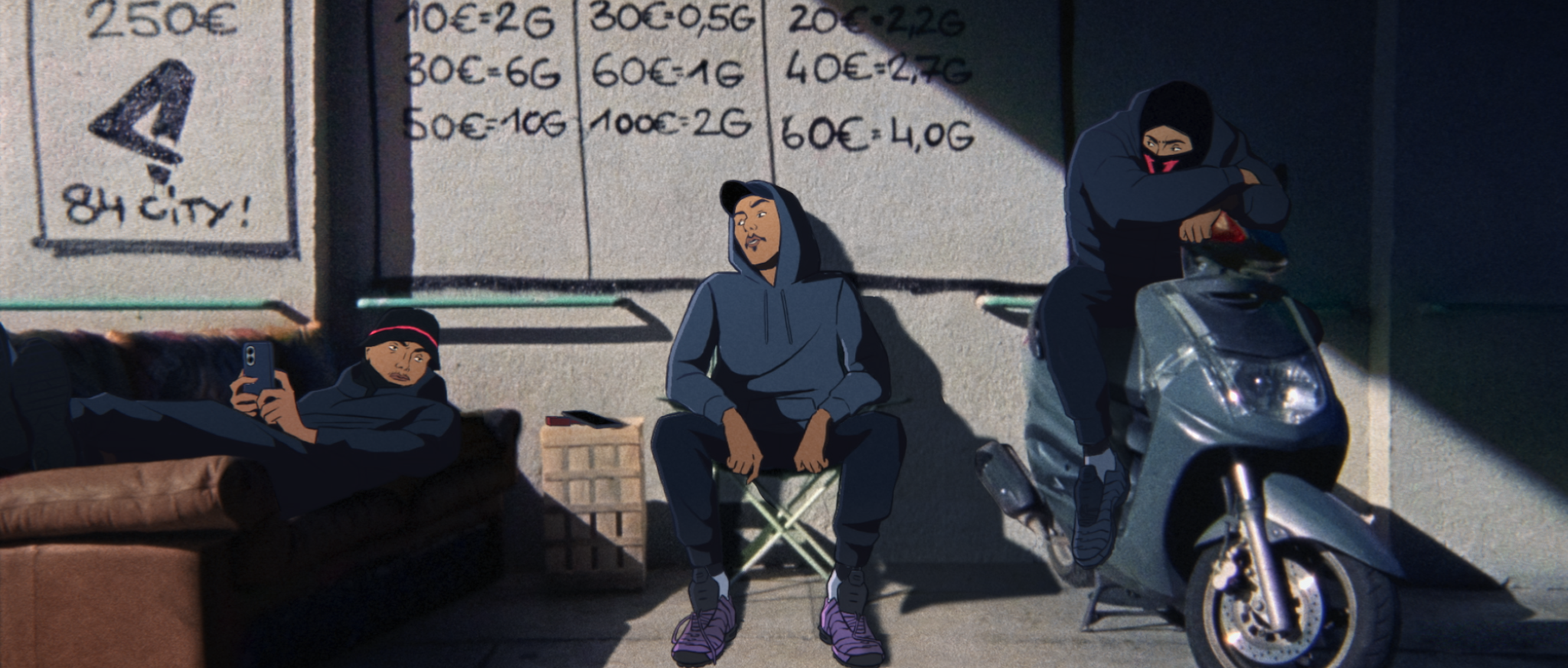
TRASH is a multi-disciplinary short film and music video hybrid that encapsulates the thematic weight of Saïf’s musical output. The narrative focuses squarely on Adel, whose daily existence as a "chouf"—local slang for a lookout or spotter in illicit drug trade operations—is characterized by acute surveillance, endless waiting, and sudden, high-stakes danger.
The production scale of TRASH is substantial for a music-linked visual project. Helmed by director Lucas Durkheim, who handled the screenplay, art direction, and storyboard alongside storyboard artist Julien Charles, the film was physically produced by Eddy under the stewardship of producer Cléo Kandel. Live-action sequences were managed by executive producer Gabriel Bert and director of photography Hugo Ghnassia, shooting on genuine 16-millimeter film stock to secure a granular, analog aesthetic. This footage was subsequently used as a composite base layer for traditional 2D animations overseen by head animator Raphaël Chiapparin and executed by animators Simon Crouzeix and Raphaël Doucet-Bon.
The voice cast features performances from Abdoul, Steak, Zine Darar, Bigui, and Le You, grounding the project in authentic regional dialects and street-level cadence. Meanwhile, the sonic landscape is anchored by Saïf’s original musical composition, which bridges the gap between atmospheric western Ennio Morricone-esque tension and contemporary French trap rhythms.
Chronology and Narrative Arc of the Film
The narrative framework of TRASH is compressed into a tight, unbroken 24-hour cycle. This temporal constraint serves to heighten the claustrophobia and paranoia inherent in Adel’s daily routine within the housing estate, locally referred to as a cité.
In the opening hours of the timeline, the film establishes the monotonous yet hyper-vigilant rhythm of the protagonist’s existence. Positioned on street corners and building stairwells, Adel scans the perimeter for encroaching law enforcement or rival factions. The 16mm grain of the cinematography emphasizes the harsh southern sunlight, dust, and concrete decay of the environment, while the hand-drawn 2D animated figures move with a fluid, expressive urgency against the real-world backdrop.
As the narrative progresses past the midpoint of the 24-hour span, the atmospheric tension ratchets upward. Delays in shipments, shifting alliances, and the unpredictable nature of street-level commerce introduce friction. The pacing accelerates through precise editing by Joseph Comar and sound design executed by Studio Capitaine Plouf, alongside Guillaume Le Guen and Nicolas Ghyselen.
In its final third, TRASH fully embraces its western genre DNA. The constraints of the housing estate transform into the symbolic corral of a classic frontier showdown. True to the stylistic heritage of the project, the narrative concludes not with a resolution of systemic social issues, but with a sudden, bloody confrontation that underscores the inescapable perils of the underground economy.
Supporting Data and Technical Specifications
The realization of TRASH required a specialized technical pipeline, uniting analog cinematography with modern digital compositing workflows. The decision to shoot on 16mm film stock provided a tactile, organic visual foundation that digital sensors struggle to replicate authentically. Director of Photography Hugo Ghnassia utilized vintage lenses and natural lighting setups to capture the stark socio-geographic realities of the south of France.
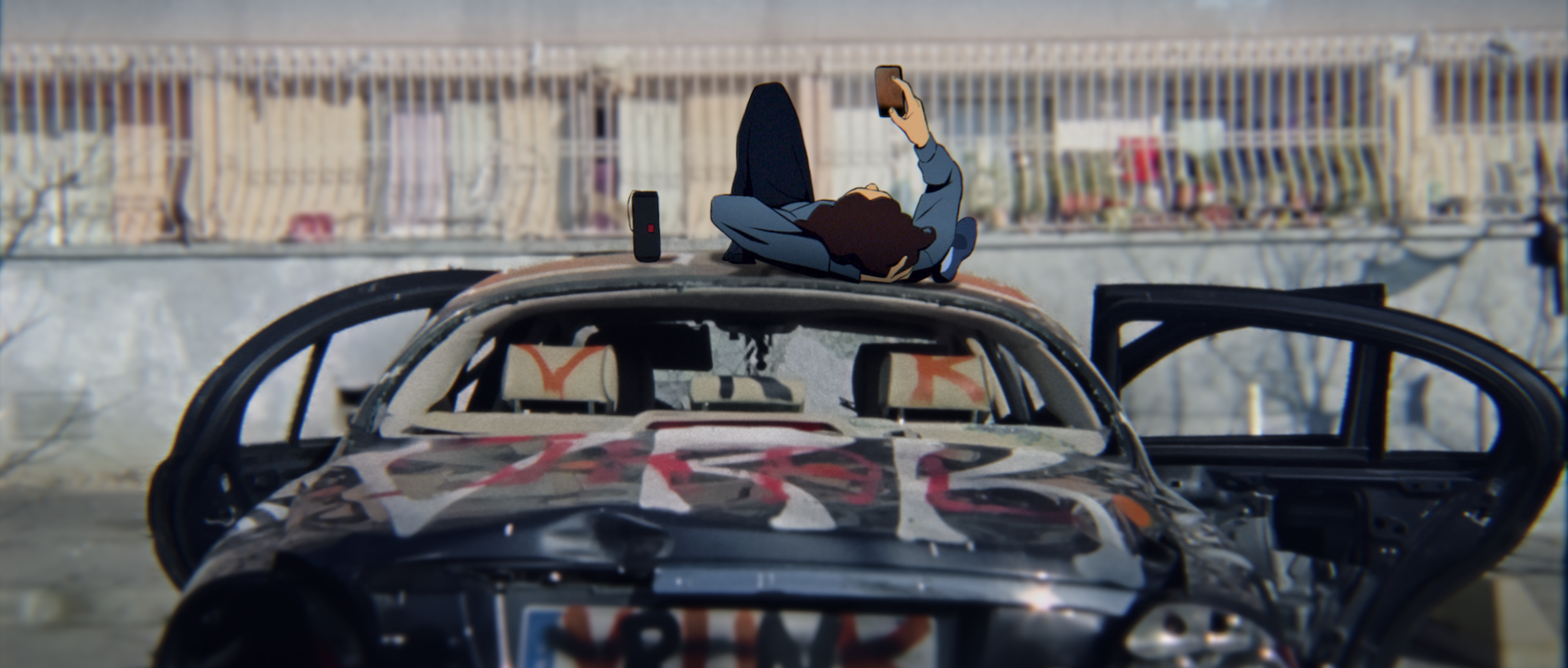
Once the live-action plates were processed, they moved through an intricate post-production workflow. Antoine Pagès contributed 3D artist capabilities to bridge spatial dimensions between the real-world sets and hand-drawn elements. The compositing department, led by Francis Polvé with assistance from Romain Collette, meticulously layered the 2D character designs—conceptualized by character designer Jules Rigolle—onto the film stock. This hybridization required frame-by-frame alignment to ensure the animated figures interacted convincingly with the lighting, shadows, and physical textures of the 16mm environments.
Color grading, executed by Nicolas Gaulthier and Eudes Quittelier at NOD, leaned heavily into warm, sun-bleached ochres and deep, oppressive shadows, reinforcing the western genre motif. Audio recording was managed by Pablo Padovani, ensuring that the dialogue possessed a raw, unfiltered proximity, matching the visual gritty realism. Typography by Thibaud Romieu frames the project’s title cards and credits with stark, minimalist lettering that echoes the brutalist architecture of the urban settings.
Background Context: Saïf and the 84 City Movement
To understand the cultural resonance of TRASH, one must examine the trajectory of its primary musical contributor, French rapper Saïf. Operating out of the independent sphere through 84 City in partnership with Warner Music France, Saïf represents a generation of francophone artists who reject sanitized pop-rap formulas in favor of introspective, socially grounded storytelling.
The release of the EP Si vous saviez serves as a critical milestone in Saïf’s career, establishing his voice within a competitive landscape dominated by hyper-commercialized trap and drill. Rather than relying on standard performance-based music videos—which typically feature artists surrounded by luxury cars or flashing club lights—Saïf and his management team, including 84 City project managers Chris Karjack and Soraya Benna, opted for a high-art narrative approach.
The choice to frame the EP’s release through the lens of a fictionalized, yet hyper-realistic, look into the French urban underclass demonstrates a deliberate artistic strategy. By aligning his music with the cinematic heritage of the western genre, Saïf elevates the narratives of marginalized youth in southern housing estates to the status of modern mythmaking. The struggles of characters like Adel mirror the systemic pressures, economic dead-ends, and fatalistic trajectories documented in contemporary sociological studies of France’s banlieues.
Industry Implications and Critical Analysis
The release of TRASH reflects a broader evolution in how musical artists market their work in the streaming era. With traditional music television largely supplanted by digital platforms, visual accompaniments must transcend simple promotional tools to become standalone cultural artifacts capable of generating organic engagement across social media channels, film festivals, and art communities.
By engaging production house Eddy—known for its roster of high-end commercial and artistic animation talent—and director Lucas Durkheim, the creative team successfully bridged the often-sundered worlds of indie hip-hop and auteur animation. This cross-pollination benefits both industries. For animation studios, music-backed projects offer financial backing and creative freedom to experiment with mixed-media techniques, such as the 16mm-plus-2D pipeline utilized here. For the music industry, such collaborations grant credibility among discerning audiences who value visual artistry and narrative depth.
Furthermore, the film’s thematic framing invites critical discourse regarding the representation of underprivileged urban spaces in French media. While cinematic depictions of the banlieues frequently lean toward sensationalism or dry social realism, TRASH utilizes genre tropes—specifically the moral fatalism and stark aesthetic of the western—to universalize its protagonist’s plight. Adel is not merely a statistical data point in reports on narcotics trafficking; he is cast as an outlaw hero trapped in an immutable destiny dictated by his environment.
Conclusion and Future Outlook
TRASH stands as a testament to the collaborative potential of contemporary European creative industries. By fusing the urgent cadence of French rap, the timeless storytelling mechanics of the western genre, and the meticulous craft of hybrid animation, Lucas Durkheim, Eddy, and Saïf have delivered a visceral audiovisual experience. As the project circulates through digital platforms, film circles, and music channels, it establishes a high benchmark for how narrative filmmaking and music promotion can coalesce into a unified, resonant work of art.