The golden age of Hollywood, spanning from 1920 to 1960, remains a definitive era in the history of visual culture, characterized by high-contrast lighting, opulent aesthetics, and the calculated construction of celebrity personas. While modern photography often favors a light, airy, and naturalistic aesthetic, there is a renewed movement among professional photographers to reclaim the dramatic, intentional, and highly stylized portraiture techniques that defined the mid-20th century. By analyzing the technical requirements of the past, practitioners can move beyond flat, purposeless imagery to create portraits that evoke the classic glamour associated with stars such as Audrey Hepburn, Marilyn Monroe, and Clark Gable.
The Evolution of the Hollywood Portrait Aesthetic
In the early decades of the 20th century, the portrait was more than a mere likeness; it was a marketing tool designed to build the mythos of the silver screen star. Between 1920 and 1940, the "Golden Age" studio portrait was born from the necessity of producing promotional stills that would be distributed globally to newspapers, magazines, and fan clubs.
Cinematographers and portrait photographers of the time, such as George Hurrell and Clarence Sinclair Bull, utilized large-format cameras and complex tungsten lighting setups to create images defined by deep shadows and controlled highlights. This period relied on "Rembrandt" or "Paramount" lighting schemes, which prioritized sculpting the subject’s facial features rather than simply illuminating them. As the industry moved into the 1950s, the style evolved, incorporating more depth and environmental elements, yet maintaining a sharp focus on the psychological engagement of the subject.

The Modern Crisis of Purpose in Portraiture
Current industry analysis suggests that the democratization of photography, brought on by the proliferation of high-end digital mirrorless cameras and accessible post-processing software, has led to a saturation of images that lack a distinct stylistic point of view. A significant segment of contemporary portraiture falls into a "neutral" category, characterized by soft, low-contrast lighting that often results in the subject blending into the background.
This trend is often attributed to the dominance of social media algorithms that prioritize bright, high-key imagery. While these images are visually palatable, they frequently fail to convey a narrative. The lack of shadow and contrast often flattens the dimensionality of the subject, stripping the portrait of its ability to communicate mood or authority. The professional consensus within the fine art photography community is that when lighting lacks a clear purpose—either to highlight texture, define shape, or establish mood—the portrait loses its ability to engage the viewer on a deeper level.
A Four-Step Technical Framework for Re-creating the Look
Achieving the vintage aesthetic requires a departure from standard "natural light" practices and a return to deliberate, multi-point lighting.
1. Dialing in Ambient Exposure
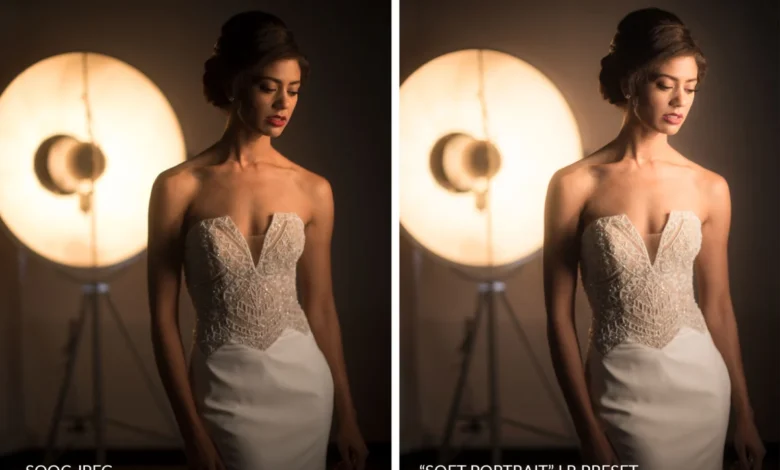
The foundational step in recreating a mid-century look is the aggressive management of ambient light. Modern cameras are designed to balance exposures to preserve details in both highlights and shadows, resulting in a flat, high-dynamic-range image. To achieve the vintage aesthetic, photographers must intentionally underexpose the scene. By stopping down the exposure, the photographer effectively "kills" the ambient light, creating a dark, controlled environment where the light sources can be placed with mathematical precision. This provides the negative space necessary for the highlights to pop.

2. Implementation of Multi-Point Lighting
The "Hollywood look" is predicated on the interaction between multiple light sources. A typical setup often utilizes a primary "key" light, frequently a continuous tungsten-style LED such as a Kino Flo, to mimic the warm, soft output of vintage cinema lights. To add complexity, photographers often introduce a secondary, gridded flash source at a low power setting (typically 1/64) to provide subtle fill or accentuation without destroying the dramatic shadow side of the face.
Rim lighting is perhaps the most critical component. By positioning a light source behind the subject, the photographer creates a "halo" effect that separates the subject from the background. In historical studio settings, this was done with dedicated fresnel spots; in modern locations, such as the Roosevelt Hotel or similar historic venues, photographers often incorporate existing environmental light sources as practical rim or background lights to add a layer of authenticity to the composition.
3. Directing the Subject for Editorial Tone
The lighting is only as effective as the subject’s engagement with the camera. In modern lifestyle photography, the goal is often "candid" or "playful" emotion. However, the vintage aesthetic demands a shift toward the editorial. This involves directing the subject to adopt serious, reserved, or contemplative expressions. The goal is to simulate the promotional headshots of the 1940s, where the subjects were expected to project an aura of unattainability and professional poise. This requires the photographer to act as a director, coaching the subject on posture, chin placement, and eye contact to ensure the emotional weight of the image matches the dramatic lighting.
4. Post-Production and Final Stylization
The final layer of the process occurs in the digital darkroom. Lightroom and other professional editing suites are used to finalize the "soft-yet-dramatic" transition that was inherent in analog film processing. A common technique involves the use of specific portrait presets that compress the tonal range, followed by a slight desaturation of colors to reduce the "digital" look of modern sensors. Finally, lifting the shadows slightly ensures that while the image remains high-contrast, no essential detail is lost in the deepest blacks, mirroring the characteristics of vintage silver-gelatin prints.

Broader Impact and Industry Implications
The resurgence of these techniques suggests a broader trend in visual media: a return to "intentionality." As artificial intelligence begins to dominate the creation of generic, hyper-realistic images, professional photographers are increasingly turning toward high-craft, studio-based techniques to distinguish their work.
The economic implications for professional photographers are notable. By offering a "bespoke" or "vintage-styled" service, photographers can move away from the high-volume, low-margin business model of standard portraiture. This niche allows for higher price points, as the work requires specialized gear, deeper technical knowledge of light-shaping, and more intensive post-production labor.
Furthermore, the influence of this style is visible in current editorial fashion and high-end advertising. Luxury brands are increasingly looking to the past to evoke feelings of timelessness and reliability. By utilizing the lighting schemes of the 1930s and 40s, brands are able to associate their products with the glamour and stability of a bygone era.
Ultimately, the revival of Hollywood-style lighting is more than a nostalgic exercise. It serves as a necessary reminder that light is a language. When used with purpose, it does not merely reveal a subject; it elevates them, creating a portrait that is both a historical homage and a modern technical achievement. Through the systematic application of ambient control, multi-point lighting, editorial direction, and precise post-processing, photographers can reclaim the cinematic power of the golden age, ensuring that their portraits possess the weight and authority that modern, flat imagery often lacks.