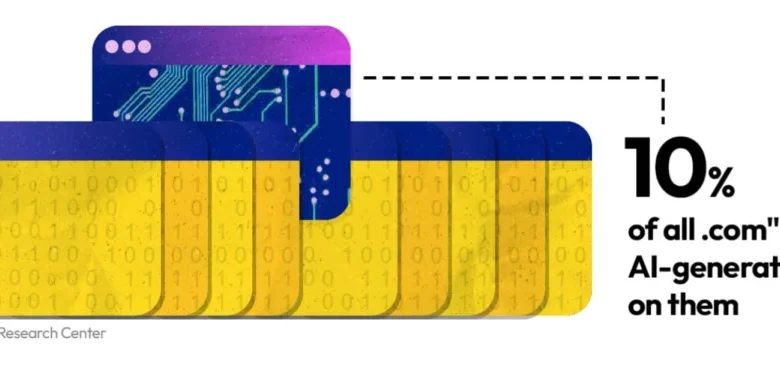
The digital landscape of 2026 has transformed into a high-stakes arena where the boundary between authentic information and sophisticated deception has all but vanished. As artificial intelligence tools become more accessible, the barrier to entry for malicious actors has dropped significantly, leading to an explosion of "pink slime"—low-quality, AI-generated websites masquerading as legitimate local news outlets—and high-fidelity social media impersonations. With roughly one-third of all recent web content now generated or heavily assisted by AI, users are finding it increasingly difficult to navigate the internet without encountering predatory schemes designed to siphon personal data, steal financial assets, or disseminate targeted misinformation.
The Proliferation of Digital Deception
The current crisis of trust stems from a shift in the economics of fraud. Historically, the creation of large-scale disinformation campaigns or convincing phishing portals required significant technical expertise, server infrastructure, and human labor. Today, the rise of open-source AI models has decentralized this power. Bad actors now utilize "scam kits"—all-in-one packages that automate everything from the creation of deceptive blog posts and social media profiles to the simulation of video calls and the generation of synthetic, high-authority branding.

According to data from NewsGuard, the number of "fake local news" sites has officially surpassed the number of real, human-staffed local newspaper websites in the United States. This trend is not merely a nuisance; it is a structural threat to public discourse. These sites often use neutral-sounding names like "The [City Name] Daily Gazette" to establish a veneer of credibility, then populate their pages with AI-spun articles that blur the lines between objective reporting and partisan propaganda.
Chronology of the Synthetic Shift
The escalation of this digital arms race can be traced back to the widespread public release of generative AI tools in 2022. By 2024, the focus shifted from simple text generation to the automation of full-scale digital identities.
- 2022–2023: The "Experimental Phase," where AI-generated content was often clunky, riddled with hallucinations, and easily identifiable by repetitive syntax or strange image artifacts.
- 2024–2025: The "Refinement Phase," characterized by the emergence of "jailbroken" models—AI systems stripped of safety guardrails—allowing bad actors to generate massive amounts of deceptive content without triggering automated detection filters.
- 2026 (Present): The "Saturation Phase." We are now in a period where AI is being used to conduct real-time, personalized social engineering, such as deepfake audio in voice phishing (vishing) and dynamic URL hijacking that adjusts based on the visitor’s geographic location.
The Failure of Traditional Verification Signals
For decades, internet users were taught a set of "digital street smarts": look for the padlock icon, avoid URLs with suspicious misspellings, and ignore emails that demand immediate action. Experts, including Donnie Hasseltine, Chief Information Security Officer at Arkstone Defense, note that these traditional cues are no longer sufficient. Modern phishing campaigns often leverage "typosquatting" that is visually identical to the naked eye, utilizing international character sets that look like standard English letters.

Furthermore, the "blue check" of the past has been diluted across multiple platforms. With verification now often available as a paid service rather than a mark of authentic identity, the visual markers of authority have been severed from their original purpose. Eyal Elazar of the e-commerce security firm Riskified emphasizes that "the traditional signals of authenticity are fading." Because AI can now produce perfectly polished websites, error-free copy, and high-resolution synthetic images, users must move away from surface-level observations toward a more rigorous, lateral verification approach.
Advanced Verification Strategies
To combat these sophisticated threats, cybersecurity professionals recommend adopting the SIFT method, a framework designed to prioritize critical thinking over visual trust:
- Stop: Before reacting to a shocking headline or an urgent request for money, pause. The urgency is often the first indicator of a scam.
- Investigate the source: Do not rely on the "About Us" page of a website, which can be easily fabricated. Instead, perform a "lateral search"—open a new tab and search for the organization’s name alongside words like "scam," "review," or "official website."
- Find better coverage: If a story is legitimate, it will likely be covered by multiple reputable, long-standing news organizations. If a viral claim appears only on a single, obscure website, it is likely fabricated.
- Trace claims back to the original: If a post cites a "study" or "data," find the primary source. AI-generated sites frequently invent citations that do not exist or misrepresent legitimate research.
Zoning and Lateral Reading
Chuck Salter, president and CEO of the News Literacy Project, advocates for "zoning" content. This requires users to ask: What is the intent of this page? Is it to inform, to persuade, to sell, or to incite? By categorizing the content before engaging with it, users can mentally adjust their level of skepticism.

Lateral reading—the practice of leaving a site to verify its reputation elsewhere—remains the gold standard for authentication. If you receive a link via a social media message, do not click it. Instead, search for the sender’s handle in a search engine. If the account is a bot or a impersonator, other users or watchdog groups have likely already documented the behavior.
The Role of Technology and Regulation
While the burden of verification currently rests on the user, there is an ongoing movement to force platforms to take greater responsibility. AI-detection tools, such as those provided by firms like Resemble.AI, are beginning to offer more robust ways to scan for synthetic media. However, as Ron Kerbs of Kidas notes, these tools are not "silver bullets." They can identify potential AI fingerprints, but they cannot replace the human capacity for contextual analysis.
Governmental bodies and regulatory agencies are also beginning to respond. The Federal Trade Commission (FTC) and similar international bodies have intensified their focus on "dark patterns" and deceptive AI usage. Despite this, the global nature of the internet means that bad actors can quickly relocate their infrastructure to jurisdictions with fewer regulations.

Implications for Digital Literacy
The implications of this era are profound. If society cannot distinguish between real and fake, the foundational trust required for online commerce, political discourse, and social interaction begins to erode. We are currently witnessing a form of "reality apathy," where users, overwhelmed by the sheer volume of potentially fake content, begin to disengage or, conversely, accept anything that confirms their existing biases as truth.
The solution requires a shift in how digital literacy is taught. Rather than focusing on static rules—which AI can easily mimic—education must focus on the mechanics of information dissemination: how algorithms prioritize engagement, how emotional manipulation functions in a feed-based environment, and why the "first mover" advantage in social media often favors the purveyor of misinformation.
As we move deeper into this decade, the most important tool in an internet user’s arsenal will not be a software extension or a browser setting; it will be the habitual application of healthy skepticism. In a world where machines can generate the appearance of truth in milliseconds, the ability to verify, cross-reference, and remain emotionally detached from clickbait has become a fundamental survival skill for the modern citizen.
Related posts: