Louis Erard x Vianney Halter Futur Antérieur: A Masterclass in Accessible Independent Haute Horlogeriew

The horological landscape has long been defined by a stark economic and stylistic divide: on one side sit ultra-exclusive, independent watchmakers producing avant-garde mechanical marvels priced well into the six-figure territory; on the other are mass-market brands delivering reliable, accessible timepieces. Bridging this chasm has historically been a rare feat, yet recent collaborative movements within the industry continue to challenge traditional boundaries. The latest chapter in this evolving narrative arrives via the Louis Erard x Vianney Halter Futur Antérieur, a limited-edition timepiece that successfully distills the eccentric, steampunk-inspired genius of independent watchmaking icon Vianney Halter into a package accessible to a broader collector base.
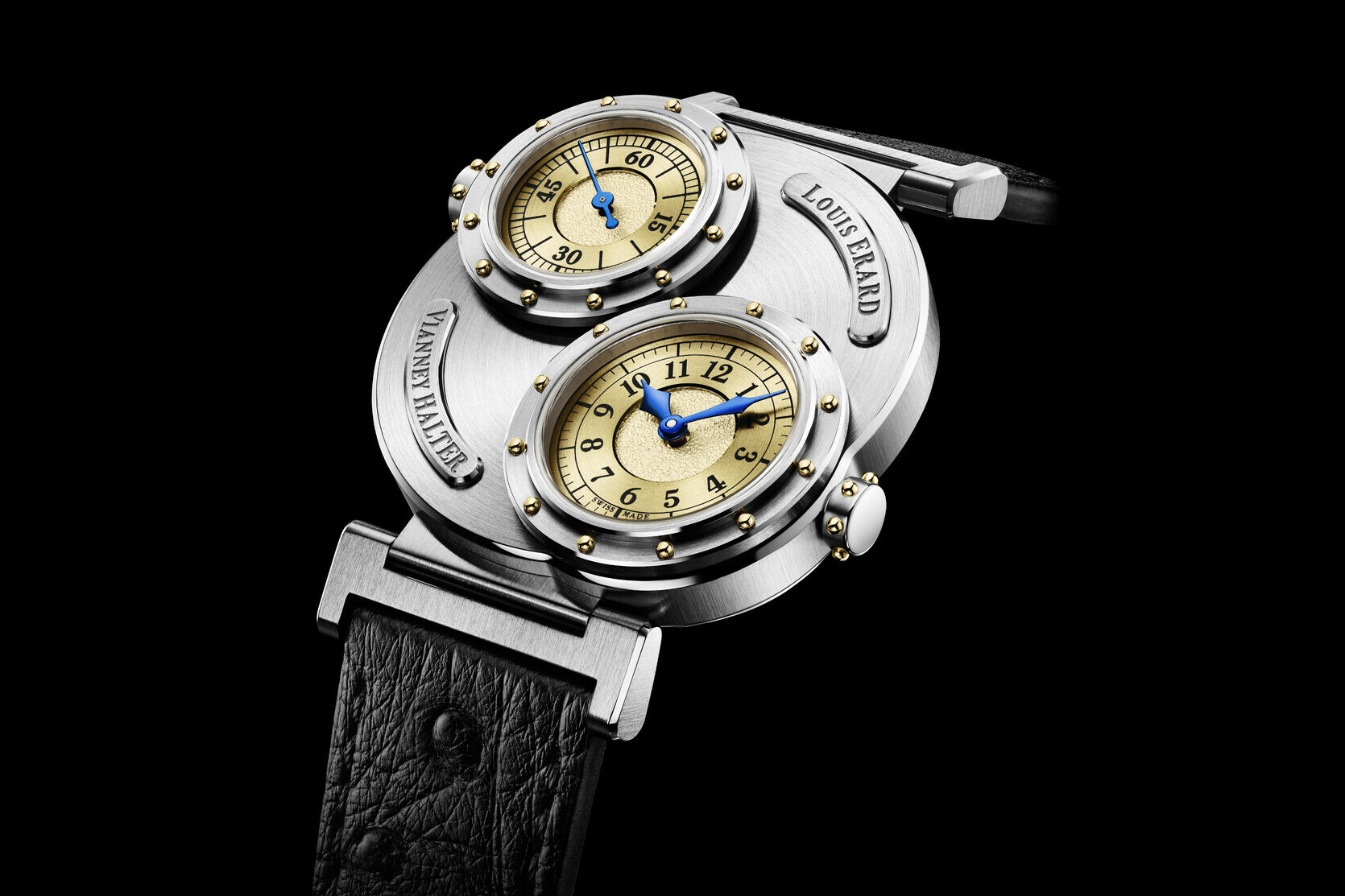
Unveiled as the third creative partnership between independent Swiss watchmaker Vianney Halter and accessible luxury brand Louis Erard, the Futur Antérieur represents a definitive departure from their previous joint ventures. While earlier collaborations served primarily as traditional Louis Erard models tastefully reinterpreted with Halter’s distinct aesthetic signatures, this latest release is an unapologetic, elaborate homage to one of the most significant independent timepieces of the late 20th century: Vianney Halter’s iconic Antiqua perpetual calendar, originally launched in 1998.
Tracing the Lineage: From the $200,000 Antiqua to Modern Accessibility
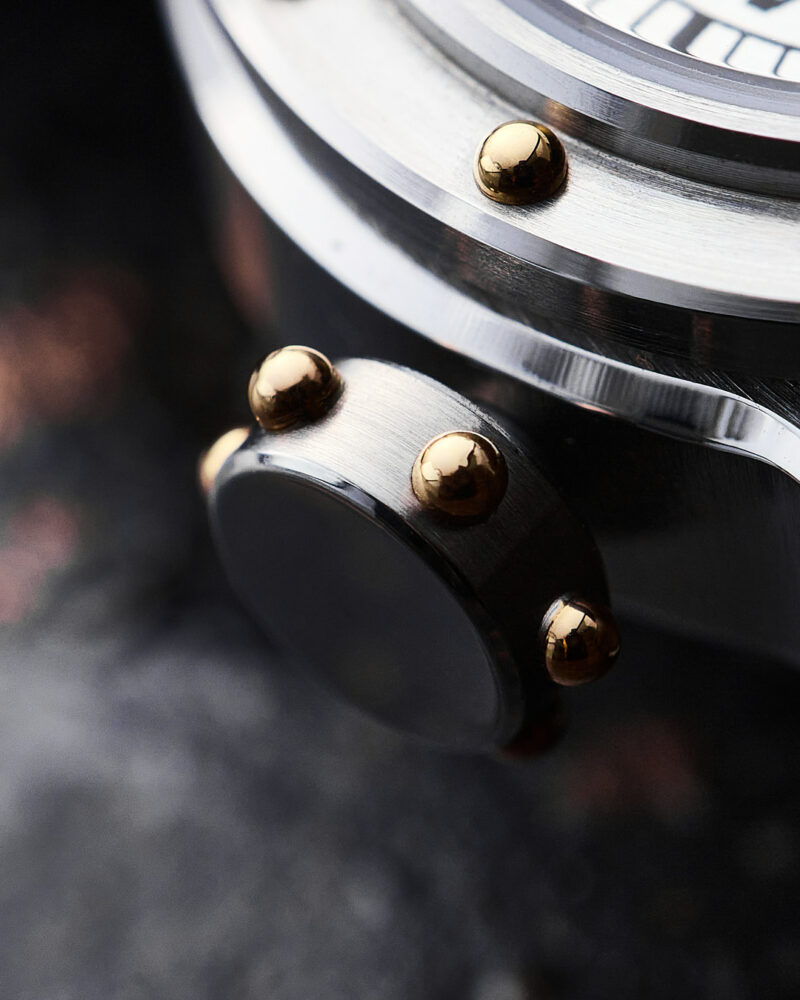
To fully appreciate the design language and technical ambition of the Futur Antérieur, one must examine its historical predecessor. When Vianney Halter introduced the Antiqua perpetual calendar in 1998, it sent shockwaves through the conservative Swiss watchmaking establishment. With its porthole-style dial windows, exposed gold-plated rivets, organic contours, and futuristic yet retro-futuristic aesthetic, the Antiqua effectively birthed the "steampunk" subgenre in high-end horology. Today, original examples of the Antiqua command prices exceeding $200,000 on the secondary market, placing the design firmly out of reach for all but the most elite collectors.
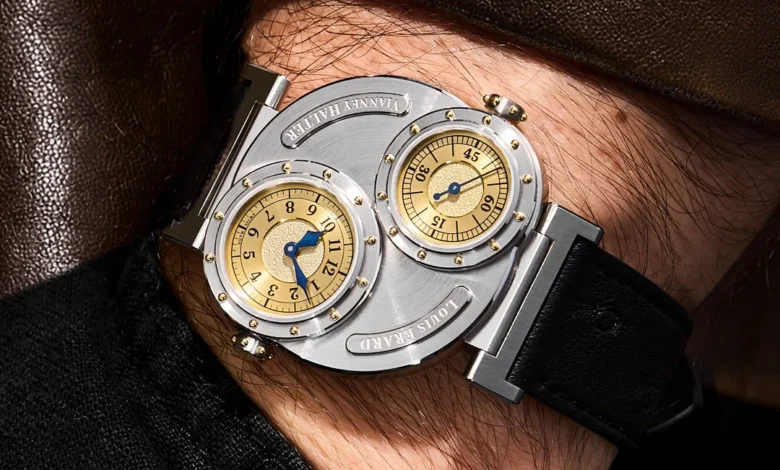
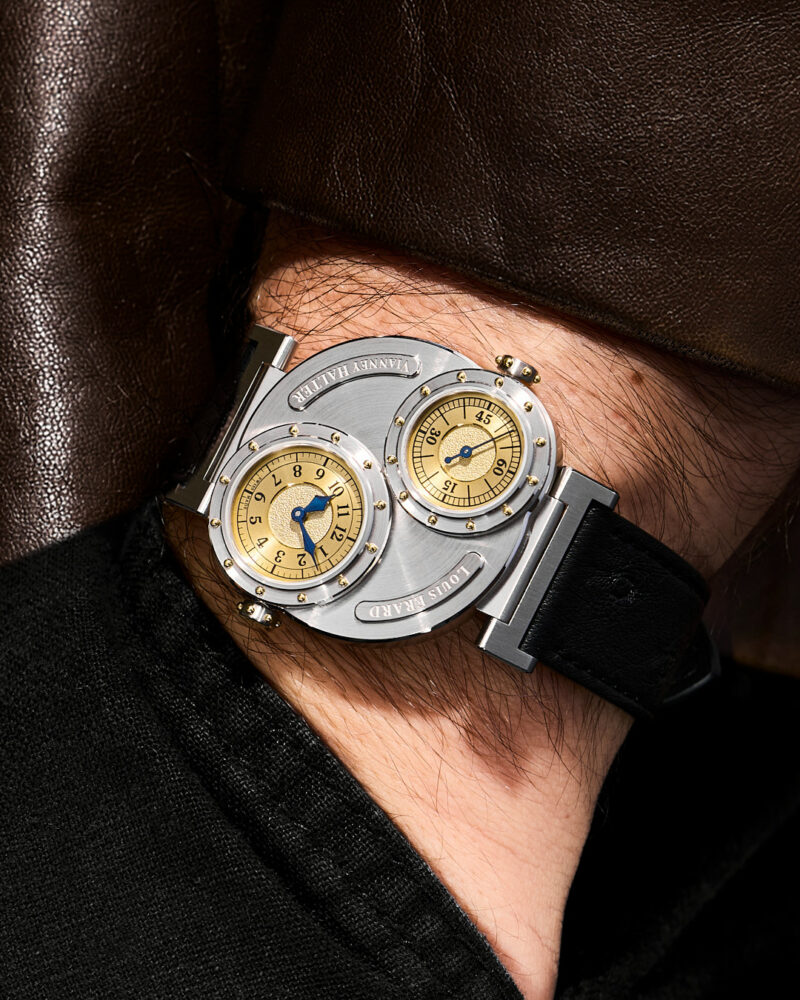
The Louis Erard x Vianney Halter Futur Antérieur captures the distinct DNA of the Antiqua while introducing a radically different economic and mechanical reality. Priced at approximately $6,000 USD (before local taxes), the watch does not attempt to house a complex perpetual calendar mechanism. Instead, it reinterprets the multi-porthole visual identity through a clever, dual-dial architecture.
The watch features a complete separation between its primary time-telling display—comprising the hours and minutes—and its running seconds indicator. Rather than utilizing a single complex movement with gear trains stretching across an expansive dial, Louis Erard solved this design challenge through an unorthodox yet brilliantly straightforward mechanical solution: each dial is independently powered by its own dedicated Sellita SW100 automatic movement.
Mechanical Innovation and Structural Proportions
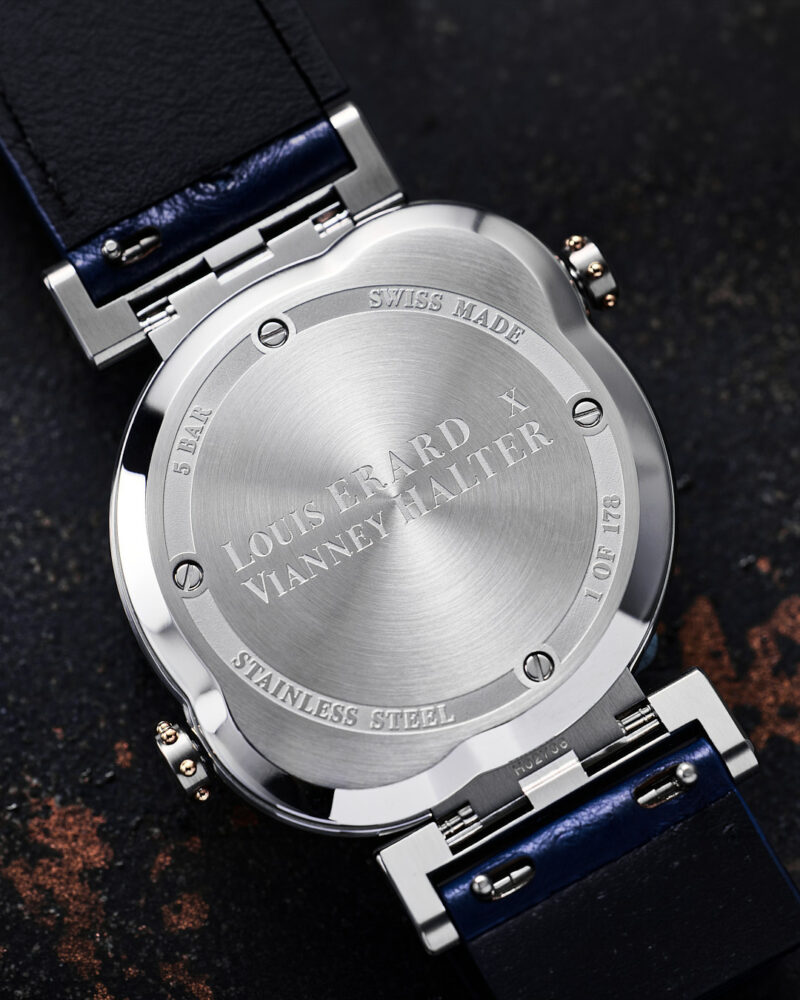
Housing two distinct automatic movements within a single wristwatch usually spells disaster for case dimensions, frequently resulting in bulky, heavy, and uncomfortable proportions. However, the engineering team behind the Futur Antérieur managed to circumvent this obstacle. By employing the compact Sellita SW100 caliber, the brand achieved a remarkably slim case profile, measuring a mere 8.85 millimeters in thickness.
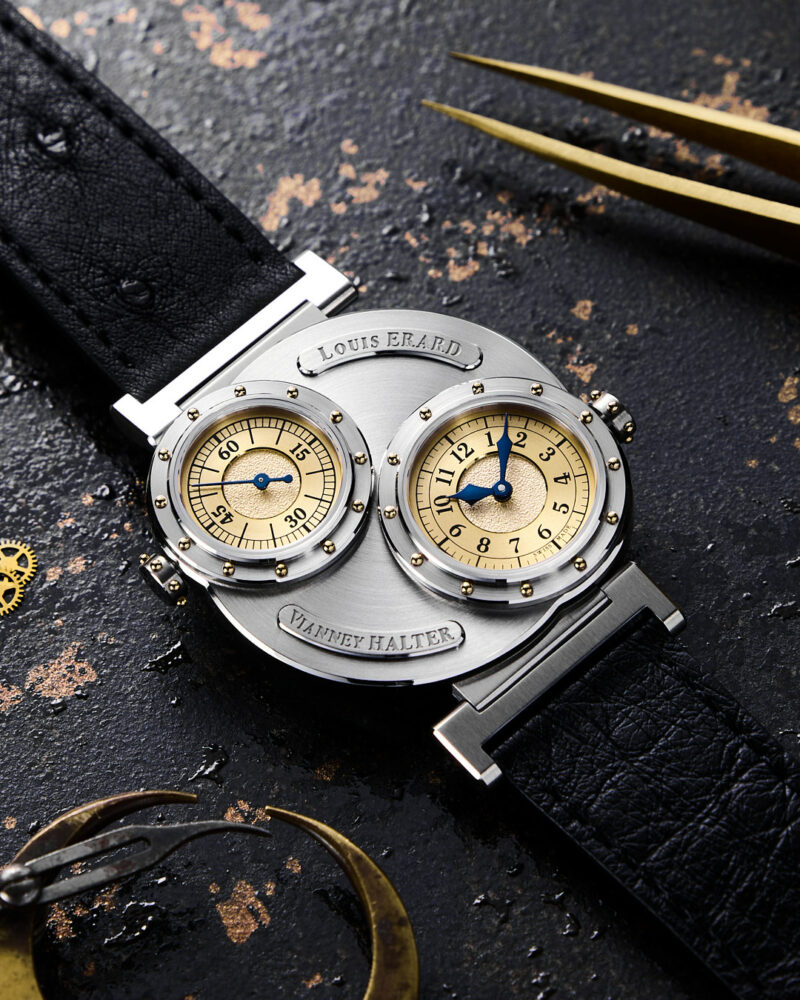
Furthermore, the watch avoids the common pitfalls of multi-dial or oversized avant-garde timepieces by maintaining remarkably wearable proportions. The case measures a modest 38 millimeters in diameter. Complemented by articulating lugs, the Futur Antérieur is engineered to conform comfortably to a wide spectrum of wrist sizes. Hands-on evaluations have revealed surprising versatility, noting that the watch pairs exceptionally well with alternative straps, including single-pass fabric and NATO configurations—an unexpected characteristic for a design heavily rooted in classical avant-garde haute horlogerie.
The Mechanics of Dual-Movement Architecture
The inclusion of dual automatic movements naturally sparks technical debates among horological enthusiasts. A recurring question throughout the release cycle has centered on functionality: given that the watch houses two independent movements, why did the manufacturers not configure it as a dual-time or GMT timepiece, allowing the wearer to track two separate time zones simultaneously?
From an aesthetic and historical standpoint, supporters of the running-seconds configuration argue that a dual-time setup would deviate too far from the design philosophy of the original Antiqua. On the Antiqua, each individual porthole served a distinct functional purpose within a single holistic calendar system. Replicating the display to show a secondary time zone would alter the balanced visual harmony of the dial layout.
From a pragmatic manufacturing perspective, Louis Erard cited technical constraints as the primary driving factor. Despite its diminutive size, the Sellita SW100 is not engineered to operate with the extreme precision and long-term rate consistency of ultra-high-end in-house calibers. Aligning and regulating two separate movements to maintain identical timekeeping rates over extended periods would introduce significant calibration challenges, driving production costs well beyond the targeted $6,000 price point. Utilizing the secondary dial exclusively for running seconds provides necessary operational tolerance, accommodating minor rate variations between the two independent engines without disrupting the user experience.
Market Reception, Positioning, and Value Proposition
In the broader context of modern watch collecting, the Futur Antérieur occupies a fascinating niche. Industry analysts and collectors evaluating the timepiece at its $6,000 price point often weigh its mechanical novelty against the high-end finishing and precision of competing alternatives in the same financial bracket—such as Grand Seiko’s Spring Drive models or METAS-certified Tudor timepieces, which offer exceptional daily rate tolerances of 0 to +5 seconds per day.
However, viewing the Futur Antérieur purely through the lens of absolute timekeeping accuracy misses its primary value proposition. The timepiece functions fundamentally as a wearable piece of independent horological art. It offers collectors rare access to Vianney Halter’s legendary design language—a privilege historically reserved for ultra-high-net-worth connoisseurs—at a fraction of the historical cost.
Production Scarcity and Collector Availability
True to Louis Erard’s collaborative business model, exclusivity remains a core pillar of the release. The brand has structured the distribution of the Futur Antérieur around strict production limits to protect long-term collector value and preserve the artisanal spirit of the collaboration.
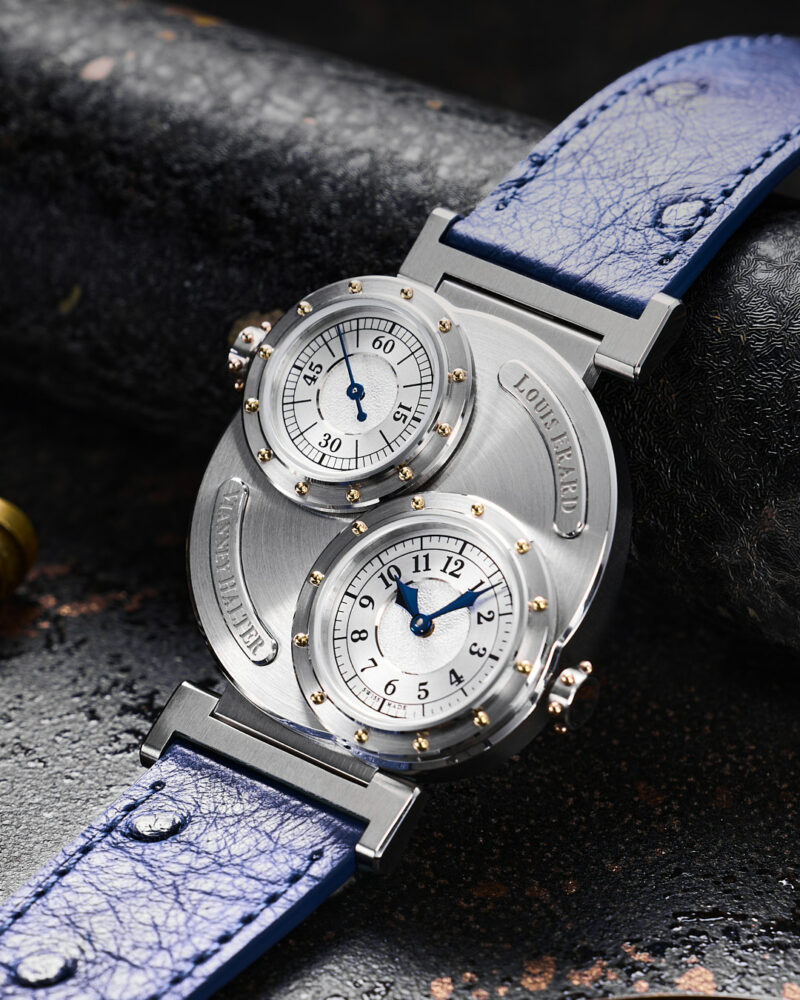
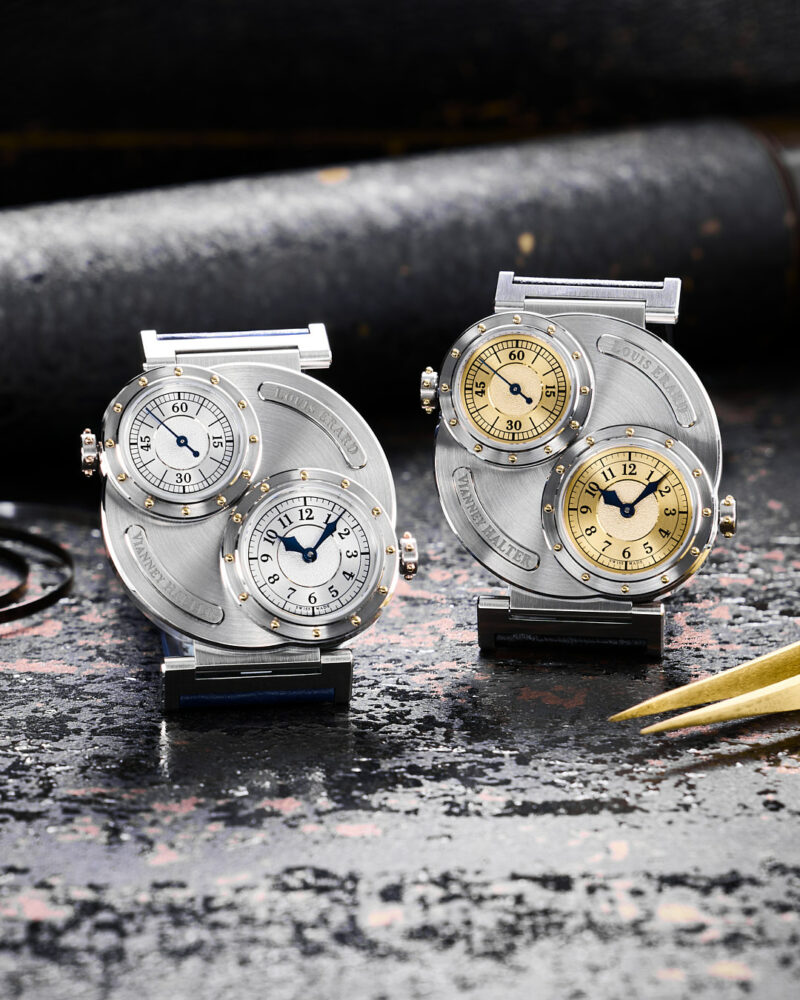
Louis Erard manufactured only 178 individual pieces for each of the two primary dial configurations (silver and gold-toned accents). Additionally, the brand curated an ultra-limited run of 78 exclusive collector’s box sets, containing both watch variations packaged together, offered at a retail price of CHF 9,900 (approximately $12,075 USD). Given the intense global demand for previous Louis Erard and Vianney Halter joint ventures, industry experts note that primary market allocations were exhausted almost immediately upon release, relegating prospective buyers to the competitive secondary market.
As independent watchmaking continues to captivate a younger, design-conscious audience, projects like the Futur Antérieur demonstrate that creative boundaries can be pushed without sacrificing accessibility. By translating the spirit of a $200,000 masterpiece into a thoughtfully engineered $6,000 package, Louis Erard and Vianney Halter have delivered a landmark release that will be studied by collectors and industry insiders for years to come.