Modern CSS might make your front-end more complex: why simplicity in code does not always equal simplicity in systems

The rapid evolution of CSS has provided developers with powerful tools to replace traditionally JavaScript-heavy logic with native browser features. Technologies such as Container Queries, the :has() selector, and native CSS nesting allow developers to reduce lines of code significantly. While these migrations often look like wins during a pull request review, they can inadvertently introduce complex, hard-to-trace bugs. Recent investigations suggest that replacing JavaScript with CSS frequently shifts the burden of complexity from the script to the browser’s rendering engine and the CSS cascade, often creating “invisible” technical debt.
The Illusion of Local Simplicity
In the modern development cycle, efficiency is often measured by the size of a diff. A pull request that deletes fifty lines of JavaScript and replaces them with five lines of CSS is typically met with immediate approval. However, this focus on local simplicity—the reduction of code within a single file—often masks a rise in system complexity.
When a developer removes a ResizeObserver to favor a container query, they are not merely deleting code; they are altering how the component interacts with the surrounding layout. If the original JavaScript is not entirely purged, or if the new CSS interacts with inherited styles in ways that were not present in the original design, the application enters an unstable state.
Chronology of a CSS Migration Conflict
The transition from script-based logic to native CSS features typically follows a specific lifecycle of failure. In the first phase, a developer identifies a piece of JavaScript logic that can be handled natively. The implementation is deployed, and the application appears to function as expected.
Within a week, phase two begins: unintended side effects manifest. These are often inconsistent, appearing only on specific screen sizes or under certain rendering conditions. For instance, a header might expand unexpectedly on tablet devices, or a specific component might vanish from the DOM entirely. These bugs are rarely found within the new CSS itself; rather, they exist in the friction between the new feature and the legacy environment.
Phase three involves the debugging process. Developers, assuming the CSS is correct, look for errors in the remaining JavaScript. Because the bug is emergent—arising from the interaction between the new CSS and the existing cascade—it is notoriously difficult to reproduce in isolation. This leads to extended cycles of troubleshooting that often exceed the time originally saved by the migration.

Data-Driven Performance Analysis
The assumption that "native is always faster" is a common industry misconception that warrants closer examination. While CSS-based solutions often outperform JavaScript-driven DOM manipulation by avoiding layout thrashing, they are not exempt from performance costs.
Recent testing using browser developer tools shows that complex CSS selectors, particularly those using :has(), can trigger massive restyle operations. In a simulation involving 5,000 rows of data, toggling a single class via JavaScript required minimal browser effort. However, when multiple CSS rules—each individually harmless—were introduced, they interacted to force the browser to restyle all 5,001 elements upon a single state change.
This behavior highlights a significant implication for front-end architecture: the browser’s rendering engine treats CSS as a global rule set. When multiple conditions are met, the engine must re-evaluate the entire affected subtree. Unlike JavaScript, where the logic is explicit and scoped, CSS logic is implicit and global. When the number of rows increases to 20,000, the performance cost can jump from a negligible fraction of a millisecond to nearly 30 milliseconds—the threshold for dropping frames on a 60Hz display.
The Cascade and the Challenge of Specificity
Beyond performance, the CSS Cascade introduces its own set of challenges. Modern features like native nesting and :has() affect the specificity of selectors in ways that are not always intuitive to the average developer.
For example, a selector that appears simple may inadvertently apply styles to deep-nested components that were previously governed by their own specific rules. This is particularly problematic in "half-layered" codebases where some styles are managed within Cascade Layers and others remain unlayered. In such environments, legacy unlayered styles will almost always override new, well-intentioned layered styles, leading to a "war of specificity" that forces developers to use !important or overly complex selector chains to restore order.
Industry Perspectives on Frontend Complexity
The debate over whether this complexity is essential or accidental has become a central theme in software engineering discussions. Proponents of native CSS argue that browser-native features reduce reliance on third-party dependencies and improve long-term maintainability. Conversely, critics argue that the industry is replacing manageable JavaScript logic with "spaghetti CSS" that is significantly harder to debug.
One perspective gaining traction is that the issue is not the technology itself, but the "greenfield bias." Most documentation and tutorials for new CSS features are written for greenfield projects—new applications built from scratch. However, the vast majority of real-world work involves migrating existing, complex legacy systems. Applying greenfield techniques to a legacy codebase without a comprehensive understanding of the existing interaction patterns is the primary driver of modern front-end instability.

Strategies for Sustainable Migration
To mitigate the risks associated with replacing JavaScript with CSS, engineering teams are being encouraged to adopt a more rigorous migration framework. This includes:
- Mapping Dependencies: Before removing any script, developers must document every component that relies on the current behavior.
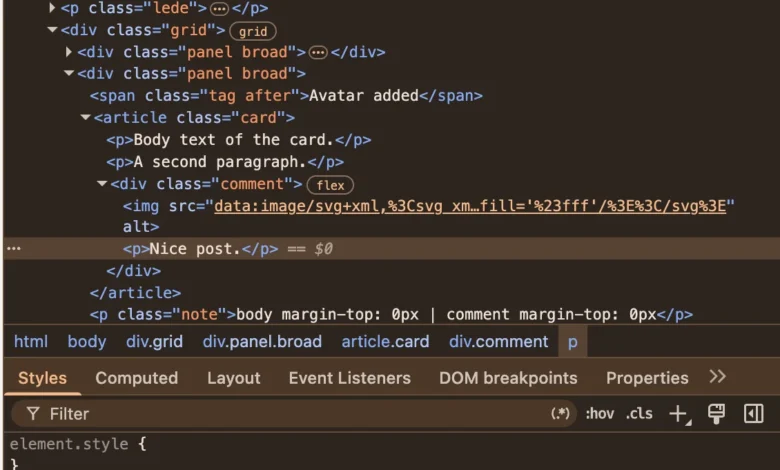
- Cascading Impact Analysis: Evaluate how the new CSS affects elements outside of the target component, particularly regarding margin collapsing and block formatting contexts.
- Explicit Scope: Use child combinators and :where() selectors to ensure that new CSS rules do not unintentionally apply to nested components.
- Performance Benchmarking: Use browser performance traces to verify that the new CSS does not force the browser to perform excessive restyling, especially in large datasets.
- Full Cleanup: Ensure that the migration is total. Leaving behind "orphaned" JavaScript event listeners or CSS classes creates a "zombie" state where two different systems attempt to manage the same behavior.
Broader Implications for the Web
The transition toward native CSS capability represents a significant shift in how developers interact with the browser. As the web platform matures, the divide between logic (JavaScript) and presentation (CSS) is blurring. While this offers unprecedented control, it also demands a higher level of systems thinking.
The industry is reaching a consensus that the next phase of front-end development will not be defined by who can write the least amount of code, but by who can build the most predictable systems. If a migration results in a smaller code diff but a higher cognitive load for the team responsible for maintaining that code, the migration has technically failed.
The future of front-end development rests on the ability to recognize that every new CSS feature acts as a "tenant" in a shared environment. Successful migration requires not only the introduction of the new feature but also a deep, thorough understanding of how that tenant will live alongside the existing components, the cascade, and the browser’s own rendering logic. By moving away from the "less is more" mindset and toward a "less is only better if it’s more predictable" philosophy, teams can leverage the power of modern CSS without sacrificing the stability of their applications.
Ultimately, the goal remains the same: to deliver fast, responsive, and maintainable user experiences. As the tools available to developers continue to grow in power and complexity, the discipline required to use them safely must grow in equal measure. The next time a developer deletes a block of code, the real work begins in ensuring that the system remains coherent for everyone else who has to live in it.