X Integrates Direct Stock and Crypto Trading Into Timelines Through New Cashtag Partnership Feature

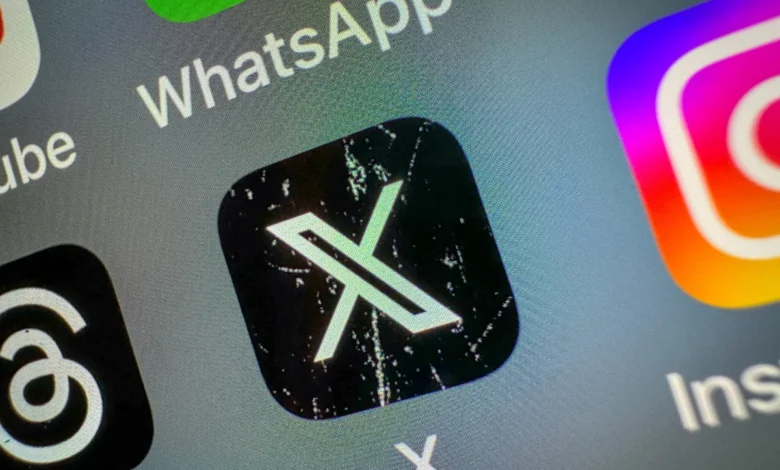
X, the social media platform owned by billionaire entrepreneur Elon Musk, has officially launched a transformative financial feature that allows U.S.-based users to execute stock, exchange-traded fund (ETF), and cryptocurrency trades directly from their timelines. Rolled out on Wednesday, the feature leverages the platform’s popular "Cashtag" system—which prefixes financial ticker symbols with a dollar sign—and integrates it seamlessly with several prominent online brokerages and crypto exchanges.
This development marks a significant milestone in X’s ongoing evolution toward becoming an all-encompassing "everything app," signaling a direct expansion into financial technology infrastructure under the umbrella of X Money. By bridging the gap between social media discourse and real-time financial markets, the platform is attempting to redefine how retail investors discover, analyze, and execute trades in an increasingly digitized economy.
Mechanics of the New Cashtag Trading Integration
The newly introduced functionality transforms traditional Cashtags from passive text-tracking mechanisms into interactive financial destinations. Previously, users could type a dollar sign followed by a ticker symbol—such as $AAPL for Apple or $BTC for Bitcoin—to aggregate posts, news, and market sentiment related to that specific asset. While this helped users track public conversations, executing a trade required leaving the application, opening a separate brokerage app or website, and manually searching for the asset.
Under the updated system, tapping any supported Cashtag on the X timeline opens an interactive native dashboard. This interface displays real-time price charts, relevant social commentary, trending posts, and a prominent "Trade" button.
When users click the trade button, they are smoothly connected to one of X’s initial participating brokerage and exchange partners. These initial partners comprise a mix of traditional financial brokerages and digital asset platforms, including Interactive Brokers, Moomoo, Gemini, Kraken, and Coinbase. Users can then log into their existing brokerage accounts or register for new ones to complete the transaction. According to platform representatives, the integration is designed to maintain user engagement by eliminating friction between market discovery and financial execution, keeping users within the ecosystem as long as possible before handing off the transaction securely to the licensed financial institution.
The Evolution of the Cashtag: A Historical Chronology
The origin of the Cashtag on social media dates back well before Elon Musk’s acquisition of the platform, then known as Twitter.
- 2008: The financial social media platform Stocktwits conceptualized the use of a dollar sign preceding stock ticker symbols to help investors easily categorize and search for market-related conversations.
- 2012: Recognizing the utility of this user-generated standard, Twitter officially adopted Cashtags, hyperlinking ticker symbols so users could instantly view all public posts associated with a specific equity or commodity. For over a decade, this feature remained purely informational, serving as a barometer for retail investor sentiment during major market events, earnings reports, and meme stock frenzies.
- 2022–2023: Following Elon Musk’s acquisition of the platform and its subsequent rebranding to X, strategic shifts began focusing heavily on monetization, creator payouts, and financial services. Musk frequently expressed his ambition to turn the platform into an "everything app" modeled after Asia’s WeChat, incorporating payments, banking, and commerce.
- Early 2024–Present: X secured various state-level money transmitter licenses in the United States, laying the groundwork for peer-to-peer payments and brokerage integrations under the banner of X Money. The rollout of trading-enabled Cashtags represents the most concrete realization of these financial ambitions to date.
Corporate Perspectives and Official Statements
Executives from X emphasized the strategic importance of merging public discourse with actionable financial capabilities. By allowing users to react instantly to breaking news, earnings surprises, or viral trends, the company aims to capitalize on the velocity of modern retail trading.
"Cashtags close the gap between a ticker on the timeline and the market itself," said Mridul Singhai, X Product Engineering lead, in a statement shared with industry publication TechCrunch. "When you post or tap a ticker, you’re taken right to the asset, where you have seamless access to the live chart, the conversation around it, and now the ability to trade with one of our brokerage partners."
Monique Pintarelli, the head of Global Advertising at the company, echoed these sentiments, highlighting the value proposition for both users and financial institutions seeking to capture modern consumer attention.
"With our Cashtag partners, we’re connecting the financial conversation to action," Pintarelli noted. "People come to X to discover what’s happening, shape the conversation, and act in real-time on what matters to them. Our Cashtag partners make it possible to move seamlessly from discovery and conversation to a brokerage, without breaking the moment."
Financial partners involved in the launch also view the collaboration as an opportunity to meet digitally native retail investors where they congregate. By embedding broker access directly into social feeds, platforms like Interactive Brokers, Moomoo, Gemini, Kraken, and Coinbase can streamline user acquisition and reduce the friction traditionally associated with opening investment accounts or funding portfolios.
Market Implications, Regulatory Oversight, and Potential Risks
While the integration of trading directly into a major social media feed offers unprecedented convenience for retail traders, industry analysts and financial watchdogs have raised important questions regarding market integrity, consumer protection, and platform safety.
The primary concern centers on the potential for market manipulation. Social media platforms have long been breeding grounds for coordinated trading campaigns, pump-and-dump schemes, and misinformation campaigns—phenomena vividly illustrated during the meme stock surges of 2021 involving GameStop and AMC. Critics argue that coupling real-time financial speculation with an algorithmically driven social network could amplify these risks.
Specifically, the proliferation of automated accounts, artificial intelligence-controlled bots, and coordinated actor networks could artificially inflate or depress sentiment around specific equities or cryptocurrencies. Because users can now move from reading a viral, potentially misleading post to executing a live trade within seconds, vulnerable retail investors might experience heightened exposure to volatile, manipulated assets.
However, industry observers also note that these risks are not entirely novel. Speculative trading influenced by social media sentiment already occurs extensively across the internet. By partnering exclusively with established, regulated brokerages and crypto exchanges—entities that must comply with strict federal and state regulatory frameworks, including Know Your Customer (KYC) and Anti-Money Laundering (AML) laws—X has integrated a layer of institutional compliance. Users ultimately complete their transactions within the regulatory perimeters of licensed financial partners, meaning traditional broker-dealer rules regarding risk disclosure and suitability still apply once the user transitions to the partner platform.
Broader Industry Impact and the Future of Social Commerce
The debut of X’s Cashtag trading feature positions the platform in direct competition with traditional financial apps, digital brokerages, and rival social networks that have flirted with financial integrations. Platforms like Reddit and Stocktwits have historically hosted vibrant communities of retail investors, but none have successfully embedded end-to-end trade execution directly into the core user experience at this scale.
If the feature proves successful among U.S. users, analysts expect X to expand the service internationally, pending regulatory approvals in foreign jurisdictions. Furthermore, the success of this rollout could accelerate plans for broader deployment of X Money, turning the platform into a centralized hub for digital wallets, merchant transactions, and peer-to-peer transfers.
Ultimately, X’s latest move represents a defining moment in the convergence of media and finance. By dissolving the boundary between talking about the market and participating in it, the platform is betting that modern consumers prefer an uninterrupted, hyper-connected digital experience where conversation and commerce exist as one continuous loop.