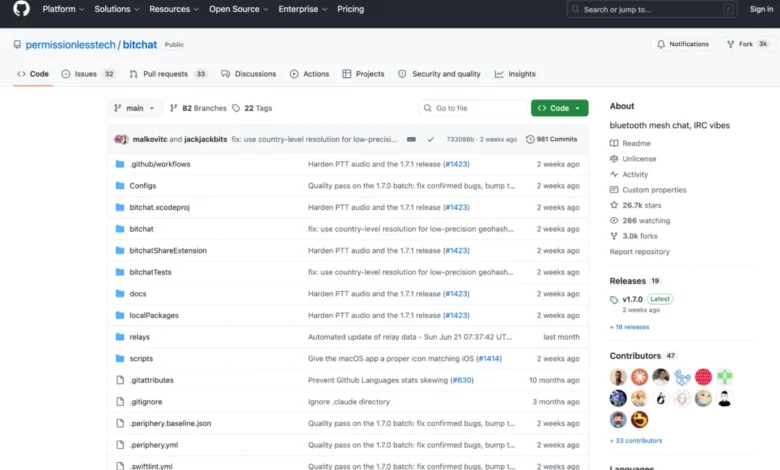
An unprecedented move by the Indian government to compel GitHub to remove repositories associated with Jack Dorsey’s innovative offline messaging application, Bitchat, has ignited a fierce debate surrounding the legal frameworks governing open-source software and digital rights. The directive, which came to light after Dorsey himself posted it on X (formerly Twitter) on Friday, July 26, 2026, signals a significant escalation in governmental efforts to control digital communication, particularly in the context of ongoing public dissent. The Ministry of Home Affairs’ notice demanded the restriction of access to three Bitchat repositories within a mere three hours, explicitly citing the app’s anonymous, decentralized, and Bluetooth-powered architecture as a potential facilitator of unlawful activity and a means for users to communicate during internet shutdowns, thereby impeding lawful interception and traceability.
This aggressive posture from Indian authorities is not isolated but emerges against a backdrop of intensifying internet restrictions in response to weeks of student-led protests in New Delhi. These demonstrations, widely dubbed the "cockroach movement," have mobilized thousands of young people demanding accountability from the government, specifically calling for the resignation of Indian Education Minister Dharmendra Pradhan over alleged examination paper leaks. In an attempt to quell the protests and manage public order, authorities have not only imposed restrictions on marches toward the parliament but have also frequently resorted to disabling mobile data services in affected areas. It was during these internet blackouts that local media reported a noticeable shift among protesters towards offline messaging applications like Bitchat and Briar, enabling them to circumvent digital communication blockades and maintain coordination.
The chronology of events highlights the rapid escalation of this digital tug-of-war. The "cockroach movement" gained significant momentum in early July 2026, with widespread student participation. As protests intensified, particularly around July 17-18, Indian authorities began implementing localized internet shutdowns. Coinciding with these restrictions, Bitchat experienced a dramatic surge in popularity within India. Market intelligence provider Sensor Tower reported that between July 17 and July 23, India accounted for approximately 85% of Bitchat’s global downloads, a stark contrast to the mere 1% share it held in the preceding 30 days. Specifically, the app witnessed over 91,000 downloads in India within those five days, with a staggering thirty-two-fold jump in downloads on July 19 alone. By Thursday, July 25, Bitchat’s daily active users in India soared to over 330,000, marking its highest ever recorded engagement in the country. It was in the immediate aftermath of this surge, on July 23, that the Indian Cybercrime Coordination Centre (I4C), operating under the Ministry of Home Affairs, issued the controversial takedown notice to GitHub. Dorsey’s public disclosure of this notice on Friday, July 26, brought the issue into the global spotlight.
A Novel Approach to Digital Control
The government’s directive, issued by the I4C, represents a departure from its historical methods of content removal. Mishi Choudhary, founder of SFLC.in, a prominent Indian digital rights legal advocacy group, observed that prior to 2021, the Indian government typically relied on Section 69A of the Information Technology Act and the 2009 Blocking Rules for nationwide content removals. However, the current notice, while resembling recent government takedown formats, cites legal provisions that, according to Choudhary, do not explicitly empower authorities to demand the removal of an entire software project based on its operational design, rather than specific illegal content hosted or transmitted through it.
Unlike many previous takedown requests that identify particular posts, messages, or repositories containing illicit material, the document shared by Dorsey makes a broader claim. It argues that Bitchat’s inherent capability to function during internet blackouts and its reliance on a decentralized architecture, eschewing central servers, inherently facilitates "unlawful activity." The notice explicitly states that Bitchat enables users to communicate "even during network restrictions" and "internet shutdowns," thereby making it possible to "circumvent lawful restrictions" and hampering "lawful interception, attribution, and traceability." This framing shifts the focus from the content being communicated to the means of communication itself, marking a significant and potentially troubling precedent for open-source development and digital innovation.

Global Digital Rights Advocates Voice Strong Concerns
The implications of this move have resonated deeply within the global digital rights community, prompting widespread criticism and calls for clarity. The Internet Freedom Foundation (IFF), a New Delhi-based digital rights advocacy group, quickly questioned the practical effectiveness and legality of the apparent takedown request. In a statement on X, the IFF highlighted the technical realities of decentralized applications: "The order also fails on its own terms as deleting a repository does not delete the application from any phone that carries it, and the mesh keeps functioning without servers. What the takedown actually prevents is scrutiny of the underlying code." This observation underscores the technical futility of attempting to suppress a decentralized, open-source application by merely removing its source code from a single platform, while simultaneously raising concerns about transparency and the ability of security researchers and users to inspect the software.
Raman Chima, global program director at the Association for Progressive Communications (APC), a global digital rights network, further elaborated on the gravity of the directive. He told TechCrunch that the notice goes beyond merely targeting a messaging service by seeking to remove its open-source code from GitHub. "They’re [the Indian government] not just targeting the designated service provider, but they’re trying to say that open source development of this type of product… should not occur," Chima stated. This perspective suggests that the Indian government is not just interested in censoring specific messages but in curtailing the very development and distribution of technologies that offer robust privacy and censorship resistance.
Namrata Maheshwari, Asia Pacific policy manager and encryption policy lead at digital rights group Access Now, stressed the fundamental human rights implications. She told TechCrunch that blocking an offline messaging platform during internet restrictions risked transforming these shutdowns into a "communication blackout," which directly violates fundamental rights. Maheshwari emphasized that "Protesters in any democracy have the right to communicate privately and coordinate peacefully." This sentiment highlights the critical role such applications play in enabling civic participation and protecting civil liberties, especially in environments where traditional communication channels are suppressed.
GitHub’s Response and the Open-Source Ethos
As of Friday, July 26, 2026, Bitchat’s primary GitHub repositories remained accessible from India, and GitHub had not publicly confirmed receipt of the Indian government’s directive. When queried about the apparent notice, the company directed inquiries to its public repository of government takedown requests, github.com/github/gov-takedowns, which, at the time, did not contain any recent requests related to Bitchat. This public repository is a cornerstone of GitHub’s transparency policy, where the company commits to sharing every government takedown request it acts upon.
Rose Coogan, GitHub’s principal online safety counsel, reiterated the company’s established procedure in an emailed statement: "When we receive a complete government takedown request, we notify the affected account owners and give them an opportunity to appeal. We share every government takedown request we take action on publicly." This policy aims to ensure due process and transparency, allowing developers and the public to understand the legal bases for content removal and to challenge potentially unwarranted actions. The absence of the Bitchat request in this public ledger, coupled with the continued accessibility of the repositories, suggests either that GitHub had not yet processed the request, deemed it incomplete, or was actively reviewing its legal validity. The Indian Home Ministry, for its part, did not respond to requests for comment regarding the directive.

The potential removal of Bitchat’s open-source code from GitHub raises profound questions about the future of open-source development and platform liability. Open-source software thrives on collaborative development, transparency, and the free exchange of code. Governments attempting to censor entire software projects based on their design rather than content could set a dangerous precedent, forcing platforms like GitHub to become arbiters of technological design rather than merely hosts of code. This could lead to a chilling effect, discouraging developers from creating tools that enhance privacy and communication freedom for fear of government reprisal.
Broader Implications for Digital Freedom and Global Governance
India has a documented history of leading the world in internet shutdowns, often citing national security, public order, and preventing the spread of misinformation as justifications. Reports from organizations like Access Now consistently place India at the top of the list for internet blackouts globally, with hundreds of instances recorded over recent years. These shutdowns disproportionately affect marginalized communities, economic activity, and access to essential services, in addition to stifling dissent. The attempt to target an offline messaging app like Bitchat underscores a growing desperation by authorities to close all possible avenues of communication during such restrictions, effectively aiming for a complete "communication blackout."
The move also brings into sharp focus the ongoing global tension between national sovereignty over digital spaces and the universal principles of internet freedom and human rights. As governments worldwide grapple with the challenges of regulating digital platforms and content, the Indian government’s action against Bitchat highlights a concerning trend where the very architecture of privacy-enhancing technologies is deemed problematic. This approach contrasts sharply with the ethos of open internet advocates who champion technologies that empower individuals to communicate freely, securely, and without fear of surveillance or censorship.
The situation with Bitchat and GitHub is far from resolved. Its outcome will likely have significant ramifications, not only for open-source developers and digital rights activists in India but for the broader global debate on internet governance, censorship, and the future of digital freedom. It forces a critical examination of where the line should be drawn between legitimate national security concerns and the fundamental right to communicate, innovate, and access information in an increasingly interconnected yet fragmented digital world.