Pioneering Digital Frontiers: Inside the Groundbreaking Visual Effects of Peacock’s Ted Season 2

Seth MacFarlane, renowned for his signature brand of raunchy, boundary-testing comedies like Family Guy and American Dad, has consistently demonstrated an equally ambitious drive to push technological limits in service of his storytelling vision. This commitment is perhaps nowhere more evident than within the Ted franchise, where the fully computer-generated titular teddy bear has successfully transitioned from two blockbuster feature films to a popular streaming series on Peacock, now in its sophomore season. The eight-episode second season of Ted presented a formidable array of visual effects challenges, requiring the expertise of Co-Visual Effects Supervisors Blair Clark, a veteran known for his work on projects like Hellboy (2019), and Hoyt Yeatman, whose extensive credits include The Fly. Together, they navigated an eclectic mix of demands, from conjuring a fantastical Dungeons & Dragons-themed world to meticulously recreating a period-appropriate Bill Clinton using cutting-edge machine learning techniques, all while ensuring Ted himself appeared fluffier than ever.
A New Era for a Foul-Mouthed Bear: The Visual Effects Evolution of Peacock’s Ted Season 2
The shift from theatrical releases to a streaming series often entails a recalibration of visual effects pipelines, balancing cinematic quality with the accelerated timelines and budgets typical of television production. For Ted Season 2, the ambition remained high, demanding innovation across multiple fronts. "This season we went in a bunch of different directions. There were a lot of effects that went outside of the realm of doing a Ted," Yeatman notes, underscoring the expanded scope beyond animating the central CG character. The series, set in 1993, chronicles Ted’s early years living with his best friend John Bennett (Max Burkholder), highlighting the irreverent humor and heartfelt moments that define MacFarlane’s work. The visual effects team was tasked not only with maintaining the established charm and photorealism of Ted but also with venturing into entirely new creative and technical territories, pushing the boundaries of what is achievable in episodic television. This season alone saw nearly 3,000 visual effects shots, a testament to the demanding workload and the crucial role VFX plays in bringing MacFarlane’s distinctive world to life.
Reanimating Reality: The Bill Clinton AI Challenge
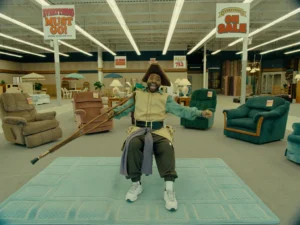
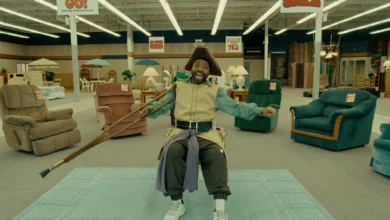
One of the season’s most technically intricate and narratively audacious challenges involved Seth MacFarlane portraying a mid-1990s Bill Clinton. This endeavor immediately ran into a significant hurdle: an initial directive from the studio forbidding the use of any AI technology. This prohibition likely stemmed from the growing industry-wide apprehension surrounding deepfake technology, which, while offering unprecedented realism, also raises ethical concerns regarding authenticity, consent, and potential misuse. The "uncanny valley" phenomenon, where digital recreations of human faces that are almost, but not quite, perfect can elicit feelings of unease or revulsion, further complicates the application of such technologies.
Undeterred, the team pursued a more traditional CG approach first. Rights were painstakingly acquired for news videos and presidential portrait photographs from the William J. Clinton Presidential Library, serving as critical reference material. Using these assets, a highly accurate ZBrush sculpt of Clinton’s head was created. However, a stark anatomical reality emerged: the head shapes of former President Clinton and MacFarlane were fundamentally different. This disparity made a simple digital overlay or tracking solution insufficient, necessitating a full CG head replacement.
Gradient Effects was brought in to leverage their proprietary software, Shapeshifter, which created a detailed 3D mesh of MacFarlane’s head. This mesh was then adapted and applied to the Clinton rig, based on the ZBrush sculpt. While an improvement, the risk of falling into the uncanny valley remained high, proving difficult to circumvent with traditional CG techniques, particularly when dealing with the subtleties of human expression and speech.
It was at this juncture that the team discovered Deep Voodoo, a Venice, California-based visual effects house founded by South Park creators Trey Parker and Matt Stone, which specializes in visual effects with an emphasis on AI. Despite the initial studio ban, the unique challenges of the Clinton portrayal prompted a re-evaluation. Yeatman elaborates on their situation: "Typically, most AI is generated by a text prompt or an image and text prompt, not actually having to deal with photography and a plate where lighting, performance and lensing are established." This distinction was crucial; Deep Voodoo’s application was not a generic AI image generator but a sophisticated tool designed for precise facial replacement within live-action plates.
Deep Voodoo was developing an application specifically for this type of challenge. "They were literally trying to do what we do in CG, which is to lop the head off somewhere through the neck and replace the whole head with CG, including the hair, ears and the back of the head," Yeatman explains. The core advantage of this AI-driven approach, he notes, lies in its profound understanding of the human face and, critically, human speech. "The advantage of using AI over CG is that it understands human speech well. This means you can look into the mouth and see the tongue moving. In animation, you can’t capture that, or the little nuances around the eyes and squints; AI does that perfectly."
The process involved training the AI model to understand Bill Clinton’s facial characteristics. Subsequently, this model analyzed the live-action plate, accounting for MacFarlane’s performance, camera lensing, tracking data, and on-set lighting. The AI then rendered a 1024 x 1024 window that effectively replaced MacFarlane’s head with a highly realistic, AI-generated Clinton face. This technique allowed for the capture of minute details like tongue movement and subtle eye squints—elements that traditionally consume a disproportionate amount of time and resources in CG animation to achieve convincing realism. "AI does all the heavy lifting that is not seen by the viewer but is felt by them. That’s the last 5% or 10% that you struggle with in traditional CG. AI was another tool in the visual effects arsenal," Yeatman asserts. It was far from a "magic pushbutton," however; the AI-generated element was seamlessly integrated into the standard visual effects pipeline, undergoing compositing, multiple approval processes, and color grading, just like any other VFX asset. This integration highlights a growing trend in the VFX industry: AI is not replacing human artists but augmenting their capabilities, serving as a powerful tool to achieve unprecedented levels of detail and realism efficiently.
Crafting Fantasies and Period Pieces: The D&D Realm and 90s Boston
The visual effects scope of Ted Season 2 extended far beyond character animation and AI-driven facial replacement. The team was also responsible for constructing entire worlds, both fantastical and historical, demanding meticulous attention to detail and innovative problem-solving.
Epic Quests: Building the Dungeons & Dragons Episode
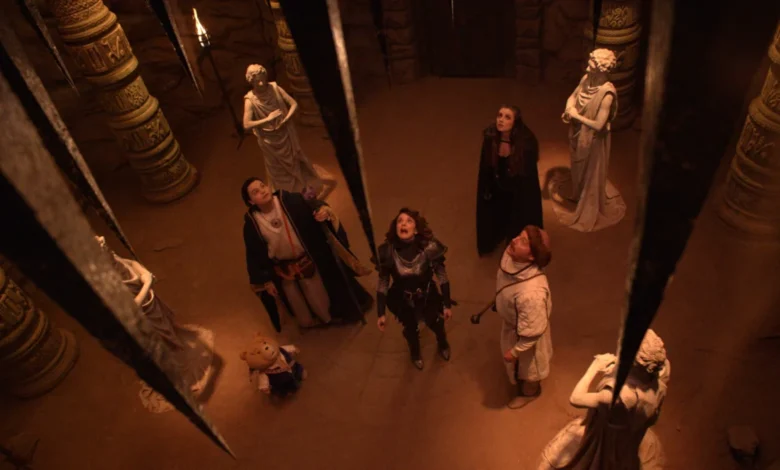
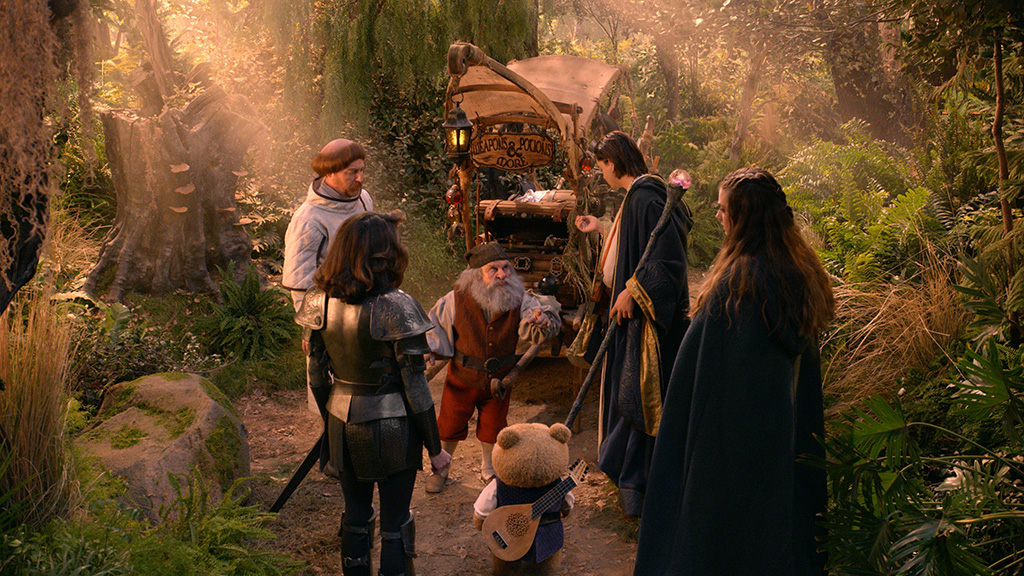
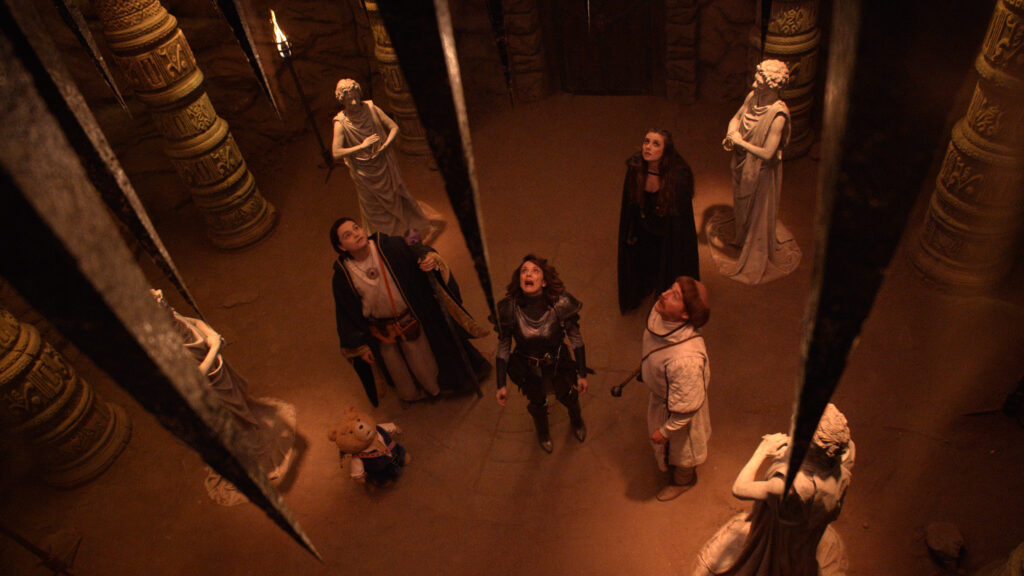
Episode 203 plunged Ted and John into a Dungeons & Dragons-themed quest, requiring the creation of an immersive fantasy world. This sequence necessitated close collaboration between the visual effects, art, and costume departments. Specific "rules" for Ted’s appearance, such as never putting shoes on him (as Clark humorously notes, "they look like an orthopedic contrivance that’s ridiculous"), were strictly adhered to, maintaining character consistency even in fantastical settings.
The art department utilized Unreal Engine for extensive previs (pre-visualization), mapping out complex camera transitions from sweeping vistas to intimate forest paths where the actors would eventually walk. The practical forest set, built on a soundstage, was colossal, featuring a staggering 3,000 linear feet of bluescreen towering 40 feet high. This immense scale, however, introduced significant challenges. "The tree branches were less than eight or nine inches away from the bluescreen, which is typically a big no-no," Yeatman laughs, explaining the difficulty of lighting such a tight space. Standard practice dictates a much greater distance to allow for proper illumination and spill control.
To overcome these environmental and lighting hurdles, the VFX team employed a sophisticated blend of practical and digital techniques. The set was meticulously LiDAR scanned, generating a volumetric representation of every plant, trunk, and rock. This precise 3D data was then used in the digital arena to accurately track cameras and extend the environment. Crucially, it allowed for the artificial placement of a key light source in the digital realm to simulate "God rays"—shafts of light filtering through the canopy, giving the forest a magical, ethereal feel that would be impossible to achieve naturally on a stage of any size. These rays were rendered in layers, allowing for a "clamshell" effect where they could be sandwiched between foreground elements, actors, midground, and background, creating depth and realism. Tiny particulates were also added to the air digitally to enhance the atmospheric effect. Digital set extensions seamlessly expanded the practical forest build, ensuring the environment felt endless and immersive, never revealing the physical limitations of the soundstage.
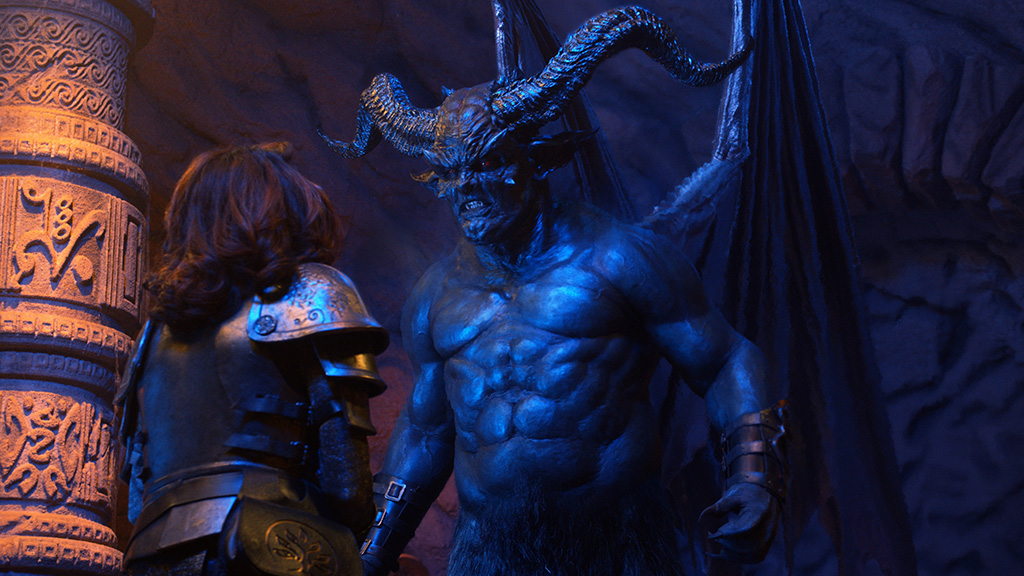
The episode also featured the demon Dra’hul, whose appearance was achieved through a combination of practical prosthetics and digital enhancements. Clark reveals, "We added wings, slimmed down the waist and did a treatment on the skin that was otherworldly or ethereal. Other than that, it was straight makeup. It looked great." This hybrid approach maximized the impact of practical effects while using VFX to add the fantastical elements that would otherwise be impossible to achieve realistically.
Time Travel via VFX: Recreating 1990s Boston
Beyond fantasy, the series demanded a faithful recreation of 1990s Boston, transforming the backlots of Universal Studios Hollywood into the distinct East Coast setting. This required an obsessive level of detail. "Seth was keen on the trees," Clark recounts. "He would be like, ‘Those look like West Coast trees.’ Seth was very specific." This anecdote highlights the director’s discerning eye and the extensive environmental work needed to ensure period and geographical accuracy, from specific foliage types to architectural details.
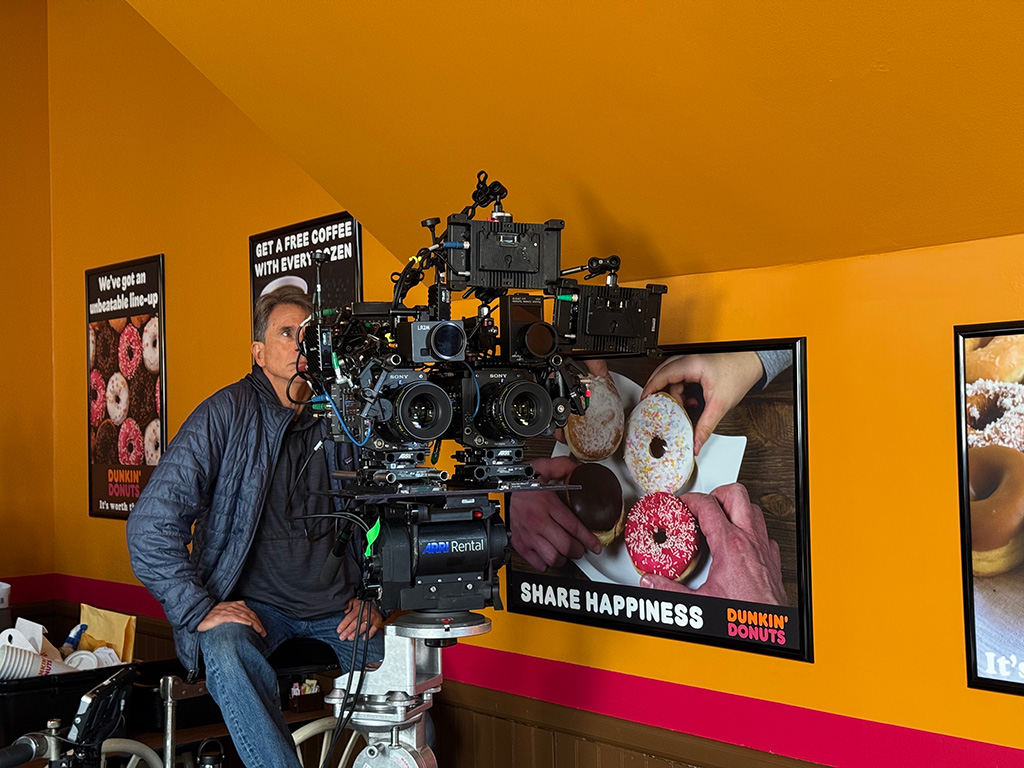
Driving sequences, a staple of the series, presented a traditional greenscreen challenge, often involving multi-camera setups. "We have three cameras running all the time, so we have to deal with multi-camera shoots, which is another part of the challenge of doing visual effects," Yeatman notes. The team often utilized plates from the previous season, which were actually shot in Boston. However, these archival plates also presented difficulties, requiring the digital removal or replacement of anachronistic cars or other elements that did not fit the 1993 timeline. For mansion scenes, an impressive eight-camera array provided complete freedom on stage, allowing for dynamic shots and comprehensive coverage. While a video wall might seem ideal for such environments, Yeatman explains that "for the speed that we’re working, with three cameras blazing, this works quite well." Even seemingly minor details, like snow on the ground, required careful management, with powder paper used on practical sets and then digitally extended to cover entire neighborhoods for wider shots.
The Art of the Animated Bear: Ted’s Fluffy Feats and Physical Comedy
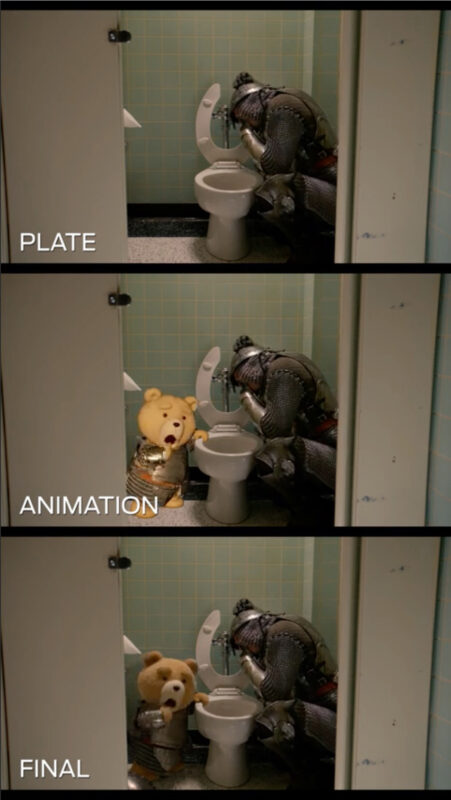
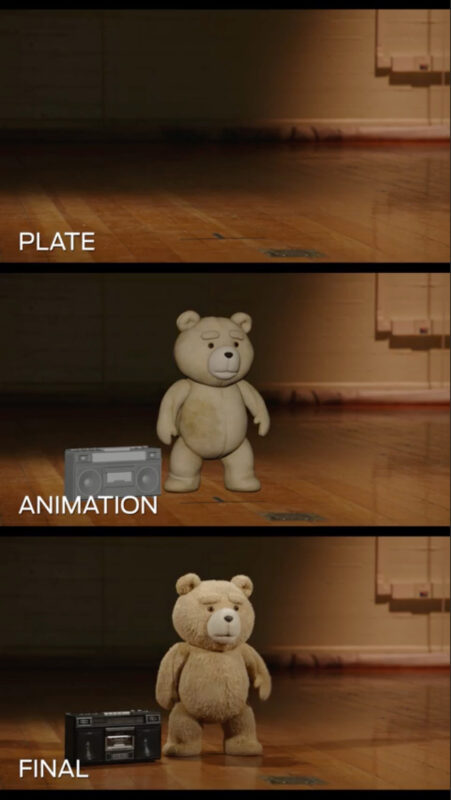
At the heart of the Ted franchise is its fully CG protagonist, and ensuring his consistent and expressive performance is a continuous labor of love. Framestore in Melbourne has been the steadfast animation studio for Ted since the first feature film, fostering a deep understanding of the character. "The same team has been on the show since the first feature, so they had the recipe for his movements and mannerisms," Blair Clark shares. This continuity is invaluable, allowing for nuanced character development and consistent quality across films and seasons.
Season 2 introduced several memorable gags that pushed Ted’s physical animation. A running joke that eventually became a popular meme involved Ted emerging from a dryer, transformed into an impossibly fluffy, almost spherical ball of fur. "Coming out of the dryer was the fluffiest he had ever been! That was artistic license. We had some where he was puffed up, but Seth wanted a full sphere of fur," Clark reveals. This required intricate fur simulation and grooming techniques to achieve the desired exaggerated, yet believable, effect. Another recurring gag involved Ted coughing up furballs, which, while seemingly simple, relied heavily on animation subtlety. "The success in that was mainly the pantomime," Clark states. The trick, he explains, was to keep Ted "grounded in subtlety with his mannerisms and not going cartoony. Just go in enough so that people forget he is a CG character and buy him as another member of the cast." This philosophy underscores the primary goal of character animation in the Ted universe: making a talking teddy bear feel like a tangible, living presence.
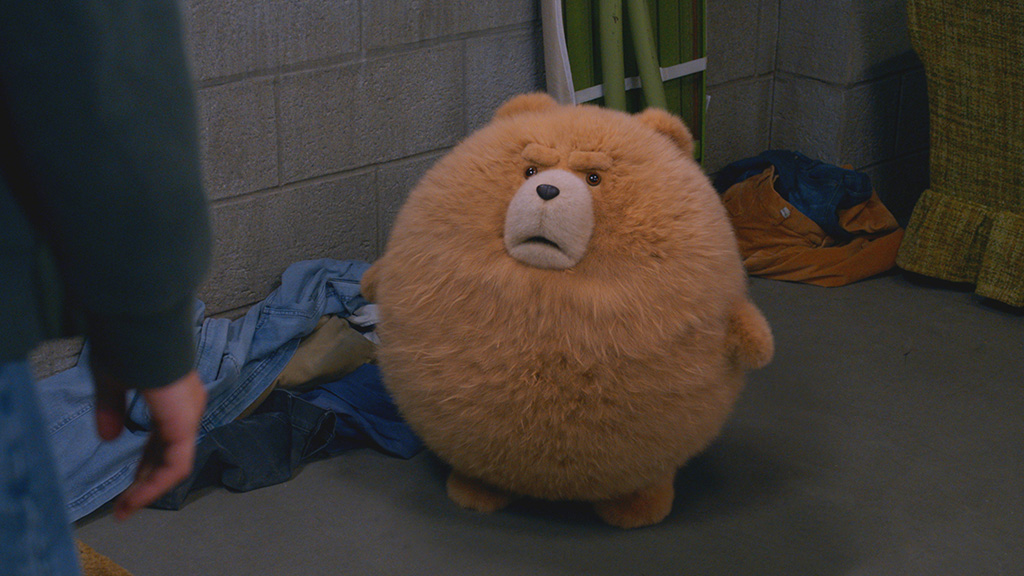
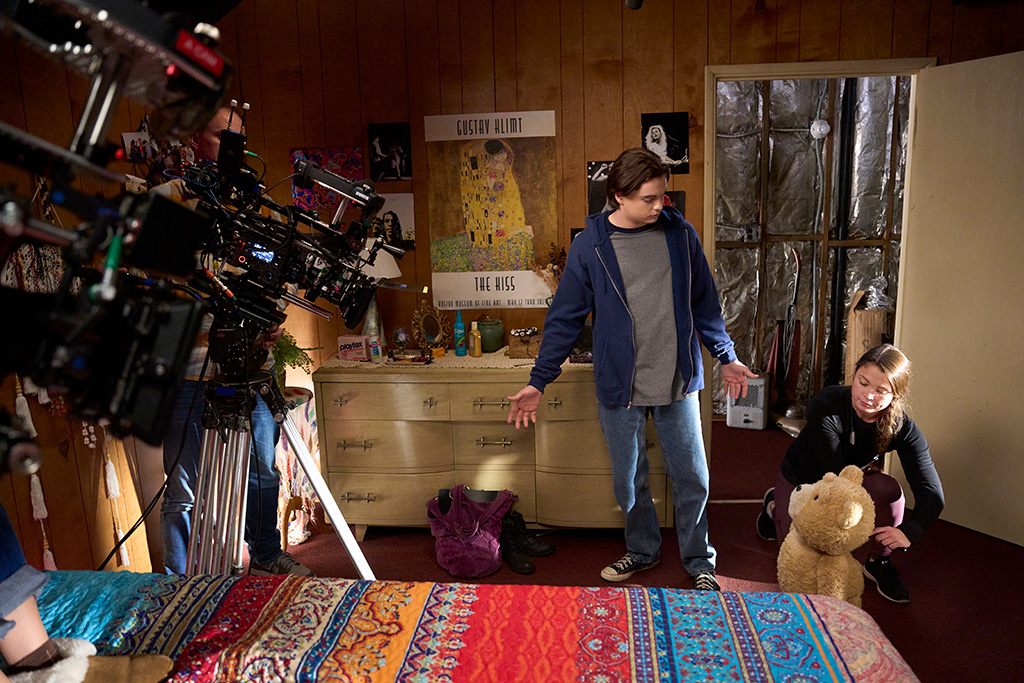
Physical interactions with Ted were also crucial, particularly when he is thrown around. Scott Grimes, playing John Bennett, demonstrated remarkable talent in making these moments believable. "Most of that was the talent of Scott Grimes being able to throw something and make it feel believable, like a football," Clark remarks. To aid in these performances, the team utilized various "stuffies" – physical stand-ins for Ted. A specialized "stunt stuffie" with detachable arms, legs, and head, affectionately nicknamed "the egg" (referring to its torso), allowed Scott to practice and get a sense of Ted’s volume and mass. For the actual takes, Scott would pantomime the action, seamlessly interacting with an invisible Ted, a testament to his skill and the detailed preparation by the VFX team. These practical stand-ins are vital on set for establishing eyelines, composition, and lighting references, bridging the gap between the physical set and the digital character.
On-Set Synergy: ViewScreen, Previs, and the ‘Jazz’ of VFX Production
The integration of real-time visualization tools is increasingly crucial in modern VFX production, and Ted Season 2 made extensive use of ViewScreen technology. This system allows filmmakers to see a rough, real-time composite of the CG character or environment within the live-action viewfinder, providing immediate feedback on framing, composition, and interaction. "It was a good reference," Clark observes, emphasizing its utility. The ViewScreen system was seamlessly integrated with Framestore’s pipeline, ensuring a cohesive workflow.
While ViewScreen proved invaluable for cameramen to visualize the final shot, especially when dealing with complex set extensions or dynamic environments, its direct benefit for actors interacting with a CG character can be limited. "Basically, on set, Blair is Ted," Yeatman explains, referring to Co-VFX Supervisor Blair Clark, who often steps in during rehearsals to embody Ted’s movements and pacing. This allows Seth MacFarlane to direct the "character" and the cameramen to understand the intended action, even if the real-time ViewScreen render isn’t perfectly synchronized with the actor’s performance.
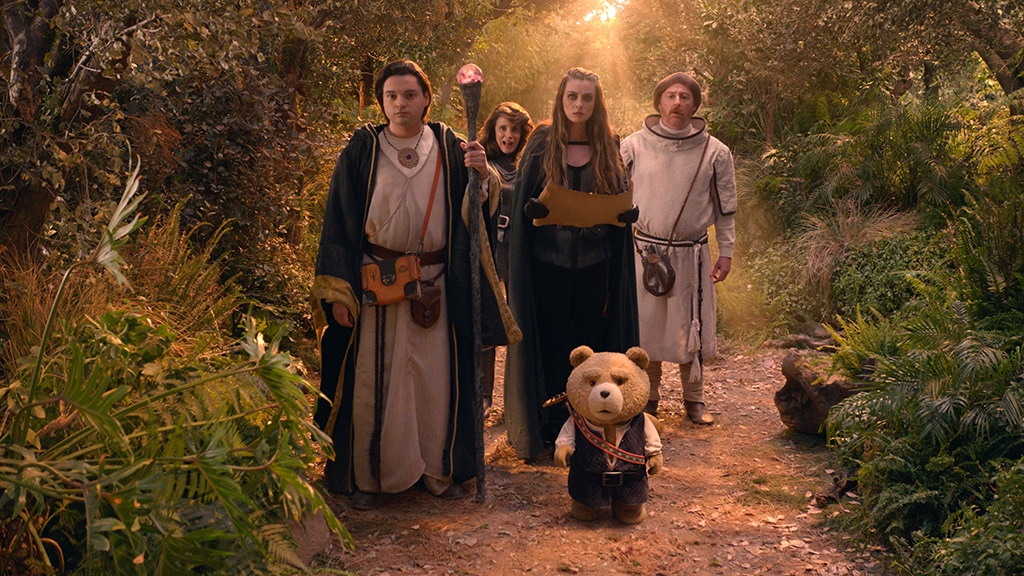
ViewScreen truly shone in environmental applications. For the Dungeons & Dragons forest, it allowed the team to "see beyond what we had physically on set," integrating the digital set extensions with the practical build. An opening shot, for example, involved a 24-foot camera move on set, but the Unreal Engine animatic had specified a 64-foot crane shot. ViewScreen helped everyone visualize the extended scope and camera positioning. Similarly, for a sequence in a temple ceiling where spikes descended, ViewScreen was instrumental in determining framing, the extent of set extensions, and the speed of the spikes. "It was more of an environmental use. It’s harder on the character because it’s so dynamic on set," Yeatman clarifies.
Yeatman uses an evocative analogy to describe the dynamic, experienced-driven workflow on Ted: "It’s like the difference between jazz and classical music. In classical music, every single note is written down, but here you know the tune and melody and just get in there, and it organically happens." This "jazz" approach, he explains, is possible because the core team, from the directors to the VFX supervisors and animators, has worked together for so long on the features and episodes. "They have it drilled down. That’s why it goes as smoothly as it does because everyone knows how it goes." This long-standing collaboration fosters an intuitive understanding and efficiency that allows for organic problem-solving and creative improvisation on set, a hallmark of high-level production.
A Collaborative Canvas: The Extensive VFX Pipeline
The sheer scale of visual effects in Ted Season 2 required a robust and collaborative pipeline, drawing on the strengths of multiple leading studios. Alongside Framestore, which masterfully handled all of Ted’s character animation, other significant contributors included Studio Blackbird, Rising Sun Pictures, Deep Voodoo, and Pitch Black. Together, these studios were responsible for delivering nearly 3,000 visual effects shots, a staggering number for a television series, underscoring the cinematic ambitions of the production.
Beyond character and specific sequences, extensive environmental work was undertaken to transform the backlots of Universal Studios Hollywood into a convincing 1990s Boston. This involved not only the meticulous recreation of period-appropriate architecture and urban landscapes but also subtle details like specific types of trees. Seth MacFarlane’s keen eye for authenticity, as noted by Clark regarding "West Coast trees," drove the VFX team to ensure every detail resonated with the East Coast setting of the era.
Yeatman and Clark, with their decades of experience in the ever-evolving field of digital technology, continuously seek to integrate the latest advancements into their workflow. "Blair and I stay up on the latest greatest [tech] and make sure it works before we put it into practice," Yeatman states. Their philosophy is centered on empowering the creative vision while maintaining practical efficiency. "We want to give Seth the greatest amount of freedom that he can have and still achieve a good look. Sometimes we do stuff that looks crazy. But with the technology that we have in our back pocket, we can pull it out, make some shots that look cool and make the day, which is probably the biggest thing that we’re all working on." This highlights the dual role of VFX supervisors: not just managing the technical execution, but also acting as strategic partners, enabling ambitious creative choices by leveraging cutting-edge tools and seasoned expertise.
Looking Ahead: The Evolving Landscape of Visual Storytelling
The visual effects achievements in Peacock’s Ted Season 2 serve as a significant benchmark for the capabilities of modern television production. By seamlessly blending traditional CG character animation with groundbreaking AI facial replacement, intricate world-building, and meticulous period recreation, the series demonstrates the escalating sophistication of episodic visual storytelling. The integration of advanced tools like Unreal Engine for previs, LiDAR scanning for environmental reconstruction, and real-time ViewScreen technology showcases a proactive embrace of the latest industry innovations.
The use of AI, particularly in the nuanced recreation of Bill Clinton, marks a pivotal moment, illustrating how these powerful tools can overcome previously intractable challenges in achieving photorealistic human performance, provided they are applied with precision and integrated into a rigorous traditional VFX pipeline. This cautious yet enthusiastic adoption of AI points towards a future where such technologies become an indispensable part of the VFX arsenal, augmenting human artistry rather than replacing it.
The collaborative spirit between multiple VFX studios, alongside the deep synergy between the visual effects, art, and costume departments, underscores the complex, interdisciplinary nature of contemporary filmmaking. The enduring success of Ted‘s CG protagonist, consistently animated by Framestore’s dedicated team, further exemplifies the value of long-term creative partnerships and a shared understanding of character. As digital technology continues its remarkable pace of evolution, the lessons learned and boundaries pushed in Ted Season 2 will undoubtedly inform and inspire the next generation of visual storytellers, solidifying its place as a testament to the boundless possibilities of modern visual effects.