Maintaining a pristine lawn requires more than just regular watering and seasonal fertilizer applications; the mechanical health of turf-management equipment plays a critical role in achieving a clean, professional-grade cut. Among the most essential yet frequently overlooked components of routine lawn care is the condition of the lawn mower blade. Dull, nicked, or bent blades tear grass blades rather than slicing them cleanly, leaving jagged edges that turn brown and expose the turf to disease and pest infestations. For homeowners and landscape professionals looking to maintain optimal equipment performance, having access to the right hardware is paramount. Retailers such as Tractor Supply Co. offer a comprehensive inventory of sharpening solutions catering to various skill levels, ranging from lightweight manual tools and power-drill attachments to heavy-duty motorized bench grinders. Understanding the available options, proper sharpening methodologies, and safety precautions ensures both equipment longevity and personal protection.
The Importance of Mower Blade Maintenance in Turf Health
The mechanics of a lawn mower blade dictate the overall health of a residential or commercial lawn. When a mower blade is sharp, it creates a clean, precise shearing action that seals the grass tip quickly, allowing the plant to redirect its energy into root development and lateral growth rather than cellular repair. Conversely, a blunt edge batters and shreds the grass blades, creating a frayed brown crown that diminishes curb appeal and creates an entry vector for fungal pathogens like dollar spot and brown patch.
Agronomists and turf management specialists universally recommend inspecting and sharpening mower blades at least once or twice per season, depending on the acreage mowed and the presence of obstacles such as rocks, exposed tree roots, and dense debris. Despite this clear directive, many equipment owners struggle with the practical execution of blade maintenance. Factors such as a lack of technical confidence, improper tools, or fear of damaging the blade often lead to deferred maintenance. To bridge this gap between necessity and execution, equipment suppliers have diversified their offerings to provide accessible, user-friendly sharpening devices suitable for DIY enthusiasts and experienced mechanics alike.
Manual and Portable Sharpening Solutions
For users who prefer simplicity and minimal mechanical setup, manual tools offer an effective and inexpensive entry point into blade maintenance. Products such as the Prime 8-inch Flat File represent a traditional, low-tech approach to edge restoration. Constructed from durable hardened steel with a double-cut pattern, a flat file allows operators to meticulously target minor nicks, burrs, and imperfections along the cutting edge. Compact in size and featuring a textured, anti-slip ergonomic grip, a flat file provides the user with tactile feedback and absolute control over the removal of metal. When utilizing a flat file, best practices dictate clamping the removed blade securely in a bench vise and employing controlled, single-direction push strokes rather than a back-and-forth sawing motion, which can prematurely dull the file teeth and create an uneven bevel.
Another portable innovation popular among homeowners is the handheld tool sharpener, exemplified by products like the GardenSharp Lawn and Garden Tool Sharpener. Engineered with a lightweight housing and a pre-set tungsten carbide blade, this device is specifically designed to restore the factory-prescribed 30-to-45-degree bevel on mower blades, hoes, and shears with minimal physical effort. Users simply draw the tool along the length of the cutting edge at the designated angle. While these manual methods require more physical exertion than motorized alternatives, they eliminate the risk of overheating the metal—a common hazard with high-speed power tools that can compromise the temper and structural integrity of the steel.
Power-Assisted and Heavy-Duty Shop Equipment
As property sizes increase and equipment demands grow, many operators transition from manual files to power-assisted sharpening solutions that dramatically reduce the time and labor required to maintain a fleet of mowers. Drill-mounted accessories occupy a middle ground between manual filing and heavy shop machinery. The Arnold Lawn Mower Blade Sharpener/Balancer Kit, for instance, is designed to mount onto standard quarter-inch and three-eighths-inch household power drills. Featuring an abrasive grinding stone affixed to a drill arbor, this attachment allows the user to swiftly re-edge blades for a wide array of equipment, including walk-behind push mowers, riding lawn tractors, and commercial zero-turn radius mowers.
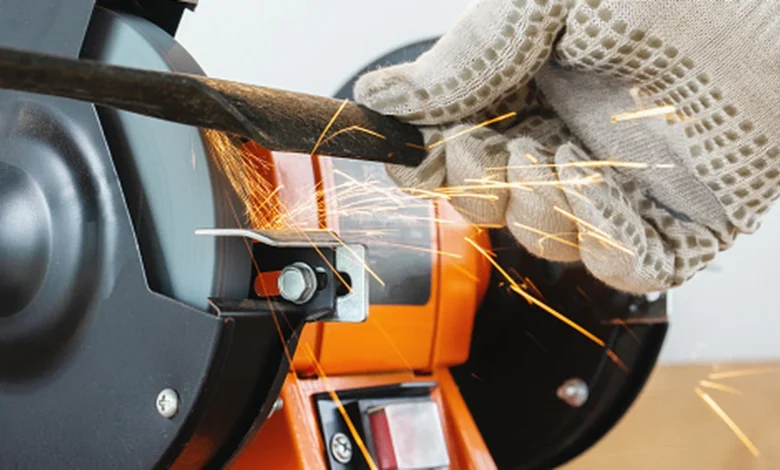
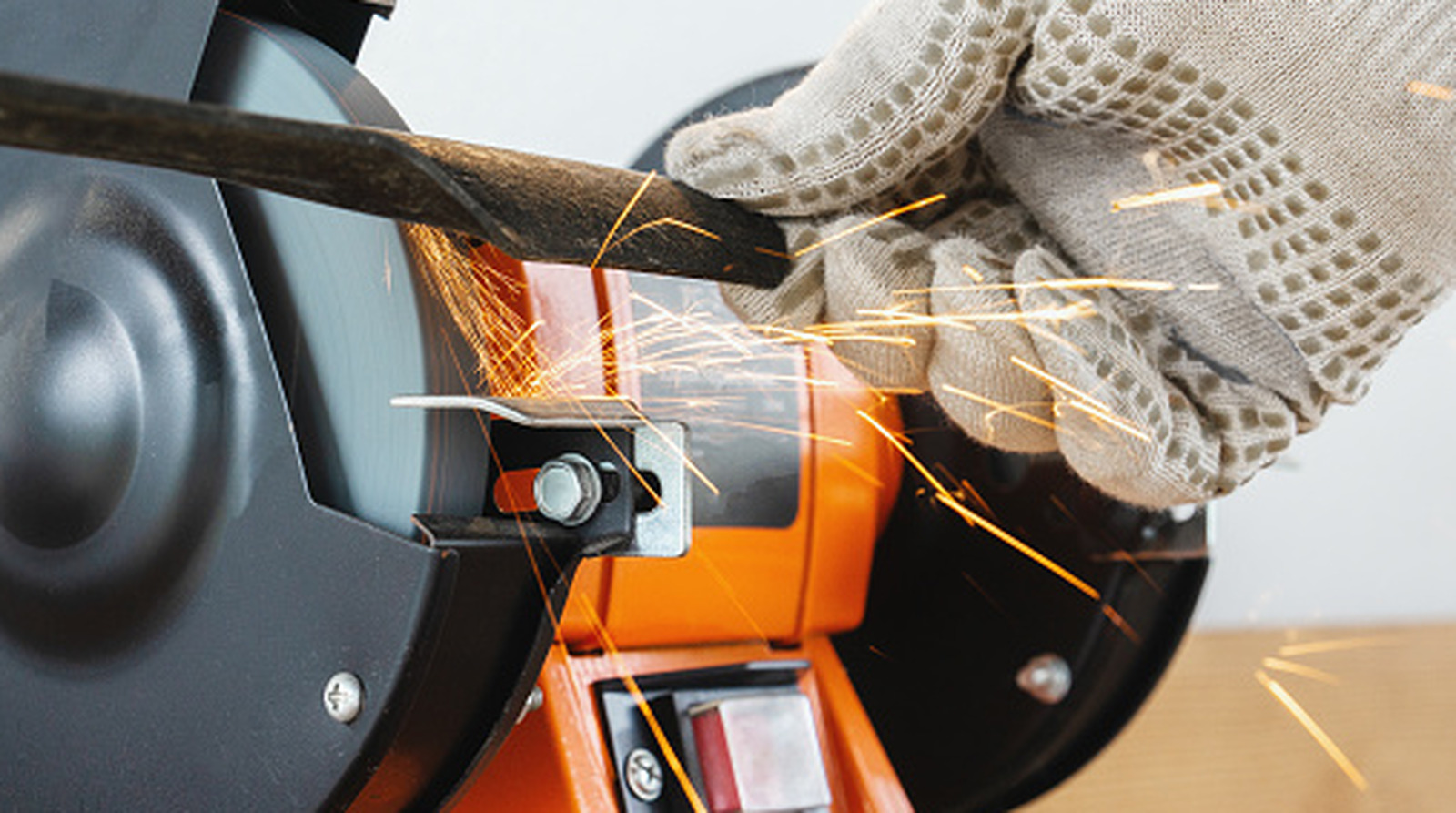
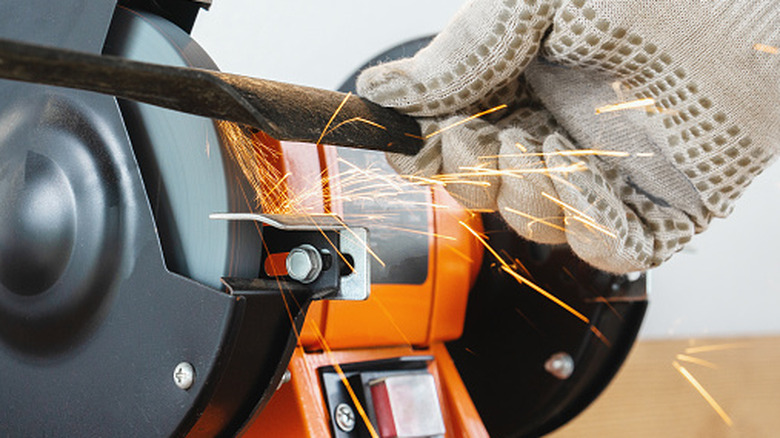
For those seeking professional-grade results and long-term durability, bench-mounted electric grinders represent the gold standard of workshop maintenance. Devices such as the DeWalt 6-inch Bench Grinder utilize robust induction motors capable of reaching speeds up to 3,450 RPM to drive high-grit abrasive wheels. These machines make quick work of heavily damaged or severely worn blades, restoring a razor-sharp edge in a fraction of the time required by manual methods. Modern bench grinders typically feature adjustable tool rests that provide a stable platform for maintaining a consistent sharpening angle, as well as transparent eye shields to deflect sparks and debris away from the operator’s face.
Safety Protocols and Protective Equipment
Operating high-speed grinding machinery and handling razor-sharp tempered steel inherently carries safety risks that demand rigorous adherence to protective protocols. Industry safety standards dictate that anyone operating a bench grinder or utilizing power-drill attachments must wear appropriate personal protective equipment (PPE), most notably ANSI-approved safety goggles or a full-face shield to guard against flying metal shards, abrasive grit, and sparks. Furthermore, operators should consult and strictly follow the operational guidelines outlined in the manufacturer’s user manual for both the sharpening tool and the mower itself.
When servicing a lawn mower, safety begins long before the sharpening tool touches the metal. To prevent accidental engine ignition, operators must always disconnect the spark plug wire on gas-powered mowers or remove the battery pack from electric models before attempting to tilt the chassis or remove the cutting deck blade. Heavy-duty work gloves should be worn at all times when handling removed blades to protect against deep lacerations caused by accidental slips. Additionally, when using bench grinders, operators must avoid exerting excessive pressure on the blade against the spinning wheel; overheating the steel can cause it to lose its temper, turning the metal soft and rendering it incapable of holding a sharp edge during operation.
The Critical Importance of Blade Balancing
Sharpening a lawn mower blade is only half of the maintenance equation; ensuring the blade remains dynamically balanced is equally vital to the mechanical health of the mowing equipment. An unbalanced blade—where one cutting wing is heavier than the other due to uneven metal removal during the sharpening process—generates severe rotational vibrations when spinning at thousands of RPMs. Over time, these persistent imbalances transfer destructive harmonic frequencies through the mower deck, ultimately damaging spindle bearings, bending the crankshaft, loosening engine mounts, and causing premature fatigue failure in structural components.
To verify proper balance after sharpening, technicians utilize specialized blade balancers or perform a simple horizontal pivot test. By suspending the blade horizontally through its center mounting hole on a nail, wall-mounted cone balancer, or specialized magnetic balancer, the user can observe its physical orientation. A correctly balanced blade will remain perfectly level. If one side dips downward, it indicates excess weight on that wing, requiring the operator to grind away a small amount of additional metal from the heavier side until horizontal equilibrium is achieved.
Broader Implications for Equipment Longevity and Consumer Trends
The availability of accessible, retail-grade sharpening tools reflects a broader consumer trend toward right-to-repair initiatives and home self-sufficiency. As economic pressures encourage property owners to extend the operational lifespan of their outdoor power equipment, retail suppliers are positioning themselves as comprehensive resource hubs rather than mere point-of-sale outlets. By providing consumers with the instrumentation needed for proactive preventative maintenance, retailers help mitigate the rising costs associated with professional mechanic service fees and premature equipment replacement.
Ultimately, investing a modest amount of time and resources into proper mower blade sharpening and balancing yields compounding returns. Homeowners and landscaping professionals who master this routine maintenance task not only protect their capital investments in expensive mowers and tractors but also secure healthier, more vibrant turfgrass capable of withstanding environmental stresses. Through the thoughtful selection of appropriate tools—from simple manual files to advanced motorized grinders—maintaining peak mechanical and agronomic performance remains well within reach for any dedicated property manager.