Apple’s Evolving Strategy: From iPhone SE’s Value Proposition to the "Economical" E-Series

In 2016, Apple embarked on a strategic pivot designed to broaden its appeal and capture a segment of the smartphone market previously underserved by its premium offerings. The introduction of the iPhone SE, priced at a groundbreaking $399, marked a significant shift. SlashGear, in its review at the time, aptly described the device as a "classic remix," highlighting its ability to blend the familiar design and functionality of older iPhones with a significantly more accessible price point. This move was a direct response to a market that not only desired more compact devices but also balked at the then-prevalent flagship iPhone prices, which often hovered just south of $800, exemplified by models like the iPhone 6S Plus. Apple’s ingenious approach involved leveraging components from previous generations, whose costs had naturally declined, combined with a smaller form factor and a less expensive display. This strategy allowed Apple to maintain its coveted low price tag while still offering a genuine iPhone experience.
The reception to the original iPhone SE was overwhelmingly positive, validating Apple’s assessment of the market. This success paved the way for the second-generation iPhone SE in 2020, which reiterated the crucial sub-$400 price point, solidifying Apple’s presence in the mid-range smartphone arena. The company continued this lineage with the third-generation iPhone SE, or SE 3, in 2022. However, this iteration saw a slight price adjustment, increasing to $429, a $30 increment over its predecessors. The SE lineup reached its apparent conclusion in 2025 with the discontinuation of the iPhone SE 3, making way for a new branding strategy: the iPhone 16 E, positioned as its successor.
The "E" series, as it has come to be known, represents Apple’s latest attempt to distill the core iPhone experience into a more budget-conscious package, targeting a $599 price point. To achieve this, Apple has made deliberate design concessions across various components, including the display, battery, camera system, and processor. These design choices, while distinct from the SE models, are rooted in the same philosophy of affordability that underpinned the SE series. Consequently, the E-series devices, while more expensive than their SE predecessors, remain a significant step down from the premium iPhone models.
The "E" Stands for Economical: Unpacking the iPhone 16E
The arrival of the iPhone 16E in 2025 signaled the end of Apple’s iPhone 14 lineup and, more notably, the phasing out of the SE branding. Apple marketing declared that the "e" in the E-series designation stood for "economical." While the true extent of its economy was a subject of discussion, SlashGear’s assessment found the iPhone 16E to be a well-balanced device, fitting comfortably in both hand and wallet. Positioned as an entry-level model, it aimed to provide a gateway into the Apple ecosystem, though its $599 price tag represented a notable increase of approximately $170 compared to the iPhone SE 3.
To meet its target price, Apple employed many of the same cost-saving measures that had characterized the SE models. The iPhone 16E retained the aluminum unibody construction common to the iPhone 16 family, but it featured a slightly more compact footprint. Its display, while functional, offered a lower resolution and reduced peak brightness compared to its higher-end counterparts. Aesthetically, it adhered to the older, more traditional notch design, foregoing Apple’s innovative Dynamic Island feature. Internally, the device was powered by a cut-down version of the A18 System-on-Chip (SoC), featuring four GPU cores instead of the five found in the standard iPhone 16. Further cost reductions were evident in the omission of the dedicated Camera Control button, the inclusion of a single rear camera lens, and the absence of MagSafe or Qi2 wireless charging capabilities.
Despite the initial sticker shock for some consumers, the iPhone 16E still presented a compelling value proposition. It was priced $200 lower than the iPhone 16’s starting price of $799 and offered substantial savings over the Pro and Pro Max variants. Unlike the SE models, which often felt like distinct offerings that coexisted with different iPhone generations, the iPhone 16E was intrinsically linked to the iPhone 16 line as a specialized variant, a branding ethos that Apple intended to carry forward.
Evolution of Affordability: The iPhone 17E Enhances the Entry-Level Experience
With the launch of the iPhone 17E, Apple demonstrated a commitment to refining its entry-level strategy, aiming to enhance baseline specifications while crucially maintaining the $599 price point. Similar to its predecessor, the iPhone 17E remained $200 less expensive than the standard iPhone 17. This iteration directly addressed some of the criticisms leveled against the iPhone 16E, most notably by incorporating MagSafe compatibility and 15W wireless charging through the Qi2 standard.
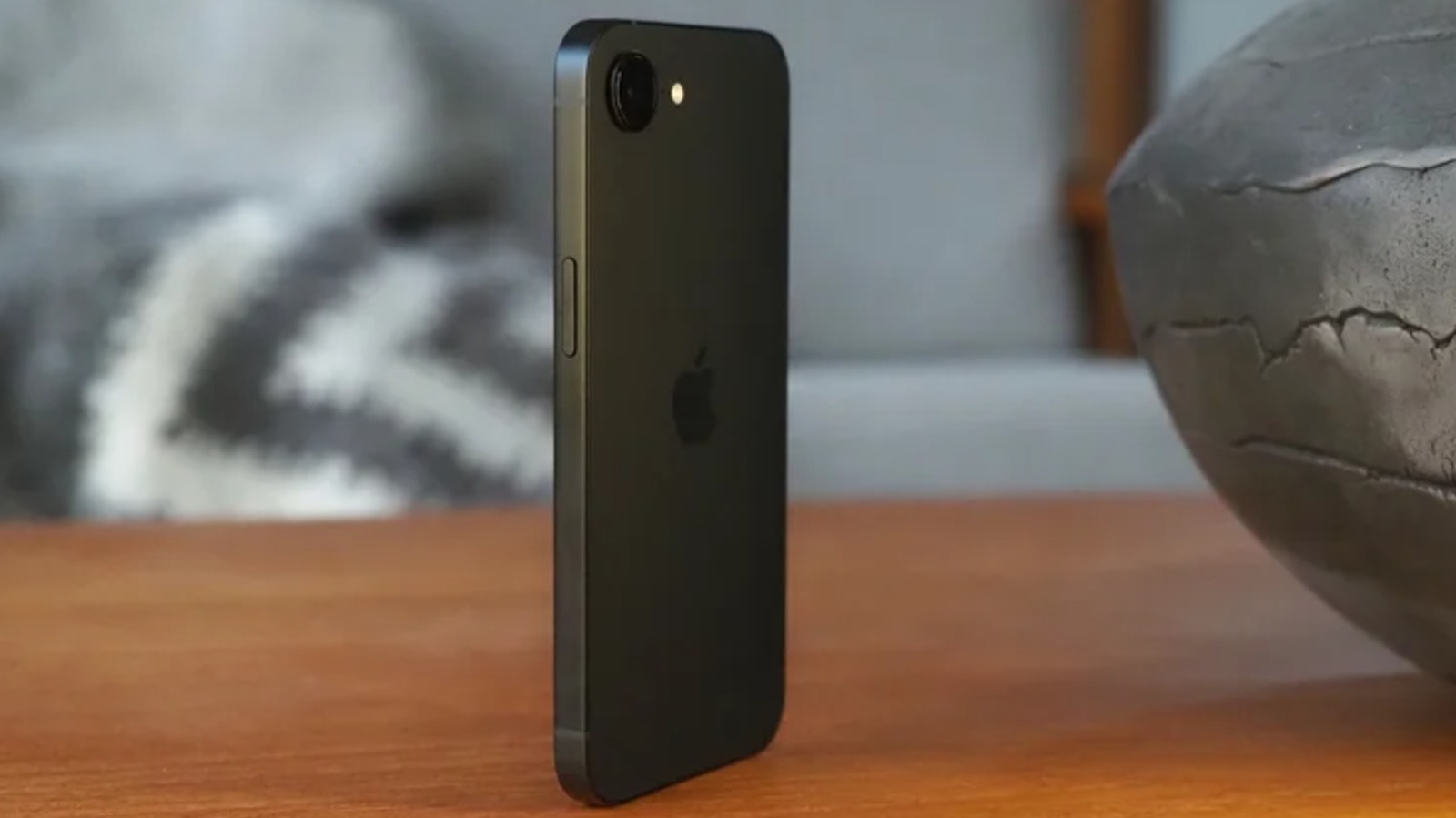
However, many of the compromises that defined the previous E-series model persisted. The iPhone 17E continued to feature Apple’s signature notched display, eschewing the Dynamic Island, a feature that had garnered considerable positive attention since its debut with the iPhone 14 Pro and was widely praised for its innovative integration and user experience. Under the hood, the device was equipped with Apple’s latest A19 SoC, albeit in a binned-down configuration that reduced its GPU core count from six to five.
Perhaps one of the most significant omissions was the absence of Apple’s new N1 networking chip. This meant that the iPhone 17E was limited to Wi-Fi 6 speeds, foregoing the enhanced performance and capabilities of Wi-Fi 7. The device also made further concessions in its connectivity suite, opting for Bluetooth 5.3 over the newer Bluetooth 6 standard and omitting Apple’s U2 chip, which powers its latest Ultra Wideband technology.
The iPhone 17E did feature a Super Retina XDR OLED display, a marked improvement over some lower-tier LCD panels. However, it was capped at a standard 60Hz refresh rate, lacking the variable 120Hz ProMotion technology found in other iPhone 17 models. The display also shared the lower peak brightness characteristic of the iPhone 16E. Furthermore, the device retained a single rear camera lens and a comparatively smaller battery.
The introduction of the iPhone 17E was swiftly followed by the discontinuation of the iPhone 16E. While there was a brief period where it seemed Apple might continue to offer refurbished iPhone 16E models, this strategy appears to have been largely abandoned, reinforcing the company’s clear focus on its latest entry-level offering.
A Strategic Timeline of Apple’s Value-Focused iPhones:
- 2016: Introduction of the first-generation iPhone SE. Priced at $399, it utilized older components in a compact design, offering an accessible entry point into the Apple ecosystem.
- 2020: Launch of the second-generation iPhone SE. It maintained the $399 price point, continuing Apple’s strategy of catering to the mid-range market.
- 2022: Release of the third-generation iPhone SE (SE 3). The price increased to $429, marking a slight departure from the consistent sub-$400 pricing.
- 2025: Discontinuation of the iPhone SE 3. Apple introduces the iPhone 16E as its successor, with a new branding strategy and a price point of $599. This model featured design concessions to achieve its target price.
- 2026: Introduction of the iPhone 17E. This iteration improved upon the 16E by adding MagSafe and Qi2 charging while retaining the $599 price, though it continued to omit certain premium features like Dynamic Island and Wi-Fi 7.
Analysis of Implications: The E-Series as a Balancing Act
Apple’s E-series iPhones represent a calculated strategy to balance market accessibility with profitability. By introducing a distinct branding and price tier below the flagship models, Apple aims to attract a broader customer base that might otherwise be priced out of the Apple ecosystem. The "economical" approach, while involving compromises, allows Apple to maintain its premium brand perception while capturing market share in a highly competitive segment.
The decision to move away from the SE branding to the E-series suggests a desire to more clearly delineate product tiers. While the SE models often felt like distinct, albeit value-oriented, iPhones, the E-series is explicitly positioned as a variant of the main iPhone line. This approach may simplify marketing efforts and reinforce the core iPhone experience across all its devices, albeit with varying degrees of sophistication.
However, the continued omission of features like Dynamic Island and advanced networking capabilities in the E-series highlights the enduring gap between Apple’s entry-level and premium offerings. This strategy, while effective in attracting new users, also underscores Apple’s commitment to its higher-margin Pro models. The incremental upgrades within the E-series, such as the addition of MagSafe and Qi2 charging in the 17E, indicate a responsive product development cycle that addresses user feedback while carefully managing cost.
The success of the E-series will likely be measured not only by sales figures but also by its ability to foster long-term customer loyalty. By providing a more affordable entry point, Apple hopes to convert users into its ecosystem, potentially leading to future upgrades to more premium devices. The "economical" strategy, therefore, is not just about selling phones; it’s about cultivating a sustained relationship with a wider array of consumers.