Scandinavian Design Studio Ribbit Redefines Product Marketing with Imaginative Launch Film for Award-Winning Air Quality Monitor Birdie


The intersection of functional consumer technology and artistic expression has reached a new milestone as the newly established Scandinavian creative collective Ribbit unveils its inaugural major campaign. Stepping away from conventional, feature-heavy product demonstrations, Ribbit has chosen to introduce the acclaimed indoor air quality monitor, Birdie, through a poetic, metaphor-driven short film. This strategic launch marks a significant departure from traditional tech marketing, favoring emotional resonance, visual storytelling, and a distinctly Nordic design philosophy over dry technical specifications and utilitarian walk-throughs.
Birdie, which has previously earned high praise and industry accolades for its minimalist aesthetic and reliable carbon dioxide (CO2) monitoring capabilities, needed a campaign that matched its design pedigree. Rather than instructing consumers on sensor calibrations, parts-per-million thresholds, and ventilation metrics, Ribbit’s creative team opted to translate invisible indoor environmental data into tangible, imaginative visual metaphors. The resulting production successfully navigates the delicate balance between maintaining a sense of mystery around a high-end design object and clearly communicating its fundamental purpose: alerting inhabitants when indoor air quality deteriorates.
Main Facts and Creative Direction
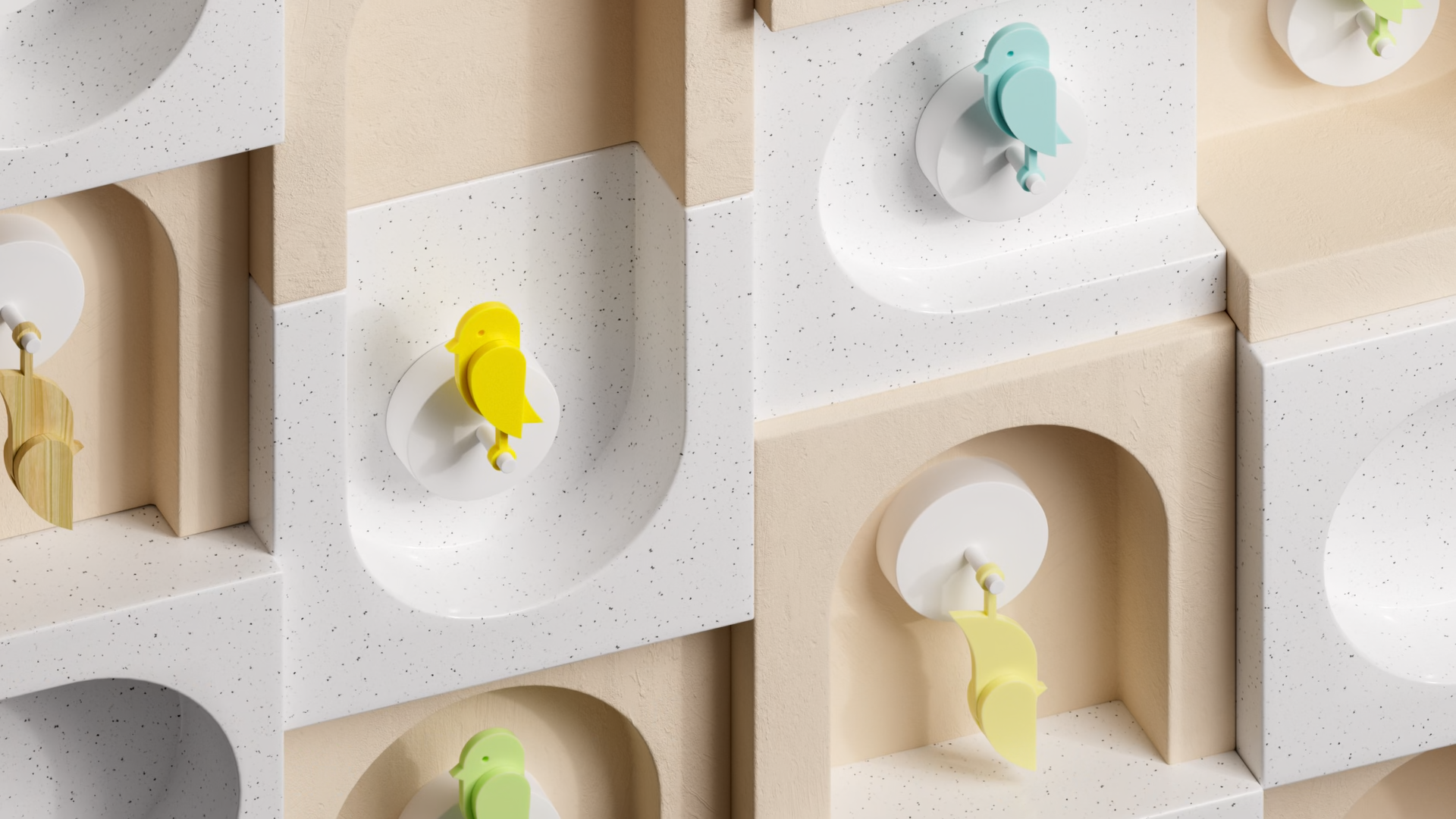
The newly released launch film centers on the core function of the Birdie device—which is modeled after the historic canaries once used by miners to detect dangerous subterranean gases—while elevating the concept into high art. Instead of opening with a standard product close-up, the film utilizes dynamic, surreal set pieces to illustrate how the device senses and reacts to stale indoor air.
According to the studio’s foundational principles, the primary challenge of the project lay in communicating utility without compromising desirability. Modern consumers are increasingly resistant to heavy-handed marketing that feels overly clinical or aggressive. By anchoring the narrative in a refined Scandinavian design aesthetic, Ribbit transformed a complex piece of environmental technology into an intuitive companion for the modern home.
The production reflects the collective’s broader mission to reject standard industry templates in favor of work that foregrounds strong conceptual storytelling and playful execution. The film relies heavily on atmosphere, pacing, and meticulous art direction to convey the relief of bringing fresh air into a stagnant room, subtly prompting the viewer to consider their own indoor environments without resorting to alarmist messaging.
Chronology and Background of the Collaboration
The partnership between Birdie and Ribbit represents a convergence of two entities deeply rooted in the Nordic design tradition. Birdie first emerged as a response to the growing awareness of indoor air quality, a topic that gained unprecedented public attention during the global health shifts of the early 2020s, when remote work forced populations to spend the vast majority of their time indoors. Studies consistently show that indoor air is often significantly more polluted than outdoor air, contributing to fatigue, reduced cognitive function, and long-term health issues.
Recognizing that existing air monitors were largely unappealing industrial boxes that users preferred to hide on bookshelves or behind furniture, the creators of Birdie engineered a device that hung proudly on the wall as an interior design object. When the multidisciplinary studio Ribbit was established, its founders sought an inaugural project that would immediately signal their creative capabilities and establish their market positioning. Birdie was identified as the ideal canvas.
The development phase of the campaign spanned several months, moving from conceptual sketches and metaphor mapping to advanced 3D animation and sound design integration. The creative team deliberately avoided conventional commercial timelines, allowing the visual metaphors to evolve organically. The resulting film was finalized and released to the public, instantly drawing attention within both the design community and the consumer technology sector for its refreshing restraint.
Supporting Data and Market Context
The launch of Ribbit’s campaign arrives at a time of significant growth within the smart home and wellness technology sectors. According to recent market research data, the global indoor air quality monitor market has experienced a compound annual growth rate (CAGR) exceeding ten percent over the past five years, driven by heightened consumer awareness regarding health, wellness, and energy-efficient, airtight modern buildings.
Despite this market expansion, consumer fatigue regarding gadget marketing has intensified. Traditional tech advertisements often rely on a barrage of acronyms, data charts, and clinical white-room settings that fail to emotionally engage the buyer. Ribbit’s approach capitalizes on a shifting consumer psychology that prioritizes emotional well-being, home aesthetics, and holistic lifestyle integration. By visualizing air quality through metaphor, the studio taps into a broader cultural desire for technology that feels organic and sympathetic to human rhythms, rather than intrusive and demanding of attention.
Furthermore, the data surrounding indoor air pollution underscores the societal relevance of products like Birdie. The United States Environmental Protection Agency (EPA) notes that levels of indoor pollutants can be two to five times—and occasionally more than 100 times—higher than outdoor levels. Because people spend approximately ninety percent of their time indoors, addressing stale air is no longer a luxury but a fundamental component of indoor health. By framing this issue through imaginative storytelling, Ribbit bridges the gap between critical health data and accessible home decor.
Official Credits and Collaborative Framework
The successful execution of the Birdie launch film was the result of a tightly coordinated collaboration between the client and the newly formed studio. The official project credits highlight a multidisciplinary team whose members span conceptual design, spatial aesthetics, and technical animation:
Client: Birdie
Studio: Ribbit
Concept and Art Direction: Casper Aarup Rasmussen, Simone Tufvesson, August Kyrø, and Martin Aggerholm
Design: August Kyrø
Producer: Martin Aggerholm
Animators: August Kyrø and Martin Aggerholm
Sound Design: Alexander Bernsen
The integration of sound design by Alexander Bernsen played a critical role in the film’s success. Rather than utilizing standard corporate voiceovers or generic royalty-free tracks, the audio landscape was custom-crafted to mirror the shifting atmospheres depicted on screen, enhancing the emotional weight of the narrative and guiding the viewer through the transition from stagnant indoor air to revitalized environments.
Broader Impact and Industry Implications
Ribbit’s work on the Birdie launch film signals a potential shift in how direct-to-consumer technology brands communicate with their audiences. As digital noise increases and consumer attention spans fragment, the traditional product demo is facing diminishing returns. Brands are increasingly compelled to invest in narrative-led campaigns that treat physical products as characters within a larger artistic universe.
For the design industry, this project serves as a case study in how to market functional hardware without sacrificing artistic integrity. By refusing to compromise on visual style for the sake of explicit feature listing, Ribbit and Birdie have elevated the expectations for tech brand marketing. The campaign demonstrates that modern consumers respect intelligence and aesthetic restraint; when a product is well-designed, it does not need to shout its specifications to be understood.
As Ribbit continues to build its portfolio following this high-profile debut, the studio is positioned to influence a wider movement across Scandinavian and European creative agencies. The emphasis on playfulness paired with rigorous conceptual execution offers a blueprint for how emerging studios can establish immediate credibility in a crowded global marketplace. Ultimately, the Birdie launch film proves that technical innovation and poetic storytelling are not mutually exclusive, but rather powerful allies in the modern commercial landscape.