Deep Retail Discounts Highlight the Growing Market Demand for Compact and Subcompact Power Tools

The consumer hardware and tool market has experienced a significant structural shift over the past several years, marked by a rising preference among both professional contractors and do-it-yourself enthusiasts for smaller, highly portable instruments. While heavy-duty, high-voltage equipment remains indispensable for large-scale construction, demolition, and industrial fabrication, the market data consistently demonstrates that compact and subcompact tools are capturing a substantial share of consumer purchases. This evolution in tool selection is driven by several practical factors, including the need for precision in confined spaces, ergonomic benefits that reduce user fatigue, and the practical demands of urban living where garage and workshop storage is severely limited.
Industry analysts note that manufacturers have responded aggressively to this trend, engineering lower-voltage platforms—most notably 12-volt systems—that deliver performance metrics previously exclusive to bulkier 18-volt or 20-volt alternatives. Brushless motor technology and advanced lithium-ion battery chemistries have bridged the performance gap, allowing mini tools to handle demanding tasks without sacrificing portability. Concurrently, major hardware retailers and online marketplaces have leveraged this product category through aggressive promotional campaigns, offering seasonal and year-round discounts that often exceed 30% to 40% off the manufacturer’s suggested retail price (MSRP). These promotional events, extending well beyond traditional shopping holidays like Black Friday, have democratized access to professional-grade equipment, making specialized precision gear more accessible to the general consumer base.
Comprehensive Performance Analysis of Featured Subcompact and Mini Tools
A closer examination of the specific products currently featured in promotional lineups illustrates the technological capabilities that modern mini tools bring to the marketplace. Leading the high-end category is the Milwaukee M12 Subcompact Drill and Impact Driver Combo Kit, a foundational offering within the manufacturer’s extensive 12-volt portable productivity ecosystem. The M12 drill features a brushless motor capable of generating up to 350 inch-pounds of torque with rotational speeds reaching 1,550 RPM, housed within a chassis measuring just 5.4 inches in length and weighing under two pounds with the battery attached. Complementing it is the M12 impact driver, which delivers an impressive 1,100 inch-pounds of torque and up to 3,000 RPM while maintaining an even more compact footprint—measuring 4.3 inches long and weighing 1.7 pounds. The inclusion of high-capacity M12 Redlithium XC6.0 batteries distinguishes this kit from standard entry-level packages, providing extended operational runtimes that rival larger 18-volt platforms.
In the realm of precision manual hand tools, the Ryobi 38-Piece Precision Screwdriver Set addresses the micro-mechanical requirements often encountered in electronics repair, delicate assembly, and intricate household maintenance. Designed around a single ergonomic handle featuring a comfort grip, rotating cap, and anti-roll geometry, the kit includes an extensive array of interchangeable bits ranging from traditional Phillips and slotted configurations to specialized security, pentalobe, tri-point, and hex options. Value-added design elements, such as a magnetic pickup tool and a built-in sorting tray integrated into the carrying case, reflect a user-centric approach to workspace organization and fastener management.
For mobile utility and everyday carry applications, the SOG PowerPint Mini Compact Stainless Steel Multi-Tool provides comprehensive functionality within a sub-four-ounce frame. Measuring 3.2 inches when closed and expanding to 5 inches in operation, the stainless steel instrument incorporates 18 distinct functional components. These include standard pliers, wire cutters, a straight edge and serrated blade combination, scissors, and a centered magnetic quarter-inch hex bit driver. This specific hex driver integration significantly broadens the multi-tool’s utility, allowing it to interface seamlessly with standard external bits for enhanced versatility during field repairs.
Addressing basic measurement needs without the bulk of traditional tape measures, the Craftsman 6-Foot Keychain Tape Measure offers a pocket-sized alternative for rapid spatial assessments. Featuring a lacquer-coated half-inch steel blade housed in a rubber-overmolded plastic casing with an integrated slide lock and key ring, the device prioritizes durability and user comfort. Market reception, reflected in high consumer satisfaction ratings across major retail platforms, underscores the demand for reliable, micro-scale instruments that do not compromise on structural integrity or measurement accuracy.
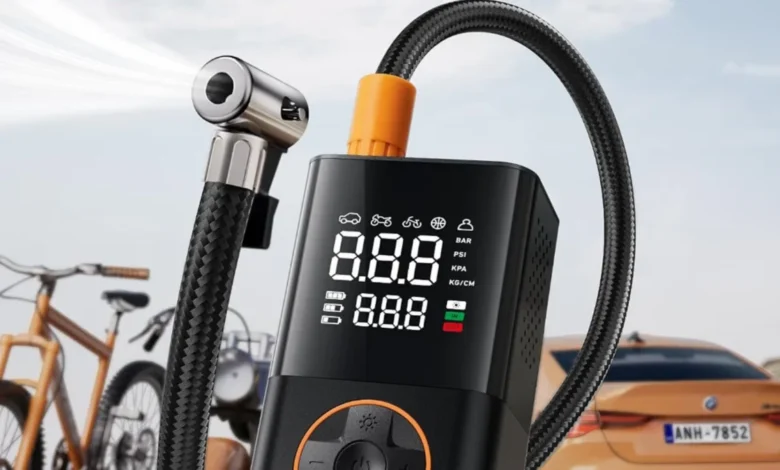
Finally, the AstroAI L7 Tire Inflator Portable Air Compressor represents the integration of digital automation into roadside safety and emergency preparedness. Engineered as a lightweight, single-handed pneumatic device powered by an internal lithium-ion battery, the L7 utilizes a dual-sensor monitoring system to capture pressure readings at a frequency of 200 times per second. With four preset operational modes—Car, Motorcycle, Bicycle, and Ball—alongside a manual custom setting ranging from 3 to 150 PSI, the device is capable of rapidly servicing various inflatable assets, highlighting the expanding scope of portable utility devices available to modern vehicle operators.
Market Chronology and Historical Context of Subcompact Hardware Pricing
The trajectory of compact tool pricing and availability has undergone a notable transformation over the past decade. Historically, deep discounts on industrial and DIY hardware were strictly partitioned into major cyclical retail windows, most notably the post-Thanksgiving Black Friday weekend, Cyber Monday, Father’s Day promotions, and end-of-year inventory clearance sales. During these periods, hardware manufacturers and major distributors such as The Home Depot, Lowe’s, and Amazon utilized loss-leader strategies on entry-level tool kits to capture new platform users, knowing that initial tool purchases would lock consumers into proprietary battery ecosystems.
By the mid-2010s, the proliferation of e-commerce platforms and algorithmic pricing models began to disrupt this rigid promotional calendar. Retailers increasingly adopted dynamic pricing strategies, introducing limited-time flash sales and year-round targeted markdowns to maintain steady inventory turnover and capture off-season demand. The introduction of competitive 12-volt lithium-ion systems by major brands—such as Milwaukee’s M12 platform, Makita’s CXT line, and Bosch’s 12V Max series—intensified market competition. As manufacturing efficiencies improved and brushless motor technology became standardized across mid-tier and premium product lines, profit margins allowed distributors greater flexibility to offer aggressive promotional pricing outside of traditional holiday windows.
Market analysts observe that current discounting practices—such as the notable reductions seen on the Milwaukee M12 combo kit, marked down from its base MSRP of $299 to $169, or the AstroAI tire inflator seeing a 41% reduction—reflect a sophisticated inventory management technique. Retailers use these targeted price corrections to stimulate consumer engagement during traditionally slower retail periods, such as the transition from late summer into the autumn fiscal quarter, ensuring continuous cash flow and maintaining supply chain velocity.
Comparative Economic and Operational Implications for Consumers
The broader implications of these ongoing retail discounts extend far beyond immediate consumer savings, influencing consumer purchasing behavior, ecosystem loyalty, and the operational capabilities of independent contractors and hobbyists alike. From an economic perspective, substantial price reductions on starter kits and precision tool collections lower the barrier to entry for high-tier engineering systems. When a consumer purchases a discounted kit like the Milwaukee M12 combination package, they are not merely acquiring two power tools; they are entering a proprietary energy ecosystem comprising interchangeable batteries and chargers. This initial acquisition often dictates future tool purchases within that specific brand ecosystem, creating long-term brand loyalty for the manufacturer.
Operationally, the widespread availability of specialized mini tools alters how professionals and DIYers approach fieldwork and project execution. The reduction in physical load—carrying a subcompact drill weighing under two pounds versus an 18-volt equivalent weighing four to five pounds—directly correlates with decreased physical fatigue during repetitive overhead or extended installation tasks. Furthermore, the accessibility of precision gear, such as specialized screwdriver sets and compact multi-tools, encourages proactive maintenance and repair culture over disposable consumption. Consumers equipped with proper instrumentation are statistically more likely to attempt minor household repairs, electronics maintenance, and automotive upkeep, thereby extending the lifecycle of consumer goods.
Industry experts anticipate that the convergence of advanced brushless motor efficiency, lightweight composite materials, and dynamic retail pricing will continue to drive growth in the subcompact tool segment. As manufacturers refine battery energy densities and retailers sustain competitive promotional strategies, the market for compact utility equipment is projected to remain a resilient and rapidly expanding sector within the global hardware industry.