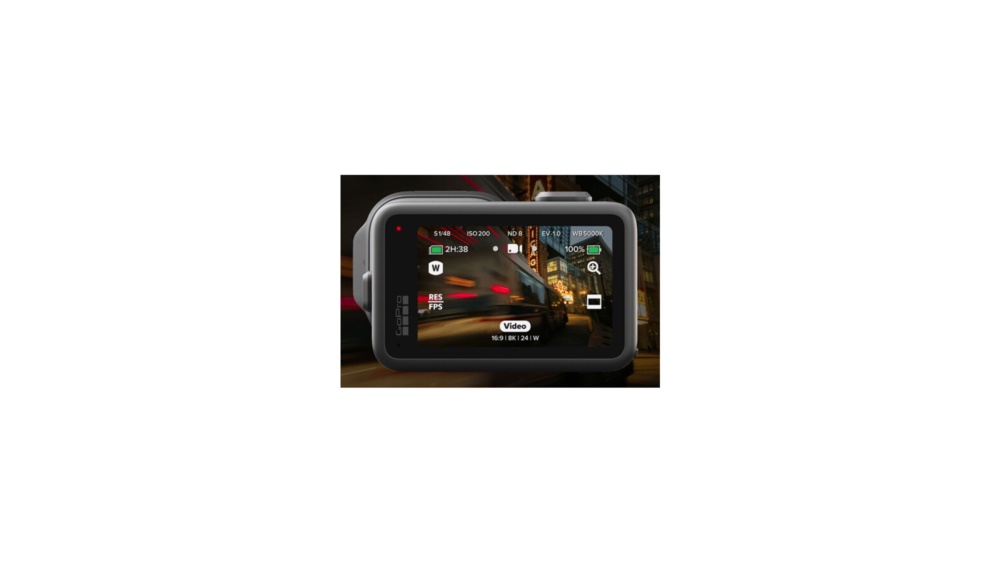
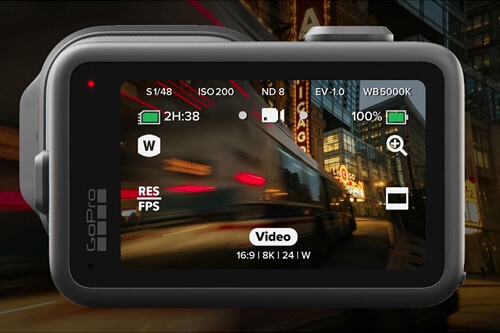
The release of the GoPro Mission 1 Pro ILS, retailing at an MSRP of $699.99 for the body-only configuration, has reignited a long-standing technical debate within the professional cinematography and broadcast industries. Despite significant strides toward standardization by industry peers such as Blackmagic Design, Canon, OBSBOT, Panasonic Lumix, and Sigma, GoPro has maintained a controversial approach to how it displays and implements frame rates in its menu systems. This ongoing issue, often characterized by technical professionals as "framerate malpractice," centers on the misleading labeling of non-integer frame rates as integer values within the camera’s internal software.
Technical Context and the Non-Integer Dilemma
The core of the issue lies in the distinction between integer and non-integer frame rates—a legacy of the transition from black-and-white to color television in the mid-20th century. In the NTSC (National Television System Committee) standard, the introduction of color necessitated a slight shift in the frame rate from 30 frames per second (fps) to 29.97 fps to accommodate the color subcarrier. This discrepancy has persisted into the digital era, with 23.976 (commonly referred to as 23.98), 29.97, and 59.94 fps remaining the standard for traditional broadcast television in former NTSC and PAL-M regions.
Conversely, "integer" rates such as 24, 30, and 60 fps are standard for digital cinema, web streaming, and modern gaming applications. The professional standard requires that cameras accurately report these rates to two decimal places to ensure synchronization, prevent audio drift, and avoid complications during post-production workflows. When a device displays 29.97 fps simply as "30" in its menu, it introduces a layer of ambiguity that can lead to significant errors for editors and colorists, particularly when mixing footage from multiple camera sources in a single timeline.
Chronology of the Discrepancy
The professional broadcast community has spent years advocating for menu transparency. While many manufacturers have responded by updating their firmware to display precise, two-decimal-place rates, GoPro’s recent product line—specifically the Mission 1 Pro ILS—appears to prioritize a simplified user interface over technical accuracy.
In early 2026, industry analysts noted that while the GoPro Mission 1 Pro ILS offers a robust suite of features, it continues to hide the reality of its NTSC-derived rates. This pattern is not new; it has been a recurring point of contention since the rise of high-resolution action cameras that serve as primary capture devices in professional settings. While competitors have moved toward a "what you see is what you get" philosophy, the GoPro software architecture continues to rely on legacy labeling, which assumes that the end-user does not require, or would be confused by, the technical distinction between 29.97 and 30 fps.
The Role of GoPro Labs and "Post-Hacking"
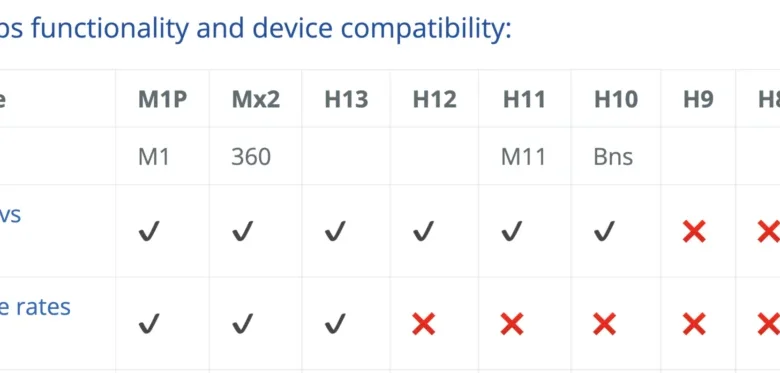
An essential component of this narrative is the existence of the GoPro Labs software—an experimental, optional firmware suite provided by the manufacturer. Through this portal, users can access advanced features, including the ability to force the camera to run at actual integer frame rates. The existence of this software demonstrates that the hardware itself is fully capable of outputting accurate, standardized rates.
The fact that these modifications are relegated to an optional, enthusiast-focused "labs" environment suggests a deliberate design choice rather than a hardware limitation. For professional production houses, relying on unofficial, user-modified firmware to achieve standard technical specifications introduces a level of liability and instability that many organizations are unwilling to accept. This creates a bifurcated user experience: the consumer who uses the camera as-is, and the professional who must "hack" the device to make it compliant with industry standards.
Implications for the Production Pipeline
The impact of this labeling practice extends beyond the camera itself. In modern broadcast and streaming environments, timecode synchronization and multi-cam editing rely heavily on metadata accuracy. If a camera reports a file as 30 fps when it is actually 29.97, software-based editing suites may struggle to align the audio tracks over long durations, leading to the "drifting" effect common in mismatched frame rate scenarios.
Furthermore, the confusion is compounded by regional differences. The inclusion of 25 and 50 fps—which are standard for former PAL and SECAM regions—shows that GoPro is capable of distinguishing between regional standards. However, the failure to provide the same level of precision for the 29.97/59.94 standards indicates a gap in the company’s current approach to global professional standards.
Industry Response and Future Outlook
The industry-wide move toward transparency is largely driven by the demand for "open" workflows. As action cameras become more common in professional broadcast, reality television, and high-end web production, they are increasingly being integrated into ecosystems that use high-end cinema cameras. When a camera does not play well with others in terms of metadata and rate precision, it becomes a liability in a professional environment.
Manufacturers who have successfully navigated this transition have found that providing accurate technical data does not alienate casual users; rather, it elevates the brand’s reputation among professionals. By labeling rates as 23.976, 29.97, and 59.94 where applicable, these companies have effectively reduced the burden on editors and post-production supervisors.
A Call for Firmware Transparency
The argument for a firmware update is centered on the principle of technical interoperability. Critics of the current GoPro interface argue that a firmware update providing a "Professional Mode" toggle—which would reveal the true, two-decimal-place frame rates—would resolve the issue without impacting the simplicity of the interface for casual users.
Such an update would likely be welcomed by the production community, as it would negate the need for third-party "hacks" and align the Mission 1 Pro ILS with the standards set by the rest of the industry. Without such a change, the device remains an outlier in a field that is increasingly intolerant of proprietary, non-standard behaviors.
Data Summary: Frame Rate Standards
To provide clarity on the current state of frame rates used in global production, the following breakdown is essential for understanding why precision matters:
- 23.976 (23.98) fps: The standard for digital cinema and feature film conversion to NTSC-compatible video.
- 24 fps: The standard for digital theatre and native cinema projection.
- 25 fps: The standard for traditional television broadcast in former PAL and SECAM regions.
- 29.97 fps: The standard for NTSC television broadcast in the United States and other NTSC/PAL-M regions.
- 30 fps: The pre-1953 NTSC standard, now commonly used in web video and modern gaming.
- 50 fps: The double-rate standard for high-motion content in former PAL/SECAM regions.
- 59.94 fps: The double-rate standard for modern NTSC-based broadcast high-definition television.
- 60 fps: The standard for high-refresh-rate gaming and web streaming.
The failure to distinguish between these rates in a camera menu is not merely a nomenclature error; it is a fundamental misrepresentation of the data being captured. As the lines between consumer and professional gear continue to blur, the demand for transparency will only grow. GoPro, as a market leader, remains in a position to set the standard for how these devices interact with the professional world. A transition toward honest, precise, and standardized frame rate labeling would represent a significant step forward in the evolution of the Mission 1 Pro ILS and future iterations of the product line.
Until such changes are implemented, production professionals are advised to exercise caution when incorporating these units into workflows that require strict synchronization and to remain cognizant of the discrepancies between reported and actual frame rates when importing files into non-linear editing software.
Related posts: