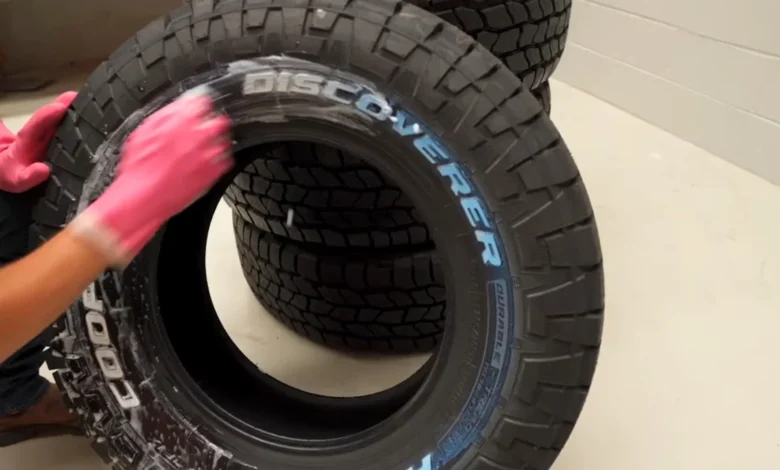
When enthusiasts return from an intensive weekend of off-roading, a certain level of post-trip vehicle maintenance is fully anticipated. Mud-caked fenders, minor rock chips along the alloy rims, and deeply embedded debris within the tread patterns are standard badges of honor for drivers navigating rugged backcountry trails. However, a peculiar phenomenon frequently catches motorists off guard: upon washing away the heavy layers of earth, the rubber sidewalls of the tires often reveal an unexpected, vibrant blue discoloration. Far from being a mere optical illusion or a trick of the light, this strange chemical transformation is a well-documented industrial reaction involving modern tire manufacturing chemistry and environmental exposure.
To understand why rubber suddenly develops blue hues, one must examine the complex chemical architecture of a modern pneumatic tire. Far from being composed solely of vulcanized rubber, a standard off-road tire is a sophisticated matrix of synthetic polymers, reinforcing fillers like carbon black and silica, and an array of protective chemical agents. Among these constituents are various aromatic amines, benzothiazoles, chlorinated paraffins, and melamines. These substances serve critical functions during the tire’s operational lifespan, acting as antiozonants and antioxidants designed to prevent the rubber from prematurely degrading, cracking, or perishing when exposed to severe atmospheric elements and intense ultraviolet (UV) radiation.
Under normal driving conditions, these protective chemical agents remain relatively stable and locked deep within the vulcanized rubber matrix. However, the extreme thermal and mechanical stresses encountered during off-road driving fundamentally alter this dynamic. As a vehicle negotiates rocky terrain, climbs steep inclines, and plows through wet, abrasive mud pits, the tires experience severe flexure and friction. This continuous mechanical agitation generates significant localized heat, causing microscopic chemical compounds within the rubber compound to migrate outward toward the surface—a phenomenon commonly referred to in the automotive and detailing industries as "blooming."
When these migrated chemicals reach the outer boundary of the tire, they encounter aggressive environmental triggers. The combination of intense solar UV radiation, ambient atmospheric heat, and the specific mineral composition of the mud creates an immediate chemical reaction. Certain types of soil contain abrasive particulate matter and alkaline or acidic compounds that actively interact with the blooming antiozonants. When these elements oxidize upon contact with air and moisture, they frequently yield a striking blue or purple chromatic shift. Consequently, off-roaders who wash their vehicles after a grueling trail run are often startled to find their expensive all-terrain or mud-terrain tires sporting an uncanny azure tint.
While this discoloration can be alarming to vehicle owners who fear structural harm or chemical degradation, automotive and tire maintenance experts emphasize that a blue tire is not inherently a damaged tire. The structural integrity of the carcass, steel belts, and tread blocks remains fundamentally intact. Nevertheless, if the reactive chemical residue is left unattended for extended periods, it can permanently stain the rubber, leaving unsightly blemishes that resist standard washing techniques. Therefore, addressing the issue promptly through proper cleaning and preventative care is essential for maintaining the aesthetic appeal and longevity of specialized off-road equipment.
Comprehensive Maintenance Strategies for Off-Road Tires
Preventing the unsightly blue staining associated with trail driving requires a proactive maintenance regimen that begins well before the vehicle ever touches the dirt. Off-road tires operate under vastly different physical constraints compared to standard highway passenger tires, necessitating specialized care protocols to mitigate wear and chemical migration.
Prior to entering an unpaved trail network, experienced off-roaders routinely practice "airing down"—lowering the tire inflation pressure below standard highway specifications. This strategic deflation increases the physical contact patch of the tire, significantly improving traction over loose surfaces, jagged rocks, and uneven obstacles. Beyond enhancing grip, lowering tire pressure acts as a vital preservation measure. By allowing the tire to mold around obstacles rather than forcefully striking them, it reduces sharp impact shocks that accelerate tread wear and tear. Furthermore, reduced slippage on loose terrain minimizes the extreme frictional heat that triggers the internal chemical blooming responsible for blue discoloration.
Equally critical to the health of off-road tires is the condition of the vehicle’s suspension system, particularly the shock absorbers. Off-roading places immense strain on dampening components. When shocks fail or lose their efficiency, they can no longer effectively absorb the kinetic energy of rough terrain. Consequently, the tires are forced to take the brunt of every impact, leading to severe, irregular tread wear patterns known as cupping or feathering. Maintaining and regularly inspecting suspension components ensures that impact forces are evenly distributed across the entire rubber footprint, preventing localized hot spots that stimulate chemical migration.
Rotation Protocols and Alignment Complexities
Tire rotation is universally recognized as a cornerstone of vehicle maintenance, but the methodology changes significantly for vehicles equipped for serious off-road excursions. Traditional passenger cars typically utilize a four-tire rotation pattern. In contrast, dedicated off-road vehicles—such as lifted trucks, Jeeps, and SUVs—frequently feature full-sized matching spares mounted on the rear tailgate or roof rack. Ignoring the spare tire during routine maintenance guarantees that four tires experience accelerated wear while a fifth brand-new tire sits idly unused.
To achieve uniform tread life across all operational equipment, off-road enthusiasts must adopt a five-tire rotation pattern. For vehicles with directional tires or symmetrical tread designs, this usually involves a specific clockwise or crisscross sequence that rotates the spare into the primary rotation schedule at regular intervals—typically every 3,000 to 5,000 miles, depending on the severity of trail use. This practice ensures that every tire shares an equal distribution of wear, prolongs the overall investment lifecycle of expensive rubber, and prevents discrepancies in rolling diameter that can strain four-wheel-drive transfer cases and differential systems.
In addition to systematic rotations, maintaining precise wheel alignment is paramount. However, vehicle owners who modify their suspensions with lift kits or larger-diameter tires often discover that standard factory alignment specifications no longer apply. Custom lifts alter caster, camber, and toe angles, which can cause rapid, uneven scrubbing of the tread blocks. Correcting these angles requires specialized alignment technicians who thoroughly understand modified suspension geometries, ensuring that the tires track straight and wear evenly across both paved highways and rugged dirt trails.
Post-Trail Cleaning and Chemical Management
The immediate aftermath of an off-roading excursion requires a meticulous cleaning protocol to neutralize reactive compounds and prevent permanent blue staining. The cleaning process must be approached with both chemical and mechanical precision to avoid damaging the delicate rubber compounds.
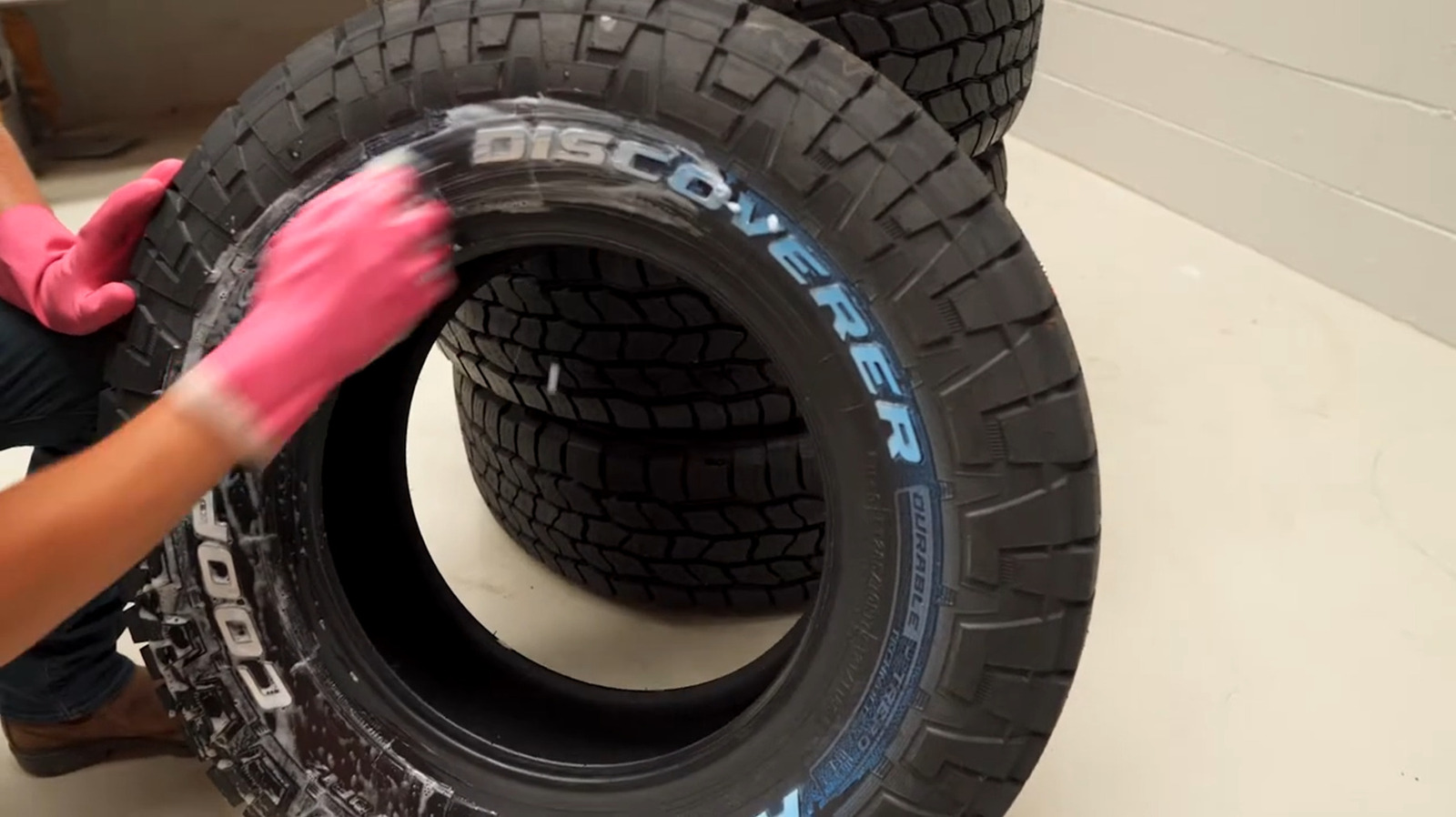
The remediation procedure should commence with a thorough high-pressure water rinse to strip away heavy layers of caked mud, grit, and organic debris. Once the bulk of the soil has been removed, technicians recommend utilizing a specialized rubber or tire cleaner applied with specific mechanical tools. A stiff-bristled tire brush should be used carefully on the thick rubber blocks of the tread pattern to dislodge embedded stones and stubborn dirt. For the sensitive sidewalls, however, a softer brush is required to prevent abrasion damage while working the cleaning solution into the pores of the rubber.
Crucially, vehicle owners must exercise caution regarding the chemical composition of the cleaning products they select. Harsh, highly caustic degreasers or industrial acid-based wheel cleaners can react adversely with the antiozonant chemicals that have migrated to the surface, paradoxically worsening the blue discoloration or accelerating rubber degradation. Neutral pH cleaners formulated specifically for modern tire compounds are strongly recommended. Following a thorough scrubbing, the tires must be rinsed completely with clean water and dried using a microfiber towel to remove any lingering chemical residue.
To provide an added layer of defense against future staining and environmental aging, many detailers advocate for the application of a high-quality tire sealant or protectant after the cleaning process is complete. Sealants create a microscopic barrier that inhibits the outward migration of chemical compounds while blocking UV rays that catalyze discoloration. Finally, when the vehicle is parked for extended periods between off-road adventures, proper storage practices play a decisive role. Tires should be kept away from direct, prolonged exposure to intense sunlight and high-heat environments. Utilizing opaque tire covers can dramatically slow down photo-oxidation and the formation of dry rot, preserving the structural integrity and appearance of the rubber for years of future trail exploration.
Broader Environmental and Industry Implications
The phenomenon of tire blooming and chemical migration extends far beyond aesthetic concerns for off-road enthusiasts, intersecting with broader environmental and automotive regulatory discussions. As global regulatory bodies increasingly scrutinize the ecological impact of microplastics and automotive runoff, the chemical composition of tires has emerged as a subject of intense scientific research.
Compounds such as 6PPD—a ubiquitous antiozonant widely utilized in tire manufacturing to prevent cracking—have recently garnered significant attention from environmental agencies worldwide. When tires wear down during normal operation or through aggressive off-road friction, microscopic particles containing these chemical additives are deposited onto roadways and into surrounding ecosystems. Rainwater runoff subsequently carries these substances into local watersheds, where researchers have linked certain tire-derived chemical byproducts to acute toxicity in aquatic life, most notably contributing to mortality events in specific migratory fish populations.
In response to these mounting environmental pressures, the global tire manufacturing industry is undergoing a quiet technological transformation. Major rubber producers and chemical suppliers are actively investing in research and development to formulate eco-friendly alternatives to traditional antiozonants and plasticizers. These next-generation compounds aim to maintain the vital safety, durability, and flexibility standards required for modern driving while drastically minimizing environmental toxicity and mitigating unwanted surface reactions like the blue staining frequently observed by off-road motorists.
For the everyday consumer and outdoor recreationist, these ongoing industrial shifts underscore the evolving relationship between automotive passion and environmental stewardship. While the sudden appearance of blue sidewalls after a muddy weekend trail run will likely remain a common topic of discussion within the off-road community, understanding the underlying chemistry empowers vehicle owners to manage maintenance effectively. By combining proper trail preparation, diligent cleaning regimens, and an awareness of sustainable automotive practices, enthusiasts can continue to explore rugged backcountry terrain while minimizing both aesthetic blemishes and their broader ecological footprint.