YouTube Advertising Growth Moderates in Q3 2026 While Subscription, Connected TV, and AI Initiatives Surge

Alphabet Inc.’s latest financial disclosures for the third quarter of 2026 reveal a complex and evolving landscape for its premier video-sharing platform, YouTube. While the platform’s core advertising revenue experienced a modest deceleration compared to previous quarters, robust counterweights emerged in the form of soaring subscription figures, aggressive expansion into connected television (CTV) living rooms, expanding e-commerce integrations, and a widespread embrace of generative artificial intelligence tools.
According to Alphabet’s Q3 2026 earnings report, YouTube advertising revenue reached $11.2 billion for the period. While this figure underscores the platform’s staggering commercial scale, the year-over-year ad growth slowed to 9%, marking a notable dip from the 13% growth rate reported during the second quarter. Despite this slight cooling in ad intake, Alphabet executives emphasized that YouTube’s overarching ecosystem is diversifying rapidly, with non-advertising revenue streams proving increasingly vital to the company’s financial health and market dominance.
The Subscription Boom and the Connected TV Revolution
A primary driver of YouTube’s diversified revenue model is its booming subscription business. YouTube’s premium offerings—namely YouTube Music and YouTube Premium—have achieved a major milestone, surpassing a combined total of 150 million subscribers globally. This represents a monumental leap from early 2024, when the platform celebrated crossing the 100 million subscriber threshold, illustrating sustained, accelerated demand for ad-free viewing experiences and dedicated music streaming services.
This subscription surge has significantly bolstered Google’s overall subscription revenues, contributing to an 11% year-over-year increase in that segment for Q3 2026. Industry analysts note that much of this momentum is being fueled by an unexpected and highly lucrative demographic: connected TV (CTV) viewers.
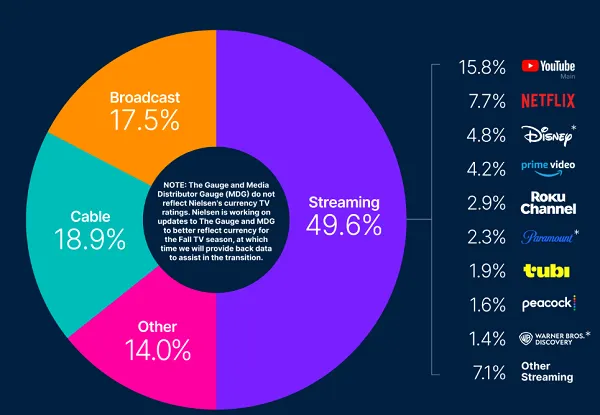
During Alphabet’s Q2 2026 earnings call in July, company executives highlighted a dramatic increase in Premium sign-ups among households streaming YouTube content via living room television sets. This trend aligns directly with broader shifting media consumption habits. According to Nielsen’s authoritative "The Gauge" report published in August 2026, YouTube officially cemented its status as the top streaming platform in the United States, frequently capturing the largest share of total television viewing time and regularly outpacing traditional broadcast and cable networks, as well as subscription video-on-demand competitors.
Capitalizing on this behavior, Google Chief Business Officer Philipp Schindler revealed during the Q3 earnings call that the "Living Room" viewing experience has transformed into a critical financial engine. CTV advertising now accounts for more than one-third of total YouTube advertising revenue, proving that the platform has successfully transitioned from a mobile and desktop novelty into a primary fixture of the modern American living room.
E-Commerce Integration and Creator Economy Expansion
Beyond passive viewing and subscriptions, YouTube is aggressively positioning itself as a major player in social commerce and creator monetization. The platform’s partnership ecosystem continues to swell, with more than 3 million content creators now enrolled in the YouTube Partner Program, unlocking monetization channels through ads, channel memberships, and fan funding.

E-commerce represents one of the fastest-growing frontiers for the platform. Alphabet reported that over 1.3 million channels are now actively enrolled in YouTube’s shopping program. This retail infrastructure received a massive strategic boost recently when YouTube announced a landmark affiliate partnership with Amazon.
The integration allows U.S.-based creators to seamlessly tag Amazon products directly within their long-form videos, YouTube Shorts, and livestreams. By bridging the gap between content creation and frictionless online retail, YouTube is providing creators with robust new revenue streams while transforming its vast library of user-generated content into an interactive shopping mall. Meanwhile, Schindler noted that the platform continues to witness strong adoption of its Demand Gen advertising products among small and medium-sized businesses (SMBs), ensuring a diversified and resilient advertiser base despite macroeconomic fluctuations.
Generative AI Integration and Creative Toolsets
In lockstep with its commercial expansions, YouTube is aggressively integrating generative artificial intelligence across its ecosystem to streamline content creation, enhance ad targeting, and boost user engagement. Alphabet executives pointed out that the platform’s infrastructure processes a staggering volume of media, with more than 20 million videos uploaded daily. To manage and stimulate this immense creative output, YouTube has deployed a suite of AI-powered utilities within YouTube Studio, alongside conversational editing assistants designed specifically for Shorts and YouTube Create.
The rollout of these technologies builds upon a series of strategic feature introductions earlier in the year. In March, YouTube launched an AI-powered "reimagine" option for Shorts, allowing viewers to generate alternative video variations based on existing creator clips. Additionally, the platform tested an "Extend with AI" tool designed to help creators automatically generate alternative video endings.
These technical additions appear to be striking a chord with the creator community. A usage report published by YouTube revealed that 61% of individuals who have published videos on the application over the preceding 12 months expressed keen interest in leveraging AI tools to seamlessly insert themselves into video content or manipulate digital scenes.
Broader Market Implications and Future Outlook
The financial and operational data from the third quarter of 2026 paints a portrait of a maturing platform that is successfully navigating the transition from a pure digital video repository to a diversified entertainment, commerce, and technology conglomerate. While the deceleration in ad growth from 13% to 9% might initially trigger caution among short-term investors, the counterbalance provided by a 150-million-strong subscriber base and the booming connected TV market suggests structural stability.
As YouTube solidifies its reign as America’s most-watched streaming service, its strategic bets on the living room, creator-led e-commerce, and generative artificial intelligence are redefining the digital media landscape. Nevertheless, industry observers caution that as the platform leans further into generative content, it will inevitably need to navigate challenges related to content quality, copyright management, and the proliferation of low-quality automated media—colloquially known as "AI slop."
For now, however, user data indicates that YouTube’s AI-powered creative toolkit is resonating strongly with its base. With advertising revenues remaining robust at $11.2 billion, a thriving subscription model, and deep integrations with retail giants like Amazon, YouTube enters the final stretch of 2026 positioned securely at the center of the global digital economy.
Related posts: