Snapchat Introduces New Plans Feature to Seamlessly Transition Digital Chats Into Real-Life Meetups

Snapchat has officially rolled out a brand-new feature designed to bridge the gap between virtual communication and real-world socialization. Dubbed “Plans,” the fresh addition allows users to effortlessly transition from standard text-based conversations to setting up tangible calendar events directly within the app’s interface. This move represents a significant step in the platform’s ongoing strategy to foster authentic human connections, distinguishing itself from competitors that prioritize endless algorithmic feeds and superficial follower counts.
As digital socialization continues to evolve, tech platforms are increasingly challenged to provide tools that encourage users to step away from their screens and engage in physical environments. With the launch of Plans, Snapchat is tackling this challenge head-on, giving its massive user base a streamlined, in-app mechanism to organize gatherings without ever needing to juggle multiple external applications.
Mechanics of the New Plans Feature
The newly introduced Plans functionality is built directly into Snapchat’s existing chat infrastructure, ensuring a frictionless user experience. Rather than forcing individuals to exit the app, open a separate calendar, and manually send out invites, Snapchatters can now initiate an event right inside a conversation thread.
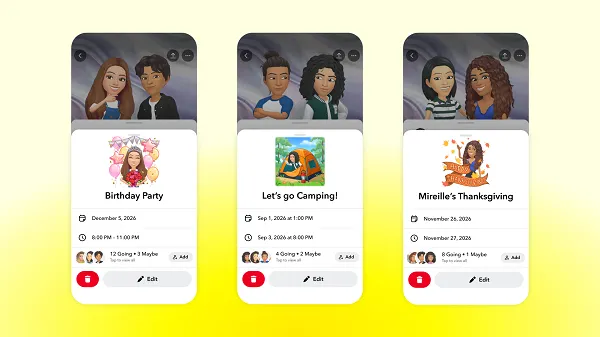
According to the official specifications released by Snap, the event creation process is both robust and user-friendly. When setting up a gathering, event creators can assign a specific title, choose an exact date and time, and invite up to 200 friends simultaneously. One of the standout creative elements of the feature is its personalized approach to design: events are automatically paired with dynamic, Bitmoji-powered cover art. This visual artwork updates in real-time as the event details evolve and more friends RSVP, adding a playful yet informative layer to the coordination process.
Once an event is created, invitations are dispatched directly into the one-on-one or group chat interfaces of the invited friends. Recipients can respond instantly using a simplified RSVP system, selecting from three clear options: "Going," "Maybe," or "Can’t Go." Crucially, this entire interaction takes place without interrupting the flow of the ongoing conversation.
To ensure that participants do not lose track of their schedules, Snapchat has incorporated a dedicated "My Plans" section within each user’s personal profile. This hub allows event creators and attendees to monitor all upcoming gatherings and verify details at a glance. Additionally, users can view accepted event information directly on their friends’ profiles, promoting a sense of shared visibility within trusted social circles. To prevent missed connections, the app will automatically dispatch reminder notifications to all confirmed attendees exactly one hour before an event is scheduled to begin.

A Long-Awaited Development: Chronology and Background
While the official rollout of Plans marks a major milestone for the platform, the feature has been a long time in the making. The development of native event-planning tools within Snapchat dates back several years, reflecting a methodical approach to product design and feature integration.
Initial traces of an internal events feature were first spotted by tech analysts examining the back-end source code of the Snapchat application as early as 2021. During that period, developers uncovered early frameworks that hinted at calendar integration and group coordination capabilities. However, rather than rushing an unpolished tool to market, Snap spent years refining the user experience, observing shifting communication habits, and building complementary features.
Over the subsequent years, Snapchat introduced several foundational elements that paved the way for Plans. Among these was the Countdown feature, which allowed users to set joint reminders that ticked down to significant dates or mutual meetups with friends. Additionally, the platform heavily invested in upgrading its Snap Map ecosystem, introducing location listings, sharing tools, and localized loyalty badges to help friends find each other in the physical world. By layering these incremental updates over time, Snapchat systematically built a comprehensive suite of real-world interaction tools, culminating in the comprehensive release of the Plans feature.
Capitalizing on Usage Behavior and Supporting Data
Snapchat’s decision to launch the Plans feature is not merely an aesthetic upgrade; it is firmly rooted in empirical user data and observed behavioral trends among its core demographic.
Company research indicates a clear shift in how younger generations utilize digital messaging platforms. According to a recent internal survey cited by Snap, an impressive 35% of U.S. Snapchatters aged 13 to 24 routinely rely on the app’s group chat functionality specifically to coordinate plans, schedule outings, and organize real-world events. By formalizing this organic user behavior into a dedicated feature, Snapchat is removing friction from a process that its audience was already attempting to execute using less efficient messaging workarounds.
This data-driven approach highlights Snapchat’s acute awareness of its audience’s daily habits. By capturing the moment a group chat transitions from casual banter to concrete scheduling, Snapchat positions itself as an indispensable utility in the social lives of Gen Z and younger millennials.
Strategic Vision and Industry Implications
The introduction of Plans arrives at a pivotal philosophical moment for Snap Inc., aligning closely with the company’s overarching corporate identity and long-term business strategy. In an era where many social media giants measure success strictly by daily active user retention, time-spent metrics, and algorithmic scroll depth, Snapchat has consistently charted a different course.

Earlier this week, Snap CEO Evan Spiegel published an expansive letter commemorating the 15-year anniversary of the application. In the missive, Spiegel reflected on the platform’s foundational ethos, emphasizing that Snapchat’s enduring success stems from its unwavering commitment to connecting real-life friends rather than accumulating anonymous followers. He reiterated that the company’s primary objective is to bring people together in meaningful ways, rather than trapping them in an endless cycle of passive content consumption within a centralized feed.
The rollout of the Plans feature is a direct manifestation of this philosophy. By providing tools that actively facilitate physical, face-to-face interactions, Snapchat is intentionally designing a product ecosystem where digital technology serves as a bridge to the physical world, rather than an isolated substitute for it.
From an industry perspective, this strategy differentiates Snapchat from competitors like Meta, TikTok, and X, which heavily lean toward public broadcast models and algorithmic content distribution. By doubling down on private, intimate, and real-world connectivity, Snapchat carves out a defensible market niche that appeals strongly to users experiencing social media fatigue.
Fact-Based Analysis of Future Impact
The long-term implications of the Plans feature stretch across several operational and cultural dimensions for the platform:
- Increased Utility and Engagement Quality: By integrating calendar functionality into daily messaging, Snapchat increases its sticky utility. Users who rely on the app to manage their social calendars are far more likely to open the application daily, driving high-intent engagement rather than passive scrolling.
- Strengthened Real-World Integration: Features like Snap Map and Plans collectively transform Snapchat from a purely ephemeral messaging app into an essential lifestyle companion for real-world coordination. This strengthens user loyalty by embedding the app deeply into the fabric of users’ social lives.
- Advertising and Local Partnership Opportunities: While the initial launch of Plans focuses purely on peer-to-peer coordination, the foundational architecture opens up intriguing future possibilities for commercial integrations. Brands, local businesses, and event organizers could potentially leverage event-creation tools to drive foot traffic, sponsor local gatherings, or offer location-based promotions tied directly to Snap Map loyalty badges and scheduled meetups.
As Snapchat continues to refine its ecosystem around real-world connection, the Plans feature stands out as a pragmatic, user-centric innovation. By listening to how its community naturally communicates and translating those insights into intuitive product design, Snapchat is successfully reinforcing its unique position in the modern digital landscape.
Related posts: