Meta Faces High Stakes and Retention Hurdles as Muse AI Agents Drive Record E-Commerce Volume Amid Growing Regulatory Scrutiny

During its Q3 earnings presentation, Meta Platforms provided investors and analysts with a detailed look into the adoption trajectory, financial mechanics, and strategic roadmap of its flagship conversational AI assistant, Muse. The disclosure comes at a critical juncture for the social media giant, which has committed immense capital resources toward building out its next-generation artificial intelligence infrastructure. While consumer enthusiasm at the top of the funnel remains robust—evidenced by over 10 million downloads and top-ranking App Store positions since its debut in the United States and Canada—the company faces profound challenges. These include declining user retention over time, escalating privacy and data security concerns, and the daunting task of monetizing a technology platform that requires hundreds of billions of dollars in infrastructural investments.
The Genesis and Strategic Importance of Muse
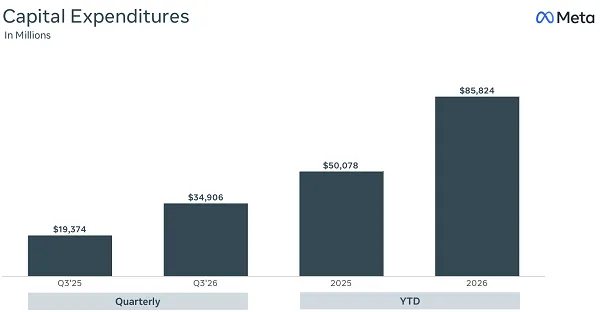
Meta introduced Muse to the market as part of a calculated strategy to transition its massive investments in computational power, data centers, and specialized silicon into a tangible revenue-generating product. For years, Wall Street and industry observers have scrutinized Meta’s capital expenditure, questioning when and how the company plans to offset the soaring costs associated with its aggressive AI pivot. Muse represents the cornerstone of that commercialization strategy.
Speaking during the Q3 earnings call, Meta CEO Mark Zuckerberg emphasized that the application has experienced exceptional initial traction since launching last month. "Growth continues to be strong and we have been the number one application in the App Store almost every day," Zuckerberg told analysts and investors. "Engagement and retention are also off to a strong start. About 25% of people who have set up Muse use it on any given day."
However, while initial daily active usage figures appear promising on paper, industry analysts point out that the broader application ecosystem for generative AI is fraught with engagement volatility.
Adoption Trends and Retention Realities
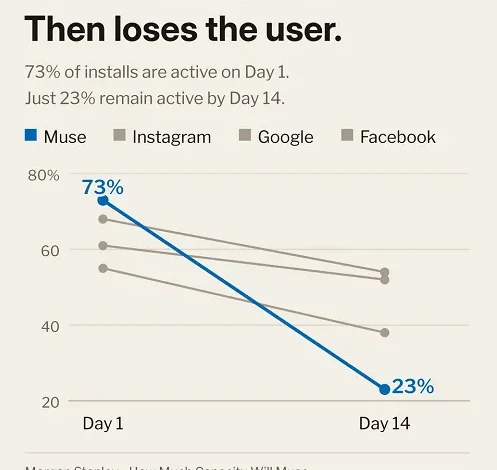
Despite Zuckerberg’s optimistic framing regarding daily engagement metrics, independent third-party analytics paint a more nuanced picture of user behavior. Data compiled by market intelligence firm Sensor Tower and highlighted by industry researchers on social media platforms indicate that user retention for Muse experiences a sharp downward trajectory roughly two weeks following the initial download.
This retention curve is not unique to Meta’s offering. Across the broader generative AI landscape, consumer utilities and chatbot applications frequently experience high initial curiosity-driven downloads followed by a significant drop-off in active daily usage as the novelty fades. Nevertheless, for a company like Meta—which has allocated hundreds of billions of dollars toward its long-term artificial intelligence roadmap, with cumulative investments projected by some financial analysts to approach the trillion-dollar mark—even standard industry attrition rates pose a serious strategic concern.
To justify expenditures of this magnitude, Meta must establish high lifetime value metrics and consistent, sticky user habits. If churn rates stabilize at levels comparable to legacy chatbots, generating a sufficient return on invested capital will require extracting exceptionally high value from every active user who remains on the platform.
The E-Commerce Powerhouse: Driving High-Value Transactions
Fortunately for Meta, early usage patterns reveal a distinct monetization vertical that far exceeds initial expectations: commercial shopping and transaction facilitation. According to data shared by Zuckerberg during the earnings call, more than 25% of active Muse users leverage the AI agent primarily for commercial purposes—seeking out competitive product deals, comparing pricing models, and executing direct purchases.
More impressively, the average transaction size facilitated through the Muse platform exceeds $200, signaling that consumers are willing to trust the conversational agent with substantial purchases rather than merely utilizing it for casual queries or low-stakes information retrieval. This high-intent commercial behavior has placed unprecedented demands on financial technology infrastructure partners integrated within Meta’s ecosystem.
"Plaid told us they hadn’t seen activity like they’re seeing with their connector on any other service before," Zuckerberg stated during the earnings call. "And in the first week, we had to work with Stripe to raise credit limits since the volumes were above what any of any of us expected."
This transactional volume is precisely the mechanism Meta needs to bridge the gap between heavy infrastructure spending and long-term profitability. By positioning Muse as an intelligent shopping concierge, Meta can capture a percentage of sales, charge merchant referral fees, or leverage its targeted advertising machinery to monetize the commercial intent passing through the conversational interface. If consumers routinely utilize the platform to execute multi-hundred-dollar purchases, the economic equation for Meta’s AI division begins to look considerably more viable.
Privacy Scandals and Security Vulnerabilities
While the e-commerce capabilities of Muse offer a clear pathway to profitability, Meta’s broader corporate challenges regarding consumer data privacy threaten to undermine trust in its AI ecosystem. The company’s ambitions to scale Muse to billions of users worldwide face significant headwinds stemming from regulatory penalties and cybersecurity vulnerabilities.
Just days prior to the Q3 earnings disclosure, a New Mexico state judge ordered Meta to pay a staggering $25 billion in financial penalties after a civil jury concluded that the corporation had intentionally misled consumers regarding the safety and privacy of their personal data. This landmark ruling represents one of the most severe judicial penalties ever levied against a technology platform over data handling practices, compounding the company’s regulatory pressures across multiple international jurisdictions.
Compounding these macroeconomic regulatory woes, product-specific security flaws have also surfaced. Cybersecurity researchers and reports from technology publication Ars Technica revealed that a simple exploration technique allowed an independent security group to access extensive logs and personal details from Muse user queries. The ability to extract sensitive personal and business secrets through basic navigational exploits highlights critical vulnerabilities in how conversational AI platforms store, process, and protect user data.
In direct response to these mounting pressures, Zuckerberg announced that Meta is actively developing a proprietary infrastructure solution known as the "Muse Confidential VM." This specialized virtual machine architecture is designed to insulate user data, secure conversational history, and enforce stringent privacy boundaries. Whether these technical safeguards can restore consumer confidence in the wake of multi-billion-dollar legal judgments and security exposures remains one of the defining questions for the platform’s future.
The Horizon: Multi-Agent Networks and Hardware Integration
Looking beyond immediate monetization and security remediation, Meta is aggressively mapping out the next evolutionary phase of its artificial intelligence ecosystem. Zuckerberg outlined a visionary plan to construct what he termed a "Muse network"—an interconnected grid of autonomous AI agents designed to communicate, negotiate, and optimize tasks across a decentralized digital landscape.
Rather than operating as a solitary, single-player interface where an individual interacts exclusively with their personal assistant, the proposed Muse network would allow a user’s AI agent to seamlessly interface with the agents of friends, family members, and commercial entities.
"Building what I refer to as the Muse network, which is making it so that Muse is not just a kind of single-player game where you have your Muse, but making it so that your Muses can work with your friends and your families," Zuckerberg explained. "And if you want to buy something, it’s not just navigating to that business’ website. It’s talking to their agent. I think that getting that all to work well together is going to unlock tremendous value at scale."
This multi-agent coordination mirrors earlier, controversial initiatives discussed by Meta executives regarding the deployment of millions of synthetic AI personas across its social networking applications, such as Instagram and Facebook, to stimulate engagement. However, in the context of Muse, the network is framed as a functional utility intended to optimize workflows, coordinate group activities, and automate B2C (business-to-consumer) negotiations.
Furthermore, Meta is wasting no time integrating the software layer with its physical hardware ecosystem. Zuckerberg confirmed during the earnings presentation that Muse will officially roll out to Meta’s line of smart glasses this coming November. By bridging conversational intelligence with wearable augmented-reality hardware, Meta aims to transition Muse from a screen-bound application into a ubiquitous, ambient assistant capable of interpreting the physical world in real time.
Conclusion and Market Outlook
Meta’s third-quarter disclosures regarding Muse encapsulate the duality of the modern technology sector: breathtaking consumer adoption and high-value commercial utility juxtaposed against steep financial burn rates, retention drop-offs, and critical security vulnerabilities.
The platform has undeniably proven its capability to drive lucrative e-commerce transactions, validating the hypothesis that conversational agents can serve as direct conduits for high-ticket retail sales. Yet, as the company navigates historic regulatory fines, privacy litigation, and the infrastructural cost of its generational AI pivot, the margin for operational error is razor-thin.
As Meta prepares to introduce Muse to its hardware ecosystem via smart glasses and lays the groundwork for interconnected multi-agent networks, the ultimate success of the platform will hinge on its ability to secure consumer trust, stabilize long-term user engagement, and sustainably convert massive capital expenditures into enduring operational profitability.