Seattle’s Enigmatic Raccoon: Unraveling the Mystery of Jimothy’s Identity and the Phenomenon of Urban Wildlife Celebrity

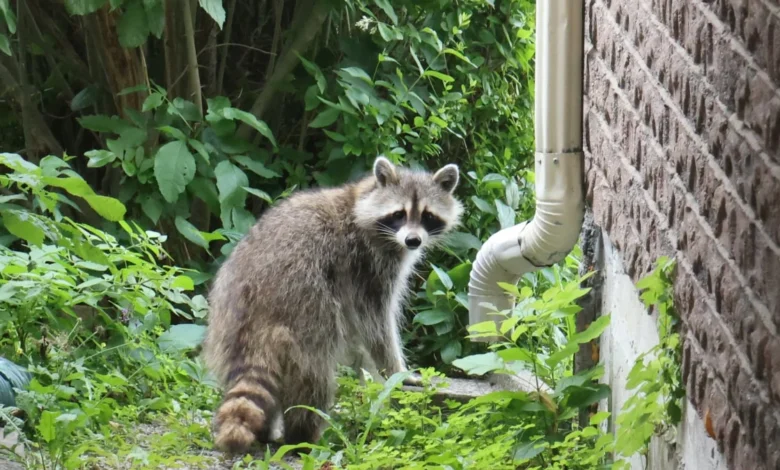
The bustling urban landscape of Seattle, Washington, particularly its vibrant Ballard neighborhood, has become the improbable stage for a captivating wildlife mystery surrounding a uniquely shaped raccoon named Jimothy. What began as a viral video of an unusually compact creature scuttling across a street has rapidly escalated into a local legend, complete with internet fame, widespread public adoration, and a growing debate among residents and wildlife experts: is "Jimothy" a singular, exceptionally resilient individual, or are the sightings indicative of a mysterious lineage of similarly proportioned raccoons inhabiting the city? The internet, in its characteristic fashion, remains playfully undecided on the appropriate plural for "Jimothy" – be it "Jimothies," "Jimothem," or "Jimothi" – a reflection of the larger, unresolved question about the identity of this endearing urban icon.
The Genesis of a Star: Jimothy’s Viral Ascent
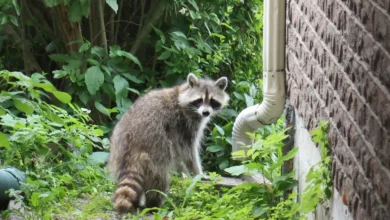
The phenomenon surrounding Jimothy exploded into public consciousness following a serendipitous encounter on July 13 when Seattle resident Kiana Hall was on a walk through Ballard. Hall initially mistook a creature beneath a parked car for a domestic feline. Her curiosity piqued, she began recording as the animal emerged, revealing the distinctive masked face of a raccoon, yet with a notably shortened torso and neck. Struck by its peculiar charm, Hall instinctively named the raccoon "Jimothy," a moniker she later explained to Today simply felt fitting for the creature’s appearance.
The brief video, capturing Jimothy’s distinctive gait and unusual build, was quickly uploaded to social media platforms. Its novelty resonated immediately with viewers, accumulating millions of views across Instagram, TikTok, and Twitter within days. The visual anomaly of a seemingly healthy yet remarkably compressed raccoon navigating an urban environment struck a chord, transforming Jimothy from a local curiosity into an overnight internet celebrity. This rapid ascent to fame initiated what fans enthusiastically dubbed "Hot Jimothy Summer," a cultural wave that swept through Seattle and beyond.
The public’s infatuation with Jimothy manifested in a myriad of creative expressions. Memes featuring the raccoon’s unique silhouette proliferated online, fan art depicting Jimothy in various whimsical scenarios adorned social media feeds, and some dedicated admirers even commissioned murals and tattoos in his honor. The demand for Jimothy-themed merchandise, ranging from apparel to home decor, underscored the depth of his cultural impact. Local organizations and institutions quickly recognized and embraced the phenomenon. The Washington State Department of Transportation (WSDOT) leveraged Jimothy’s popularity for public service announcements, subtly integrating the beloved raccoon into messages about road safety or environmental awareness. The University of Washington reportedly bestowed an honorary doctorate upon the creature, a lighthearted gesture acknowledging his significant local influence. Even the Seattle Mariners baseball team incorporated a costumed Jimothy into their seventh-inning Salmon Run race, where he famously defeated four oversized fish, cementing his status as a city mascot. Globally, tech giant Google joined the celebration, introducing an animated Jimothy that scurries across the screen when users search for "Jimothy" or "Jimothy the raccoon," demonstrating the raccoon’s reach into mainstream digital culture.
The Medical Marvel: Understanding Jimothy’s Unique Physique
Jimothy’s distinctive appearance – characterized by a noticeably shortened torso and neck – has been attributed by experts to a suspected congenital spinal deformity, most likely a condition resembling short spine syndrome. This rare genetic disorder, more commonly observed in domestic animals such as dogs (e.g., the "Quasimodo" dog breed) and occasionally cats, results from the compression and fusion of vertebrae in the spinal column. In affected animals, the spine appears significantly abbreviated, leading to a compact, "hunchbacked" or "squat" body shape. While the condition can vary in severity, ranging from minor cosmetic differences to more debilitating issues affecting mobility and internal organs, Jimothy’s case appears to be on the less severe end of the spectrum.
It is crucial to note that Jimothy has not undergone a veterinary examination, meaning the diagnosis of short spine syndrome remains speculative rather than clinically confirmed. However, observations from numerous videos shared by residents consistently show the raccoon exhibiting a remarkable degree of functional ability. He is seen walking, climbing, foraging for food, and independently navigating the complex urban environment of Ballard. This resilience suggests that despite his compressed build, Jimothy’s daily life functions are largely unimpaired, allowing him to survive and thrive in the wild, at least for now. Wildlife experts often emphasize the adaptability of raccoons (Procyon lotor), intelligent and resourceful omnivores that have successfully colonized diverse habitats, including dense urban areas. Their dexterity, keen senses, and problem-solving skills enable them to exploit human-modified environments for food and shelter, making them particularly adept at overcoming physical challenges like those Jimothy may face. The absence of apparent distress or significant mobility issues in the viral footage further supports the notion that he is coping well with his unique physiology.
The Plot Thickens: A Chronology of Conflicting Sightings
As Jimothy’s fame grew, so did the number of purported sightings. Ballard residents, captivated by the mystery, began to delve into their personal archives – old photographs, home security camera footage, and neighborhood social media posts – searching for evidence of the distinctive raccoon. This enthusiastic archival effort, however, inadvertently introduced a significant complication to Jimothy’s narrative.
Rebecca Sorenson, a Ballard resident, articulated the emerging confusion in an interview with FOX 13 Seattle, highlighting the conflicting accounts of Jimothy’s age. "There’s posts now that say that he was born a year ago and then other people with posts that saw him in 2017," Sorenson stated, posing the pivotal question, "I’m curious now if there are more than one?"
This discrepancy in timelines presented a formidable challenge to the notion of a singular Jimothy. The initial viral video of Jimothy gained widespread attention in July 202X. If some residents’ claims of seeing the same uniquely shaped raccoon date back to 2017, it would imply a significant lifespan for a wild raccoon. Wendi Mallo, an experienced animal keeper who cares for raccoons at Northwest Trek Wildlife Park, provided expert insight into the typical longevity of these animals. She informed FOX 13 Seattle that a lifespan of three to five years is considered long for a wild raccoon. Many do not survive their first year due to a multitude of urban hazards, including vehicular traffic, encounters with domestic animals like dogs, prevalent diseases such as distemper and parvovirus, and other environmental dangers.
For a raccoon spotted in 2017 to still be the same individual appearing in recent videos, it would need to be at least nine years old, if not older, by current estimates. While not entirely impossible – there are always outliers in the natural world – this age would be exceptionally rare for a wild raccoon facing the rigors of an urban environment. Mallo acknowledged this improbability but left room for the unexpected: "Yeah, that seems like a very long-lived raccoon to me for the wild… But who knows, there’s magic in the wild. We’ve just got to look for it." This statement encapsulates the blend of scientific skepticism and hopeful wonder that often accompanies such wildlife narratives. The collective memory of the neighborhood, fueled by social media, began constructing various origin stories for Jimothy, some claiming to show a younger version living with its mother and siblings, further blurring the lines between fact and folklore.
The Jimothy Hypothesis: One Legend or a Lineage?
The conflicting accounts and expert opinions have given rise to two primary hypotheses regarding Jimothy’s identity, each with its own compelling, albeit unconfirmed, logic.
Hypothesis A: The Immortal Jimothy
This theory posits that the various sightings, from the earliest claims in 2017 to the most recent viral videos, all depict the same singular, extraordinarily resilient raccoon. This "Immortal Jimothy" would be a true outlier, defying average wild raccoon lifespans and navigating the perilous urban environment of Seattle for nearly a decade. Proponents of this theory often point to the consistent appearance of the short spine syndrome, suggesting that such a unique physical characteristic would be highly improbable to replicate across multiple individuals in the same localized area. This narrative appeals to the human desire for a singular hero, a survivor against the odds, lending a mythical quality to the raccoon’s existence. The "magic in the wild" sentiment often supports this view, embracing the idea that some creatures simply possess an unparalleled will to survive.
Hypothesis B: The Jimothy Dynasty
The alternative, and arguably more biologically plausible, theory suggests that "Jimothy" is not one animal but rather a succession or collection of raccoons within the Ballard neighborhood that all exhibit similar spinal abnormalities. This "Jimothy Dynasty" could arise if a genetic predisposition for short spine syndrome exists within a localized raccoon population, passed down through generations. While short spine syndrome is rare, a genetic bottleneck or localized breeding within a relatively isolated urban population could theoretically increase the likelihood of multiple individuals displaying the trait. Under this hypothesis, the raccoon seen in 2017 might have been an ancestor or relative of the raccoon that went viral in 202X, both sharing the distinctive physical trait. This would explain the differing age accounts and reconcile the typical lifespan of wild raccoons with the long history of sightings. The challenge here is the rarity of the condition itself; even a localized genetic predisposition would likely not result in a large number of affected individuals without other environmental or genetic factors at play.
Without direct examination by a veterinarian, including detailed physical assessments, potential genetic testing, or the use of unique identifying marks, it remains impossible to definitively confirm either hypothesis. The urban environment, with its transient wildlife populations and lack of systematic tracking for individual raccoons, further complicates any conclusive identification. Therefore, "Jimothy" may indeed represent a singular, exceptionally long-lived individual, a series of similarly formed relatives, or even a mix of genuine sightings of a unique raccoon combined with instances of mistaken identity due to the general public’s limited understanding of individual raccoon variations. The mystery persists, adding to the allure of Seattle’s celebrated urban dweller.
Broader Implications: Urban Wildlife, Internet Culture, and Conservation
The "Jimothy" phenomenon, while seemingly lighthearted, offers valuable insights into several broader implications concerning urban wildlife, the dynamics of internet culture, and the delicate balance of conservation ethics in human-dominated landscapes.
Urban Wildlife Adaptation: Jimothy’s story underscores the remarkable adaptability of raccoons, which have become quintessential urban dwellers. Cities like Seattle provide a unique mosaic of resources – abundant food sources from human waste, diverse shelter opportunities in buildings and green spaces, and often fewer natural predators compared to rural environments. However, urban living also presents significant challenges: increased exposure to traffic, human-wildlife conflict, disease transmission, and habitat fragmentation. Jimothy’s apparent resilience, despite a potential congenital condition, highlights the species’ capacity to not only survive but potentially thrive even with physical challenges in such environments. His ability to navigate, forage, and apparently maintain good health speaks volumes about the robustness of urban raccoon populations. The public fascination with Jimothy could inadvertently raise awareness about the presence and challenges of urban wildlife, fostering a greater understanding of the need for coexistence.
The Power of Internet Culture: Jimothy’s journey from an obscure local sighting to an international internet celebrity is a powerful testament to the viral nature of digital media. A single video, shared across platforms, can ignite a collective storytelling process, where online communities contribute to the narrative, create cultural artifacts (memes, fan art), and engage in collective problem-solving (the "Jimothy plural" debate). This rapid dissemination of information and emotional engagement transforms a local anomaly into a shared cultural touchstone. The involvement of local businesses, government agencies, and even global tech companies like Google demonstrates how online virality can translate into tangible real-world impact, influencing local commerce, public awareness campaigns, and even sports entertainment. It highlights the increasingly blurred lines between digital and physical realities, where a digital phenomenon can profoundly shape local identity and collective experience.
Conservation and Ethical Considerations: Amidst the widespread adoration, wildlife officials have consistently emphasized critical guidelines for public interaction with Jimothy, or any wild animal. The advice remains clear: observe from a distance, do not approach, do not feed, and under no circumstances attempt to capture or pet the animals. These guidelines are rooted in fundamental wildlife ethics and practical concerns. Feeding wild animals, even with good intentions, can lead to dependency on human food sources, which are often nutritionally inadequate and can lead to aggressive behavior towards humans. It also draws animals closer to human habitats, increasing their risk of injury or death from traffic, disease, or human-wildlife conflict. The heightened attention surrounding Jimothy, while boosting public interest, also carries the inherent risk of attracting more visitors to the Ballard neighborhood, potentially increasing human-raccoon interactions and creating additional hazards for the raccoons. The ethical imperative is to appreciate urban wildlife without interfering with their natural behaviors or compromising their safety and well-being. The mystery of Jimothy thus serves as a valuable case study in balancing human curiosity and admiration with responsible wildlife stewardship.
The Enduring Legacy of "Jimothy"
Ultimately, the question of whether Seattle is home to a singular, long-lived Jimothy or a succession of similarly peculiar raccoons remains an open-ended enigma. Without scientific intervention and direct examination, the definitive answer will likely elude the public. However, the true significance of "Jimothy" may transcend the need for a singular identity.
The phenomenon has transformed the name "Jimothy" from a mere moniker for one animal into a symbol, a title perhaps implicitly passed among Ballard’s roundest and most distinctively shaped residents. It represents the surprising resilience of nature within an urban fabric, the power of a unique individual to capture collective imagination, and the universal human desire to find wonder and connection in the natural world, even if that world is a city street and its inhabitant a short-spined raccoon. Jimothy has become a legend, a testament to the unexpected charm that can emerge from the intersection of urban life and wild nature, continuing to inspire curiosity and conversation in Seattle and far beyond.