Seattle Grapples with the Enigma of "Jimothy": One Raccoon, Many or a Mythical Dynasty?

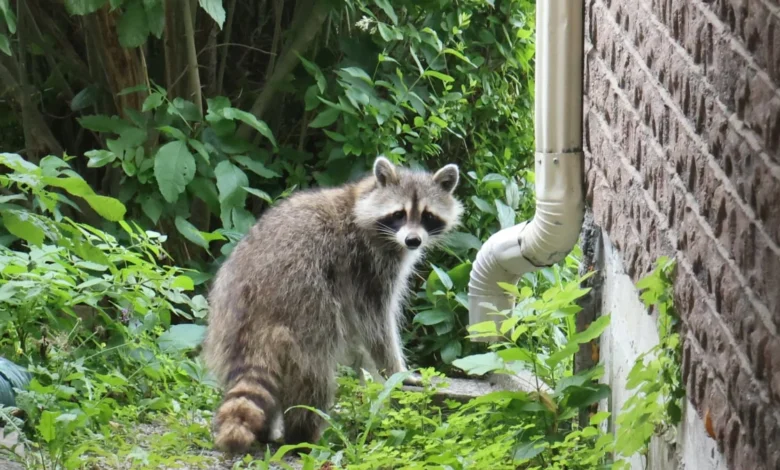
The bustling urban landscape of Seattle, particularly its historic Ballard neighborhood, finds itself captivated by an unusual internet sensation: Jimothy, a uniquely shaped raccoon whose sudden rise to fame has sparked both adoration and a compelling zoological mystery. What began as a viral video of a distinctively squat raccoon has evolved into a broader discussion among residents and wildlife experts about identity, urban ecology, and the powerful narrative-building capacity of the internet. The core question perplexing Seattleites and beyond remains: Is there a singular, resilient Jimothy, or has the city become home to multiple raccoons sharing a similar, endearing physical anomaly, perhaps even a lineage of "Jimothies"? The internet, in its characteristic fashion, has yet to settle on a definitive plural for this enigmatic creature, ranging from "Jimothies" to "Jimothem" or "Jimothi," mirroring the uncertainty surrounding his true nature.
The Genesis of a Viral Phenomenon: Jimothy’s Ascent to Stardom
The saga of Jimothy commenced on July 13, when Seattle resident Kiana Hall encountered an extraordinary animal beneath a parked car in Ballard. Initially mistaking the creature for a particularly round cat, Hall’s curiosity led her to begin recording. As the animal emerged, its masked face undeniably that of a raccoon, its unusually shortened torso and neck became strikingly apparent. Hall, struck by its peculiar charm, spontaneously bestowed upon it the moniker "Jimothy," explaining later to Today that "he simply looked like one." This brief, unscripted video, shared widely across social media platforms, rapidly accumulated millions of views, transforming Jimothy into an almost instantaneous local, then national, celebrity.
The immediate aftermath of the video’s release saw an outpouring of public affection and creative expression. The internet quickly declared a "Hot Jimothy Summer," with fans immortalizing the raccoon through memes, elaborate murals, custom tattoos, and a burgeoning market for Jimothy-themed merchandise. Local organizations and even governmental bodies quickly capitalized on the phenomenon. The Washington State Department of Transportation (WSDOT) issued humorous public service announcements featuring the raccoon, while the University of Washington playfully awarded him an "honorary doctorate." His fame even permeated local sports culture, with a costumed Jimothy character triumphing over four oversized fish in the Seattle Mariners’ popular seventh-inning Salmon Run. Even tech giant Google joined the celebration; a search for "Jimothy" or "Jimothy the raccoon" now triggers an animated Jimothy scurrying across the search results page, a testament to his undeniable cultural impact.
The Unique Physiology of Jimothy: Short Spine Syndrome
Jimothy’s distinctive appearance – his compressed build, shortened torso, and seemingly absent neck – is believed by experts to be caused by a congenital spinal deformity. While he has not undergone a veterinary examination for a confirmed diagnosis, his physical characteristics strongly resemble those associated with "short spine syndrome," a rare condition observed in various animal species, including cats, dogs, and, less commonly, raccoons. This condition results from the abnormal development of vertebrae, leading to a severely foreshortened spinal column. Despite this significant physical challenge, videos circulating online consistently depict Jimothy as remarkably functional. He is seen walking, climbing, foraging for food, and independently navigating the complex urban environment of Ballard, suggesting a surprising degree of adaptability and resilience. This visible capability has only added to his mystique, reassuring concerned observers that his condition, while unusual, does not appear to severely impede his quality of life.
The Unraveling Mystery: Conflicting Sightings and the "Jimothy Paradox"
As Jimothy’s online following swelled and his image became ubiquitous, residents of Ballard, fueled by a mixture of civic pride and burgeoning detective work, began sifting through their personal archives. Old photographs, security-camera footage, and anecdotal backyard sightings emerged, purporting to show the distinctive raccoon. It was during this period of collective recollection that the seemingly straightforward narrative of a single viral raccoon began to unravel, giving rise to what some have dubbed the "Jimothy Paradox."
Ballard resident Rebecca Sorenson publicly articulated the growing confusion in an interview with FOX 13 Seattle, highlighting the glaring inconsistencies in the reported age of the celebrated raccoon. "There’s posts now that say that he was born a year ago and then other people with posts that saw him in 2017," Sorenson noted, expressing her own burgeoning skepticism. "I’m curious now if there are more than one?" These conflicting timelines presented a significant challenge to the notion of a solitary Jimothy. If every reported sighting genuinely depicted the same animal, the raccoon would need to exhibit an exceptionally prolonged lifespan, especially for a creature living in the wild.
Expert Perspectives on Raccoon Lifespans and Urban Survival
To shed light on this discrepancy, wildlife experts weighed in. Wendi Mallo, an experienced animal keeper who cares for raccoons at Northwest Trek Wildlife Park, provided crucial context on raccoon longevity. She explained that in the wild, a raccoon’s lifespan typically ranges from three to five years, with many individuals succumbing to various dangers – including vehicular accidents, predation by domestic dogs, and prevalent diseases – within their first year of life. The notion of a wild raccoon surviving for nearly a decade, particularly with a known congenital condition, stretches the bounds of probability.
"Yeah, that seems like a very long-lived raccoon to me for the wild," Mallo conceded to FOX 13 Seattle, acknowledging the statistical unlikelihood. However, she also offered a glimmer of hope for the romantics, adding, "But who knows, there’s magic in the wild. We’ve just got to look for it." While the possibility of an exceptionally long-lived individual cannot be entirely ruled out, the 2017 sightings, if accurate and indeed of the "original" Jimothy, would imply an age of at least nine years today, pushing the boundaries of typical wild raccoon survival significantly.
The Plausible Theory: A Dynasty of Jimothys or Coincidental Anomalies?
The mounting evidence of conflicting timelines has naturally led to a compelling alternative theory: that Ballard may be home to not one, but multiple raccoons exhibiting similar spinal abnormalities. While short spine syndrome is rare, it is not unheard of, and genetic predispositions within a localized population could potentially lead to more than one individual presenting with the condition. This theory posits that "Jimothy" might be less of a proper noun for a single animal and more of an inherited title, or perhaps even a generic descriptor for any unusually squat raccoon encountered in the neighborhood.
This hypothesis gains traction when considering the sheer volume of "sightings" and the human tendency to attribute a singular identity to a beloved public figure, even if that figure is a raccoon. Residents have eagerly shared purported "old security-camera footage, photographs, and backyard sightings they believe show the distinctive raccoon at different ages." Some footage, for instance, has been circulated with claims of depicting a "young Jimothy living with his mother and siblings" from years prior. These fragmented narratives, while adding to the legend, further complicate definitive identification. Without a direct examination by a veterinarian or a reliable method of individual identification, such as a microchip or distinct natural markings (which are difficult to ascertain on a creature whose primary distinguishing feature is its overall body shape), the mystery persists.
Challenges in Urban Wildlife Identification and the Human Narrative
The "Jimothy" phenomenon underscores the inherent difficulties in accurately identifying and tracking individual wild animals, especially in urban environments. Unlike tagged or collared research subjects, urban wildlife like raccoons are free-ranging and often indistinguishable from one another to the untrained eye, beyond broad species characteristics. Their nocturnal habits and shy nature further complicate consistent observation. This challenge is magnified when a specific physical trait, rather than unique markings, becomes the primary identifier.
Moreover, the Jimothy saga highlights the powerful role of human narrative and anthropomorphism in our interactions with urban wildlife. People naturally seek to connect with and understand the animals sharing their spaces, often imbuing them with personality, history, and a singular identity. The desire for a continuous story, a resilient hero who has navigated the urban jungle for years, can override the more mundane biological realities. The collective effort of residents to piece together Jimothy’s "life story" through fragmented sightings is a testament to this deep-seated human need for connection and storytelling, even if the resulting narrative proves to be a composite of several individuals.
Official Guidance and the Broader Implications for Urban Ecology
Amidst the public fascination, wildlife officials have consistently emphasized the importance of responsible interaction with urban animals. Their advice remains clear and consistent: residents should continue to observe Jimothy – or any possible "Jimothys" – from a safe distance. It is crucial not to approach, feed, attempt to capture, or pet these wild animals. Such actions, while often well-intentioned, can habituate raccoons to human presence, leading to dependency, aggression, or increased exposure to dangers such as traffic or domestic animals. The increased public attention surrounding Jimothy could also inadvertently draw more visitors into the Ballard neighborhood, potentially creating additional hazards for the raccoons and disturbing their natural behaviors.
The Jimothy phenomenon, beyond its charming and perplexing nature, offers valuable insights into urban ecology and human-wildlife coexistence. Raccoons (Procyon lotor) are highly adaptable creatures, thriving in a variety of habitats, including dense urban areas. Seattle, with its abundant green spaces, waterways, and accessible food sources (often human-derived), provides an ideal environment for them. Their intelligence, dexterity, and nocturnal habits allow them to navigate and exploit urban resources effectively. Jimothy’s story serves as a poignant reminder of the vibrant, often hidden, wildlife that coexists with human populations in cities. It also highlights the responsibility of urban dwellers to understand and respect the natural behaviors and needs of these animals.
The Enduring Appeal and the Unsolved Riddle
Ultimately, the question of whether Seattle is home to a singular, long-lived Jimothy or a succession of similarly shaped individuals remains an open and engaging mystery. Without direct scientific intervention, a definitive answer may never be reached. Seattle could indeed be cherishing an exceptionally resilient raccoon, or it could be admiring several similarly shaped relatives, or perhaps even a blend of genuine Jimothy sightings interspersed with affectionate mistaken identities.
Regardless of the precise zoological truth, the legend of Jimothy has firmly embedded itself in Seattle’s cultural fabric. He has become a symbol of resilience, individuality, and the unexpected joys of urban wildlife. Until the riddle is solved, "Jimothy" may continue to function less as a personal name and more as a cherished, albeit unofficial, title passed among the distinctively round and beloved raccoons of Ballard, a testament to the enduring power of a compelling story and a uniquely charming creature. His journey from viral sensation to local legend underscores the profound impact that a single, unusual animal can have on a community, prompting reflection on our relationship with the natural world, even in its most urbanized forms.