The Death of the Follower Count: Why Social Media’s Post-Algorithm Era Demands a Total Marketing Reset


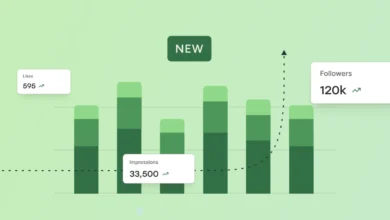
For over a decade, corporate social media strategy operated on a predictable, linear formula: amass a massive following to secure wider reach, translate that reach into deeper engagement, convert engagement into sales, and use the resulting revenue to bloat marketing budgets. Rinse, repeat, and scale. However, this foundational playbook has officially expired. Modern social networks no longer run on chronological timelines tethered to follower lists; instead, they operate entirely on algorithmic recommendation engines. Today, a single post can effortlessly rack up tens of thousands of impressions from non-followers—numbers that routinely dwarf the actual audience base of the publishing account. In this new paradigm, relevance has definitively dethroned audience size as the ultimate currency of digital media.
The Evolution of Digital Discovery: From Timelines to Recommendation Feeds
The fundamental shift in how human beings consume digital content began years ago with the rise of algorithmic feeds, such as TikTok’s For You page and Instagram’s Reels tab. Rather than serving content exclusively from accounts a user explicitly chooses to follow, platforms now rely heavily on machine-learning algorithms to predict what content a viewer will find interesting based on behavioral history, watch time, and topical interest.
According to proprietary industry data released in late 2026, over 70% of views on major social platforms originate from non-followers roughly 60% of the time. Consumer behavior has rapidly adapted to this new reality. Comprehensive consumer research—specifically a Q3 Pulse Survey conducted by Panoplai on behalf of Sprout Social, surveying 2,286 adults across the United States, United Kingdom, and Australia—reveals that only 17% of users bother to check an influencer’s follower count before deciding whether to follow them or trust their recommendation.
This data underscores a profound psychological shift in digital consumption: raw audience size is no longer an effective trust signal. Instead, users evaluate content based on immediate thematic relevance, visual quality, and genuine engagement. For global brands and marketing agencies, this evolution necessitates a complete restructuring of how creative partnerships are evaluated, moving away from vanity metrics toward rigorous qualitative performance indicators.
The Micro-Influencer Advantage and the Quest for Authenticity
The decline of the mega-influencer as a broadcast megaphone highlights the market’s growing demand for authenticity. Brands historically invested heavily in top-tier creators with millions of followers, assuming that massive top-of-funnel reach would automatically yield high conversion rates. Yet, modern data paints a starkly different picture of consumer trust.
Niche creators and micro-influencers, despite commanding significantly smaller audiences, consistently deliver superior engagement rates and higher purchase intent. Industry surveys indicate that modern buyers are considerably more likely to complete a purchase based on a recommendation from a niche creator than from a mega-influencer (21% compared to 15%, while roughly one-third of consumers express no preference). This discrepancy stems from the deep-rooted community trust inherent in smaller, tightly-focused digital communities. Micro-influencers typically maintain a closer dialogue with their followers, resulting in content that feels inherently more genuine and less transactional.
Furthermore, consumer expectations regarding product integration have shifted dramatically. Approximately 80% of surveyed consumers believe that digital influencers should actively use the products they promote, with 44% insisting that creators should be long-term, genuine users of a brand before accepting any promotional compensation. These criteria are far more naturally satisfied by smaller, relevant creators whose day-to-day content aligns seamlessly with the promoted product, contrasting sharply with traditional celebrity endorsements.
Frontline Employees as the New Frontier of Corporate Advocacy
As audiences grow increasingly skeptical of polished, corporate-led marketing campaigns, brands are discovering an unexpected yet remarkably potent source of organic reach: their own frontline workforce. Employee-generated content has quietly transformed into a major driver of product discovery, with 40% of all consumers—and an impressive 62% of Generation Z—reporting that employee perspectives drive their purchasing decisions at least monthly.
This trend achieved mainstream cultural prominence through viral phenomena such as the "Staples Baddie," a retail worker whose unvarnished, humorous videos regarding everyday occurrences in an office supply store captured national attention and earned a coveted profile in The New York Times. Crucially, audiences strongly prefer hearing from frontline workers executing their daily responsibilities over C-suite executives or corporate marketing teams delivering scripted messages. Whether it is a stockroom associate detailing logistics or a barista demonstrating how a new seasonal beverage is crafted, authentic employee advocacy resonates deeply with modern consumers.

Recognizing the immense potential of this channel, major corporations—including retail giants like Gap Inc. and Starbucks—have begun formalizing employee advocacy programs. These initiatives establish clear creative guidelines and regulatory guardrails while offering fair compensation and creative freedom. Data indicates that 61% of consumers firmly believe workers should receive additional financial compensation when content creation extends beyond their standard job descriptions, signaling that sustainable employee advocacy must be built on mutual economic benefit rather than corporate exploitation.
Social Media SEO: Optimizing for Platform Discovery
Beyond algorithmic recommendations, social media platforms have increasingly evolved into primary search engines. Recent demographic data shows that social media is now the second most commonly utilized platform for search across all age groups, trailing traditional search engines like Google but comfortably outpacing chat-based artificial intelligence and direct word-of-mouth recommendations from family and friends. Among younger demographics, the historical gap between social search and traditional search has narrowed into near-irrelevance.
Consequently, marketing teams must master Social Media SEO (SOSEO). Much like traditional web-based search engine optimization, SOSEO requires brands to understand precisely what terms and phrases their target audience is typing into platform search bars. However, social search algorithms possess advanced parsing capabilities that extend far beyond simple text captions. Modern platform algorithms actively ingest spoken audio tracks, on-screen text overlays, closed captions, and localized engagement patterns to categorize video content and determine its distribution trajectory.
A video that addresses a highly relevant topic but omits key search optimization terms in its audio or on-screen text will consistently underperform compared to content engineered holistically for discoverability. Social media managers must therefore treat keyword optimization as an indispensable, ongoing tactical requirement rather than an afterthought.
The Broader Ecosystem: Traditional Search, AI Answer Engines, and Evergreen Content
The implications of robust social optimization no longer remain confined within the walled gardens of individual social networks. Discoverability has successfully breached traditional web infrastructure through advancements in search engine indexing and Artificial Intelligence Optimization (AEO).
Major search engines like Google have integrated dedicated multimedia features—such as specialized short-video tabs—that pull indexed content directly from Instagram Reels, TikTok, and YouTube Shorts into standard search engine results pages. Concurrently, AI answer engines, including OpenAI’s ChatGPT, Anthropic’s Claude, and Google’s Gemini, routinely crawl and index public social networks like LinkedIn, Reddit, and video platforms when synthesizing comprehensive answers for web users.
This convergence fundamentally alters the lifespan of digital content. Historically, a piece of social media content suffered an accelerated decay curve, losing relevance and disappearing entirely from user feeds within 24 to 48 hours of publication. Today, the powerful intersection of social SEO, traditional search indexing, and AI answer engines grants social content an extended, evergreen shelf life. High-performing, well-optimized content can achieve organic visibility and go viral multiple times across an extended temporal window, provided its core subject matter retains long-term relevance.
Strategic Implications for the Post-Follower Landscape
The definitive transition away from the follower-centric era marks a permanent maturity milestone in the digital marketing industry. Building a large follower base is no longer the ultimate destination of social media strategy; rather, it is merely one minor input into a vast, complex algorithmic ecosystem.
Forward-thinking organizations that dominate the modern landscape are those prioritizing discoverability across every operational layer. This entails forging strategic partnerships with micro and niche creators whose topical relevance supersedes raw audience volume, formalizing employee advocacy programs that leverage authentic frontline voices, and meticulously optimizing every piece of content with search-friendly audio, text, and metadata.
As raw follower counts continue their inevitable decline as meaningful performance indicators, marketing leaders must abandon outdated optimization targets. By focusing relentlessly on discoverability, authenticity, and cross-platform search integration, brands can secure sustainable, compounding organic reach that translates directly into measurable engagement, verified trust, and long-term commercial growth.