X Expands Under The Hood Transparency Features to Reveal Local Law Content Restrictions and Visibility Limits

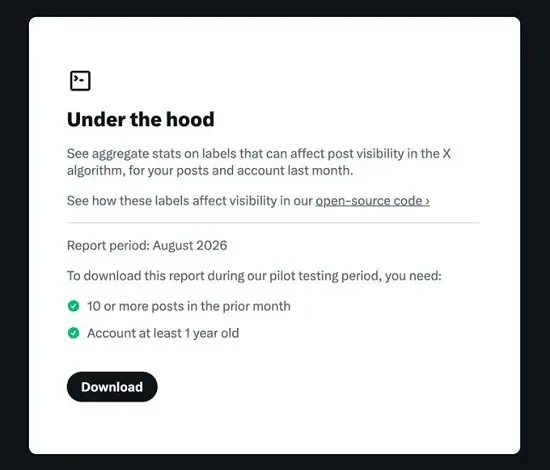
Social media platform X, formerly known as Twitter, has announced a significant expansion of its transparency framework, introducing new reporting metrics that disclose how local legal compliance affects user post reach and account visibility. The update builds upon the company’s recently launched "Under the Hood" initiative, providing creators, brands, and everyday users with unprecedented clarity regarding government-mandated content filtering, geographic restrictions, and traditional algorithmic limitations.
As digital platforms face mounting regulatory scrutiny across global jurisdictions, this move represents a calculated step toward addressing long-standing user grievances regarding opaque content moderation practices, frequently referred to as shadowbanning. By shedding light on the exact mechanisms governing post distribution—particularly regarding regional legal demands—X aims to foster a more predictable ecosystem for its global user base, especially those relying on the platform for professional content monetization.
The Evolution of X Transparency Initiatives
The introduction of these advanced insights marks the latest milestone in an ongoing evolution of X’s transparency reporting, a practice initially established by Twitter over a decade ago through its semi-annual Transparency Reports. Historically, those reports offered macro-level statistics regarding government takedown requests, subpoena compliances, and global copyright takedowns. However, individual users remained largely in the dark regarding how these broad geopolitical maneuvers directly impacted their personal metrics, follower growth, and timeline reach.
The paradigm shifted last month when X rolled out its initial "Under the Hood" update. This feature release was designed to demystify the platform’s underlying source code and algorithmic architecture while simultaneously deploying a simplified, user-facing reporting dashboard. For the first time, everyday accounts could view a consolidated log of any penalties, administrative labels, or visibility restrictions applied to their content or profiles over a rolling thirty-day period.
The initial reception from the digital community was largely positive. Content creators, digital marketers, and civil liberties advocates praised the platform for lowering the veil on moderation practices that had previously fueled speculation and mistrust. Recognizing this positive engagement, X engineering and policy teams fast-tracked the development of more granular data streams, culminating in the current expansion focused explicitly on localized legal compliance.
Decoding the New Visibility Metrics
Under the newly expanded reporting framework, eligible users can now access detailed data regarding geographical content restrictions triggered by government demands. When a specific post or an entire profile experiences limited visibility or outright withholding in a designated territory to comply with local laws, the platform will explicitly state the nature of the restriction and identify the specific jurisdiction involved.
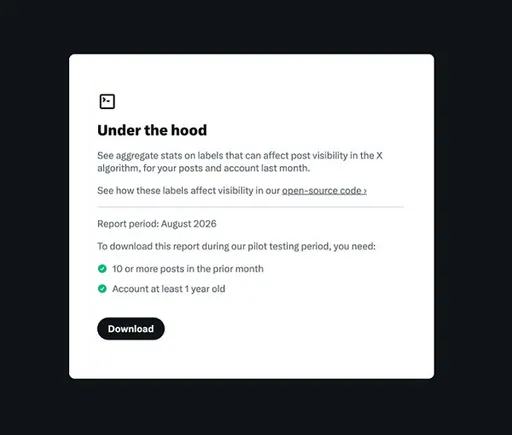
According to official statements released by X, the updated dashboard provides precise context: "We’ve expanded Under The Hood after seeing people’s appreciation of more transparency into government-required content filtering. In addition to showing labels applied to your account and posts in the prior month, Under The Hood now shows if your account or posts had their visibility limited because of required compliance with local law(s). For example, you can see if any of your posts were withheld in a country following a legal demand — and which country."
To qualify for access to these comprehensive diagnostic tools, accounts must meet specific criteria designed to prevent systemic abuse and manage computational overhead. X has stipulated that the new insights will be available exclusively to accounts that are at least one year old and have maintained an active posting cadence of more than ten original posts within the preceding thirty days. This threshold ensures that established, authentic contributors reap the benefits of the data while mitigating potential exploitation by automated bot networks or newly generated spam profiles.
Chronology of Platform Moderation Reform
To fully understand the significance of X’s latest transparency push, it is helpful to examine the chronological progression of platform governance policies over the past several years:
- Late 2022: Following the corporate acquisition of Twitter by billionaire entrepreneur Elon Musk, the platform initiates a wholesale reevaluation of its trust and safety protocols, vowing to prioritize absolute freedom of speech within the bounds of applicable national laws.
- Throughout 2023: The company publishes various segments of its recommendation source code as open-source software on GitHub, allowing independent developers and researchers to inspect how tweets are ranked, filtered, and distributed across the platform.
- Early 2024: X introduces preliminary iterations of account health indicators, though these tools remain rudimentary and often require technical navigation through developer interfaces or direct customer support inquiries to decipher.
- Previous Month: X officially deploys the "Under the Hood" update, integrating a user-friendly dashboard directly into standard account settings to display active penalties, shadowban statuses, and algorithmic reach limitations.
- Current Period: The platform expands the "Under the Hood" architecture to include localized legal compliance metrics, explicitly detailing geographic content withholding and country-specific visibility penalties.
Addressing the Shadowban Controversy
For years, social media users across virtually all major platforms have debated the existence and mechanics of shadowbanning—a practice wherein a user’s content is covertly suppressed or restricted from discovery feeds without their explicit knowledge. While platform administrators historically maintained that such suppression did not exist in the clandestine manner described by users, independent researchers consistently demonstrated that algorithmic downranking, automated trust scoring, and safety filters frequently produced identical end results.
By providing clear, itemized justifications for why a post failed to gain traction or why an account experienced a sudden drop in engagement, X’s expanded toolset directly confronts this long-standing industry ambiguity. Users can now definitively distinguish between organic underperformance, standard algorithmic sorting preferences, formal account penalties, and mandatory government-enforced geographical restrictions.
This distinction is particularly vital for the platform’s professional creator community. With X aggressively expanding its creator monetization programs—which distribute ad revenue shares based on verified user engagement and impression metrics—transparency regarding reach limitations translates directly to financial predictability. Creators who invest time and capital into producing content can now audit their own accounts to ensure their earning potential is not being artificially or unfairly throttled by unseen regulatory or administrative interventions.
Industry Implications and Broader Context
X’s aggressive push toward radical transparency arrives at a critical juncture for the global technology sector. Regulatory bodies across the European Union, the United States, and various Asian and Latin American markets are currently enforcing increasingly stringent compliance frameworks regarding content moderation, digital sovereignty, and platform accountability.
Legislation such as the European Union’s Digital Services Act (DSA) mandates rigorous transparency reporting from very large online platforms, compelling companies to disclose the exact parameters of their content recommendation systems and algorithmic filtering processes. By proactively offering granular, user-level insights into legal compliance and visibility limitations, X positions itself ahead of many regulatory mandates while simultaneously challenging competitors—such as Meta, TikTok, and Google—to elevate their own reporting standards.
However, legal and tech policy analysts point out that increased transparency introduces its own complex set of diplomatic and operational challenges. When a global platform openly acknowledges that it has suppressed specific content to comply with the authoritarian edicts of a particular sovereign state, it inevitably draws intense scrutiny from international human rights organizations and free-speech advocates.
While transparency allows users to understand why a post was hidden in a specific country, it also highlights the uncomfortable reality of operating a borderless digital town square within the fragmented legal jurisdictions of the physical world. Platforms are perpetually caught between the crossfires of upholding universal free expression ideals and adhering to local penal codes that prohibit blasphemy, political dissent, defamation, or localized hate speech definitions.
Future Outlook for X’s Developer and Transparency Roadmap
Looking ahead, industry insiders anticipate that X will continue refining its open-source initiatives and data-sharing capabilities. The integration of local compliance metrics into the standard user dashboard suggests that the company views transparency not merely as a defensive public relations strategy, but as a core product feature designed to build long-term user trust and engagement loyalty.
As the platform rolls out these features to all eligible accounts meeting the age and activity thresholds, the broader digital ecosystem will be watching closely to evaluate the operational impact. If successful, X’s model of decentralized, user-accessible algorithmic and legal auditing could well become the gold standard for social media governance in the modern digital age, fundamentally altering the relationship between platform operators, sovereign regulators, and the global creator economy.