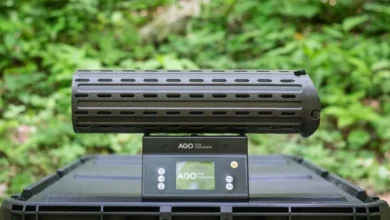
The Peak Design Travel Tripod: Engineering Portability and Stability for Modern Visual Storytellers


The modern photography and videography landscape is defined by a paradox: as camera technology becomes increasingly sophisticated and feature-rich, the logistical demands on creators have surged, often resulting in heavy, cumbersome equipment kits that hinder mobility. Peak Design, a manufacturer known for its iterative approach to gear design, has addressed these constraints with the release of the Travel Tripod. By prioritizing a "minimalist footprint" philosophy, the company has sought to reconcile the traditional trade-off between the stability required for professional-grade imaging and the compact form factor necessary for international travel and long-distance location shooting.
A Chronology of Portable Support Systems
To understand the significance of the Peak Design Travel Tripod, one must examine the evolution of camera support systems over the last two decades. Historically, tripods were categorized by their material composition—aluminum versus carbon fiber—and their intended use, ranging from lightweight, entry-level consumer models to robust, heavy-duty cinema platforms.
For years, the industry standard for professionals involved sacrificing portability for rigidity. In the early 2010s, as the "run-and-gun" style of filmmaking began to gain traction, the industry saw a surge in demand for lightweight, collapsible solutions. However, many early attempts at "travel tripods" resulted in significant compromises in payload capacity and vibration dampening. It was against this backdrop that Peak Design launched a multi-year development cycle, eventually debuting their Travel Tripod via a highly successful crowdfunding campaign in 2019. The project raised over $12 million, signaling a clear market appetite for a product that could bridge the gap between heavy-duty studio sticks and fragile travel accessories.
Engineering for Efficiency
The core innovation of the Peak Design Travel Tripod lies in its geometric design. By utilizing a unique, non-cylindrical leg profile, the tripod collapses into a diameter similar to a water bottle, measuring only 15.5 inches in length. This design choice serves a specific logistical purpose: compatibility with standard airline carry-on requirements.
When fully deployed, the tripod extends to 60 inches, a height sufficient for most eye-level photography, utilizing an expandable center column. The unit features a five-section leg configuration, which allows for rapid deployment—a critical factor for photojournalists and landscape photographers who often work in time-sensitive environments. From a structural perspective, the tripod supports a maximum payload of 20 lbs (9.1 kg). While this is substantial for mirrorless and lightweight DSLR systems, it is worth noting that it is not intended for heavy-duty cinema rigs, such as fully dressed Alexa or RED cinema packages, which may require specialized fluid heads and heavier-duty legs to prevent harmonic oscillation.
Supporting Data and Technical Specifications
The product is available in two distinct material variants, each catering to different budgetary and weight requirements:
- Carbon Fiber Model: Weighing 2.81 lbs (1.27 kg), this version utilizes high-modulus carbon fiber to maximize rigidity while minimizing mass. It is the preferred choice for long-distance hikers and international travelers where every ounce of weight saved is critical.
- Aluminum Model: Weighing 3.44 lbs (1.56 kg), the aluminum iteration provides a more cost-effective entry point for professionals who require the same engineering benefits but do not have the same strict weight-to-performance ratio requirements.
Both models include a built-in ball head, which features a single adjustment ring for panning, tilting, and locking. This integrated head is primarily optimized for stills and static landscape work. For videographers requiring panning or tilting motion, the company offers a universal head adapter, allowing users to mount third-party fluid heads to the legs.
Industry Implications and User Adaptability
The broader impact of such a device is reflected in the shift toward "mobile production." As creators increasingly rely on single-camera setups that serve dual purposes for both photography and video, the demand for versatile, modular equipment has grown. The inclusion of a reversible center column, which allows for inverted shooting for low-angle macro photography, and a hidden, integrated phone mount, demonstrates an understanding of the multi-format nature of modern media.
Furthermore, the integration of a standardized Arca-Swiss compatible plate system underscores a commitment to industry-wide interoperability. By removing two locking screws, the system can be configured to accommodate various L-mount plate designs, a common requirement for professional photographers who frequently switch between different camera bodies during a single session.
Professional Observations and Criticisms
Critics and industry professionals have noted that while the tripod excels in portability, it represents a departure from traditional "twisting lock" or "lever lock" systems. The proprietary locking mechanism requires a learning curve, and the unique ball-head design, while efficient, does not offer the same level of granular resistance control found on larger, dedicated video heads.
However, the consensus among field users—specifically those in the landscape and travel sectors—is that the product successfully solves the "chiropractor problem." By reducing the total volume of a camera kit, the tripod enables creators to carry their primary support system in a standard backpack or carry-on, effectively eliminating the need for a separate, bulky tripod bag. This shift in logistics has real-world implications for professional workflows, allowing for more agile movement through transit hubs and faster setup times in the field.
Broader Market Context
The release of this tripod has forced competitors to re-evaluate their own product lines. Many manufacturers have since moved to adopt similar "telescoping" leg designs to reduce folded length. The impact on the accessory market has been similarly significant, with a surge in third-party spiked feet, alternative mounting plates, and head adapters specifically designed to interface with the Peak Design ecosystem.
From a maintenance standpoint, the company provides a small multitool with each unit, allowing users to perform field-level adjustments—such as tightening leg tension—without needing to return the product to the manufacturer. This emphasis on field-repairability aligns with a growing movement toward sustainable, long-lasting gear, moving away from the "disposable" nature of lower-cost photography accessories.
Conclusion: A New Standard for Mobility
The Peak Design Travel Tripod represents a significant shift in how support equipment is viewed by the creative community. It is not merely a tool for holding a camera steady; it is a structural component of a larger, highly mobile workflow. For the travel photographer, the landscape artist, or the documentary filmmaker, the product offers a compelling balance of engineering, weight, and function.
While it does not replace the heavy-duty tripods required for high-end cinema production, it effectively fills the vacuum for a mid-tier, professional-grade support system that prioritizes the user’s ability to move freely. By successfully integrating complex features into a compact, 15.5-inch package, the manufacturer has set a new benchmark for what is expected of travel-oriented camera gear in the current decade. As technology continues to evolve, the demand for such high-performance, low-footprint solutions is expected to remain a driving force in the design of professional photography equipment.