Darkroom on the Go: Testing the REEL Paper 8 System for Large Format Photographic Printing

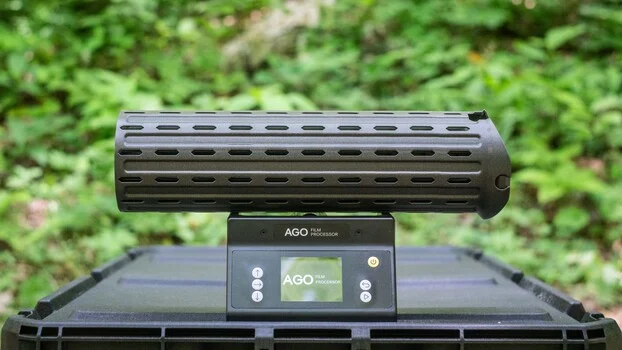
The evolution of film photography has long been defined by a tension between the pursuit of image quality and the logistical burden of the darkroom. For decades, the professional standard for silver-gelatin and color printing has required dedicated, light-tight environments equipped with multiple chemical trays, temperature-controlled running water, and significant square footage. However, recent developments in analog hardware—most notably the REEL Paper 8 from Vintage Visual—aim to dismantle these spatial constraints by enabling the processing of photographic prints up to 12×16 inches within a compact, light-tight cylinder.
Origins and Technical Evolution
The concept of daylight processing for film is well-established, with rotary processors and tank-based systems having served professional photographers for years. The transition of this methodology to photographic paper represents a significant engineering challenge. Paper, unlike film, is often larger and more fragile, requiring careful handling to avoid creasing, scratching, or uneven chemical distribution.
Vintage Visual’s REEL Paper 8 is an ABS plastic cylindrical insert designed to fit within the Paterson 8-reel tank system. By utilizing a slotted, perforated design, the unit allows for the secure loading of photographic paper, which is then processed through the same agitation cycles as roll film. This system effectively replaces the traditional tray method, which typically requires a minimum of three stations: developer, stop bath, and fixer, often followed by an extensive wash cycle. By consolidating these steps into a single, enclosed vessel, the system mitigates the risk of light leaks and chemical exposure, providing a modular solution for photographers operating in non-traditional environments.
Field Analysis: The Nantahala Implementation
In late 2024, the REEL Paper 8 was subjected to a rigorous field test in the Nantahala National Forest in North Carolina to determine its viability in remote, off-grid conditions. The testing protocol involved the full lifecycle of analog production: from the initial capture of images on 4×5 large-format film to the development of the negatives and the final production of silver-gelatin prints.
The testing environment presented significant challenges, including limited access to utilities and fluctuating ambient temperatures. The process demonstrated that the system is capable of producing consistent, high-quality results. During the session, six sheets of 8×10 Ilford Fiber-Base Gloss paper were processed. The observations indicated that the internal dimensions—roughly 12.75 inches in length and 3.5 inches in diameter—were sufficient to accommodate the paper without mechanical obstruction. Crucially, the system allowed for a reduction in chemical volume, as the tank-based method requires significantly less solution than open-tray processing, where evaporation and oxidation rates are higher.
Quantitative Analysis and Workflow Efficiency
The logistical impact of adopting such a system is measurable. A standard professional darkroom setup for 11×14 printing typically requires:
- Three 16×20 trays (to allow for adequate movement of the paper).
- A minimum of 2 to 3 liters of chemistry per tray to ensure full submersion.
- A dedicated light-proof space of at least 50 square feet.
By contrast, the REEL Paper 8 integration requires:
- A Paterson 8-reel tank.
- Approximately 600ml to 1 liter of chemistry, depending on the specific agitation cycle.
- Zero floor space once the paper is loaded into the tank in a changing bag or dark space.
From a sustainability and logistical perspective, the reduction in chemical consumption is approximately 30-40% compared to traditional tray processing. Furthermore, the ability to transport the entire printing apparatus in a single container allows photographers to maintain a darkroom workflow in mobile environments, such as camper vans or remote field stations, where space is at an absolute premium.
Market Context and Economic Considerations
The commercial availability of the REEL Paper 8 reflects a broader trend in the analog photography market: the "professionalization" of portable darkroom gear. As the community of film enthusiasts grows, the demand for equipment that bridges the gap between high-end studio quality and nomadic lifestyles has increased.
However, the financial barrier to entry remains a critical factor. The REEL Paper 8 retails for approximately $115 USD. When combined with the necessary Paterson 8-reel tank—priced at roughly $100 USD—and the optional AGO Film Processor for automated agitation (which can range significantly in price), the total investment exceeds $200. This places the system in a niche category, appealing primarily to professionals who require extreme portability or enthusiasts who value the precision of automated processing.
Broader Implications for Analog Photography
The introduction of the REEL Paper 8 signifies a shift in the philosophy of darkroom practice. Historically, the darkroom was a fixed, immovable site of production. The democratization of "mobile darkroom" technology suggests that the location of the photographer is no longer a limiting factor for the final print.
However, industry experts note that while the technology successfully automates the chemical processing, it does not bypass the fundamental requirement of light-tightness during the initial exposure phase. Photographers must still utilize an enlarger or a contact printing frame in a light-proof environment to expose the paper before the REEL Paper 8 can be employed for development. Thus, the system is a workflow enhancer rather than a total replacement for the darkroom.
Expert Observations and Industry Reception
The reception of the REEL Paper 8 among the analog community has been largely positive, with particular praise for the quality of the ABS molding and the absence of artifacts or physical damage to the prints. The system’s compatibility with the AGO Film Processor is a major selling point, as it leverages pre-programmed agitation cycles that ensure consistent contrast and density—factors that are often difficult to control manually in field conditions.
The potential for RA-4 color printing is perhaps the most significant long-term implication. Color printing is notoriously sensitive to temperature and agitation consistency. By providing a stable, light-tight, and repeatable environment, the REEL Paper 8 may lower the barrier to entry for photographers looking to process their own color work without the prohibitive cost of professional lab services.
Conclusion: Future Outlook
As the resurgence of film photography continues to mature, the focus of hardware development is shifting from mere image capture to the entire processing ecosystem. The REEL Paper 8 serves as a bridge between the traditional, large-scale darkroom and the modern, mobile creator. While it may not be a necessity for the home-based darkroom enthusiast with ample space, its utility for the field-based artist is substantial.
The success of such products relies on the continued availability of high-quality chemistry and light-sensitive materials. Given the current trajectory of the analog market, where specialty manufacturing is becoming more agile, tools that enable "anywhere" printing are likely to remain a focal point of innovation. The REEL Paper 8 does not merely represent a new piece of plastic equipment; it represents a fundamental change in the methodology of the modern darkroom, proving that the constraints of the past are no longer the boundaries of the future.