The Death of the Interface: How Intent-Driven Design is Transforming the Digital Landscape

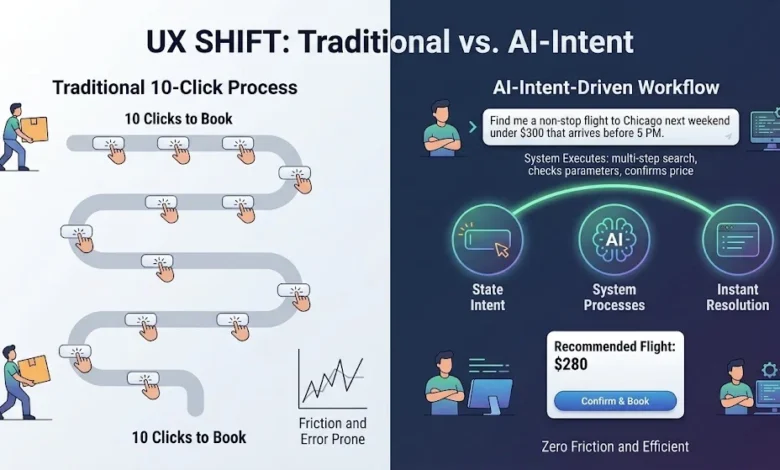
For decades, the digital economy has been defined by the point-and-click paradigm, a rigid architecture of menus, forms, and navigation bars that forces users to perform the mental and physical labor of software interaction. Since the mid-1980s, when the Xerox Star and the Apple Macintosh introduced the Graphical User Interface (GUI) to the masses, human-computer interaction (HCI) has been tethered to the assumption that users want to "operate" software. However, the rise of Large Language Models (LLMs) and advanced artificial intelligence agents has triggered a tectonic shift toward Intent-Driven Design—a philosophy that seeks to eliminate the interface entirely, allowing users to achieve goals through natural language and autonomous background execution.
The Historical Context of Interaction Friction
To understand the current paradigm shift, one must recognize the stagnation of web design over the last thirty years. Throughout the 1990s and 2000s, UX design was largely synonymous with "usability"—the art of making complex, multi-step processes as intuitive as possible. Whether booking an airline ticket or searching for medical information, users were conditioned to accept a high degree of friction.

A standard consumer flight-booking workflow, for instance, requires a user to navigate through search parameters, date selectors, seat assignments, baggage upselling, and payment gateways. This process, often spanning over a dozen clicks and several minutes, treats the user as an orchestrator of raw data rather than a beneficiary of a solution. This model was popularized by the "desktop metaphor," where files and tools were visually represented on screen to bridge the gap between human thought and machine logic. Today, that bridge is being replaced by an abstraction layer where the machine understands the "what" and handles the "how" independently.
Timeline of the Interface Evolution
The transition from visual command centers to intent-based systems did not happen overnight. It is the culmination of several distinct eras in computing:
- 1980s – 1990s: The GUI Era. The focus was on literal visual representations (desktops, folders, menus) to make computing accessible to non-programmers.
- 2000s – 2010s: The Responsive/Mobile Era. Design became optimized for various screen sizes, introducing "flat design" and standardized patterns to handle increased information density.
- 2015 – 2022: The Conversational AI Era. Early experiments with chatbots and virtual assistants like Siri or Alexa introduced the concept of voice-led commands, though they often struggled with complex, multi-step reasoning.
- 2023 – Present: The Agentic/Intent Era. The current phase, characterized by LLMs that can chain actions together, browse the live web, and synthesize information, effectively moving the "work" from the human to the background agent.
The Pillars of Intent-Driven Architecture
The shift toward intent-driven systems rests upon three technological and design pillars that are currently redefining the responsibilities of software architects and product designers.
First is the move from micro-actions to high-level goals. In legacy design, a user provides an input—such as a filter selection—and the system updates a view. In an intent-driven model, the user provides a "goal statement." The system then utilizes natural language processing (NLP) to break that statement into a sequence of actionable steps.
Second is the rise of Generative UI. For years, websites have been static entities. Every user, regardless of their specific intent, was presented with the same navigation bar and layout. Under the new paradigm, interfaces are being rendered dynamically. If a user asks a platform for a financial summary, the system does not redirect them to a generic dashboard; it generates a custom widget containing only the specific data points requested, which then dissolves once the interaction concludes.
Third is the transition to autonomous execution by AI agents. This represents the most significant departure from traditional heuristics. In the past, software was designed to be "safe" through constant confirmation modals. Modern intent-driven systems prioritize "easy reversibility." Instead of asking a user, "Are you sure you want to delete this?" every five seconds, the system executes the action and provides a clear, single-click "Undo" or "Revision" mechanism, significantly reducing the cognitive load on the user.
Comparative Data: Interaction Efficiency
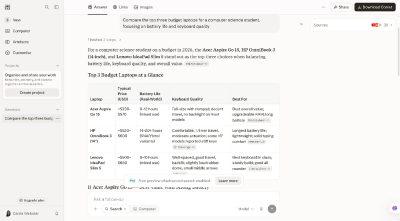
Industry analysis from groups such as the Nielsen Norman Group suggests that the "intent-based" model can reduce time-to-task by as much as 70% in data-heavy workflows. For example, in a traditional search-and-research task involving product comparisons, a user might spend 12 to 15 minutes navigating through various e-commerce sites, manual filter settings, and tab switching. An intent-driven AI tool, such as Perplexity AI or similar synthesized search platforms, can aggregate the same information in under 30 seconds.
This gain in efficiency is supported by the changing nature of web platforms. Tools like Vercel’s v0, which allows for the generative creation of UI components through text prompts, demonstrate that even the creation of software is moving away from manual drag-and-drop editors toward intent-specification.
The Ethical and Design Implications
Despite the clear benefits of reduced friction, this transition is not without significant risk. The "Black Box" problem remains a central concern for designers. In a traditional GUI, a user can audit why a specific result appeared by checking the filters they applied. In an AI-driven system, if the machine makes a calculation error or misunderstands the user’s goal, the path to correction is obscured by the complexity of the underlying model.
Furthermore, there is the "Illusion of Control." As highlighted by researchers at the Stanford Human-Computer Interaction Group, the more a system automates, the more it risks paternalism. If an AI agent decides which airline flight is "best" based on its own algorithm, it may inadvertently prioritize corporate partnerships or skewed preferences. Consequently, designers are now tasked with creating "transparent feedback loops," where the system explicitly states its reasoning—e.g., "I am showing you these flights because you requested under $300 and a morning arrival"—allowing the user to retain final authority.
Industry Response and Future Outlook
Major technology firms have begun adjusting their design guidelines to reflect these changes. Apple’s recent updates to its Human Interface Guidelines now emphasize "contextual and ambient design," encouraging developers to build systems that anticipate needs based on device state and environmental metadata rather than waiting for explicit user prompts.
The consensus among modern designers is that the "best interface is no interface." This is not a call for the total abandonment of design, but a call for the evolution of the designer’s role. UX professionals are moving away from the craft of building static buttons and toward the craft of mapping user intent to generative components. They are no longer "page builders"; they are "intent-architects."
As the digital landscape matures, success will no longer be measured by "time spent in app"—a metric that has historically incentivized addictive, cluttered interfaces. Instead, the new benchmark for success is "seamless, invisible completion." A product that successfully solves a user’s problem and then disappears is the ultimate achievement in modern software design.
Conclusion
The evolution of the web is moving toward a state where the interface serves as a silent, transparent bridge rather than a noisy, cluttered barrier. As AI agents become more sophisticated at interpreting human intent and executing complex workflows, the reliance on traditional GUI elements will continue to fade. While the transition presents challenges regarding transparency, trust, and the maintenance of user agency, the trajectory is clear: the future of the internet is not found in more buttons, but in the total elimination of the friction that once made them necessary. We are witnessing the end of the "click-through" era and the beginning of the era of intent-driven digital fluency.
Related posts: