The Art and Science of Naming: A Comprehensive Guide to UI Components and Design Systems

Naming is one of the most persistent, yet overlooked, challenges in the software development lifecycle. The language used within a digital product acts as the foundation for communication between designers, developers, and end-users. When this foundation is flawed, the result is a "Tower of Babel" scenario where stakeholders refer to the same interface elements by different names, leading to technical debt, inefficient design handoffs, and user confusion. As digital products grow in complexity—spanning across multiple platforms, brands, and themes—the necessity for a standardized, logical, and scalable naming taxonomy has become a prerequisite for success.

The Linguistic Problem in Interface Design
The core struggle in naming UI components often stems from the trade-off between generic and specific terminology. Names that are too generic—such as "box," "wrapper," or "element"—fail to provide context, making the codebase difficult to navigate. Conversely, names that are too specific, such as "blue-login-button," prevent reusability and render the component useless if the brand’s color palette shifts or the context of the component changes.
In modern software development, this issue is amplified by the "dialect gap." Developers often prioritize functional descriptors (e.g., flex-container-01), while designers prioritize visual or structural intent (e.g., card-hero-primary). When these two groups lack a shared vocabulary, the friction results in lost productivity. Research from various design system management studies suggests that teams spend approximately 15% to 20% of their time resolving ambiguity related to naming conventions during the implementation phase of a design system.

Establishing a Structural Foundation
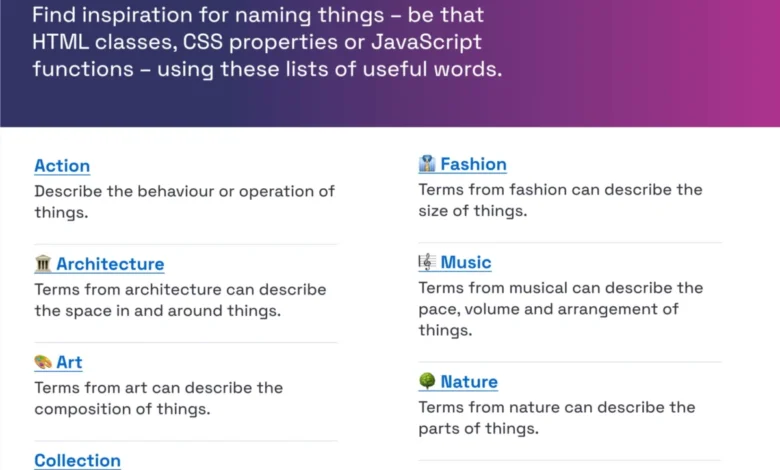
To mitigate these issues, industry leaders have moved toward structured taxonomies. Resources such as Classnames offer a categorized approach, encouraging developers to look beyond technical jargon. By pulling from domains like architecture, theater, and nature, teams can create names that are not only meaningful but also distinct.
The transition from ad-hoc naming to systematic taxonomy is best illustrated by the evolution of design tokens. Design tokens are the atomic building blocks of a design system, representing values like colors, spacing, and typography. A robust token system must account for multi-brand, multi-theme environments. For instance, the team at Intuit famously overhauled their design token taxonomy to serve their diverse portfolio, which includes QuickBooks, TurboTax, and Mailchimp. By developing a taxonomy that separates brand-level tokens from semantic, functional tokens, they enabled developers to swap themes across products without rewriting the underlying structural code.

Chronology of Naming Best Practices
The evolution of naming conventions has mirrored the growth of the web:
- The Early Web Era (1995–2005): Naming was largely chaotic and localized to specific HTML files. CSS class names were often descriptive of appearance (e.g.,
.red-text). - The Component Revolution (2006–2015): The rise of frameworks like jQuery and early CSS methodologies (BEM—Block, Element, Modifier) forced developers to adopt consistent patterns to manage increasing complexity.
- The Design System Era (2016–Present): With the advent of Figma and specialized design token management tools, naming has become a strategic enterprise function. Organizations now treat their naming taxonomy as a "source of truth" documentation that requires ongoing maintenance.
Data-Driven Naming: Lessons from Design Systems
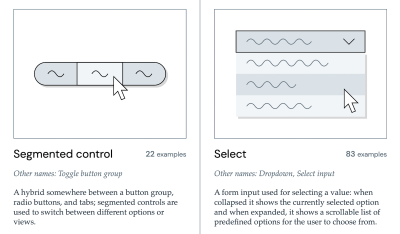
Standardization is the ultimate goal. The Component Gallery provides a critical look at how the industry has converged on certain terms. By analyzing over 50 common UI components, the project reveals that while variations exist, there is a clear trend toward "functional" naming. For example, "accordion" has largely superseded older, more abstract names like "collapsible-container" or "expandable-list" because it is a term that both designers and users intuitively understand.

Furthermore, the integration of tools like the "Variables Taxonomy Map," as demonstrated by the Vodafone UK Design System, highlights the importance of hierarchical naming. Their approach categorizes tokens into four distinct levels:
- Global/Brand Tokens: The raw values (e.g.,
color-blue-500). - Alias/Theme Tokens: Tokens that map to specific brands or modes.
- Component/Semantic Tokens: Tokens that describe the purpose (e.g.,
button-primary-background). - Page/Contextual Tokens: Highly specific overrides used in limited scenarios.
This four-tier structure allows teams to scale without the risk of "token bloat," where a system becomes so complex that it is no longer usable by the wider engineering team.

The Impact on Feature Adoption
Naming is not merely a technical concern; it is a user experience (UX) imperative. Poorly named features frequently suffer from low adoption rates. When a feature is named using internal project code (e.g., "Project Helios") rather than the user’s language (e.g., "Smart Export"), the user struggles to discover, understand, and integrate the tool into their existing workflow.
According to UX researchers, the most effective names are those derived from "jobs-to-be-done" (JTBD) interviews. By asking users to describe a process in their own words, organizations can align their UI language with the user’s mental model. When the label on a button matches the user’s internal vocabulary, the cognitive load is reduced, and the likelihood of successful interaction increases significantly.
Strategic Implications for Organizations
The financial and operational implications of poor naming are tangible. Organizations that fail to implement a clear, documented naming convention often face "refactoring fatigue." As a project matures, the time required to understand what a specific piece of code or design component does becomes a major bottleneck.
For developers, a well-named component is self-documenting. For designers, it ensures that the "hand-off" process is frictionless. For product managers, it provides a clear map of the product’s capabilities. A consistent naming system effectively functions as an internal API, reducing the need for constant communication and meetings to clarify intent.

Moving Forward: A Unified Approach
As the industry continues to advance, the emphasis is shifting toward automated governance. Tools that allow for the validation of token names and the prevention of naming conflicts are becoming standard in modern CI/CD (Continuous Integration/Continuous Deployment) pipelines.
For teams looking to improve their current systems, the path forward is clear:

- Audit current naming: Identify where the team uses multiple terms for the same object.
- Standardize the dictionary: Create a shared, accessible glossary that includes prohibited names and preferred alternatives.
- Adopt a naming framework: Utilize established structures like BEM or token-based hierarchies to ensure consistency.
- Iterate with user feedback: If a feature is confusing, the name is likely the primary culprit.
Ultimately, the goal of naming is to eliminate friction. By investing time in creating a clear, logical, and universally understood taxonomy, teams do more than just clean up their code—they build a more resilient, accessible, and user-friendly digital ecosystem. As the web grows, the teams that master the art of naming will be the ones that can scale most effectively, minimizing the chaos of complexity while maximizing the clarity of their design.