How to Turn Brand Strategy into Visual Direction: Navigating the Pre-Concept Phase

The failure of a branding project rarely originates in the aesthetic quality of the final logo; instead, it is often rooted in the ambiguity of the strategic foundation established months prior. In the contemporary design landscape, where digital-first identities must scale across diverse platforms, the gap between abstract strategy and visual execution has become a primary point of friction. This critical interval, often referred to as the "pre-concept" phase, represents the work that occurs after the initial project kickoff but before the first pixel is moved in design software like Figma. By researching brand context, uncovering hidden stakeholder assumptions, and establishing a shared visual foundation, design teams can transition from vague adjectives to concrete visual systems that drive business value.
The Strategic Gap: Why Brand Language Often Fails
In many traditional branding workflows, designers receive a creative brief populated with high-level descriptors such as "modern," "trustworthy," "premium," or "disruptive." While these terms provide a general North Star, they are notoriously subjective. A "modern" aesthetic for a legacy financial institution might involve clean sans-serif typography, whereas for a Web3 startup, it might imply neon gradients and brutalist layouts. When these terms are left undefined, the designer is essentially forced to guess the client’s internal definitions.
Industry data suggests that this lack of alignment is a significant contributor to project bloat. According to a 2023 industry survey on design management, nearly 45% of branding projects experience "scope creep" or significant revisions during the concept stage due to a lack of initial strategic alignment. The pre-concept phase acts as a diagnostic tool to mitigate these risks, ensuring that the team agrees on what the brand is supposed to communicate before the high-cost work of visual creation begins.
Chronology of the Pre-Concept Workflow
The transition from abstract strategy to visual direction follows a logical progression designed to build consensus at every layer of the brand’s identity.
1. The Discovery and Perception Phase
The process begins with a deep dive into the brand’s current context. This involves not just collecting facts about the business and its competitors, but clarifying perception. Because a brand ultimately lives in the minds of the audience, designers must identify the specific "gut feeling" the stakeholders wish to evoke. This stage utilizes targeted questioning to move beyond surface-level adjectives. For example, if a stakeholder requests a "bold" look, the pre-concept work involves determining if that boldness should manifest as aggressive disruption or as confident, quiet authority.

2. Category Research and Perception Mapping
Once internal perceptions are gathered, the team looks outward at the competitive landscape. This is often executed through "Competitor Perception Mapping," where existing brands are plotted on a two-axis grid. These axes are chosen based on the specific tensions the brand must navigate—such as "traditional vs. progressive" or "understated vs. bold." This exercise reveals where the "white space" in a category exists and allows stakeholders to visualize where they want to sit relative to their peers.
3. The Visual Brand Driver Exercise
To bridge the gap between verbal strategy and visual intuition, stakeholders engage in metaphor-based exercises. By associating the brand with unrelated categories—such as transportation, furniture, or architecture—stakeholders are forced to think through the lens of brand character rather than personal aesthetic preference. If a company is described as a "high-speed train," it implies reliability, speed, and fixed structure; if it is a "mountain bike," it implies agility, ruggedness, and individual exploration.
4. Definition of Design Codes and Visual Foundations
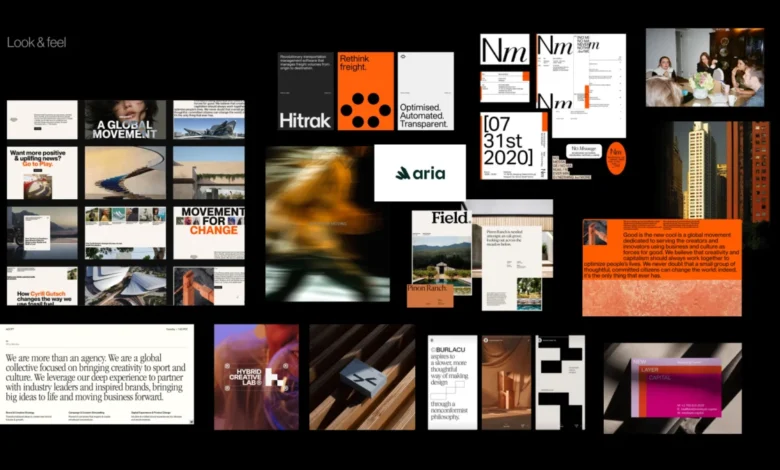
The final stage of the pre-concept phase is the creation of "Design Codes." These are visual principles that translate strategic pillars into graphic cues. This stage establishes the boundaries for typography, color palettes, and imagery styles without committing to a final logo or layout.

Supporting Data: The Economic Impact of Design Alignment
The necessity of the pre-concept phase is supported by broader economic trends in the design industry. Research by the Design Management Institute (DMI) has consistently shown that design-led companies outperform the S&P 500 by an extraordinary margin—up to 211% over a ten-year period. However, this performance is predicated on brand consistency and clarity.
In the digital product space, the cost of a "missed" brand concept is high. Rebranding a digital product involves not just a logo change, but the overhaul of entire design systems, UI kits, and marketing collateral. By investing in a robust pre-concept phase, organizations reduce the likelihood of "visual debt"—the cost of fixing misaligned brand elements after they have been integrated into a product. Furthermore, data from McKinsey & Company indicates that companies that integrate design into their strategic planning from the outset see a 32% increase in revenue growth compared to those that treat design as a final "polish" stage.
Case Analysis: Tension in Health Tech and Fintech
The practical application of pre-concept work is best observed in highly regulated or conservative industries where "innovation" must be balanced with "credibility."

In a recent case involving a health tech firm, the client’s desire to appear "disruptive" posed a strategic challenge. In a vacuum, disruption suggests rebellion. However, through perception mapping, it became clear that the firm’s primary clients—government medical institutions—would view visual rebellion as a lack of security and professionalism. The pre-concept phase allowed the design team to redefine "disruption" for this context as "extreme clarity and efficiency." The resulting visual direction was modern and progressive but maintained a foundation of institutional trust.
Similarly, in the fintech sector, the term "premium" is frequently used. Pre-concept exercises help determine if this means "exclusive and inaccessible" (like a private bank) or "high-quality and empowering" (like a modern investment tool). By resolving these contradictions early, the designer avoids the "guess-and-check" cycle that often plagues the first round of concept presentations.
Official Responses and Stakeholder Perspectives
From a management perspective, the pre-concept phase is often viewed as a risk-mitigation strategy. Chief Marketing Officers (CMOs) report that the most difficult part of a branding project is achieving consensus among diverse executive stakeholders. The pre-concept phase provides a structured environment where disagreements—such as whether a brand should be "playful" or "serious"—can be surfaced and resolved through data and visual references rather than subjective debate.

Designers, conversely, view this phase as a form of creative liberation. When the "problem" is clearly defined and the boundaries are set, the creative process becomes more focused. Instead of wondering if a client will "like" a concept, the designer can evaluate their own work against the agreed-upon design codes: "Does this typeface express the ‘momentum’ we agreed on in the workshop?"
Broader Implications for the Design Industry
The shift toward a more rigorous pre-concept phase reflects a maturing design industry. As branding moves away from being a purely artistic endeavor and toward a strategic business function, the tools used to bridge strategy and design must become more sophisticated.
The rise of AI-driven design tools further emphasizes the need for human-led strategic alignment. While AI can generate thousands of visual iterations in seconds, it cannot define the "why" behind a brand’s direction. The pre-concept phase remains a uniquely human process of negotiation, empathy, and strategic synthesis. It ensures that when a designer finally opens Figma to create the first concept, they are not starting from a blank canvas, but from a well-defined blueprint.

Conclusion: The First Concept Should Not Be a Surprise
Ultimately, the goal of the pre-concept phase is to ensure that the first visual concept presented to a client feels like an inevitable next step rather than a surprise reveal. By the time a logo is shown, the stakeholders should already recognize the colors, the typographic tone, and the "energy" of the brand because they helped define those parameters during the research and mapping stages.
By formalizing the work that happens between strategy and design, agencies and internal teams can create more resilient brand identities. This approach transforms branding from a series of subjective approvals into a collaborative journey of discovery, ensuring that the final visual identity is not only aesthetically pleasing but strategically sound and commercially effective. In an era of rapid digital transformation, the brands that succeed will be those that understand that the strongest visual concepts don’t start with a drawing—they start with the right questions.