Shirley Ballas Sparks Controversy on Dancing With the Stars Horror Movie Night With Brutally Harsh Scoring and Divisive Critiques

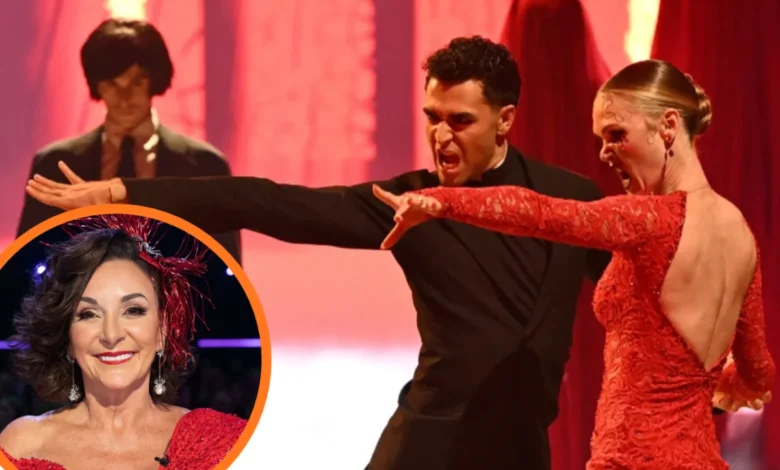
The ballroom floor of Dancing With the Stars turned into a battleground of critiques during the highly anticipated Horror Movie Night, headlined by the appearance of renowned British ballroom dancer and guest judge Shirley Ballas. Known internationally for her uncompromising standards and formidable presence on the BBC’s Strictly Come Dancing, Ballas proved to be every bit the intimidating figure contestants feared. However, her deployment of a punishing "4" score sparked intense debate among viewers, judges, and ballroom enthusiasts alike, casting a sharp spotlight on long-standing issues surrounding scoring consistency, judging metrics, and the transparency of the evaluation process in reality television dance competitions.
The Anatomy of Horror Movie Night: High Stakes and Spooky Themes
Horror Movie Night is historically one of the most creatively liberating yet technically challenging episodes of any Dancing With the Stars season. Celebrities and their professional partners are tasked with translating the tense, eerie, and macabre atmospheres of cinematic classics into intricate choreography. The evening’s lineup featured a diverse array of thematic interpretations, drawing inspiration from monumental horror films.
The night commenced with actress Julia Stiles and professional partner Ezra Sosa taking to the floor to deliver an Argentine tango inspired by William Friedkin’s 1973 cinematic masterpiece, The Exorcist. While the atmospheric staging and theatrical commitment were palpable, the technical execution left much to be desired. Viewers and critics noted that the routine felt disjointed, with moments where Sosa appeared to physically maneuver Stiles through transitions rather than facilitating a fluid, partnered connection.
Contrastingly, later in the evening, actress Tatyana Ali and partner Jan Ravnik delivered a paso doble inspired by the upcoming horror feature Sinners. As the only couple to tackle the fierce, dramatic Latin discipline on a night when a world-renowned Latin technique expert sat at the judges’ table, the routine carried immense pressure. Yet, despite demonstrating a solid command of the core choreography and maintaining the aggressive energy characteristic of the paso doble, Ali and Ravnik were met with the exact same numerical penalty as Stiles and Sosa: a shocking score of four points out of ten from Ballas.
A Comparative Analysis of Two Divisive Fours
The decision by Ballas to award matching four-point scores to two fundamentally different performances brought the mechanics of reality television judging under intense scrutiny.
Julia Stiles entered Horror Movie Night coming off a technical high, having secured an impressive 36 out of 40 points during Dedication Night. However, her Argentine tango failed to capture that same momentum. Dance analysts observed that Stiles struggled with the intricate footwork required of the tango, resulting in a clumsy and choppy presentation. The stark contrast between her high-scoring previous week and the clunky execution on Horror Movie Night made a lower score justifiable from a technical standpoint. In comparison, routines like Jenna Dewan and Val Chmerkovskiy’s near-flawless Argentine tango—which missed a perfect 40 only due to a minor wardrobe mishap—highlighted the widening performance gap within the competition.
Conversely, Tatyana Ali’s paso doble presented a different interpretive challenge. Ballas’s vocal critiques of Ali and Ravnik’s routine targeted the structural choreography itself rather than Ali’s physical execution of the steps. While the routine may not have reached the stratospheric heights of the season’s best performances, Ali successfully channeled the aggressive gravitas demanded by the paso doble. Critics and spectators argued that penalizing a functional, on-theme performance with a score typically reserved for catastrophic missteps or foundational failures felt disproportionate.
By equating Stiles’s visibly struggling routine with Ali’s competent execution, Ballas inadvertently reignited a multi-season debate regarding the uniformity of judging criteria across different dance styles and competitors.
The Broader Implications of Strict Judging and Score Range Compression
For years, dance competition formats have grappled with what experts refer to as "score range compression." As mid-season competitions progress, judges frequently find themselves trapped within a predictable numerical corridor, rarely dropping below a six or rising above a ten, even when performances fluctuate significantly in quality. This psychological barrier often leaves audiences bewildered, as mediocre routines receive inflated marks while truly poor dances are shielded from realistic scoring.
In post-show analyses, many commentators defended Ballas’s willingness to utilize the lower end of the numerical scale. Proponents argue that the fear of utilizing scores between one and five diminishes the utility of the ten-point grading system, reducing its granularity and preventing accurate reflections of performance quality. If judges refuse to utilize lower numbers, the psychological weight of a seven or an eight loses its analytical value, making it difficult to distinguish between average and exceptional dances.
However, the primary friction point remains the lack of transparency and time afforded to the judges. With strict broadcast runtimes limiting post-performance feedback, judges are rarely given the platform to fully articulate the precise mathematical or technical breakdown behind a sudden, drastic score drop. When a contestant who has steadily improved over several weeks receives a four without extensive clarification, it risks alienating both the competitors and the viewing public, who rely on clear metrics to understand the trajectory of the competition.
Contextualizing Dancing With the Stars’ Broadcast and Streaming Ecosystem
As Dancing With the Stars continues its run on ABC, the intersection of live television broadcasting and digital streaming accessibility has amplified audience engagement and immediate post-show commentary. Episodes air live on Tuesday evenings at 8 p.m. ET/PT, reaching traditional television audiences while simultaneously driving digital consumption through major streaming platforms.
Viewers seeking to catch up on missed episodes or re-examine contentious judging moments can access the series on-demand via Hulu and Disney+. The platform’s integration into various streaming bundles—ranging from ad-supported tiers to comprehensive packages incorporating premium networks—continues to expand the show’s demographic reach, ensuring that controversial moments like Ballas’s scoring decisions circulate rapidly across social media platforms and fan forums.
Looking Ahead: Will Other Judges Follow Suit?
As the competition moves past Horror Movie Night, the lingering question among ballroom aficionados is whether regular judges Carrie Ann Inaba, Bruno Tonioli, and Derek Hough will adopt Ballas’s unapologetic utilization of the full numerical spectrum. While harsher grading presents a temporary shock to contestants, proponents maintain that a more rigorous and honest approach to scoring ultimately benefits the celebrity competitors by providing realistic assessments of their technical development.
Whether Ballas’s guest appearance serves as a permanent catalyst for judging reform or remains a singular, dramatic anomaly of the season, Horror Movie Night has successfully re-energized conversations about the art, science, and strict standards of competitive dance television.
Related posts: