Patricia Summersett and the enduring legacy of The Legend of Zelda as the franchise marks its 40th anniversary


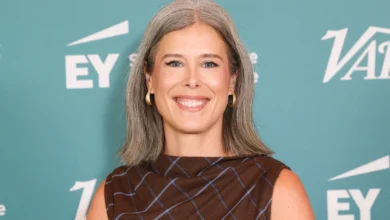
The Legend of Zelda, Nintendo’s cornerstone fantasy franchise, officially celebrates its 40th anniversary this year, cementing its status as one of the most significant pillars of global interactive entertainment. Since the release of the original title on the Nintendo Entertainment System (NES) in 1986, the series has evolved from a pioneering top-down adventure into a genre-defining open-world titan. Central to this evolution, particularly in the modern era of the franchise, is actress Patricia Summersett, whose vocal performance as Princess Zelda has helped define the character for a new generation of players since 2017.
A Legacy of Innovation and Evolution
The history of The Legend of Zelda is a timeline of technical and narrative ambition. Conceived by Shigeru Miyamoto and Takashi Tezuka, the series introduced players to the kingdom of Hyrule, a setting that has undergone countless iterations over four decades. From the 8-bit exploration of the 1980s to the 3D cinematic breakthroughs of the late 1990s with Ocarina of Time, and finally to the physics-based, non-linear freedom of the modern era, the franchise has consistently pushed the boundaries of what video games can achieve.
Summersett’s involvement began during a pivotal transition period for the series, marked by the development of The Legend of Zelda: Breath of the Wild. This title served as a soft reboot for the franchise’s design philosophy, emphasizing player agency and environmental storytelling. Summersett’s performance was integral to grounding the character of Zelda in this sprawling, melancholic world. Her contribution, however, began under a veil of extreme secrecy—a common practice in the high-stakes world of AAA game development.
The Audition and the Craft of Character
The process of casting a high-profile role in a Nintendo title is notoriously rigorous. For Summersett, the audition for the role—which was not explicitly identified as Princess Zelda at the time—required a delicate balance of technical precision and artistic intuition.
"I had auditioned for multiple characters, so I went with the archetype that felt like it rested in my body the best at the time," Summersett explains. "I knew that my regular voice was too low for a young princess character, so I sort of pitched it up. I found the place that it sat right on my vocal cords. I thought she needed to be a little bit more classic English, that was part of the description, as well as the fact that it could be anything because it’s a fantasy world."
The result was an organic, resonant performance that resonated with millions of players. Summersett’s ability to remain "physically comfortable" while recording, despite the emotional weight of the character, speaks to her professional training. She describes the process as a form of "deep relaxation," noting that maintaining the youthful, wide-eyed energy of Zelda requires a specific, grounded technique that contrasts with the intense, often high-stress nature of contemporary voice acting.
Chronology of Modern Zelda Voice Acting
Summersett’s tenure within the franchise has seen her voice the princess across several key titles, creating a continuity that fans have come to associate with the modern iteration of the character:
- 2017: The Legend of Zelda: Breath of the Wild – The global phenomenon that redefined the series.
- 2020: Hyrule Warriors: Age of Calamity – A spin-off title expanding the narrative backstory of the "Calamity" era.
- 2023: The Legend of Zelda: Tears of the Kingdom – A direct sequel that further explored the depths and skies of Hyrule.
While her voice is now inextricably linked to the franchise, Summersett maintains a professional distance regarding unannounced projects. Speculation regarding the upcoming Ocarina of Time remake and the highly anticipated live-action feature film slated for April 2027 remains high, though Summersett declines to confirm any involvement, citing the industry-standard non-disclosure agreements that govern her work.
Broader Impact and Industry Context
The significance of the 40th anniversary extends beyond nostalgia. The Legend of Zelda has consistently outperformed many of its peers in terms of critical reception and commercial longevity. With total series sales exceeding 150 million units, the franchise serves as a primary driver for Nintendo hardware cycles.
The upcoming live-action adaptation, currently in development, represents a new frontier for the IP. Following the success of recent video game-to-film adaptations such as The Super Mario Bros. Movie, expectations for the Zelda film are at an all-time high. The casting of Bo Bragason as Zelda has sparked significant public discourse regarding the adaptation of iconic video game characters for the big screen. Summersett, while not involved in the film’s creative direction, views the expansion of the franchise into cinema as a logical, albeit complex, progression.
"It’s hard to get video game adaptations right, but we also live in a time now where we’re finding that there are major successes with those adaptations," Summersett notes. "It’s a cyclical storytelling element with different repeating archetypes."
Professional Reflection and Future Endeavors
As Summersett enters her own 40s, mirroring the age of the franchise she serves, she finds herself reflecting on the nature of creative longevity. Her career, which spans over a decade of consistent work in theater, television, and interactive media, has recently shifted toward a hybrid of traditional performance and technological exploration.
Currently, she is diversifying her portfolio, moving back into music and long-form writing. She is experimenting with interactive technology—specifically motion-capture tools like the Mi.Mu gloves—to bridge the gap between human performance and digital expression. This synthesis of "indie" creative work and high-end interactive tech reflects a broader trend in the entertainment industry, where the lines between traditional storytelling and digital immersion continue to blur.
The Fandom Connection
Perhaps the most tangible result of her tenure as Zelda is the relationship she has cultivated with the franchise’s global fanbase. Through appearances at conventions and direct interaction with the community, Summersett has witnessed the "universal love" for the IP. For many fans, the music and the characters of Zelda are foundational cultural artifacts.
"To hear what the stories mean to other people, to have people come up to me and play the ocarina, play ‘Zelda’s Lullaby’ all over the world, you see the universal love of this story everywhere," she says. This connection is not merely incidental; it is a testament to the character-driven approach Nintendo has taken in recent years, moving away from purely silent protagonists to fully realized, voiced characters that carry the emotional weight of their respective narratives.
Conclusion: A Future in Flux
As The Legend of Zelda moves into its fifth decade, the franchise stands at a crossroads between its classic roots and its cinematic, high-fidelity future. The role of the voice actor in this ecosystem has become increasingly vital, serving as the bridge between player imagination and the digital reality of the game world.
Whether or not Summersett returns for future installments remains to be seen. However, her impact on the character of Princess Zelda is firmly established. By treating the role with the same rigor and dedication as a classical stage performance, she has ensured that the "ethereal" nature of the princess remains grounded in human emotion. As the industry looks toward the 2027 film and the potential remakes of classic titles, the legacy of The Legend of Zelda continues to grow, bolstered by the talent and dedication of those who have helped shape its modern identity.