Mastering Maximum Depth of Field in Landscape Photography Through Precise Aperture and Focus Control

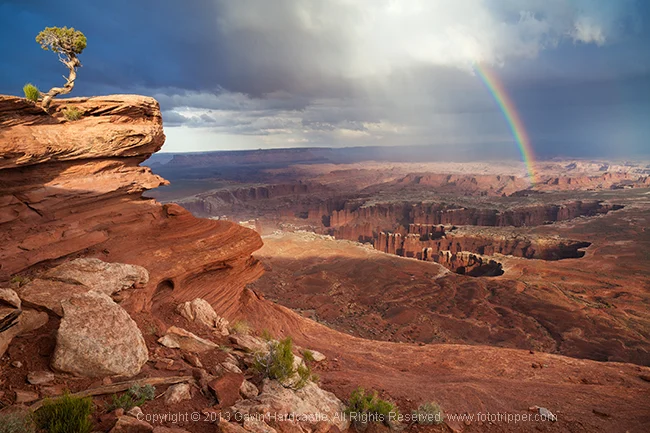
For outdoor and landscape photographers, achieving corner-to-corner sharpness—often referred to as the "holy grail" of the craft—is a fundamental technical requirement that defines the quality of an image. A deep depth of field (DOF) ensures that elements across the entire frame, from the immediate foreground to the distant horizon, appear crisp and detailed. This aesthetic choice does more than simply record a scene; it provides an immersive experience for the viewer, effectively allowing them to "step into" the environment captured by the lens. While advanced techniques such as focus stacking and the use of specialized tilt-shift lenses are available, the most efficient and accessible method for achieving this effect remains the precise manipulation of aperture and focal points.

The Technical Landscape of Depth of Field
Depth of field is defined as the distance between the nearest and farthest objects in a scene that appear acceptably sharp in an image. In landscape photography, the objective is typically to maximize this zone. Historically, photographers have relied on three primary techniques to control this: the utilization of hyperfocal distance calculations via aperture and manual focus, focus stacking, and the application of tilt-shift optics.
Focus stacking, a digital post-processing technique, involves capturing multiple exposures at different focus points and merging them via software. While it yields unparalleled sharpness, it is notoriously time-consuming and requires a static subject and a tripod, making it impractical for volatile weather conditions or moving elements like wind-blown foliage. Conversely, tilt-shift lenses offer physical control over the plane of focus through the Scheimpflug principle. While highly effective, these lenses represent a significant financial investment and require a steep learning curve. Consequently, mastering aperture and focus remains the industry standard for professional field work where speed and portability are paramount.

The Science of Aperture and Diffraction
The aperture—the opening within the lens—is the primary variable in controlling depth of field. A narrow aperture, such as f/16 or f/22, increases the depth of field by restricting the amount of light entering the lens and narrowing the cone of light rays. However, there is a technical trade-off: diffraction. As the aperture becomes excessively small, light waves begin to bend around the edges of the diaphragm blades, which interferes with the sharpness of the resulting image.
Most modern lenses exhibit an "optical sweet spot," typically located between f/8 and f/16. Beyond f/16, the degradation caused by diffraction often outweighs the benefits of a deeper depth of field. Photographers are encouraged to conduct empirical testing with their specific gear. By capturing the same scene at f/8, f/11, f/16, and f/22, a photographer can observe the point at which the image begins to soften. For most wide-angle landscape lenses, f/11 serves as a reliable balance between maximum sharpness and acceptable depth.

Establishing the Focal Plane: The Two-Thirds Rule
Determining where to place the focus is a common point of contention among practitioners. The traditional, time-tested approach for landscape photographers is the "two-thirds rule." This technique suggests that the area of focus should be placed approximately one-third of the way into the scene, or conversely, two-thirds of the way toward the background. By focusing at this point, the photographer effectively distributes the depth of field to cover both the immediate foreground and the distant background.
In practice, this requires the use of the camera’s Live View or electronic viewfinder. The photographer should identify a high-contrast object—such as a branch, a rock formation, or a structural element—at that approximate distance. By manually rotating the focus ring while observing the magnified view, the photographer can ensure the focus is locked exactly where it will provide the most significant coverage across the frame.

Case Studies in Field Application
The application of these principles is best illustrated through specific environmental challenges. In scenarios involving prominent foreground subjects—such as mossy rocks situated within feet of the lens—the standard f/8 setting may prove insufficient. In such instances, the photographer must shift to f/16. While this necessitates a slower shutter speed, requiring a stable tripod, it creates the necessary depth to maintain clarity from the foreground subject to the background landscape.
For example, when capturing a scene like the Punchbowl Falls in Oregon, the interplay of morning mist and fine detail on tree branches provides a perfect opportunity for precise focal placement. By targeting a high-contrast element in the midground and utilizing an aperture of f/16, the photographer captures the fine details of the foreground leaves without sacrificing the integrity of the falls in the distance.

Similarly, in architectural or garden landscapes, such as the Portland Japanese Garden, the focus need not always be on the primary subject. If a tree branch in the background offers better contrast, focusing there while utilizing a narrow aperture can bring the entire scene into focus, including the close-proximity moss and foliage. This highlights a critical lesson: focus is a creative choice as much as a technical one.
Broader Implications and Best Practices
The reliance on aperture and focus as a primary tool for landscape photography has significant implications for professional efficiency. In the modern era, where digital post-processing often encourages the use of focus stacking, the ability to "get it right in the camera" remains a hallmark of an experienced photographer.

- Environmental Adaptation: In rapidly changing light, such as during a sunrise or sunset, the ability to quickly adjust aperture and focus without relying on complex software stacks can be the difference between capturing a fleeting moment and losing it.
- Lens Calibration: Every lens has unique characteristics. Professional photographers invest time in "learning" their lenses at various focal lengths. A 16-35mm wide-angle lens will behave differently than a 70-200mm telephoto lens, and understanding these nuances is essential for consistent results.
- The Compromise Factor: There will inevitably be situations where physical laws prevent total focus. In such cases, the photographer must prioritize the most important elements of the composition. Protecting the sharpness of the main subject is generally prioritized over the extreme foreground or the extreme background, depending on the narrative intent of the image.
Conclusion: The Path to Intuition
Achieving massive depth of field is a skill rooted in the fundamental physics of optics. By avoiding the pitfalls of extreme apertures, identifying the optimal sharpness range of one’s specific equipment, and applying the two-thirds rule for focal placement, photographers can achieve professional-grade results without the need for expensive specialty gear or laborious post-production workflows.
Ultimately, the mastery of these techniques allows for a more intuitive shooting process. When the technical settings become second nature, the photographer is free to focus on the creative composition and the atmospheric elements that make landscape photography a compelling medium. The transition from a novice to a seasoned professional is marked by the ability to balance these variables under pressure, ensuring that every image, from the closest pebble to the farthest mountain peak, is rendered with absolute clarity. Through systematic practice and a deep understanding of one’s tools, the "holy grail" of corner-to-corner sharpness becomes an attainable standard rather than an elusive goal.