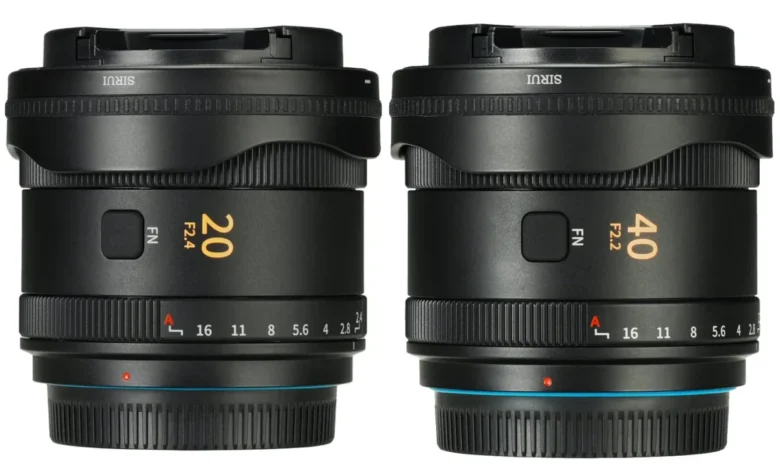
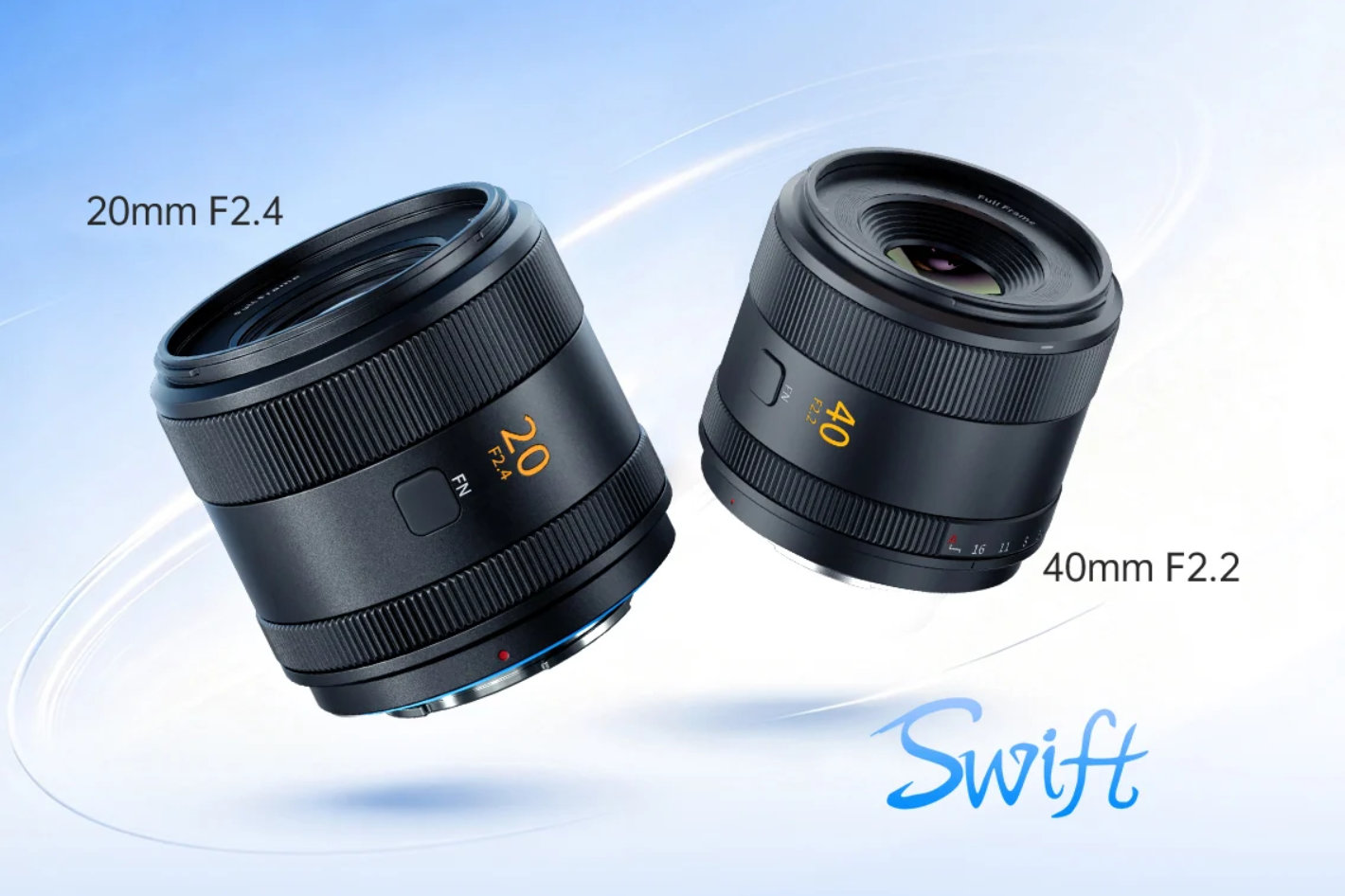
The photography and videography industry has witnessed a significant shift in market dynamics over the past decade, characterized by the rise of third-party lens manufacturers challenging the dominance of legacy camera brands. The latest development in this competitive landscape comes from Sirui, a company historically recognized for its precision tripods and anamorphic lenses, which has now introduced the "Swift" series. This new line of full-frame autofocus prime lenses—comprising a 20mm and a 40mm model—is positioned as a high-value, entry-grade solution, retailing at an aggressive price point of $149 per unit. By targeting the intersection of portability, affordability, and optical performance, Sirui is aiming to capture the attention of hobbyists, vloggers, and street photographers who require lightweight, versatile glass for daily use.
The Evolution of the Budget Lens Market
To understand the significance of the Sirui Swift release, one must consider the trajectory of the lens market. Historically, the "nifty fifty" (50mm prime) was the standard entry point for photographers moving beyond kit lenses. However, as mirrorless technology has advanced, the demand for compact, wide-angle, and standard focal length primes has surged.
In recent years, the market has seen a proliferation of budget-friendly autofocus lenses from manufacturers based in East Asia. Companies like Viltrox, Yongnuo, and TTArtisan have fundamentally changed consumer expectations. Previously, "budget" was often synonymous with "manual focus" or "poor optical quality." Today, the integration of Stepping Motors (STM) and advanced optical coatings into sub-$200 lenses has become the new benchmark. Sirui’s entry into this specific segment is not merely a product launch; it is a strategic expansion designed to leverage the company’s manufacturing prowess to provide a full-frame ecosystem for modern mirrorless users who may find native manufacturer lenses prohibitively expensive.
Technical Specifications and Optical Design
The Sirui Swift series is defined by its compact form factor and adherence to modern optical standards. Both lenses have been designed with portability as a primary objective, catering to users who utilize mirrorless bodies for travel, street, and video production.
The 20mm f/2.4 prime is constructed with 11 elements in 9 groups. This ultra-wide-angle lens is engineered to provide an expansive field of view, making it a suitable tool for landscapes, architectural photography, and vlogging, where capturing context is as important as capturing the subject. The lens features a minimum focus distance of 0.65 feet (0.2 meters), allowing for creative, close-up perspectives that exaggerate foreground elements—a hallmark of wide-angle photography.
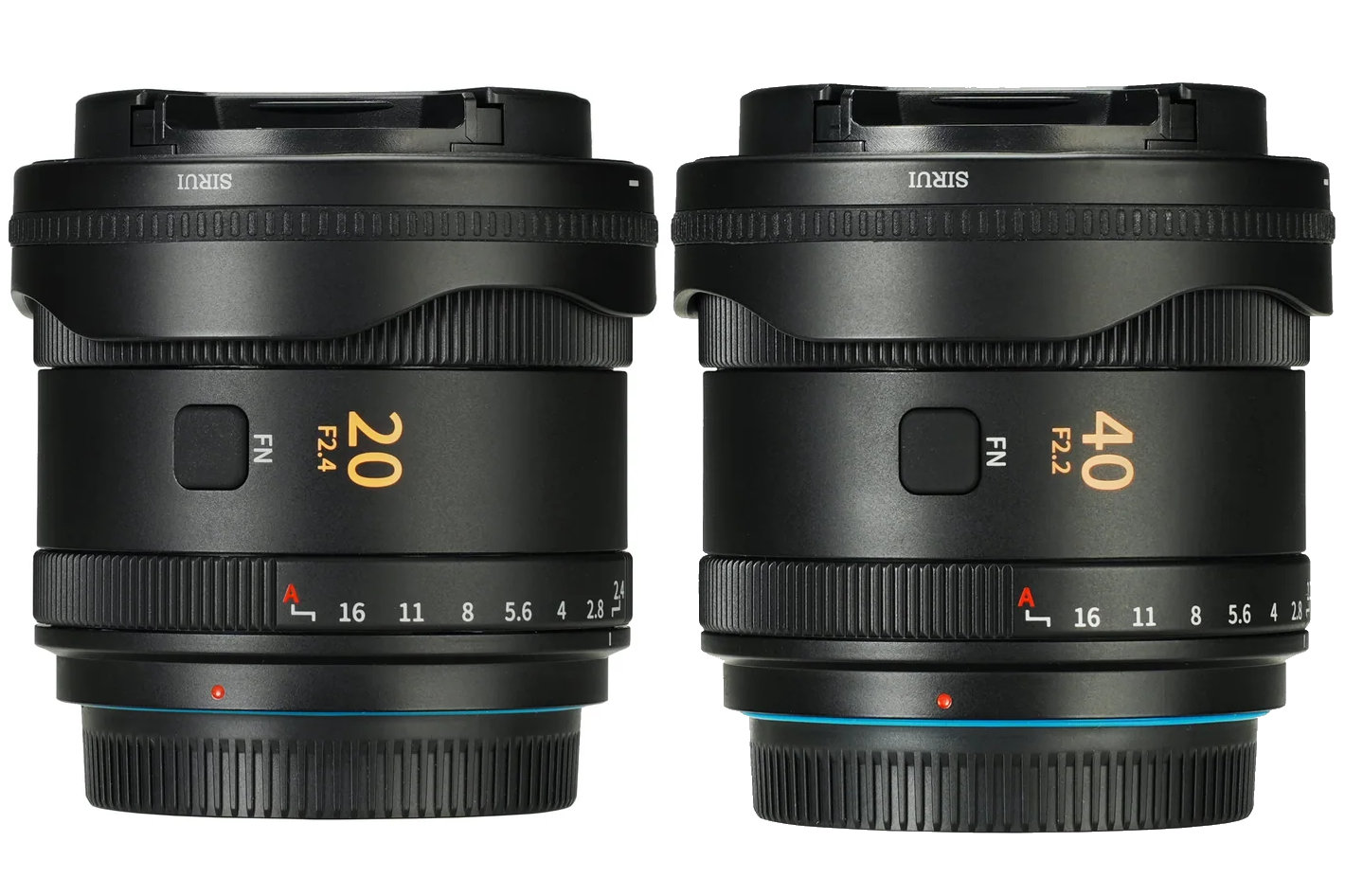
Complementing the 20mm is the 40mm f/2.2 prime, which features an 11-element, 8-group design. The 40mm focal length occupies a unique space, serving as a "bridge" between the traditional 35mm wide-angle and 50mm standard focal lengths. It is widely considered an ideal choice for street photography and portraits because it offers a natural, human-eye perspective without the distortion often associated with wider lenses. With a minimum focus distance of 1.31 feet (0.4 meters), it is capable of isolating subjects effectively, aided by its f/2.2 maximum aperture.
Both lenses share a consistent 58mm filter thread, a design choice that benefits videographers and photographers who utilize circular polarizers, neutral density filters, or diffusion filters across multiple lenses. Furthermore, the lenses are remarkably lightweight, with the L-mount versions weighing approximately 212g (0.467lb) for the 20mm and 215g (0.474lb) for the 40mm.
Performance Features for Modern Creators
A critical component of the Sirui Swift series is the inclusion of an STM (Stepping Motor) autofocus system. In the context of modern mirrorless camera systems, autofocus speed and silence are paramount. STM motors are favored for video applications because they facilitate smooth, near-silent focus transitions, which are essential for minimizing noise interference in audio recordings.
Sirui has emphasized that these lenses were developed with a focus on "minimal focus breathing." Focus breathing—the slight change in focal length that occurs when adjusting the focus distance—is a significant concern for filmmakers. When the field of view shifts during a focus pull, it can disrupt the professional aesthetic of a sequence. By addressing this in their optical design, Sirui is clearly signaling that the Swift series is intended to be a viable tool for video production and short-film creation, rather than just still photography.
The company also claims that the lenses utilize all-glass optics to ensure high resolution and minimal chromatic aberration. Chromatic aberration, or "purple fringing," is a common issue in lower-cost optics, particularly in high-contrast lighting conditions. If Sirui’s internal testing is accurate, the implementation of premium optical structures at this price point could provide a significant disruption to the entry-level lens market.
Chronology and Market Context
The release of the Swift series follows a period of rapid product iteration for Sirui. The company has historically focused on specialized cinematography gear, particularly their well-regarded 1.33x and 1.6x anamorphic lenses. By pivoting toward general-purpose, full-frame autofocus primes, Sirui is diversifying its revenue stream.
- Initial Expansion: Sirui established its reputation in the professional filmmaking community through affordable anamorphic solutions.
- Diversification: The company transitioned from purely mechanical/optical cine lenses to electronic autofocus technology, necessitated by the shift of the entire industry toward mirrorless platforms (Sony E, Nikon Z, Fujifilm X, and Leica/Panasonic/Sigma L-mount).
- The Swift Launch: The announcement of the Swift series represents the current state of this strategy, where the focus has moved from niche cinematic tools to high-volume, mass-market optics.
The $149 price point is particularly noteworthy when compared to native manufacturer offerings. For example, a native 20mm or 40mm full-frame lens from a major manufacturer often costs between $400 and $900. While native lenses typically offer superior build quality, weather sealing, and proprietary communication protocols for faster autofocus, the Swift series occupies a "good enough" category that appeals to students, budget-conscious enthusiasts, and those looking for a "disposable" lens for high-risk shooting environments.
Implications for the Industry
The availability of high-performance optics at a $149 price point has several implications for the broader photography market:
- Lowering the Barrier to Entry: Aspiring photographers who have purchased a camera body may find the cost of native glass prohibitive. By providing an affordable pathway to prime lens photography, Sirui encourages users to move beyond the limitations of standard zoom lenses.
- Increased Competition: The aggressive pricing will likely force other third-party manufacturers to re-evaluate their own entry-level pricing models. This creates a "race to the bottom" in terms of cost, which is ultimately beneficial for the consumer.
- The "Disposable" Lens Phenomenon: In professional photography, there is a concept of a "beater lens"—a piece of gear that is cheap enough to be used in hazardous conditions (e.g., street photography in rain, dust, or crowded events) where one might be hesitant to take a $2,000 professional lens. The Swift series fits this role perfectly.
Professional Analysis of the Value Proposition
When analyzing the "high-value entry grade" label, one must look at the trade-offs. To achieve a $149 price point, manufacturers typically sacrifice weather sealing, programmable custom buttons, and perhaps some edge-to-edge sharpness compared to premium "G-Master" or "L-series" optics.
However, for the target demographic—vloggers and hobbyists—these trade-offs are often irrelevant. The priority is portability and acceptable image quality. The technical data provided by Sirui suggests that the lenses are well-corrected for distortion, which is a major victory for entry-level optics. If the autofocus performance via the STM motor holds up in real-world scenarios, particularly with subject tracking (eye-AF), these lenses will likely become standard recommendations for entry-level full-frame users.
Conclusion
The introduction of the Sirui Swift 20mm f/2.4 and 40mm f/2.2 is a strategic move that reflects the democratization of optical technology. By combining a low price point with features specifically requested by the modern content creator—such as STM autofocus and minimal focus breathing—Sirui is positioning itself to be a formidable player in the third-party lens market.
While the "uncompromising image quality" claim will inevitably be subjected to rigorous real-world testing by independent reviewers, the specifications provided suggest a product that offers immense utility for the price. As the camera industry continues to consolidate around mirrorless systems, the availability of high-quality, affordable lenses like the Swift series will remain a crucial factor in the growth and accessibility of professional-grade visual storytelling. For the photographer or videographer looking to expand their kit without a significant capital expenditure, these lenses represent a compelling, low-risk investment.
Related posts: