Signal Moves to Restrict Screenshots Across All Platforms as Operating System AI Agents Pose New Privacy Threats

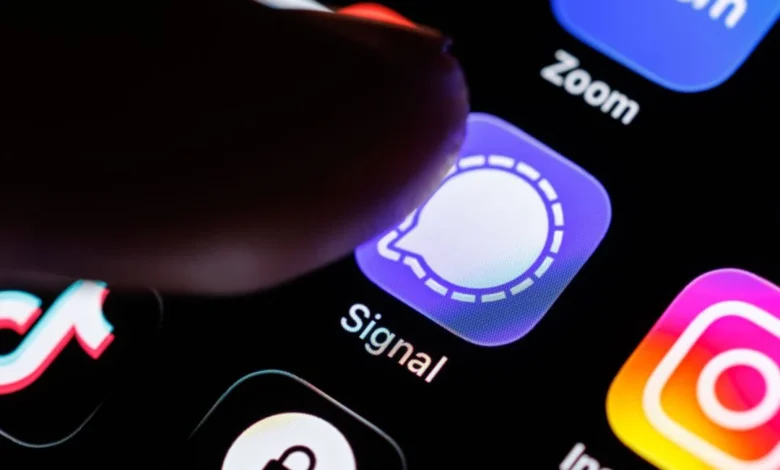
In a significant escalation of the ongoing battle between digital privacy advocates and major technology conglomerates, the encrypted messaging platform Signal announced a sweeping update on Friday designed to limit users’ ability to take screenshots within the application. The move represents a direct and urgent response to what Signal President Meredith Whittaker has characterized as an "existential threat" stemming from modern operating systems that aggressively integrate agentic artificial intelligence capabilities at the system level.
The policy update expands upon pre-existing security measures by rolling out stricter screenshot and screen-capture controls across mobile operating systems, including Google’s Android and Apple’s iOS, mirroring and extending protections previously deployed on the Windows desktop application. This latest development underscores a profound structural tension in the modern computing landscape: while privacy-focused applications strive to offer end-to-end encryption and ephemeral communication channels, the underlying operating systems powering billions of devices are increasingly built to continuously harvest, index, and analyze on-screen data to feed local and cloud-based AI models.
The Rising Threat of OS-Level AI Agents
The core of the controversy lies in the evolution of operating systems. Modern platforms developed by tech giants—such as Microsoft Windows, Apple’s macOS and iOS, and Google’s Android—are rapidly transitioning from passive tools that execute user commands into proactive environments managed by agentic AI. These AI agents are designed to understand context across different applications, anticipate user needs, and streamline workflows by constantly monitoring whatever is displayed on the screen.
However, this constant surveillance creates a severe vulnerability for secure communications. According to Whittaker, when operating systems give native AI agents the authorization to scan, read, and ingest information directly from a user’s display, they inherently bypass the application-layer security guarantees that platforms like Signal rely on.
"Now, in service of AI agentic capabilities, your sensitive data is being captured, stored, and made accessible to whatever local database or remote server an OS-level AI agent is using at that moment," Whittaker explained in an official blog post detailing the security update. "All of this is outside of Signal’s control once the data has been captured, and imperils the privacy of all the participants in a conversation."
By continuously capturing screenshots or frame-buffer data to train or inform AI assistants, operating systems effectively create unencrypted, searchable archives of private chats. This process happens behind the scenes, often without the explicit, real-time awareness of the user, transforming confidential discussions into fodder for third-party machine learning pipelines. For a messaging service whose entire value proposition rests on the premise that messages vanish and cannot be intercepted by intermediaries, the rise of omnipresent OS-level AI agents represents an unprecedented challenge.
Chronology of Signal’s Defensive Measures
Signal’s decision to tighten screenshot restrictions did not happen in a vacuum. It represents the latest step in a multi-year effort by the non-profit organization to fortify its application against hardware- and software-level leaks.
Historically, secure messaging apps focused primarily on securing data in transit (using robust end-to-end encryption protocols) and data at rest (using local device encryption). However, as operating systems have grown more invasive, the boundary between the application and the host system has eroded.

Previously, Signal recognized the vulnerability of desktop environments and implemented a default setting that blocked screenshots on its Windows desktop application. While this feature provided a layer of friction against casual snooping or malicious screen-scraping software, it remained an isolated defense.
As mobile and desktop operating systems accelerated their integration of agentic AI features throughout 2025 and 2026, Signal’s engineering and leadership teams realized that piecemeal protections were no longer sufficient. The Friday announcement marks the systematic extension of these anti-capture protocols to mobile ecosystems—Android and iOS—where users are increasingly interacting with deep AI integrations like Apple Intelligence and various Windows Copilot features.
Despite rolling out these expanded restrictions, Signal’s leadership has been transparent about the limitations of the fix. Users retain the technical ability to disable these screenshot restrictions within the app’s settings menu if they choose to prioritize convenience over security. Whittaker readily acknowledged that overriding this default configuration would "break our privacy guarantees." Furthermore, she conceded that blocking standard screen captures is an "incomplete" solution because it fails to address more covert mechanisms that sophisticated AI agents might employ to ingest application data directly from device memory or accessibility APIs.
Industry Reactions and the Broader Privacy Debate
The announcement has triggered a wide-ranging debate across the cybersecurity and tech industry regarding the ownership of user devices and the limits of platform stewardship.
Privacy advocates have largely rallied behind Signal’s stance, arguing that tech giants are engaging in a form of forced data extraction. Critics point out that consumers purchase smartphones and personal computers under the assumption that their private communications remain confidential, only to find that operating system updates quietly enable data harvesting features designed to fuel corporate AI ambitions. By taking a proactive—if controversial—step to restrict screen capture capabilities, Signal is forcing users to confront the trade-offs inherent in modern operating system design.
Conversely, representatives from major operating system developers have historically defended AI integrations as essential tools for enhancing productivity, accessibility, and user experience. Tech companies argue that local AI processing models are designed with robust privacy safeguards, data anonymization, and user consent mechanisms. However, security researchers frequently counter that centralized operating systems wield too much structural power, making it difficult for third-party applications to maintain absolute confidentiality when the host system itself is fundamentally engineered to observe everything.
Implications for the Future of Encrypted Communications
The friction between Signal and OS developers highlights a looming architectural crisis for the encrypted messaging sector. As artificial intelligence becomes a mandatory feature embedded deep within the silicon and software of modern consumer electronics, standalone privacy apps face a hostile environment.
If operating systems continue to prioritize continuous visual and contextual monitoring to power AI agents, end-to-end encryption may eventually be undermined at the endpoint. Even if a message cannot be intercepted while traveling across the internet, and even if it is securely encrypted on a device’s hard drive, it remains vulnerable the moment it is rendered on a screen that an AI agent is legally and technically authorized to read.
For Signal, the path forward involves a continuous, uphill battle of patching vulnerabilities, educating users, and pushing back against industry norms that treat user data as an infinite resource for AI training. While the newly announced screenshot limitations on Android and iOS will not solve the entire spectrum of risks posed by ambient artificial intelligence, they serve as a vital defensive line in an era where digital privacy is increasingly treated as an afterthought by mainstream technology ecosystems.