TikTok has officially pivoted its e-commerce strategy by launching a standalone application dedicated exclusively to its shopping division. This development, which marks a significant shift from the platform’s traditional integrated model, has been rolled out in Singapore, Malaysia, Thailand, and the Philippines. The move represents a calculated effort by the ByteDance-owned company to transition from a social discovery engine to a primary destination for digital commerce, positioning itself as a direct competitor to regional giants like Shopee, Lazada, and the global dominance of Amazon.
The introduction of this dedicated app—available on both iOS and Android platforms—was first observed by industry analysts, including social media consultant Matt Navarra. The application serves as a centralized hub for the features that have defined TikTok’s foray into retail, including live-streamed shopping events, short-form video product demonstrations, and a streamlined checkout process. By segregating these features, TikTok is signaling that it no longer views shopping as a mere accessory to its social feed, but as a distinct vertical requiring its own dedicated user experience.
A Strategic Expansion into Standalone Ecosystems
For years, TikTok’s strategy centered on the "discovery-to-purchase" pipeline. Users would scroll through their "For You" feeds, encounter a creator promoting a product, and navigate to a shopping cart within the main TikTok app. While this model proved highly effective at driving impulse buys, it relied heavily on the user’s intent to consume entertainment. By launching a standalone app, TikTok is now targeting a different user mindset: the intentional shopper.

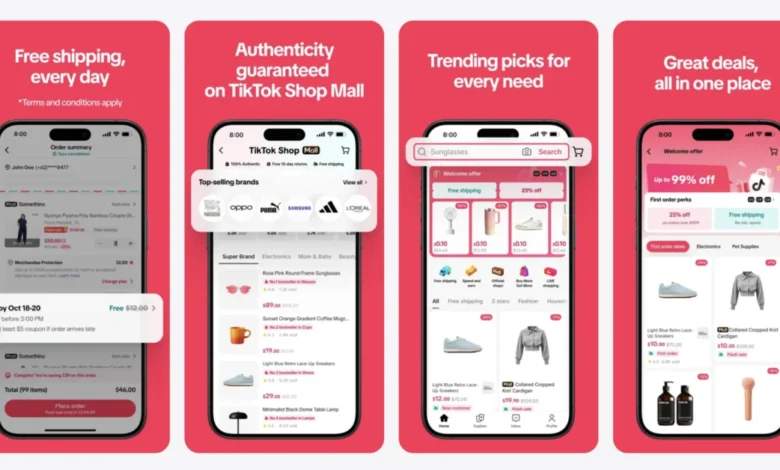
The app’s interface is designed for utility. According to its current store listings, the application provides a curated, personalized product feed, integrated order tracking, and 24/7 customer service support. This shift mirrors the company’s broader corporate philosophy of building "service-oriented" ecosystems around the habits formed within its social platform. By separating the shopping experience, TikTok can refine its recommendation algorithms to prioritize retail conversion rates over content engagement, potentially increasing the efficiency of its advertising infrastructure.
The Evolution of the TikTok Commerce Timeline
The launch of this standalone app is the latest chapter in a multi-year effort to dominate the social commerce market. Since the initial rollout of TikTok Shop, the company has aggressively scaled its operations:
- 2023: TikTok consolidated its shopping features, investing heavily in logistics and warehouse partnerships to support the rapid growth of its shop-in-app model.
- Early 2025: The company began testing localized, service-specific apps in international markets, aiming to capture niche behaviors like travel planning and local dining recommendations.
- May 2026: TikTok introduced "TikTok GO," a travel-booking integration that allowed users to book hotels and tours through third-party partners like Expedia and Booking.com, further proving the platform’s ability to monetize external service sectors.
- Late 2026: The company launched "Must Eat," a curated restaurant guide for major metropolitan areas, utilizing the vast database of user reviews and video content to drive real-world dining reservations.
- November 2026: The global release of the standalone TikTok Shop app in Southeast Asian markets, marking the first time the company has fully decoupled its retail arm into a distinct software entity.
Market Dynamics and Regional Focus
The choice of Singapore, Malaysia, Thailand, and the Philippines as the initial launch markets is not accidental. Southeast Asia represents one of the most competitive and rapidly growing e-commerce landscapes in the world. Digital adoption in these nations is high, and consumers have demonstrated a strong preference for "live shopping"—a retail format that originated in China and found massive success in Southeast Asian markets through platforms like Shopee and Lazada.
Data from the Apple App Store and Google Play indicates a steady initial adoption rate. The app has already surpassed 50,000 downloads in its first few days of availability, signaling a ready appetite for a dedicated shopping environment. Industry observers note that the app’s versioning—which has already seen rapid updates since its quiet launch—suggests that the company is iterating quickly based on real-time user feedback.

Corporate Structure and Data Governance
A notable detail in the rollout is the entity listed as the provider: TikTok Pte. Ltd. This distinction is critical for understanding the company’s global operations. Unlike the U.S.-based TikTok USDS Joint Venture, which handles data security, recommendation algorithms, and content moderation specifically for the American market, TikTok’s international commercial activities—including its e-commerce expansion—are managed under the broader global business structure.
This organizational separation highlights how TikTok manages the regulatory challenges inherent in its business model. By keeping the shopping infrastructure under a global entity, the company can maintain consistency in its e-commerce features across different countries, even while its social platform faces stringent, region-specific data oversight.
Implications for the Competitive Landscape
The launch of a dedicated shop app forces a re-evaluation of the competitive hierarchy in the e-commerce sector. For years, Amazon has been the default destination for search-based shopping, while platforms like Temu and Shein have disrupted the industry with high-volume, low-cost logistics models. TikTok’s entry with a standalone app creates a new category: "Content-Driven Commerce."
The primary advantage TikTok holds is its unparalleled dataset on consumer trends. Because the app is built on the same recommendation engine that powers the main TikTok experience, it can offer highly personalized, "shoppable" content that traditional e-commerce sites cannot replicate. If a user spends time watching beauty tutorials, the standalone Shop app can intelligently surface those exact products, creating a seamless transition from inspiration to purchase.

Future Outlook and Potential Global Rollout
While TikTok has not confirmed plans to bring the standalone Shop app to the United States or Europe, the move is being closely monitored by analysts. The success of the app in Southeast Asia will likely serve as a blueprint for future expansion. If the company can prove that a standalone app leads to higher average order values and better user retention than the in-app shopping feature, a wider global launch is inevitable.
Furthermore, the integration of exclusive deals, free shipping, and first-order incentives suggests that TikTok is willing to subsidize the cost of customer acquisition to gain market share. This aggressive pricing strategy, combined with the power of its creator network, presents a significant challenge to incumbents.
As the platform continues to build these vertical-specific apps—ranging from "PineDrama" for short-form entertainment to "Must Eat" for dining—the company is clearly moving away from being a single-use app. Instead, it is building an ecosystem of interconnected tools designed to capture every stage of the user’s digital life. Whether the average consumer is willing to download multiple, distinct TikTok-branded applications remains to be seen, but the intent behind the strategy is clear: TikTok wants to be the starting point for every digital journey, whether that journey is for entertainment, dining, travel, or the purchase of a new pair of sneakers.
As this strategy continues to unfold, the success of the standalone Shop app will depend on its ability to maintain the "discovery" element that made TikTok popular, while providing the stability and reliability expected of a dedicated retail platform. For now, the app remains in its infancy, but its arrival marks a defining moment in the evolution of social media as a dominant force in global retail.