The Ultimate Guide to Measuring Social Media Success: Defining Metrics and KPIs for 2027


In the contemporary digital landscape, the volume of data available to social media managers often obscures the signal. While the proliferation of analytics dashboards provides an exhaustive view of every user interaction, the sheer abundance of data can lead to strategic drift. The fundamental challenge for marketers is not the collection of data, but the discernment of which metrics possess the utility to inform business decisions. True success in social media marketing is measured not by the accumulation of vanity figures, but by the alignment of specific metrics with overarching organizational goals—be it audience expansion, brand sentiment improvement, or conversion-driven traffic.

The Evolution of Social Media Analytics
Historically, social media analytics were limited to basic counts: follower totals and raw engagement numbers. However, as platforms have matured, the industry has shifted toward more sophisticated, rate-based performance indicators. This transition reflects a broader trend in digital marketing, where the focus has moved from "reach at any cost" to "engagement with intent."
As of late 2026, social media professionals are increasingly required to bridge the gap between social activity and bottom-line revenue. The industry standard has moved beyond simply knowing how many people viewed a post; it now requires understanding the cost-efficiency of those views and their eventual impact on the sales funnel. This evolution is necessitated by the increasing costs of customer acquisition and the algorithmic volatility of major social platforms.
Metrics Versus Key Performance Indicators (KPIs)
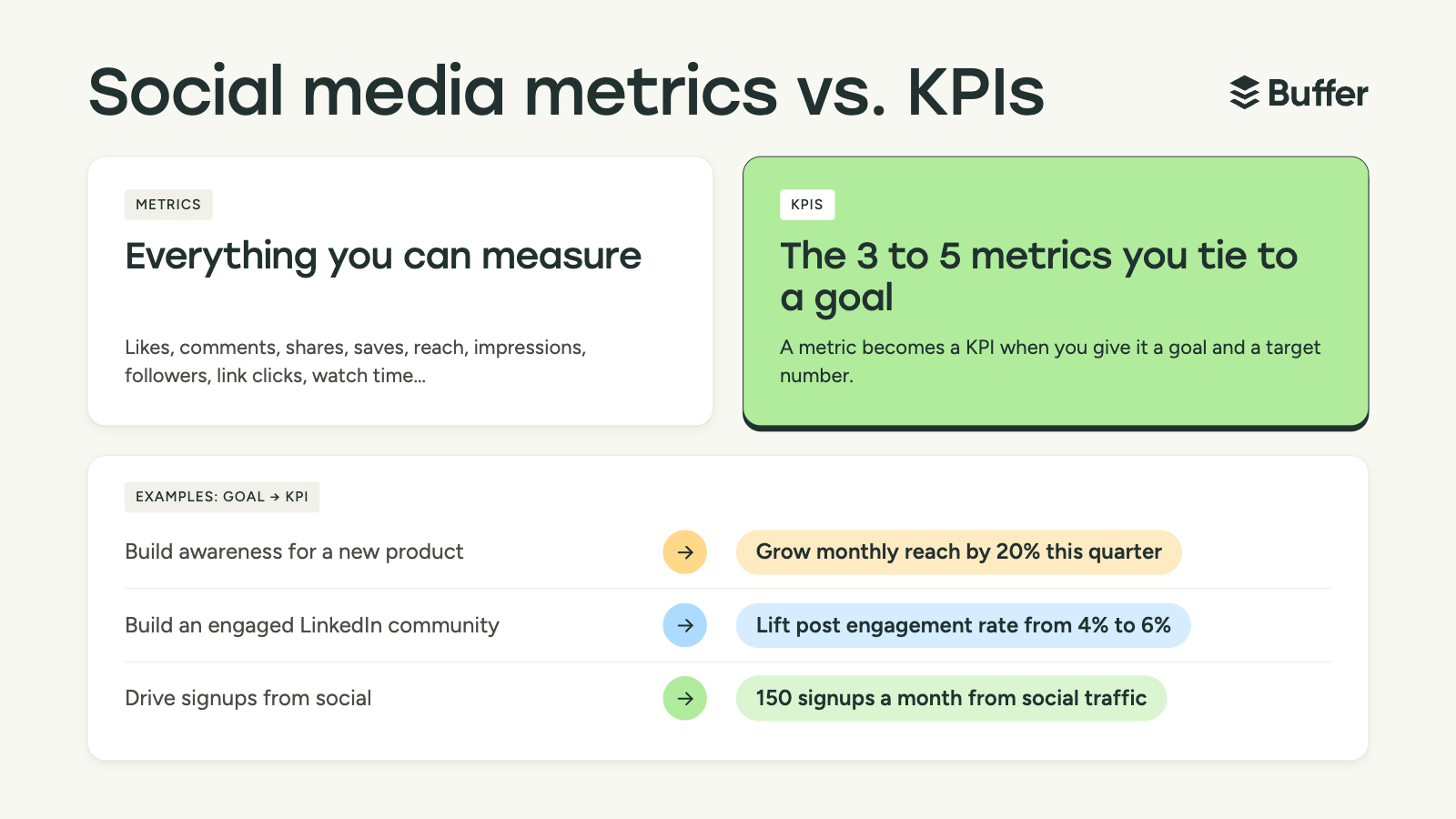
A common point of confusion in the sector is the conflation of metrics with Key Performance Indicators. A metric is a data point—a measurement of any activity occurring on a digital channel. A KPI, conversely, is a specific, actionable, and time-bound goal.
For instance, a "Like" count is a metric. However, increasing the "Engagement Rate" of a specific campaign by 15% over the next quarter is a KPI. Organizations that fail to distinguish between the two often find themselves paralyzed by data overload. Industry analysts recommend that departments track no more than three to five KPIs at any given time. By anchoring these KPIs to a specific baseline—determined by historical performance—marketers can objectively assess whether a campaign represents a genuine achievement or a stagnation of effort.
Core Engagement Metrics and Their Strategic Significance
Engagement remains the primary proxy for content resonance. In 2025, a comprehensive analysis of over 52 million posts revealed significant shifts in how audiences interact with content across various platforms. LinkedIn, for example, saw a median engagement rate of approximately 6.2%, while X (formerly Twitter) experienced a notable 44% increase in engagement compared to the previous year, settling at a 2.5% median.
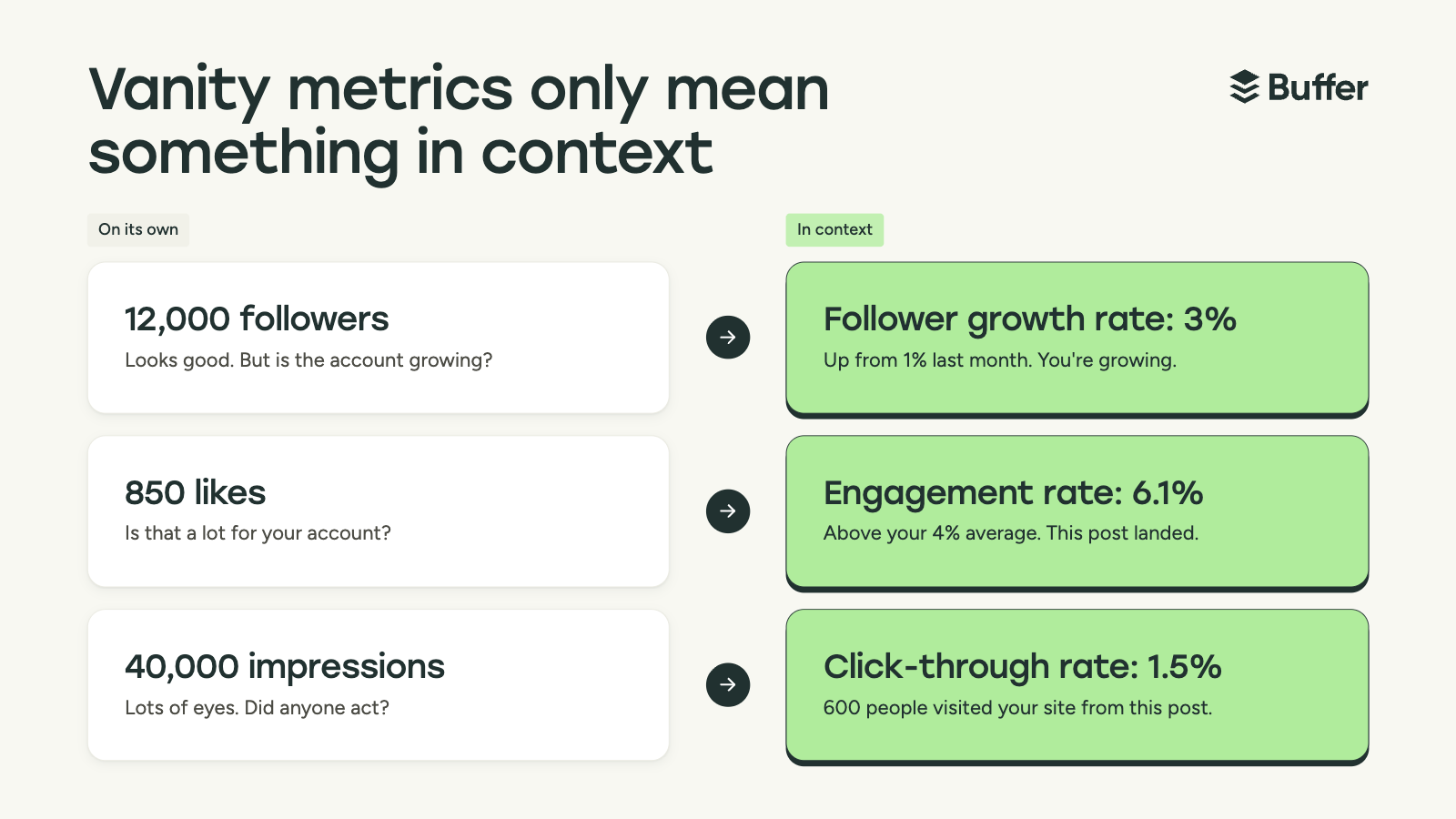
These figures underscore the importance of platform-specific benchmarks. A 4% engagement rate, while stellar on one platform, might be considered underperforming on another. Professionals must therefore analyze their data within the context of the platform’s unique ecosystem rather than comparing performance across disparate channels.
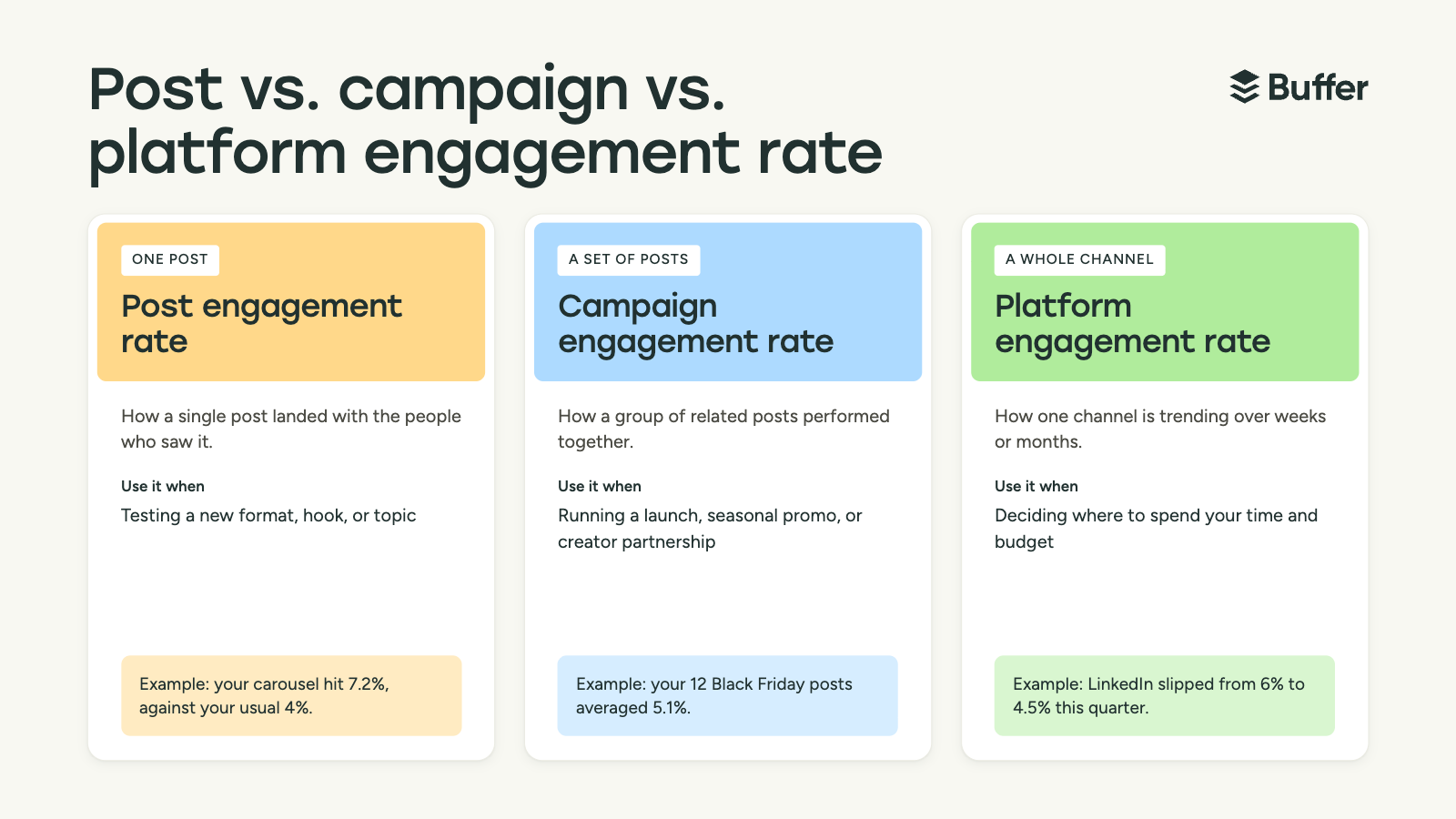
- Engagement Rate: Calculated as total engagements divided by reach, this metric serves as a barometer for content quality. High engagement rates signal that the content has successfully halted the user’s scroll, whereas low rates indicate a disconnect between the messaging and the audience.
- Comments and Quality of Interaction: Beyond the raw number of comments, practitioners are now looking at the "quality" of conversation. Research indicates that accounts that actively reply to comments see higher overall engagement. This has led to the rise of community management as a critical component of the social media marketing stack.
- Shares and Amplification: Shares represent the ultimate validation of content. An amplification rate—calculated by dividing shares by followers—measures how effectively a brand’s audience acts as a distribution channel.
- Saves: Often overlooked, the "save" function has become a critical indicator of educational or utility-based content. A save suggests that a user finds the information valuable enough to revisit, which is a strong precursor to brand loyalty.
Awareness and Growth: Beyond the Follower Count
While follower growth is frequently dismissed as a vanity metric, it remains a vital indicator of brand health when viewed as a growth rate. A stagnating follower count, when paired with decreasing reach, often indicates that a brand’s content is failing to penetrate new market segments.
Data suggests that consistency is the strongest driver of reach. Analysis of over 4.8 million channel-weeks indicates that accounts failing to maintain a regular posting schedule experience significantly slower growth than their peers. This has led to a strategic emphasis on content calendars and automated scheduling tools, which allow brands to maintain a presence without succumbing to burnout.

The Financial Dimension: Conversion and ROI
For businesses, the most critical metrics are those that track the movement from the social channel to the company website. The Click-Through Rate (CTR) and the subsequent Conversion Rate are the primary measures of a social media campaign’s commercial viability.
- Click-Through Rate (CTR): This measures the efficiency of a call-to-action. If a post garners thousands of impressions but fails to drive clicks, the issue likely resides in the creative or the messaging, rather than the platform’s reach.
- Return on Ad Spend (ROAS): In paid social media, ROAS is the definitive metric for profitability. Modern marketers are increasingly shifting toward "Blended ROAS," which evaluates the total revenue generated across all channels relative to the total ad spend. This holistic view prevents the common error of attributing success solely to the last touchpoint in a complex customer journey.
Institutional Challenges and Best Practices
The primary hurdle for most marketing teams remains the integration of data. As of 2026, many organizations still rely on manual data entry, transferring metrics from native platform dashboards to spreadsheets. This method is not only prone to human error but also prevents real-time decision-making.
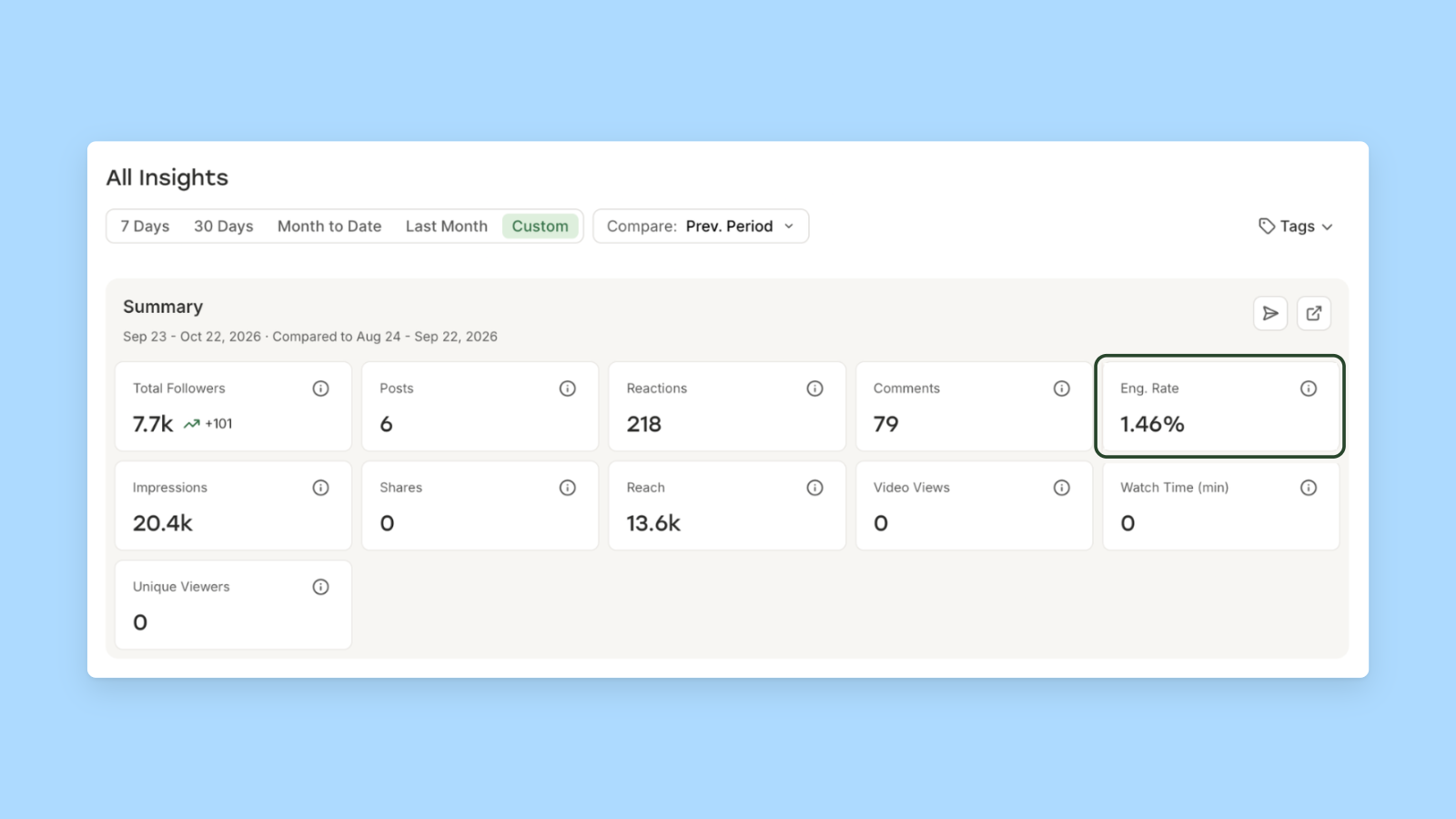
Professional standards now dictate the use of centralized analytics tools. By consolidating data from multiple channels into a single dashboard, teams can identify cross-channel trends—such as the migration of an audience from one platform to another—that would otherwise remain invisible.
Strategic Implications for 2027
The trajectory of social media analytics points toward increased automation and the integration of predictive modeling. As artificial intelligence continues to play a larger role in content creation, the burden of data analysis will also be eased by AI-driven insights that can automatically identify high-performing content patterns and suggest future pivots.

However, the human element remains irreplaceable. Regardless of the sophistication of the tool, the marketer’s ability to interpret data and apply it to a business strategy is the decisive factor in success. An effective reporting cycle involves a weekly review of content-level metrics to refine tactical execution, a monthly review of KPIs to monitor progress toward goals, and a quarterly, high-level audit to assess the alignment of the social strategy with the company’s long-term business objectives.
In conclusion, the measurement of social media success is a process of refinement. It requires the courage to ignore metrics that do not serve the bottom line and the discipline to focus on those that do. By setting clear baselines, establishing rigorous KPIs, and maintaining a consistent analytical routine, brands can transform their social media channels from simple broadcast tools into powerful, data-backed engines for growth. The objective is not to win the numbers game, but to ensure that every digit recorded is a reflection of actual progress toward a meaningful business outcome.