Busy Bodies and the Intersection of Industrial Surrealism and Traditional Printmaking in the 2027 Oscar Race

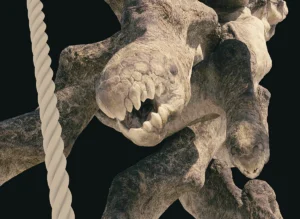
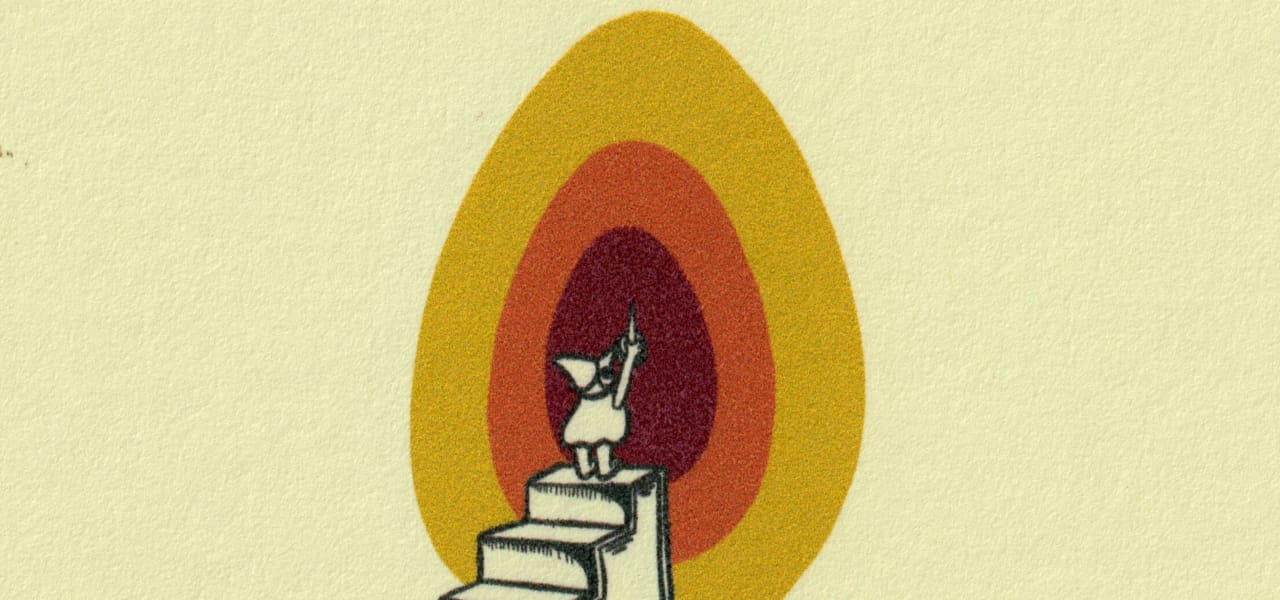
The landscape of the 2027 Academy Award for Best Animated Short Film has been significantly enriched by the inclusion of Busy Bodies, a masterwork of tactile animation that bridges the gap between traditional printmaking and surrealist industrial commentary. Directed and animated by Kate Renshaw-Lewis and produced by Eric Ackerman of Ackzilla Entertainment, the short film recently secured its path to Oscar qualification by clinching the Grand Jury Award for Animated Short at the Slamdance Film Festival. As the Academy of Motion Picture Arts and Sciences (AMPAS) continues to broaden its criteria for international and independent submissions, Busy Bodies stands as a poignant example of how niche, labor-intensive production methods are increasingly finding a home on the global stage.
The Genesis of a Mechanical Vision
The conceptual framework for Busy Bodies originated in the most mundane of environments: a grocery store lunch break. For Renshaw-Lewis, the observation of a "made by hand" sticker on a mass-produced, pre-packaged tuna wrap served as the primary catalyst for the film’s narrative arc. This seemingly innocuous label prompted a deeper inquiry into the invisible labor and dehumanized automation that define contemporary consumerism.
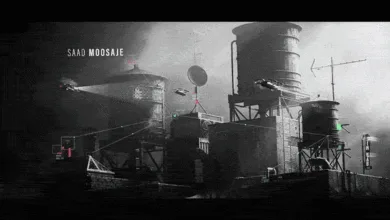
Renshaw-Lewis’s vision was heavily influenced by the paradoxical nature of modern production, where efficiency often masks profound absurdity. She cites the "salmon cannon"—a pneumatic device used to transport fish over hydroelectric dams—as a key visual reference. This invention represents the extreme lengths to which human engineering will go to streamline natural processes, a theme that echoes throughout the film as tiny, worker-like figures navigate a domestic factory under the indifferent supervision of giant hands. The narrative is further informed by the logic of Rube Goldberg machines, where the complexity of a task is amplified for the sake of a singular, often trivial, result.

A Technical Odyssey: The Marriage of Print and Film
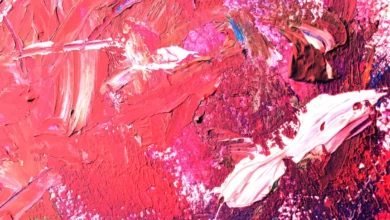
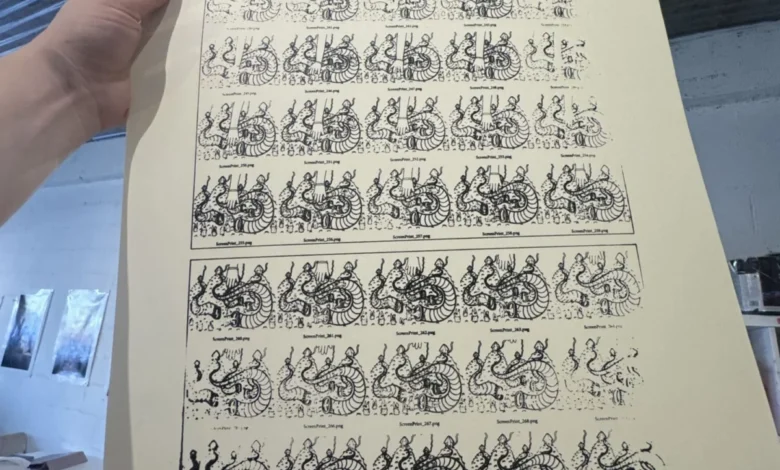
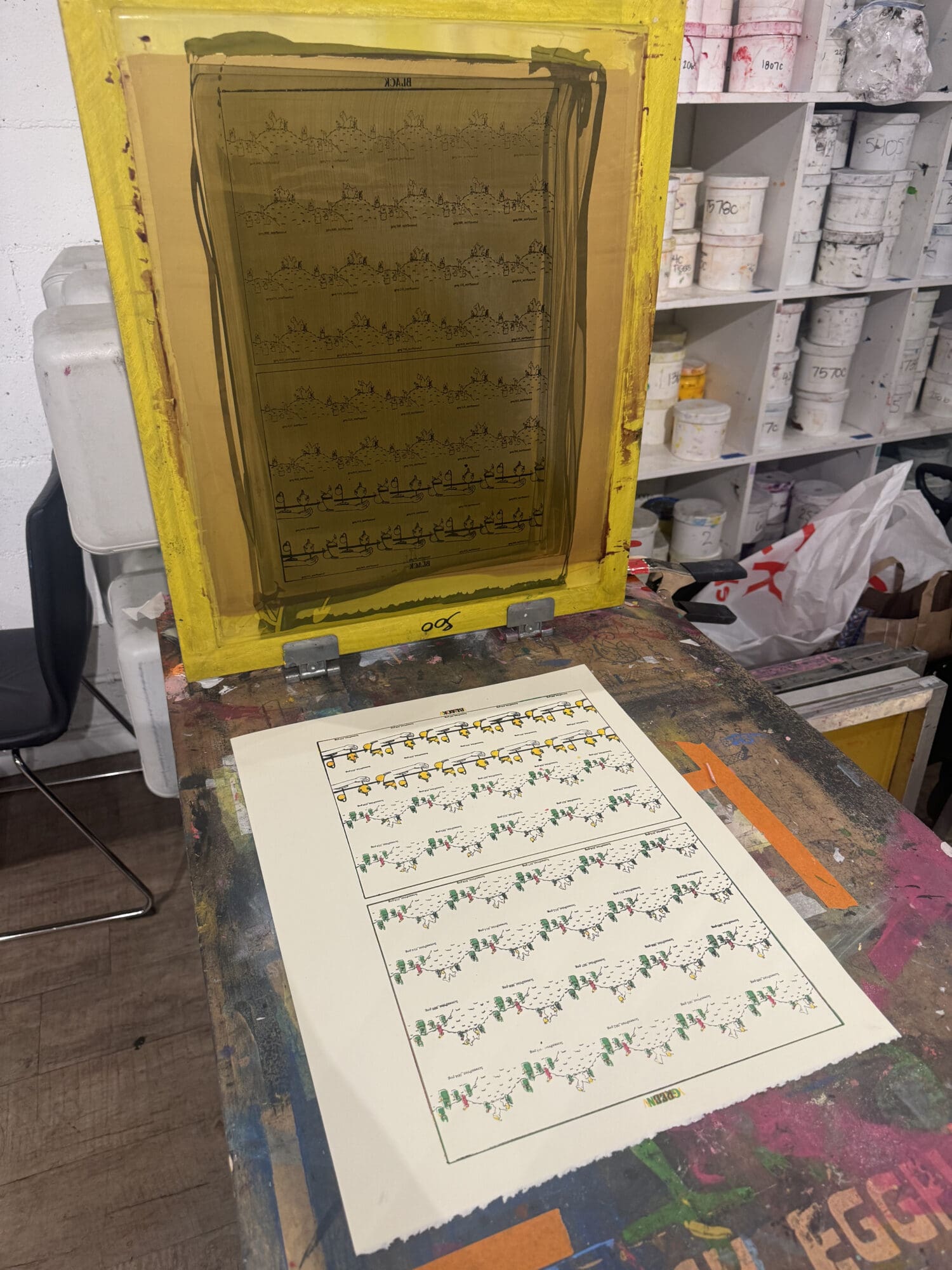
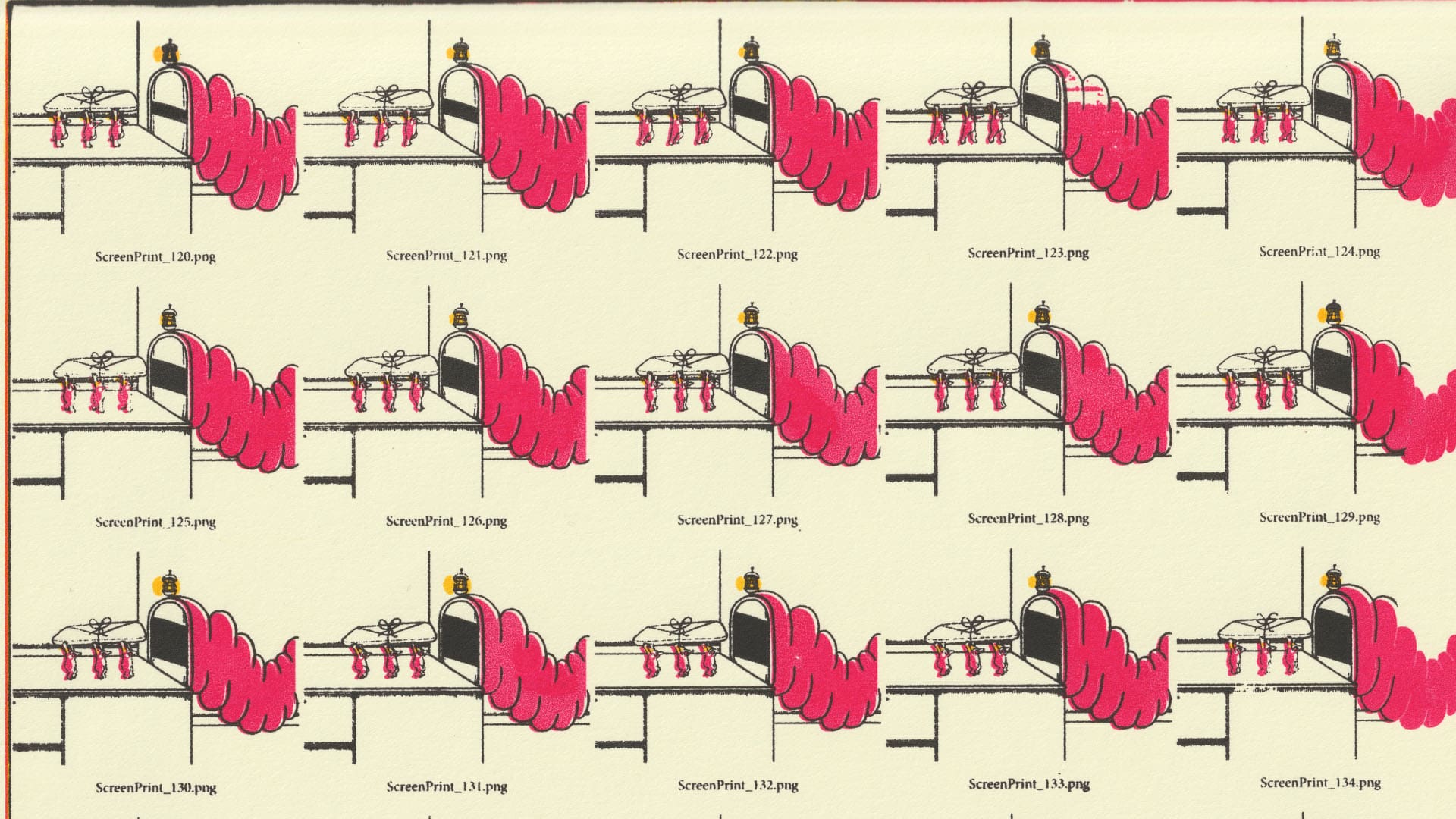
The production of Busy Bodies is as much a feat of technical endurance as it is an artistic endeavor. Diverging from the industry standard of digital compositing, Renshaw-Lewis utilized a hybrid technique involving inkjet and screen printing. Each individual frame of the animation was printed at a diminutive scale of approximately 1.5 inches. This deliberate choice to minimize the frame size allowed the paper’s inherent texture to be amplified when the imagery was ultimately enlarged for digital projection.
The constraints of the print studio directly informed the film’s aesthetic language. Because screen printing necessitates the burning of individual screens for each distinct color, the film’s color palette was inherently restricted, leading to a stylized, bold visual identity. This process also introduced a "boiling" effect—a subtle, rhythmic instability in the lines—that gives the film a living, breathing quality that digital software often struggles to replicate. By creating roughly 20 frames per printed sheet, the production required a rigorous level of planning and logistical precision, which the filmmaker eventually optimized through the use of contact sheet automation functions in Adobe Photoshop.
Soundscapes and Auditory Realism
The auditory experience of Busy Bodies is central to its ominous, yet whimsical, atmosphere. The sound design was developed in collaboration with musicians Arius Ziaee and Alex Edgeworth at the Vintage Synthesizer Museum in Los Angeles. Eschewing standard stock audio libraries, the team spent extensive sessions recording original samples using vintage synthesizers, harmoniums, and clarinets.
To ground the film in an unsettling reality, the Foley work was largely captured in the intimate, quiet environment of the filmmaker’s own home. By recording household objects—vacuums, pillows, and metal sheets—Renshaw-Lewis created an immersive soundscape that contrasts the "cute" visual language of the animation with a darker, more industrial tone. Notably, the sound of the workers scurrying away is derived from ASMR-style recordings of fingers tapping on wood, providing a tactile, rhythmic quality that underscores the film’s obsession with small-scale labor.
The Academy Award Qualifying Circuit
Busy Bodies is part of a broader ecosystem of films competing for the 2027 Academy Awards. Qualification for this category is notoriously rigorous, requiring films to either win a top prize at a qualifying festival, hold a qualifying theatrical run, or win a Student Academy Award. Slamdance, the festival where Busy Bodies achieved its victory, has long been a bastion for experimental and independent filmmakers, providing a platform for works that prioritize artistic integrity over commercial viability.
The success of Busy Bodies underscores a growing trend within the Academy: a greater appreciation for "process-heavy" films. As animation studios grapple with the rapid integration of artificial intelligence and automated generation, films like Busy Bodies serve as a reminder of the value of human touch. The deliberate, step-by-step nature of printing every frame is an antithesis to the high-speed generation of contemporary digital pipelines, positioning the film as a critical commentary on the very industry that is currently evaluating it.
Broader Implications for Independent Animation
The implications of the film’s success reach beyond the awards season. By proving that a film built on such specific, manual constraints can reach an Oscar-qualifying level of acclaim, Renshaw-Lewis provides a roadmap for other independent animators. Her reliance on physical print studios and local resources demonstrates that high-quality, festival-worthy content does not necessarily require the backing of major studios or large-scale digital rendering farms.
Furthermore, the thematic resonance of Busy Bodies—the alienation of the worker in a hyper-efficient production line—is timely. As the global economy continues to shift toward automation, the film’s critique of the "fluorescently illuminated" production process feels increasingly relevant. It challenges audiences to look past the "made by hand" labels on their own goods and consider the unseen, often absurd, mechanisms that sustain the modern world.
Chronology of the Project
- Initial Concept Phase: Inspired by observations of mass-produced goods and the "made by hand" labeling system.
- Pre-Production: Development of storyboards and a structured mind map to ensure narrative cohesion, despite the experimental visual style.
- Production Phase: Extensive time spent in print studios utilizing inkjet and screen-printing techniques, scaling down frames to 1.5 inches to capture organic paper textures.
- Sound Design Phase: Collaborative recording sessions at the Vintage Synthesizer Museum and home-based Foley recording to build the film’s sonic identity.
- Festival Run: The film toured the independent circuit, culminating in its Grand Jury Award win at the Slamdance Film Festival, securing its status as an Oscar-qualified contender for 2027.
Conclusion
As the 2027 Oscars approach, the presence of Busy Bodies highlights a vital shift in the animation industry. The film does not merely tell a story about labor; it embodies the labor itself. Through its marriage of traditional printing methods and surrealist storytelling, it offers a sophisticated critique of modern production cycles. By maintaining a sense of mystery and refusing to explicitly explain its internal logic, the film invites viewers to engage with its world as an active participant rather than a passive observer. Whether it secures a nomination or not, the film’s contribution to the medium is already solidified: a testament to the idea that the most profound stories are often hidden within the smallest, most overlooked corners of our daily lives.