Navigating the New Frontier of Risk: Why Social Media Governance is the Enterprise Imperative of the Digital Age


Social media managers have long operated under a persistent, low-level anxiety: the dread of waking up to find their corporate brand account compromised, defaced, or weaponized by malicious actors. In an era where a single errant post or sophisticated cyberattack can erase billions of dollars in market capitalization within minutes, this fear is entirely rational. Yet, while the existential threat of a completely absent digital footprint remains a risk no modern enterprise can afford, the mechanics of maintaining an active, expansive online presence have grown exponentially more complex.
Modern digital footprints no longer consist of a simple Facebook page and a corporate X feed. Today’s marketing apparatuses span dozens of rapidly evolving platforms, wrestle with localized compliance laws, combat industrial-scale misinformation, and navigate constant employee turnover. Furthermore, the dizzying ascent of artificial intelligence (AI) has introduced an unprecedented governance vacuum. As executive leadership teams push marketing divisions to adopt generative tools faster than internal policies, legal reviews, and vendor vetting procedures can keep pace, cracks are forming in the corporate armor. Recent industry data underscores this operational friction: approximately 39% of marketers report that the volatile social and political climate has triggered heavier restrictions on content and influencer partnerships, while 44% cite a surge in internal approval roadblocks.
Understanding Social Media Governance in the Digital Age
At its core, social media governance represents the systematic establishment of rules, responsibilities, and protocols designed to ensure safe, compliant, and effective organizational communication across digital channels. It dictates who holds the keys to official brand accounts, defines precise boundaries for generative AI utilization, outlines crisis communication protocols, sets behavioral standards for employees and influencers, and enforces rigorous cybersecurity measures.
Historically viewed as an administrative bottleneck, a robust social media governance framework functions as a comprehensive risk-mitigation shield. By centralizing operations, standardizing workflows, and eliminating ambiguity, organizations significantly deflate their overall exposure to external threats and self-inflicted public relations disasters. As digital ecosystems become increasingly hostile—marked by advanced social engineering, widespread doxxing, and automated misinformation campaigns—governance has transitioned from a back-office compliance checkbox into an absolute business-critical discipline.
The Multi-Faceted Architecture of Digital Risk

To secure executive buy-in and sufficient budgetary allocation, risk management professionals must clearly articulate the multifaceted dangers of operating without a formal social media governance framework. Industry analysts group these vulnerabilities into several distinct categories:
-
Brand Health and Reputation Exposure
When threat actors hijack a corporate social media account, their objectives rarely involve polite customer service. History is replete with catastrophic examples where cybercriminals seized control of enterprise handles to broadcast disparaging remarks, mimic primary competitors, or promote extremist organizations. The reputational damage inflicted by these incidents can take years to repair, fundamentally eroding consumer trust and investor confidence. -
Compliance and Regulatory Liability
Operating in highly regulated sectors—such as finance, healthcare, pharmaceuticals, energy, and higher education—demands strict adherence to public communication statutes. However, regulatory exposure extends far beyond specialized industries. All corporations face immense financial penalties for violating government data protection and marketing regulations. Under the European Union’s General Data Protection Regulation (GDPR), non-compliance fines can reach astronomical figures. Furthermore, regulatory bodies frequently target globally recognized brands to set high-profile public examples.
This regulatory burden is intensifying globally. While a federal equivalent to the GDPR remains under discussion in the United States, at least 20 individual states have enacted independent comprehensive data privacy frameworks. Simultaneously, legislative efforts to implement strict social media access bans both domestically and internationally present continuous compliance hurdles for multinational enterprises.
-
Legal Exposure and Accountability
As corporations increasingly rely on social media as a primary channel for customer care and public communication, the volume of social-media-derived litigation is climbing. If an enterprise cannot definitively prove which individual possessed account access or authorized a specific public statement during a legal dispute, its ability to mount an effective defense before a court of law or internal legal counsel is severely compromised. -
Human Error and Internal Vulnerabilities
Human error remains an inevitable reality of workforce management, but mistakes made on public-facing corporate channels carry disproportionate consequences. Without centralized management tools and clear operational procedures, employees routinely commit costly errors, such as accidentally publishing personal content from a brand account or sparking unintended public relations controversies. Furthermore, the absence of clear internal guidelines regarding employee social media conduct makes it exceptionally difficult to hold personnel accountable for sharing confidential financial data, proprietary human resources information, or airing workplace grievances in public forums. -
Cybersecurity and Third-Party Application Risks
Cybercriminals naturally target organizations with weak perimeters and inadequate security tooling. Fortune 500 companies face persistent, sophisticated attacks aimed at bypassing perimeter defenses. Securing accounts requires stringent credential management, mandatory multi-factor authentication (MFA), and strict oversight of partner agencies and third-party vendors.
Unvetted third-party applications and AI plug-ins represent a particularly insidious backdoor. When employees connect unverified external tools to primary brand accounts, they inadvertently open unsecured windows into corporate systems. Regular auditing of connected applications is no longer optional; it is a fundamental security requirement.
- Influencer Partnerships and Synthetic Persona Risks
Influencer marketing commands a historic share of corporate marketing budgets, with many major consumer brands allocating upwards of 20% to 50% of their total ad spend toward creator partnerships. Industry forecasts project that global influencer advertising expenditures will surge to $56 billion by 2029.
However, this capital influx multiplies brand safety risks. When an affiliated creator becomes embroiled in a personal scandal, makes controversial political statements, or alienates their audience, the sponsoring enterprise inevitably absorbs collateral damage. The emergence of AI-generated synthetic influencers adds another layer of complexity. Consumer sentiment surveys indicate widespread unease regarding synthetic brand ambassadors, forcing brands to explicitly define their stances on human versus AI-driven partnerships.
- The Artificial Intelligence Governance Gap
Artificial intelligence has transitioned from an experimental novelty to an indispensable driver of operational efficiency. Nevertheless, heavy reliance on AI introduces profound ethical concerns, negative brand perceptions, data privacy violations, and inaccurate or offensive outputs. To capture the scaling benefits of AI safely, enterprises must implement comprehensive internal policies that clearly delineate approved use cases, data input prohibitions, intellectual property protections, and mandatory human-in-the-loop review cycles.
Establishing a Resilient Governance Strategy
Building an effective social media governance framework requires an organization to harmonize its core values, internal corporate structures, and risk tolerance thresholds. While every enterprise playbook must be uniquely tailored, industry leaders consistently rely on several foundational pillars to secure their digital operations.
Deploying a Center of Excellence (CoE)
A centralized Center of Excellence serves as the strategic and operational backbone for enterprise social media management. Comprising cross-functional representatives from social media, public relations, information security, legal, HR, and data privacy, the CoE establishes universal standards, monitors evolving regulations, approves enterprise software vendors, and disseminates best practices.
Rather than functioning as an authoritarian policing body, an effective CoE operates as an internal support system. By providing regional and local teams with clear expectations, comprehensive training, and robust escalation guidance, global enterprises can protect brand equity while preserving localized agility. For instance, multinational industrial leaders successfully utilize centralized oversight to monitor micro-patterns across disparate regional markets—such as recurring customer friction, inconsistent posting cadences, and inactive profiles—allowing them to neutralize risks before minor issues escalate into organizational crises.

Enforcing Brand Safety and Content Compliance
Brand safety standards must be deeply rooted in an organization’s core values. Whether a brand prioritizes strict inclusivity, professional decorum, or environmental sustainability, these principles must dictate acceptable language, visual assets, and community moderation protocols.
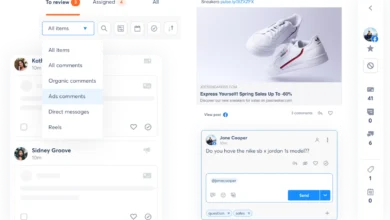
To prevent off-brand or non-compliant content from reaching the public, modern enterprises deploy automated technological safeguards. Enterprise-grade management platforms now feature automated content filters that instantly intercept restricted terminology across captions, alternative text, video transcripts, and incoming direct messages. When a restricted phrase is detected, publishing mechanisms automatically lock down, preventing the content from going live. Furthermore, multi-step message approval workflows ensure that high-stakes posts undergo rigorous collaborative review across legal and communications teams prior to publication.
Rigorous Vetting of Influencers and Technology Vendors
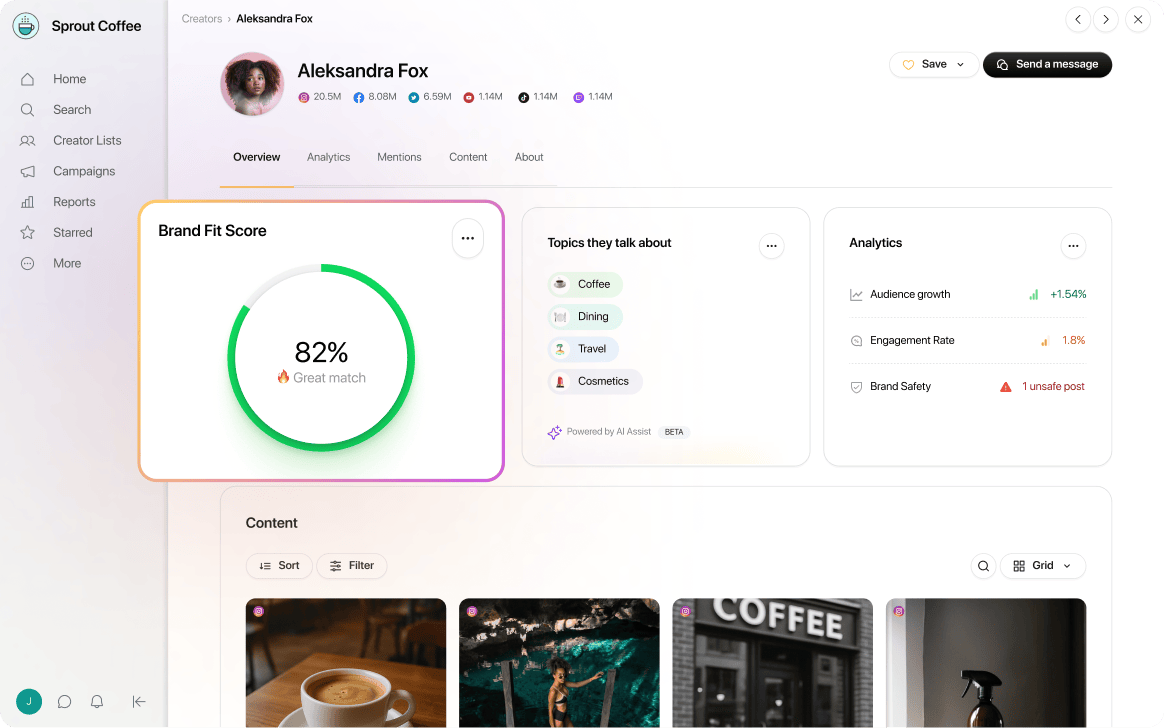
Mitigating external partnership risks demands structured, repeatable vetting protocols. Organizations must construct comprehensive checklists evaluating potential creators for value alignment, audience engagement authenticity, and historical content safety. Similarly, procurement teams must subject all AI vendors and third-party software providers to exhaustive security evaluations. Crucial inquiries must determine whether a vendor trains foundational models on proprietary corporate data, whether enterprises can successfully opt out of data-sharing agreements, and whether the provider maintains rigorous enterprise-grade security controls, including single sign-on (SSO), data encryption, SOC 2 compliance, and detailed audit logs.
Safeguarding Consumer Data and Privacy
The accumulation of customer data via social channels—ranging from basic demographic details to intricate behavioral metrics—brings immense regulatory responsibility. Mishandling consumer information, even inadvertently via direct messaging channels, can trigger severe legal liabilities under strict data privacy statutes.
Enterprises mitigate this vulnerability by implementing strict data lifecycle procedures that dictate immediate data deletion protocols and restrict customer data from ever feeding unapproved external AI algorithms. Advanced digital operations utilize automated data masking technologies to actively obscure personally identifiable information (PII)—such as credit card numbers, phone numbers, and Social Security data—within agent workspaces before customer care personnel ever view the records. When collection of sensitive information is strictly necessary, secure, encrypted forms are deployed to maintain frictionless yet fully compliant consumer interactions.
Continuous Workforce Enablement
A governance framework is fundamentally ineffective if it remains static documentation trapped on a corporate intranet. Organizations must continuously train their entire workforce—from dedicated social media managers to general employees navigating personal digital footprints—on compliance standards, crisis escalation protocols, and responsible AI utilization. Regular audits of user permissions, immediate credential revocation upon employee offboarding, and iterative policy updates ensure that governance scales dynamically alongside technological evolution.
Conclusion: Governance as a Competitive Advantage
Social media governance is frequently mischaracterized as a purely defensive, restrictive bureaucracy. In practice, however, it serves as the essential operational foundation that enables modern enterprises to build enduring trust, scale digital initiatives safely, and empower marketing teams to execute strategies with absolute confidence.
As digital ecosystems grow increasingly volatile and the integration of artificial intelligence accelerates, the organizations that ultimately thrive will be those that reject complacency. By treating social media governance as a business-critical discipline rather than an afterthought, enterprises transform potential vulnerabilities into a formidable competitive advantage.