CAA CEO Bryan Lourd Calls on Congress to Pass the NO FAKES Act to Combat AI Misuse

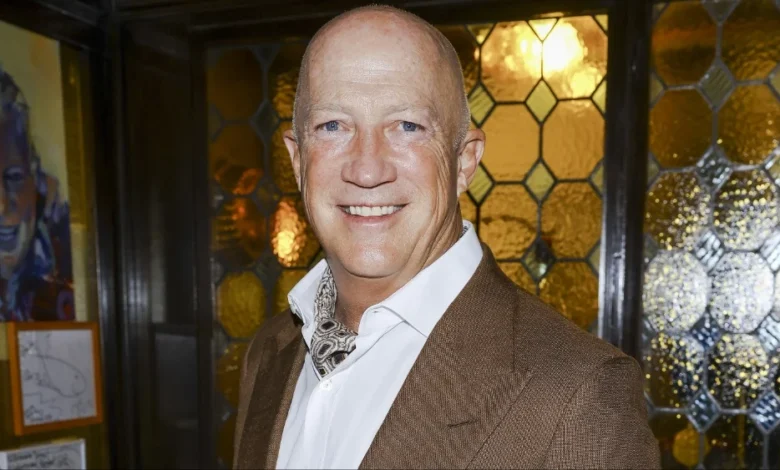
The rapid acceleration of generative artificial intelligence has brought the entertainment industry to a critical crossroads, prompting Creative Artists Agency (CAA) CEO Bryan Lourd to issue a stern directive to federal lawmakers: pass the Nurture Originals, Foster Art, and Keep Entertainment Safe (NO FAKES) Act before the current legislative session concludes. In a guest essay published in the New York Times, Lourd argued that the current legal framework is woefully inadequate to address the sophisticated, unauthorized digital manipulation of human likenesses that now defines the post-2022 AI landscape.
At its core, the NO FAKES Act, introduced by Senator Chris Coons (D-Del.), seeks to establish a uniform federal right of publicity. This would grant individuals legal ownership over their own digital replicas, ensuring that any use of a person’s voice or image—whether in film, audio, or commercial advertising—requires explicit consent and, in many cases, equitable compensation.
The Legislative Landscape and Timeline
The struggle to regulate AI-generated content has been a protracted legislative journey. The current iteration of the NO FAKES Act is the result of months of bipartisan negotiation, yet it remains stalled despite passing the Senate Judiciary Committee in June. The bill represents a significant evolution from the previous, less comprehensive attempts at AI regulation introduced in the 118th Congress.
- May 2024: Senator Chris Coons, along with a bipartisan group of colleagues, introduced the NO FAKES Act, citing the urgent need to protect the digital identities of both famous figures and everyday citizens.
- June 2024: The bill successfully cleared the Senate Judiciary Committee, signaling broad consensus on the need for federal intervention.
- Late 2024–2025: Despite momentum, the bill has faced procedural delays in the full Senate, complicated by intense lobbying from various tech sectors and competing interests regarding how AI training models should be regulated under copyright law.
- November 2026: Bryan Lourd’s public appeal marks a renewed push to finalize the bill, emphasizing that current state-level laws—which vary wildly in scope and enforceability—are insufficient for the borderless nature of the internet.
The Practitioner’s Perspective: Why Industry Leaders Are Concerned
Lourd’s plea carries weight precisely because of his role at the helm of one of the world’s most influential talent agencies. CAA manages the professional careers of thousands of actors, musicians, and public figures whose personal brands are their most valuable assets.
"I come to this issue not as a policymaker but as a practitioner," Lourd wrote. "Part of our job is to help our clients license their likenesses and performances, sometimes to AI companies. We regularly negotiate those deals, and I can tell you that the bill pending in Congress delivers what the industry needs and what will protect all Americans."
The industry’s primary grievance is not with the technology itself, but with the absence of a "bright-line rule." Currently, when a celebrity’s likeness is scraped or deepfaked, they are often forced to rely on a patchwork of state right-of-publicity laws. These laws were largely designed for the analog era, dealing with traditional media such as print advertisements or unauthorized use in retail, rather than high-fidelity, AI-generated synthetic media that can be produced in seconds.
A primary example cited by Lourd involves actor Tom Hanks, who in 2023 was forced to warn his followers about a dental clinic that used an AI-generated version of him to market services without his permission. Under the proposed NO FAKES Act, such an act would be a clear violation of federal law, providing creators with a streamlined mechanism to secure damages and force the removal of unauthorized content.
Data and Scope: The Economic Stakes
The economic implications of AI-driven likeness theft are staggering. As AI models become more capable of "voice cloning" and "face swapping," the potential for market dilution—where unauthorized AI versions of an actor compete with the actor’s own real-world work—becomes a reality.
Industry analysts estimate that the licensing market for human likenesses is currently in a state of rapid expansion. According to reports from the Motion Picture Association, the value of "digital assets" in film production is projected to grow by double digits annually through 2030. However, this growth is threatened by a lack of security. If consumers cannot distinguish between an authentic performance and a synthetic one, the premium value of human-led performances could be undermined.
Furthermore, the surge in unauthorized AI usage has created a "consent crisis." A 2025 survey of industry professionals revealed that over 70% of respondents identified the unauthorized use of their image as a top-three threat to their long-term career viability. The Human Consent Foundation, which has received backing from figures like Cate Blanchett, has documented thousands of instances where the likenesses of actors have been scraped for training datasets without disclosure, let alone compensation.
Broader Implications: Beyond Hollywood
While the high-profile nature of celebrity deepfakes often grabs headlines, the implications of the NO FAKES Act extend to the general public. As AI-generated scams become more common, the risk of "identity theft 2.0"—where a person’s voice or face is used to commit fraud—has increased. Proponents of the bill argue that a federal standard for "control, consent, and compensation" will create a safer digital environment for everyone, not just those in the public eye.
The coalition supporting the bill is remarkably diverse, highlighting the cross-industry consensus on the issue. Supporters include:
- Labor Organizations: SAG-AFTRA, the AFL-CIO, and the Recording Academy, all of which prioritize the protection of human labor against automated replacement.
- Corporate and Institutional Backers: The Motion Picture Association (MPA), the Recording Industry Association of America (RIAA), IBM, and even major players like OpenAI and YouTube, who recognize that a clear legal framework is necessary to avoid perpetual litigation.
Analysis: The Path Forward
The argument for the NO FAKES Act is fundamentally one of market stability. By codifying rights into federal law, Congress would move the AI industry from a "wild west" state into a structured marketplace. This would benefit tech companies by providing clear "rules of the road" for licensing deals, while simultaneously providing creators with the agency to participate in or opt-out of the AI economy.
The main obstacle remains the legislative calendar. With the current session nearing its conclusion, the bill faces a race against time. Opponents, or those who urge caution, have argued that overly broad legislation could stifle innovation or negatively impact the development of open-source AI models. However, Lourd and his allies contend that the risk of inaction—which includes the erosion of personal autonomy and the potential for irreparable harm to careers—far outweighs the concerns regarding regulatory friction.
As the debate continues, the entertainment industry is not waiting for federal intervention to act. CAA and other major agencies have been working behind the scenes to develop internal protocols for "digital cloning" rights, often including these terms in new talent contracts. However, these private agreements only protect those with high-level representation. The NO FAKES Act remains the only proposed mechanism capable of providing a baseline of protection for the broader public, ensuring that in the age of AI, an individual’s identity remains their own property.
The next few weeks will be pivotal. Whether the Senate brings the bill to the floor for a vote will serve as a bellwether for how the United States intends to balance the rapid progression of artificial intelligence with the fundamental right to individual self-determination. For now, the call from Hollywood is clear: the technology is already here, and the law must finally catch up.