The selection of a camera lens represents one of the most critical decisions a photographer can make, influencing everything from field of view and depth of field to the physical weight of a kit and the final aesthetic of an image. While modern camera bodies have become increasingly sophisticated, the lens remains the primary tool for shaping light, determining the character of the captured scene, and defining the boundaries of creative possibility. Understanding the nomenclature and functional differences between these optical instruments is essential for professionals and hobbyists alike.

The Evolution and Classification of Optical Systems
Camera lenses are broadly categorized based on their focal length—the distance between the optical center of the lens and the image sensor—which is measured in millimeters. Historically, the development of these optics has been driven by the need for greater versatility, reduced aberration, and specific performance in varied lighting conditions.

At the foundational level, lenses are divided into two primary operational categories: prime and zoom. A prime lens features a fixed focal length. Because these lenses do not require complex internal elements for zooming, they are frequently engineered to provide wider maximum apertures, such as f/1.2 or f/1.4. This allows for superior performance in low-light environments and the creation of a shallow depth of field, which is highly sought after in portrait and artistic photography.

Conversely, zoom lenses incorporate a variable focal length, allowing a photographer to adjust the magnification of the subject without physically moving. While early zoom lenses were often criticized for optical softness, modern computer-aided design and advanced glass coatings have significantly narrowed the quality gap between primes and zooms. However, the versatility of a zoom lens often comes at the cost of increased size, weight, and, in some cases, a more limited maximum aperture compared to equivalent primes.

Prime Lenses: Precision and Performance
The primary advantage of a prime lens lies in its simplicity. By design, a prime lens contains fewer moving parts, which often leads to higher resolution and reduced distortion. Common focal lengths include the 35mm, often favored for street and documentary photography due to its natural perspective, the 50mm, which mimics the field of view of the human eye, and the 85mm, the industry standard for portraiture.

From an engineering perspective, prime lenses can be made smaller and lighter, making them ideal for travel and candid photography. Furthermore, the wider aperture capabilities of prime lenses allow for faster shutter speeds, which is a critical advantage when shooting in challenging lighting or freezing high-speed motion.

Zoom Lenses: The Versatility Standard
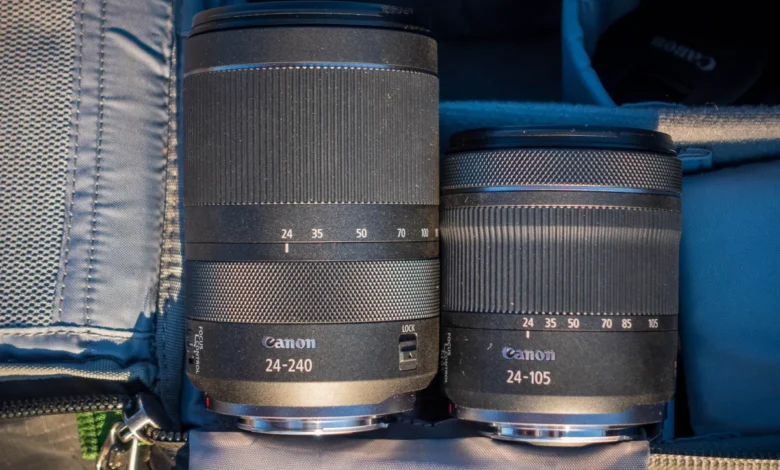
Zoom lenses, ranging from wide-angle zooms to telephoto variants, provide the agility required for fast-paced environments such as sports journalism or event photography. The "zoom ratio"—calculated by dividing the maximum focal length by the minimum—defines the lens’s range. For instance, a 24-70mm lens is a roughly 3x zoom, while a "superzoom" like a 24-240mm covers a 10x range.

The primary trade-off for this versatility is the "aperture ramp," where the maximum possible aperture decreases as the lens is zoomed toward its telephoto end. Furthermore, superzooms—lenses with exceptionally wide ranges—often require significant optical correction to maintain sharpness across the entire focal spectrum, which can lead to increased complexity and cost.

Telephoto and Wide-Angle Perspectives
The classification of telephoto versus wide-angle is entirely dependent on the focal length relative to the sensor format. A telephoto lens, typically defined as having a focal length of 85mm or greater, is designed to magnify distant subjects. These are indispensable in wildlife and sports photography, where physical proximity to the subject is restricted. Super-telephoto lenses, those exceeding 400mm, represent the pinnacle of specialized sports and avian photography, often requiring stabilization technology to mitigate the effects of camera shake at such high magnification.

In contrast, wide-angle lenses—generally 35mm and shorter—expand the field of view. These are the preferred tools for architectural, landscape, and interior photography. Ultra-wide lenses, often categorized as 20mm and below, provide an expansive perspective that can emphasize the scale of a scene, though they introduce significant challenges regarding edge distortion and the necessity for precise alignment.

Specialized Optics: Macro and Tilt-Shift
Beyond standard photography, specialized lenses offer unique capabilities. Macro lenses are specifically designed for high-magnification, close-up work. Unlike standard lenses that may focus at a distance of several feet, a true macro lens allows for 1:1 reproduction, meaning the image projected on the sensor is the same size as the subject in reality. This is vital for biological research, product photography, and fine art detail work.

Tilt-shift lenses represent a niche but highly specialized category. By allowing the lens elements to tilt or shift relative to the sensor, these lenses enable photographers to manipulate the plane of focus and correct for perspective distortion. These are frequently used in real estate and architectural photography to ensure that vertical lines remain parallel even when the camera is angled upward.

The Role of Sensor Size and Crop Factors
The physical size of the camera sensor significantly impacts how a lens performs. The industry standard, "full-frame," corresponds to the 35mm film format. However, many cameras utilize "crop sensors," such as APS-C or Micro Four Thirds.

When a lens designed for a full-frame sensor is mounted on a crop-sensor camera, the smaller sensor captures only the center portion of the image, resulting in an effective increase in magnification, known as the "crop factor." For example, a 50mm lens on an APS-C sensor will produce a field of view equivalent to a 75mm lens on a full-frame system. Recognizing this distinction is vital for photographers to ensure they achieve the desired framing.

Cinema Lenses: Engineering for Motion
Cinema, or "cine," lenses are built with different priorities than photography lenses. While a photographer prioritizes autofocus speed and sharpness, a cinematographer requires mechanical consistency. Cine lenses often feature "de-clicked" apertures, allowing for smooth, silent exposure transitions, and standardized gear rings that integrate with focus-pulling motors. They are also designed to be "parfocal," meaning they maintain focus while the zoom is being adjusted—a feature rarely prioritized in consumer-grade photography lenses.

Implications for Gear Investment
The choice of a lens system is a long-term investment. Unlike camera bodies, which are frequently updated to incorporate the latest digital processing technology, high-quality glass remains relevant for decades. Industry analysts note that professional photographers often allocate a higher percentage of their budget to lenses than to bodies, recognizing that the lens is the primary determinant of image quality.

For the aspiring photographer, the recommendation remains consistent: rent or borrow specialized equipment before committing to a purchase. The market for used professional glass is robust, and many manufacturers now offer comprehensive upgrade paths, allowing users to transition from entry-level zoom lenses to professional-grade prime lenses as their specific needs and technical proficiency evolve.

Conclusion: Matching Optics to Intent
The sheer variety of lens types available today—from the ultra-compact prime for street photography to the massive, stabilized super-telephoto for nature documentation—serves as a testament to the diversity of modern photography. By mastering the fundamental differences between prime and zoom, understanding the implications of focal length on perspective, and recognizing the specific utility of macro and tilt-shift optics, photographers can make informed decisions that align their gear with their creative vision. Ultimately, the best lens is not necessarily the most expensive or the most versatile, but the one that allows the photographer to execute their intent with the greatest precision and efficiency.