The Shift from Renting Audiences to Building Assets: How Creator-Led Production is Transforming the Global Advertising Industry

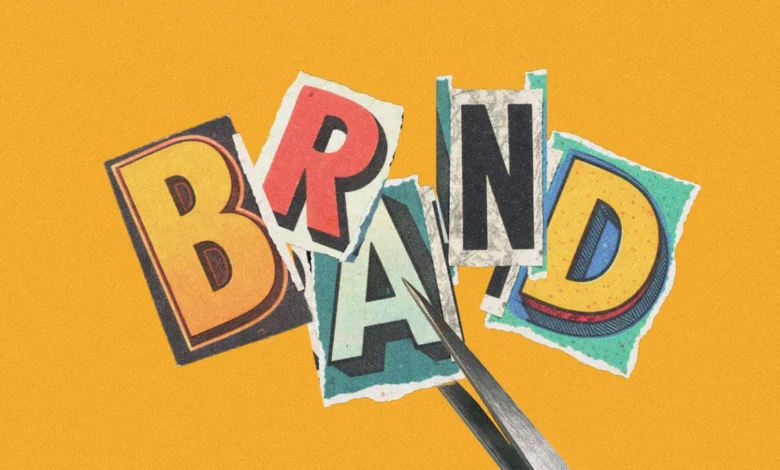
The global advertising and marketing ecosystem is undergoing a profound structural transformation, driven largely by how brands allocate capital within the rapidly expanding creator economy. For years, influencer marketing operated on a transactional model where brands paid content creators simply to rent space on their social media feeds, tapping into established audiences for sponsored posts or product mentions. Today, however, that paradigm is rapidly disappearing. Brands are no longer just buying influence; they are hiring creators to build the actual creative assets that populate paid social channels, digital video placements, and programmatic ad slots.
This evolution marks a fundamental shift in the marketing supply chain. Influencers are transitioning from traditional media channels into core creative partners, brand ambassadors, and vital cogs in the modern production machine. As spending on social video and paid social channels continues to accelerate—outpacing growth rates in traditional mediums like connected TV (CTV)—the appetite for authentic, native-feeling content has skyrocketed. Consequently, asset-led spending has emerged as the fastest-growing segment of the influencer marketing industry, reshaping budgets, challenging traditional creative agencies, and forcing major brands to rethink how they conceptualize, produce, and distribute digital advertising.
The Quantitative Realities of the Creator Production Boom
To understand the scale of this industry shift, one must examine the hard data governing modern ad campaigns. According to comprehensive research from CreativeX, which analyzed 115,990 ad campaigns representing a staggering $11 billion in cumulative ad spend, the sheer volume of assets demanded by individual campaigns has surged by 30% over the past five years. Despite this explosion in asset creation, campaign efficiency remains heavily concentrated: an average of just five individual assets still capture a commanding 88% of media investment within any given campaign.
This demand for high-performing, high-volume assets is fueling unprecedented financial growth within the creator economy. Recent findings published by research consultancy Madison & Wall reveal that roughly 12% of the $112 billion spent globally on creators is now dedicated explicitly to producing advertisements on behalf of brands. Furthermore, market analysts project this specific segment to expand at a compound annual growth rate of 16% through 2030.
Industry experts attribute this financial pivot to a simple economic reality: cost efficiency combined with performance efficacy. Working with specialized influencers to produce ad creative is frequently more cost-effective than engaging traditional, brick-and-mortar production agencies. As marketers continually face pressure to maximize every non-working—meaning non-media—dollar in their budgets, creator-led production offers a streamlined alternative. While some major brands look toward generative artificial intelligence to solve their content deficits, others find far more reliable resonance in the human touch of established content creators.
Chronology and Evolution of the Creator-Led Economy
The journey from casual product gifting to enterprise-level asset creation spans a little over a decade, mirroring the maturation of platforms like Instagram, TikTok, and YouTube.
In the early 2010s, influencer marketing was largely unregulated and unstructured, functioning as an extension of digital public relations where brands gifted products in exchange for social media mentions. By the mid-2010s, as follower counts translated into tangible commercial reach, formal compensation models emerged, establishing the "rented audience" era where brands paid flat fees for dedicated posts or stories.
As algorithms matured and audiences grew increasingly skeptical of overtly polished, traditional advertising, performance marketing began to dominate digital budgets. Brands noticed that native, lo-fi content drove significantly higher engagement rates than studio-produced commercials. This realization triggered the transition into the modern era of whitelisting, performance-based usage rights, and full-scale creator production hubs.
By the late 2010s and early 2020s, advanced advertising techniques such as whitelisting—also known as dark advertising—became mainstream. Whitelisting allows a brand to run paid media campaigns directly through an influencer’s social media handle using creator-originated assets, marrying authentic creative execution with sophisticated, discrete audience targeting. Today, in the mid-2020s, the industry has pushed past simple whitelisting into comprehensive asset licensing and co-creation models, where creators act as outsourced creative directors for Fortune 500 enterprises.
Industry Perspectives: Why Brands and Agencies Are Pivoting
The rationale behind this strategic pivot is rooted in audience psychology and the changing nature of digital attention. Jared Kozel, co-founder and chief creative officer at the agency Super Nice, emphasizes that securing space in a user’s digital feed does not automatically equate to capturing their attention.
"Good creators understand what their audiences care about and how to give them something worth stopping for," Kozel notes. "That’s valuable creative judgment to bring into an ad no matter the brand or category."
Katy Ball, head of social at M&C Saatchi Sport & Entertainment, echoes this sentiment, highlighting the dual benefits of modern creator partnerships. "You get the authentic, scroll-stopping content that people want to engage each with. But you also get the reach," Ball explains.
This sentiment is supported by rigorous empirical research. A collaborative study published in June by System1, WPP Media, and Goat revealed that creator-led advertisements achieve a remarkable 3.2 times the brand-awareness lift compared to traditional advertising creative within the same digital contexts. Audiences instantly recognize the visual grammar, pacing, and vernacular native to platforms like TikTok and Instagram. Conversely, heavily produced commercials shot on closed sets using legacy production methods often register as jarringly foreign to users scrolling through their personalized feeds—a harsh lesson that legacy brands like Nike have had to absorb.
Olivia Wedderburn, head of influence at Born Social, points out how agency budgeting habits are changing to accommodate this reality. "What we’re seeing is a lot of recutting of media spend to be allocated towards creator development in order to fund whitelisting," Wedderburn says. Madison & Wall’s research further indicates that funding for creator-led production is frequently siphoned from traditional media budgets, PR allocations, social media line items, and experimental pots of money.
Nicholas Spiro, chief commercial officer at Viral Nation, underscores the operational advantages of this integrated approach. "If programs are set up correctly, creators can deliver volume and variety faster and more cost effectively than a traditional production cycle," Spiro states. "The shift we’re seeing is brands starting to plan creators across their media budgets, rather than as a separate influencer line item alone."
Mechanics of Creator-Led Production: Whitelisting and User-Generated Content
Under the broad umbrella of creator-led production, several distinct operational methodologies have risen to prominence. Beyond the direct commissioning of video or still assets for a brand’s owned channels, whitelisting remains a favored mechanism. By granting temporary, limited access to their social accounts, creators enable brands to optimize ad delivery while retaining the social proof of the creator’s handle.
Simultaneously, user-generated content (UGC) campaigns have scaled dramatically. Brands now routinely license content from everyday social media users, transforming organic customer testimonials into polished advertising assets. Andy Ryan, co-founder at social and influencer agency Komodo, explains the operational necessity driving this trend. "They have to feed their content engines, and they’re opening up as many different avenues as they can," Ryan observes.
However, scaling these practices introduces complex operational challenges. As the commercial value of creator assets increases, negotiations surrounding usage rights, territory restrictions, and exclusivity periods have become exceedingly intricate.
"It’s never been more complicated to negotiate usage rights or exclusivity," warns Wedderburn.
Recognizing these friction points, tech platforms and agencies are rapidly innovating. For example, Billion Dollar Boy recently integrated new features into its proprietary Companion creator management tool, specifically engineered to streamline creator-led production workflows and simplify usage rights negotiations. Thomas Walters, chief innovation officer and co-founder at Billion Dollar Boy, notes the heightened stakes in the current market environment: "The creator economy has never been more competitive, heightening the urgency for brands to understand the market context."
Broader Implications and Market Outlook
The rapid acceleration of creator-led production carries sweeping implications for the entire marketing ecosystem. Traditional creative and production agencies, long accustomed to monopolizing ad asset creation for large corporate accounts, are facing mounting pressure to adapt or risk irrelevance. As brands reallocate portions of their traditional production budgets directly to creators and influencer agencies, legacy agencies must find ways to integrate creator-driven workflows into their own service offerings.
Furthermore, supply and demand dynamics are directly impacting creator compensation. The intense race for premium creative assets has fueled an inflationary trend in creator fees. Agency practitioners reported that creator rates ticked upward by 10% to 20% over the past year alone, driven heavily by demands for expanded usage rights and multi-channel distribution privileges.
Looking toward the remainder of the decade, the integration of creators into the core production supply chain appears irreversible. As consumers continue to migrate away from linear television and desktop web browsing toward immersive, algorithmically curated social video feeds, the demand for authentic, human-centric advertising assets will only intensify. Brands that successfully transition from treating creators as mere distribution channels to treating them as foundational creative partners will likely capture the lion’s share of consumer attention and commercial growth in the digital marketplace.
Related posts: