Navigating the Digital Hustle: How Political Creators Balance Reach, Revenue, and Platform Rules Ahead of the 2026 Midterms

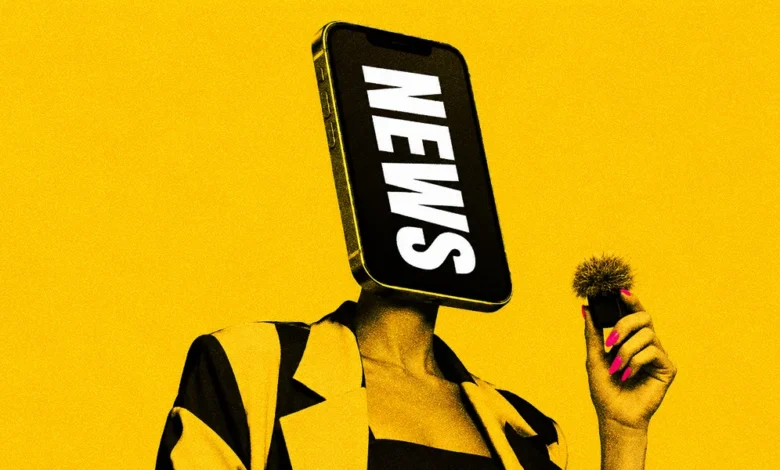
The modern digital landscape has fundamentally transformed how political discourse is generated, distributed, and monetized. As the United States marches toward the highly anticipated and contentious 2026 midterm elections, independent political creators, digital journalists, and policy commentators find themselves at a complex crossroads. Unlike traditional media conglomerates with diversified revenue streams and dedicated distribution infrastructure, digital-first political creators rely heavily on a fragmented ecosystem of third-party social media platforms. These digital environments dictate not only who sees political messaging, but also whether creators can sustain viable businesses from their labor.
According to media experts and industry practitioners, an ideal digital platform for a political creator must satisfy four critical pillars: it must drive audience discovery, ensure fair financial compensation, enforce transparent and predictable moderation rules, and allow creators to retain direct ownership of their audience relationships if they decide to leave. However, the reality of the contemporary creator economy falls far short of this ideal. Ryan Schram, executive director of the Center for the Creator Economy at Syracuse University, notes that while most dominant platforms excel at one or two of these functions, virtually none successfully deliver all four simultaneously.
This systemic fragmentation forces political influencers to adopt sophisticated, multi-platform distribution strategies. A creator might leverage Instagram for astronomical view counts, rely on YouTube or Facebook for vital ad revenue, and utilize Substack or beehiiv to secure predictable, subscription-based income. Understanding how these platforms operate—and where they frequently fail—offers a critical window into the mechanics of contemporary political communication and the shaping of public narratives leading up to the 2026 midterms.
The Genesis of the Independent Political Creator Economy
The migration of political commentary from traditional cable news networks and legacy print publications to digital platforms accelerated significantly over the past decade. Driven by shifting consumer habits, a declining trust in institutional media, and the democratization of content production tools, independent commentators have captured millions of loyal followers.
Data compiled by the Pew Research Center in late 2024 underscores this structural shift, revealing that 85 percent of the most-followed news influencers maintain a presence on X (formerly Twitter), half operate active accounts on Instagram, and 44 percent publish regular content on YouTube. Despite this broad adoption, a significant disconnect remains between where political conversations take place and where audiences actually consume media. While platforms like X serve as the primary digital town square for political insiders, journalists, campaign staffers, and elected officials, consumer-facing reach is often severely restricted compared to the massive, algorithmically driven ecosystems of YouTube, Facebook, and Instagram.
Consequently, modern political creators can no longer afford to place all their digital eggs in one basket. The strategic imperative for anyone working in political media today is diversification, balancing high-reach, low-monetization networks with low-reach, high-monetization subscriber models.
YouTube: The Gold Standard for Reliable Revenue and Algorithmic Stability
Among video-first platforms, YouTube remains the indispensable anchor for serious news and politics creators seeking long-term financial viability. Industry analysts consistently rank YouTube as the platform that offers the most robust monetization framework, bolstered by a transparent 55 percent ad revenue share for qualifying creators. Platform data indicates that YouTube has paid out more than $100 billion to creators, artists, and media companies over a four-year window.
Brendan Feldman, who leads YouTube’s news, civics, and podcast partnerships program, emphasizes the platform’s long-term commitment to supporting independent journalists. Over the past several years, YouTube has actively cultivated a renaissance of independent reporting, offering strategic guidance on channel growth, audience retention, and sustainable business development.
From an algorithmic perspective, YouTube representatives maintain that the platform’s recommendation systems do not favor or penalize content based on political orientation. Instead, systems are engineered to elevate high-quality, authoritative voices—particularly during major breaking news events, when the platform frequently deploys a dedicated "breaking news shelf" on its homepage to direct users toward verified journalistic sources.
Despite its financial advantages, YouTube presents a steep barrier to entry. Creators frequently report that channel growth is agonizingly slow compared to the rapid virality possible on short-form video apps. V Spehar, the creator behind Under the Desk News, characterizes YouTube as the most stable and fairly monetized platform, yet warns aspiring commentators of its steep growth curve. According to Spehar’s operational blueprint, new creators are often advised to produce foundational content tailored for YouTube’s search and recommendation algorithms, while simultaneously clipping highlights to distribute across high-discovery social networks to build an initial audience funnel.
Instagram: The Paradox of High Reach and Zero Monetization
While YouTube provides financial stability, Instagram offers an entirely different set of operational challenges and rewards, defined primarily by massive audience reach paired with an acute absence of native direct monetization.
For high-profile creators, Instagram’s Reels feature functions as an unparalleled megaphone. Aaron Parnas, a prominent political creator, reported generating roughly 450 million views on Instagram within a single month. However, this staggering engagement figures do not translate into platform-generated revenue. Parnas notes that because Instagram does not currently offer a robust, direct payout structure for Reels views comparable to YouTube’s AdSense program, his direct earnings from the platform remain at zero.
Other creators report mixed experiences with the Meta-owned platform. Mark Istook, a newly independent news creator, found Instagram’s community management to be comparatively predictable, noting that comment sections tend to be significantly less toxic than those found on its sibling platform, Facebook. Yet, algorithmic transparency remains a persistent pain point. Creator Grant Hermes describes Instagram’s underlying distribution mechanics as an impenetrable "black box," while peers like Adam Mockler have successfully reverse-engineered the algorithm to pull in upwards of 90 million views a month.
The strategic utility of Instagram, therefore, is clear: it functions purely as an upper-funnel brand awareness tool. Creators accept that they will not be paid directly by the platform, using the massive view counts instead to drive traffic toward monetizable newsletters, merchandise, or speaking engagements.
The Resurgence of Facebook and the Rise of Niche Platforms like Reddit
In a surprising turn for many digital strategists, Facebook has emerged as a powerhouse for political video content. Following policy adjustments that altered how political content and advertisers interact on the platform, creators have reported a noticeable resurgence in engagement and revenue potential.
Adam Mockler, who commands staggering view counts on Facebook—reaching approximately 120 million views monthly—describes the platform as an "underdog" that has significantly ramped up its creator support. Attributing the shift in part to platform-wide policy adjustments implemented as political landscapes evolved, Mockler notes that the reopening of the platform to political advertising has created a more lucrative environment for independent commentators. Consequently, Mockler has expanded his operational infrastructure, dedicating internal resources and hiring specialized personnel and interns specifically to manage and optimize Facebook distribution.
Concurrently, creators are increasingly experimenting with platforms traditionally viewed as hostile or impenetrable to political media, such as Reddit. Mockler’s team has systematically utilized Reddit as an internal public relations engine. By strategically sharing television appearances and multimedia clips across targeted subreddits—managed carefully by dedicated team members—creators can bypass traditional algorithmic gatekeepers and drive high-intent users directly to their primary digital hubs. Mockler goes as far as to rate Reddit’s value higher than TikTok for targeted political community building.
The Friction of Uncertainty: TikTok and X
If YouTube and Facebook represent the established pillars of the creator economy, platforms like TikTok and X (formerly Twitter) are increasingly characterized by friction, unpredictability, and algorithmic volatility.
TikTok remains a double-edged sword for political commentators. While the short-form video giant initially served as a primary rocket booster for countless digital careers, creators today face intense headwinds regarding content moderation, live-stream reporting, and inconsistent flagging systems. V Spehar points out that TikTok frequently mislabels political commentary as political advertising, while live streams focusing on civic issues are highly vulnerable to coordinated, false reporting campaigns. For newcomers, breaking through the noise without an established audience base has become exceedingly difficult.
Furthermore, monetization on TikTok remains secondary compared to YouTube and Facebook. Creators report sudden content suppression, where videos become trapped in prolonged "under review" loops that effectively kill their momentum during fast-moving news cycles. Mark Istook echoes these frustrations, noting that despite maintaining a massive follower count on TikTok, view counts fluctuate wildly—ranging from millions of views to a mere 1,500—with no discernible logical framework governing the algorithm.
Meanwhile, X continues to occupy a paradoxical space within the political media ecosystem. Mainstream media organizations, political campaigns, and elected officials remain tethered to the platform because it functions as the primary digital press room for breaking news and elite signaling. However, creators frequently voice frustration over algorithmic changes implemented under Elon Musk’s ownership, particularly the prioritization of paid subscribers over organic reach. Creators argue that when a platform explicitly places its thumb on the scale to favor paying accounts over the traditional public marketplace of ideas, the promise of equitable discovery is undermined.
Subscription Supremacy: Substack, Patreon, and beehiiv
Faced with the inherent volatility of ad-supported social media algorithms, the vast majority of sustainable political creators have converged on a singular financial truth: owned audience revenue through paid subscriptions is the ultimate shield against platform arbitrariness.
For creators operating on Substack, Patreon, or beehiiv, paywalled written content, deep-dive analyses, and exclusive audio feeds form the bedrock of their financial stability. Aaron Parnas notes that his paid subscription audience on Substack accounts for the vast majority of his total business revenue, providing a predictable, recurring financial stream that insulates him from the whims of tech platform policy shifts. Social media is treated strictly as an educational outreach tool to funnel prospective readers toward the paid subscription tier.
This sentiment is echoed by Lachlan Cartwright, founder of independent media company Breaker Media, which relies almost exclusively on its beehiiv newsletter to distribute exclusive breaking news and original reporting to a base of 45,000 subscribers. For Cartwright, social media platforms are secondary considerations at best.
"There’s information you can only get at Breaker, and you have to pay for it," Cartwright said, summarizing the defiant posture of modern independent media. "Social media is an afterthought. I will post on X, probably the day after, because guess what? I get no money from Elon. Why am I giving him my scoops, why am I giving Zuckerberg my content?"
Implications for the 2026 Midterms and Beyond
As the United States approaches the 2026 midterm elections, the structural dynamics of the political creator economy will play a decisive role in shaping public awareness, voter turnout, and political narratives. Campaigns and political action committees are increasingly shifting advertising budgets away from legacy media and toward independent influencers who command high-trust relationships with niche demographics.
However, the deep reliance on a fractured ecosystem—where creators must constantly negotiate between the reach of Instagram, the revenues of YouTube, the resurgence of Facebook, and the subscription security of Substack—highlights the precarious nature of independent political journalism. Without platforms that seamlessly integrate reach, revenue, transparent rules, and audience ownership, political creators will continue to build their businesses on rented land, constantly adapting their strategies to survive the next algorithmic shift.