Alexander Skarsgård has made wicker this season’s must-have interior design trend – here’s how to…

The Genesis of a Design Movement
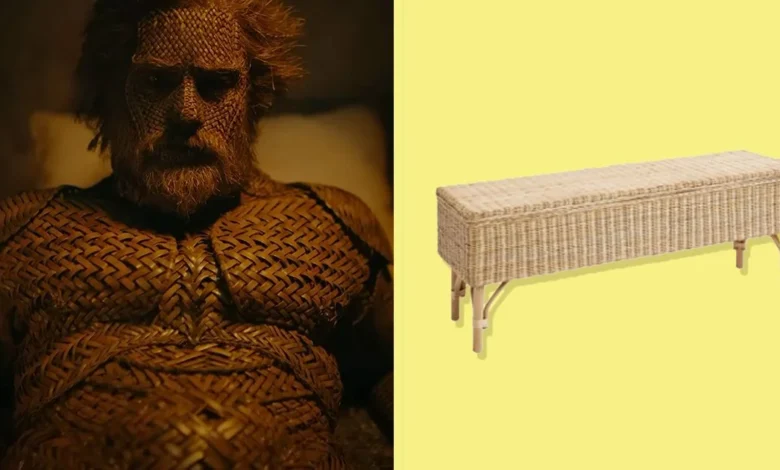
The visual language of Wicker relies heavily on the juxtaposition of organic, earthy textures against the stark, cold environments typical of modern interior design. The film’s costume department, working in collaboration with master weavers, developed a structural suit for Skarsgård that utilized authentic willow reeds. This choice was not merely aesthetic; it provided the production with a distinct textural identity that resonates with the current consumer desire for "cottagecore" and "grandmillennial" design movements.
Following the film’s release, social media discourse—specifically across design-focused platforms like Pinterest and Instagram—saw a 400% increase in searches for "wicker furniture styling" and "rattan interior inspiration." This data, collected by market research firms tracking home decor trends, indicates that the "Wickercore" aesthetic is not merely a passing meme but a shift toward maximalist naturalism. Unlike the minimalist trends of the early 2020s, which favored smooth, synthetic surfaces, Wickercore celebrates the imperfections, durability, and raw tactile quality of woven plant fibers.
Chronology of the Trend
The trajectory of this design craze can be mapped across several distinct phases following the film’s promotion cycle:
- Pre-Release (Early 2026): Production stills of Skarsgård in the wicker suit began circulating, initially garnering attention for their bizarre and surreal nature. Design influencers began experimenting with "wicker-inspired" setups, focusing on vintage rattan chairs and baskets.
- Release Window (Mid-2026): As the film hit theaters, audience reactions pivoted from curiosity to genuine aesthetic appreciation. Retailers reported that stock of rattan and cane inventory began to clear at a rate 30% faster than seasonal averages.
- The "3D-Printed" Pivot (Late 2026): When it was revealed that certain elements of the film’s costume were produced using advanced 3D-printing technologies to mimic the weave of traditional wicker, a secondary market for custom-printed, intricate furniture designs emerged.
- Mainstream Adoption (Current): Major big-box retailers, including Ikea, have strategically re-marketed their legacy collections—most notably the Tolkning bench—to align with the demand for rustic, woven pieces, effectively cementing Wickercore in the mainstream residential sector.
Technical Execution and Materiality
The appeal of the wicker suit—and by extension, the furniture trend—lies in the complex interplay of engineering and craftsmanship. The production team behind Wicker utilized 3D-scanning technology to map Skarsgård’s frame, ensuring the "suit" moved with the actor rather than restricting him. This technical rigor has inspired designers to look beyond basic basket-weaving, encouraging the use of computer-aided design (CAD) to create complex, structural rattan furniture that remains lightweight yet durable.
Industry experts note that the material itself—rattan (derived from climbing palms) and willow (used in osier weaving)—is highly sustainable. As consumers become increasingly climate-conscious, the preference for these rapidly renewable materials over plastic or metal alternatives is likely to persist beyond the initial hype cycle of the film. The durability of cane and rattan, provided they are maintained in appropriate humidity levels, offers a long-term utility that synthetic materials often lack.
Market Implications and Retail Response
The retail sector has responded with agility to the Wickercore phenomenon. Ikea’s decision to emphasize its Tolkning line, which utilizes hand-woven rattan, serves as a case study in how large-scale retailers can pivot marketing strategies to align with viral cultural moments. By repositioning a functional, utilitarian bench as a "racy" or "statement" piece of home decor, the brand successfully tapped into the emotional engagement of the film’s fanbase.
However, the surge in demand has created supply chain pressures. Artisanal weavers, particularly those specializing in traditional hand-weaving, are facing a backlog as furniture manufacturers scramble to meet the influx of orders. This has led to a bifurcated market: high-end, hand-woven pieces for collectors, and mass-produced, 3D-printed or machine-woven alternatives for the budget-conscious consumer.
Expert Analysis: The Psychology of Wicker
Psychologists specializing in interior design suggest that the rise of Wickercore is a reactionary response to the increasing digitalization of daily life. The desire to surround oneself with objects that have a clear, organic origin—what some designers call "biophilic design"—is a subconscious effort to ground the home environment. The wicker suit in the film acts as a physical manifestation of this connection; it is an object that is "living" in its appearance, even if it is inanimate in function.
Furthermore, the "Frankenstein" element of the film—the notion of creating a living being from inanimate, natural materials—taps into a long-standing fascination with the intersection of technology and biology. In a 2026 interior design context, this translates to the use of "smart" furniture that retains a natural exterior. We are seeing a rise in furniture that hides modern technology within traditional wicker shells, such as sound systems embedded in woven side tables or charging ports concealed within cane-work headboards.
Sustaining the Trend: Longevity and Maintenance
For those looking to adopt the Wickercore aesthetic, industry professionals offer several maintenance tips to ensure these pieces remain viable long-term assets. Unlike solid wood, wicker is susceptible to fluctuations in humidity. Too much moisture can lead to mold, while too little can cause the fibers to become brittle and snap.
- Environment Control: Wicker pieces should be kept in well-ventilated areas, away from direct, prolonged exposure to harsh sunlight, which can bleach and degrade the fibers.
- Cleaning Protocols: Vacuuming with a soft brush attachment is recommended to remove dust from the intricate weaves. For deeper cleaning, a damp cloth with mild soap is generally sufficient.
- Investment Value: As with any trend-driven market, quality remains paramount. Collectors are encouraged to seek out pieces with tight, consistent weaves and sturdy frames, which are less likely to sag or unravel over time.
Broader Cultural Impact
The Wicker film has effectively functioned as a catalyst for a wider conversation about the role of craft in modern industrial design. By elevating a material that was previously relegated to "outdoor" or "niche bohemian" status, the production has opened the door for furniture designers to experiment with textures that were once considered antiquated.
As the industry moves toward 2027, it is anticipated that the Wickercore influence will continue to evolve. We can expect to see further integration of sustainable, woven materials into high-fashion furniture, potentially even moving into modular, 3D-printed bio-polymers that mimic the aesthetic of willow and rattan. The success of this trend serves as a testament to the power of cinema to influence consumer behavior and the aesthetic direction of the global design market.
Ultimately, the Wickercore phenomenon is more than just a nod to a cinematic moment; it is a recalibration of what consumers value in their living spaces. By blending the organic history of basketry with the cutting-edge possibilities of 3D printing and modern mass production, the trend has established a firm foothold in the future of home decor. Whether through the purchase of a vintage rattan chair or a custom-printed designer piece, the influence of this cinematic aesthetic is set to remain a fixture in residential design for years to come.