Building Prehistoric Suburbia: How Visual Effects Brought David Robert Mitchells The End of Oak Street to Life

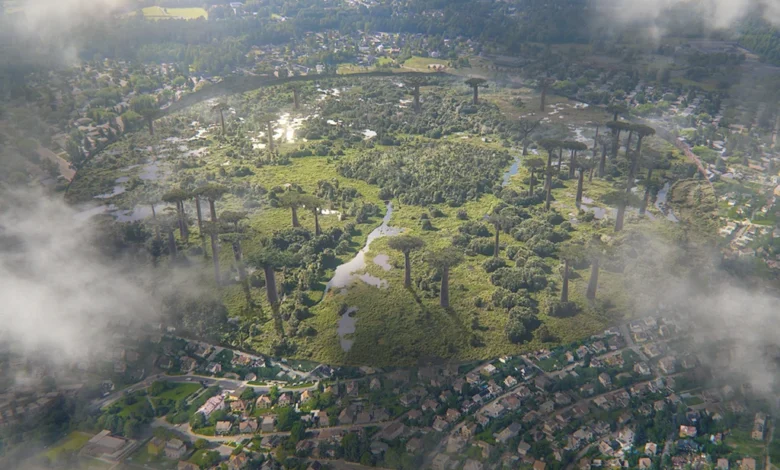
The intersection of suburban familiarity and primeval terror forms the core narrative engine of Warner Bros. Pictures’ science-fiction thriller, The End of Oak Street. Directed by David Robert Mitchell and produced alongside industry heavyweights including J.J. Abrams, the feature film pivots away from traditional cinematic tropes that rely on genetic engineering, cloning, or amber-trapped mosquitoes to introduce prehistoric beasts into the modern era. Instead, Mitchell constructs a high-concept premise driven by a mysterious cosmic event: a localized spatial disruption that instantly yanks an entire suburban neighborhood in the fictional town of Flowervale, Michigan, out of the contemporary timeline and thrusts it directly into a lush, dangerous prehistoric world.
Achieving this blending of middle-class domesticity and prehistoric wilderness required a monumental effort from the production’s visual effects department, led by Production Visual Effects Supervisor Jay Cooper. Working alongside premier visual effects houses—primarily Industrial Light & Magic (ILM), which delivered approximately 700 shots, alongside supplementary contributions from Lola VFX—the creative team navigated complex design challenges, geographical impossibilities, and strict tonal constraints to craft a distinct visual identity that sets the film apart from other creature features in contemporary cinema.
Rethinking the Prehistoric Aesthetic: Grittier, Dirtier, and More Threatening
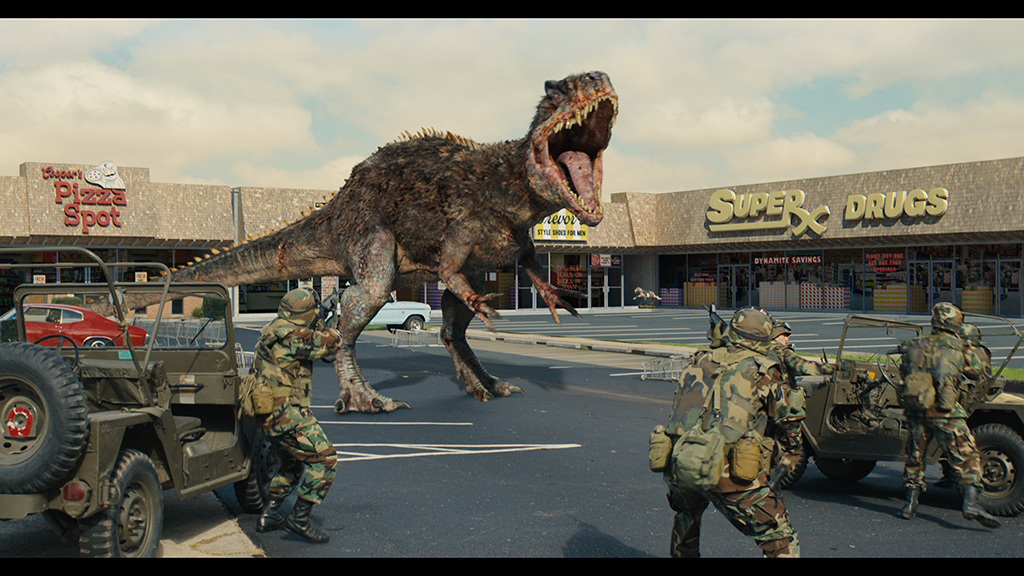
Unlike the awe-inspiring majesty traditionally associated with cinematic dinosaurs popularized by Steven Spielberg’s landmark Jurassic Park franchise, The End of Oak Street opts for a much more visceral, menacing, and grounded portrayal of prehistoric fauna. The dinosaurs in Mitchell’s film do not arrive accompanied by soaring, orchestral themes celebrating their grandeur. Rather, they are depicted as dangerous, territorial, and deeply integrated into the suburban landscape in aggressive ways—rummaging through residential garbage cans, smashing through drywall, leaving behind decaying carcasses, and terrorizing citizens on their own front porches.
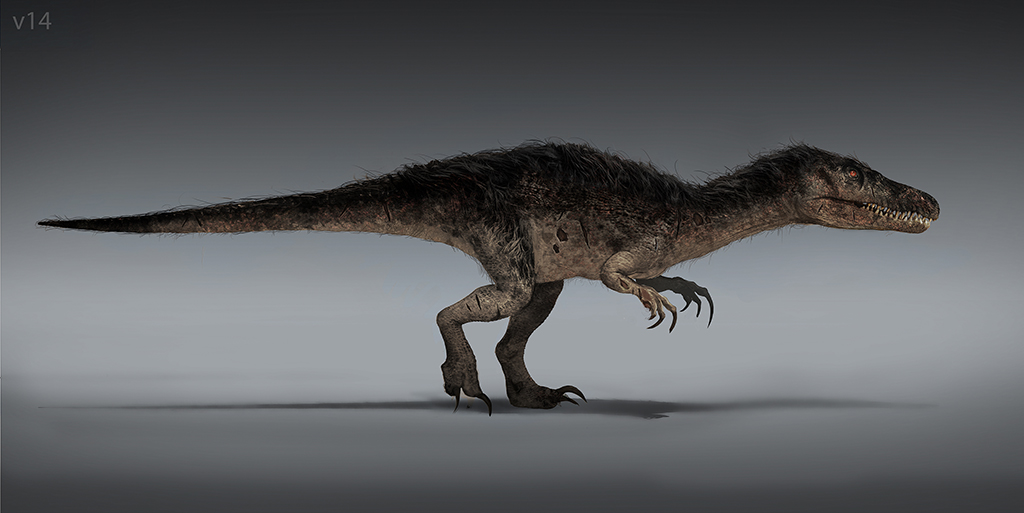
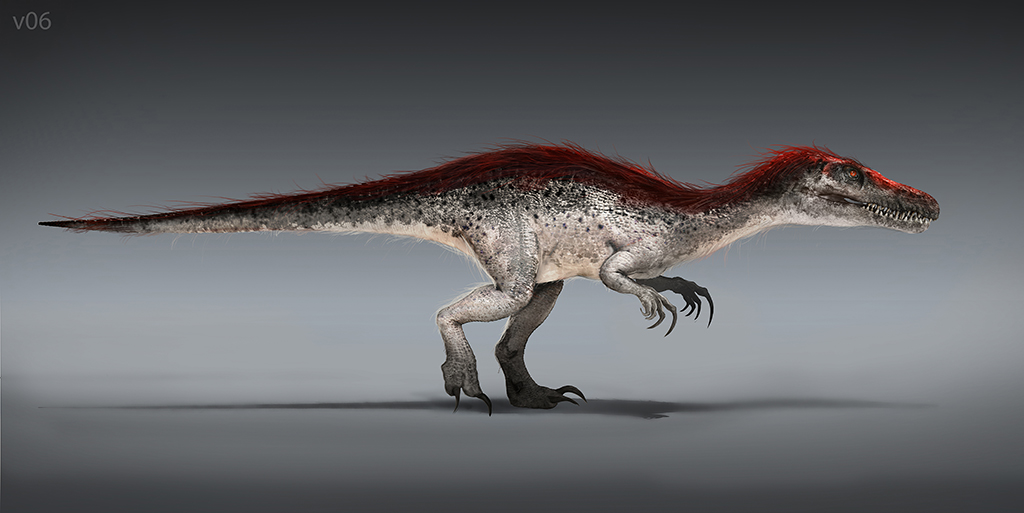
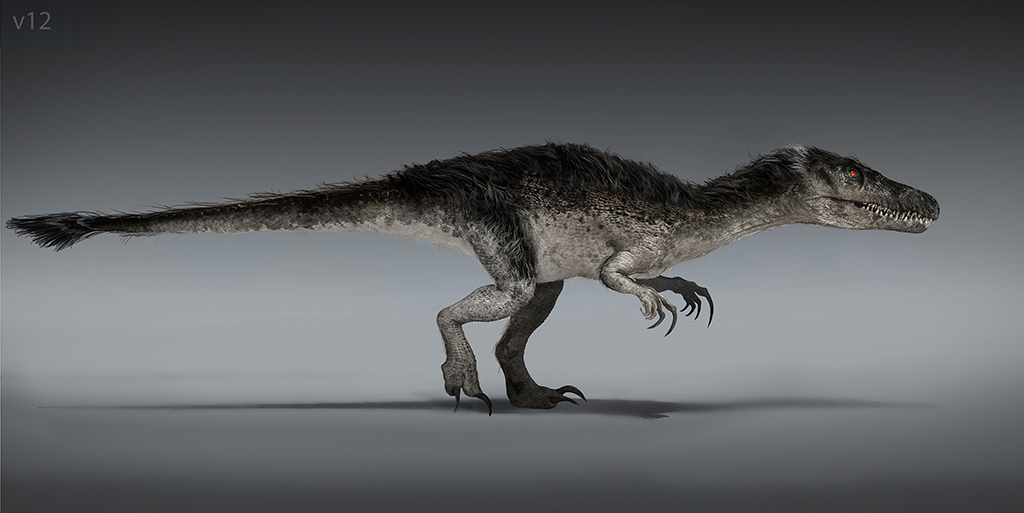
Production Visual Effects Supervisor Jay Cooper, whose career with ILM dates back to 1998, noted that the project offered rare creative liberties, particularly regarding creature design and 1980s aesthetic pastiches. Collaborating closely with Mitchell, Cooper and his team sought to make the animals look "grosser, muddier, dirtier, and wounded," distancing them from clean, pristine museum specimens.
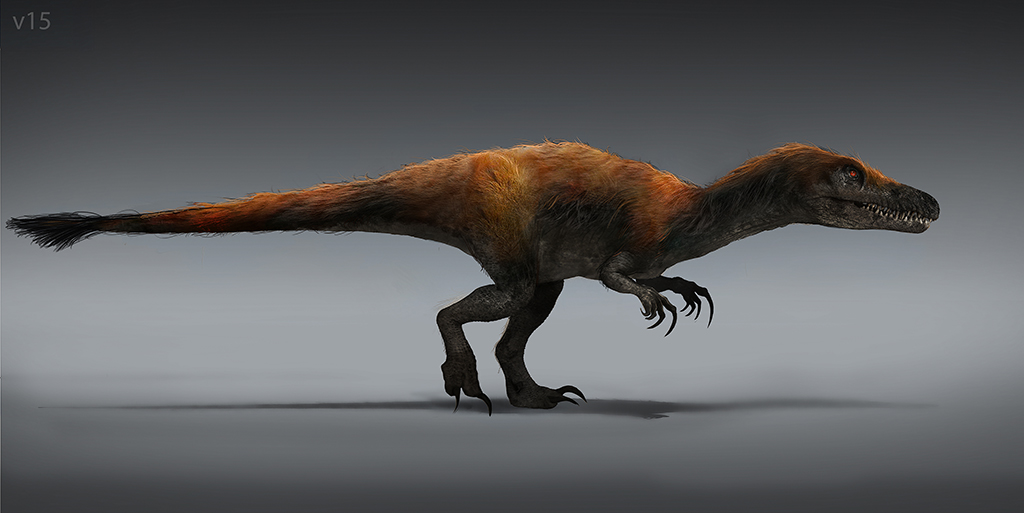
The lineup of featured species includes the Allosaurus, Coelophysis, Stegosaurus, Camarasaurus, Pterosaur, Ornithosuchus, and Ornithocheirus. To ground these digital models in biological plausibility while serving narrative tension, the animation team—led by Animation Supervisor Kevin Martel—heavily incorporated modern paleontological discoveries highlighting bird ancestry. For instance, the behavior of the Coelophysis was modeled after the twitchy, unpredictable movements of modern ratites such as emus and ostriches, combined with the unsettling side-eye glances characteristic of urban pigeons. This meticulous behavioral animation ensures that when a Coelophysis confronts lead actor Ewan McGregor, the animal’s intentions remain unsettlingly ambiguous, heightening the psychological dread for the characters and the audience alike.
Solving the Geographical Jigsaw Puzzle of Flowervale, Michigan
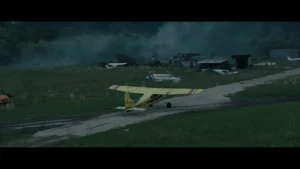
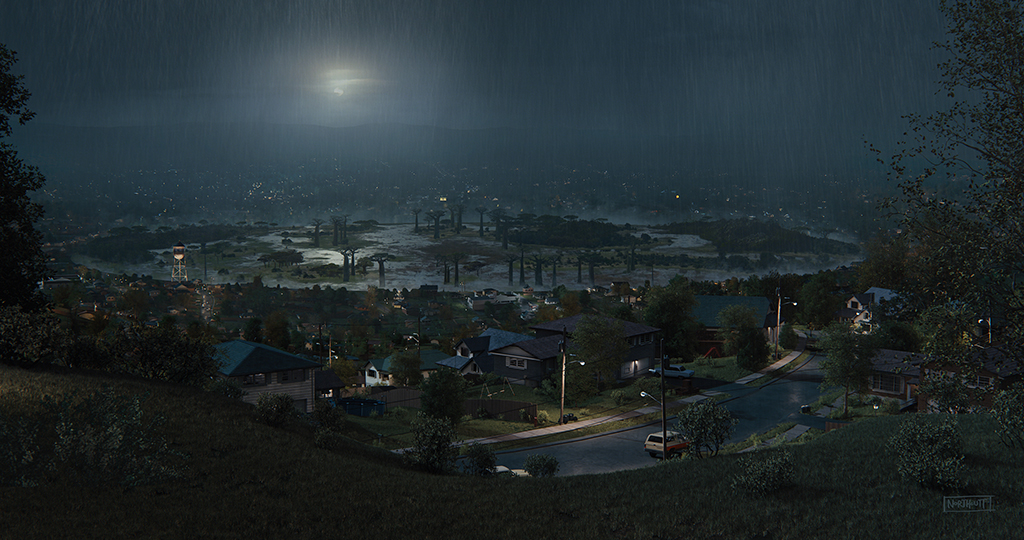
One of the most complex hurdles faced by the visual effects and production design teams was establishing the geography of Flowervale. Principal photography primarily took place in targeted residential areas of Atlanta, Georgia, chosen for their specific suburban architectural styles. However, these real-world locations failed to meet the dramatic topographical requirements dictated by Mitchell’s script, which required immediate proximity to deep bodies of water, dense primitive forests, and massive 200-foot cliff faces.
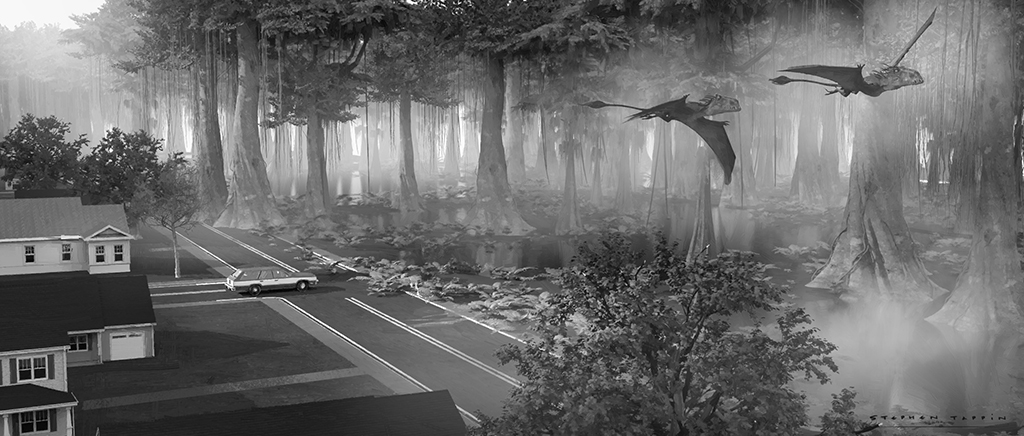
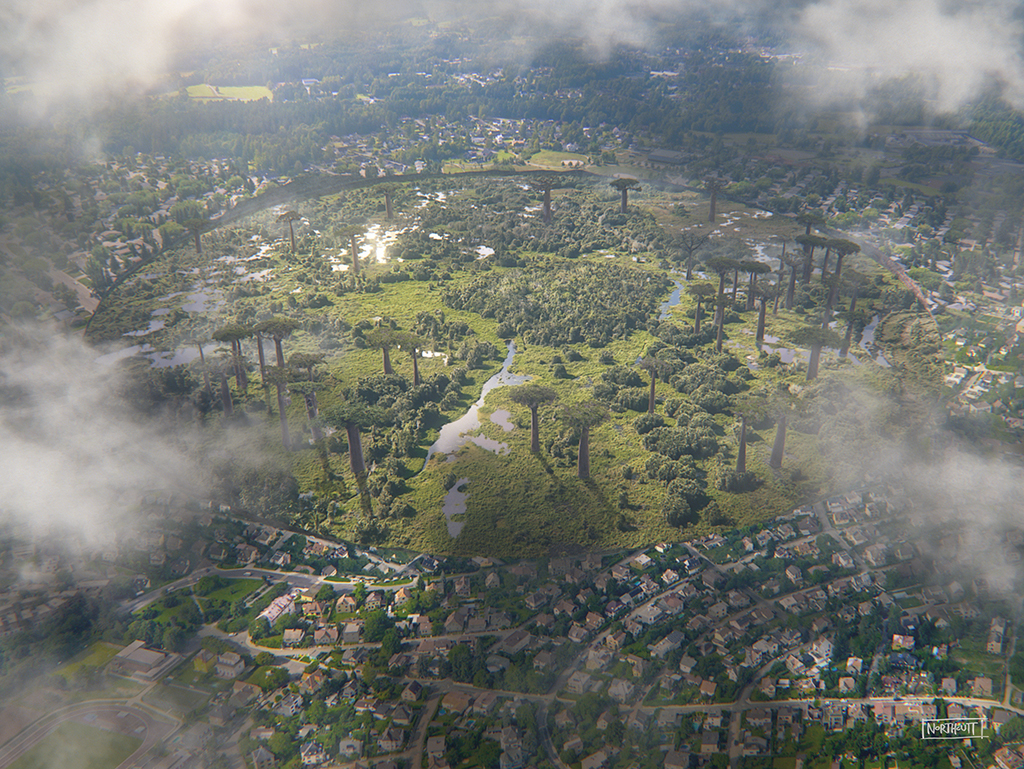
Because the neighborhood’s perimeter was supposedly carved out by a cosmic portal, the visual effects team had no real-world precedence to reference when designing the sheer, unnatural edges of the suburban slice. To tackle this, ILM concept artists David Ratajczak and Kouji Tajima developed extensive concept art to map out how the disparate environments fit together.
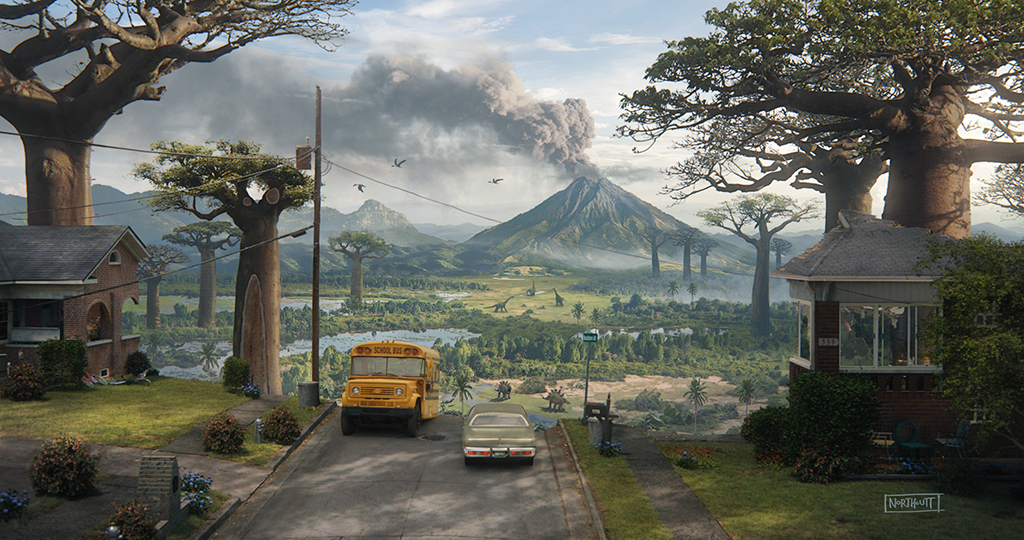
According to Cooper, narrative clarity consistently superseded scientific or geographic accuracy. In visual storytelling, complex environments must often be communicated to the audience within seconds. Consequently, the team deliberately manipulated landscape elements—such as artificially exaggerating cliff heights or introducing sudden bodies of water—to ensure that viewers immediately grasped the spatial constraints and dangers of their surroundings within a two-second glance.
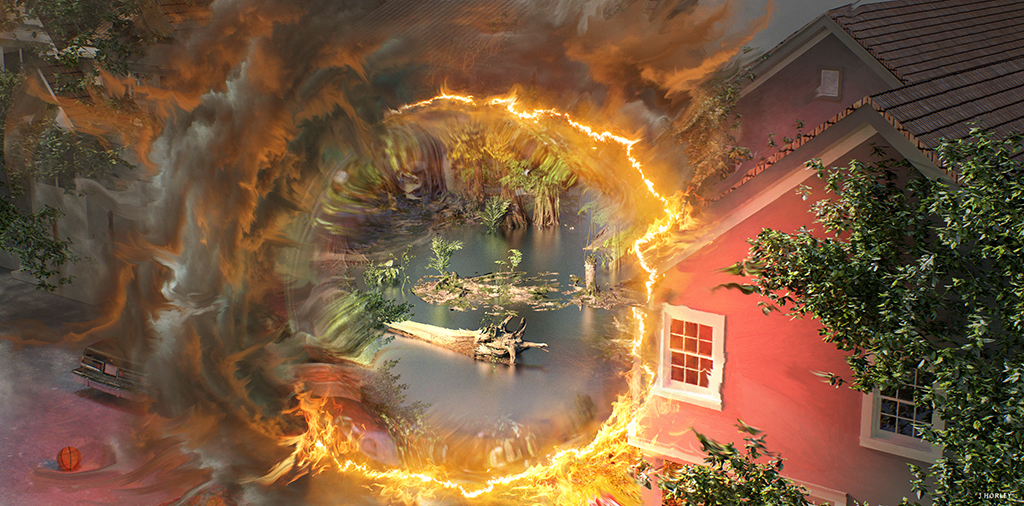
Furthermore, any shots featuring houses perched on hills, sweeping aerial views of the valley, or establishing geography were executed via extensive digital recreations. The seamless integration of these digital environments with practical Atlanta locations required close coordination between Cooper, Production Designer Maya Shimoguchi, and Special Effects Supervisor J.D. Schwalm.
Practical Integration and Real-Time Technology
To ensure believable performances from an A-list cast that included Ewan McGregor (playing Gregg Platt) and Anne Hathaway, the production relied on a rigorous combination of physical on-set stand-ins and cutting-edge digital rendering tools.
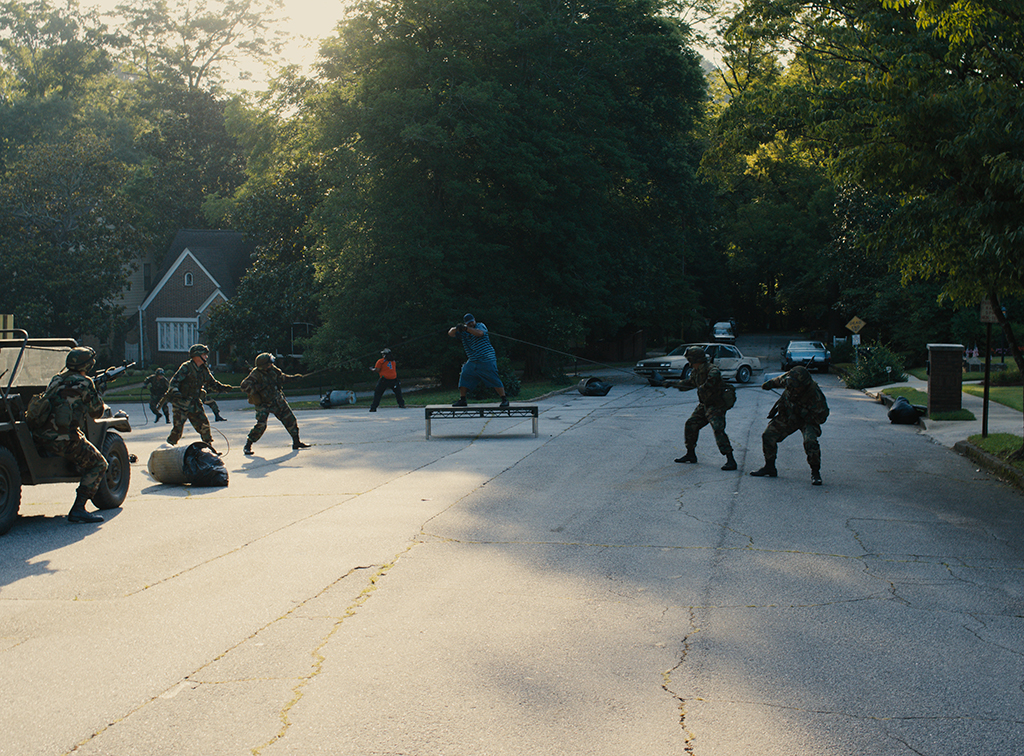
Stunt teams utilized specialized physical proxies, including Coelophysis and Ornithosuchus heads mounted on poles and customized stunt helmets. These physical stand-ins gave actors concrete reference points for eyelines, physical impacts, and defensive reactions. When Hathaway’s character kicks defensively on her porch, or when McGregor is hunted through the neighborhood, their physical interactions with tangible objects—such as chairs, plants, and stunt performers—allowed for genuine performances that greatly benefited the downstream digital compositing work by visual effects artists. More complex sequences, such as McGregor being bodily lifted and tossed by an Allosaurus, required a hybrid approach combining wire rigs and high-fidelity digital doubles.
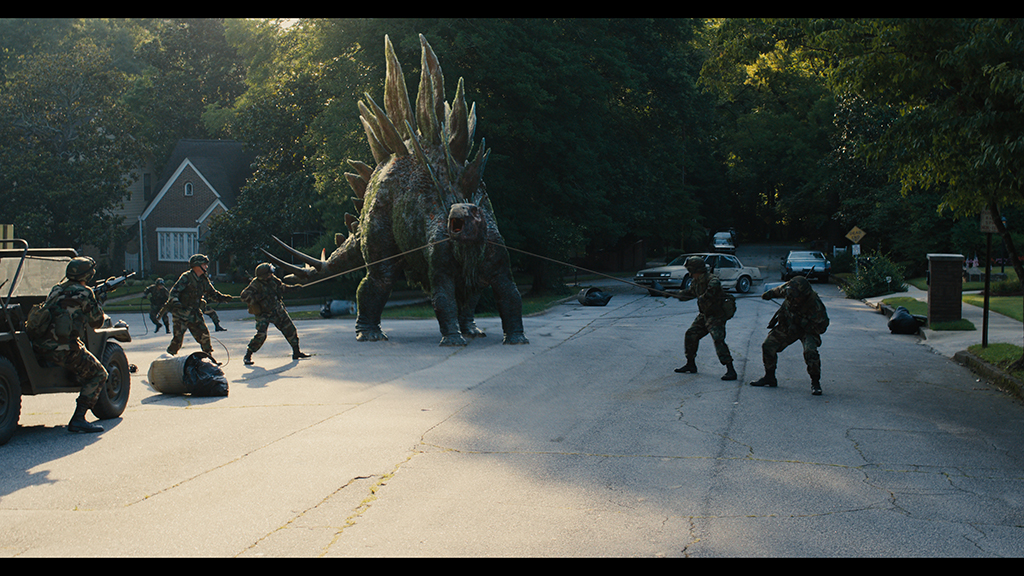
To streamline the staging process for director David Robert Mitchell, ILM utilized Helios, its proprietary real-time renderer and engine. By combining real-time motion capture dinosaurs with Gaussian splats for environmental data and traditional Unreal Engine assets, the production was able to conduct advanced pre-visualization. This technological integration gave Mitchell the freedom to stage complex camera movements and creature interactions dynamically on virtual sets before finalizing the shots.
Suspense, Restraint, and the PG-13 Threshold
Drawing thematic inspiration from classic 1980s horror and suspense cinema—with Poltergeist frequently cited as a touchstone by Mitchell and producer J.J. Abrams—The End of Oak Street heavily utilizes restraint to build tension. Much like the directorial philosophy behind Jaws, where the shark’s full reveal is delayed, the film often relies on audio cues, vibrating house shutters, and obstructed glimpses through windows to let the audience’s imagination fill in the blanks.
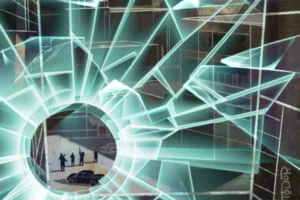
When cosmic portals do appear, the team intentionally avoided the overused, ethereal "cloud" aesthetic typical of contemporary blockbuster cinema, such as those found in various Marvel Studios productions. Instead, they opted for a tactile, grounded visual language consisting of undulating, misty water bubbles that gave the spatial disruptions a visceral, physical weight.
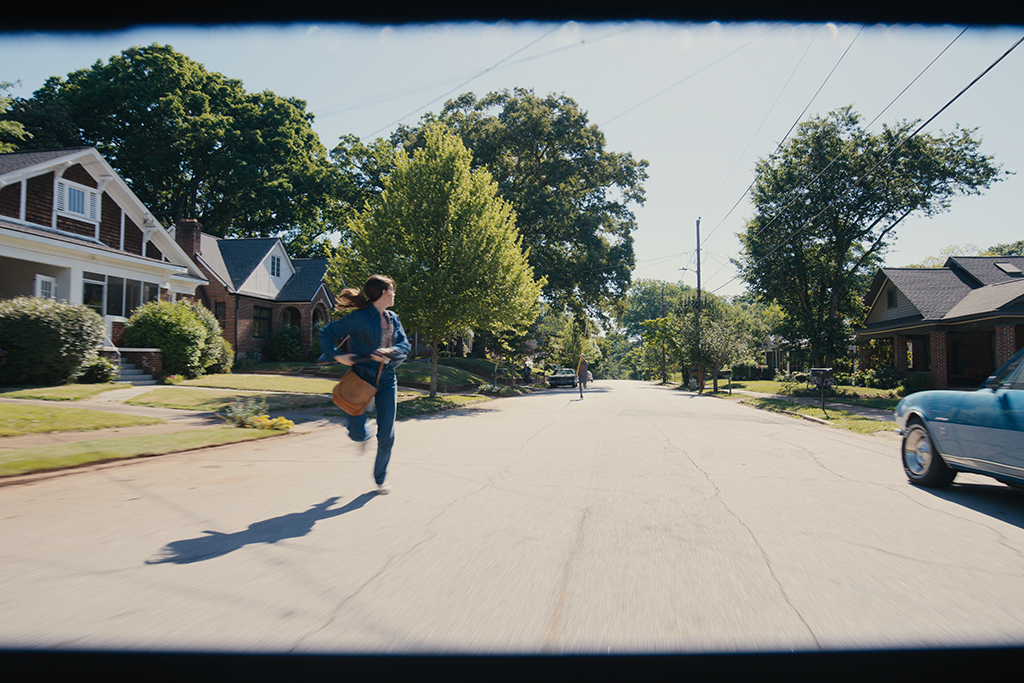
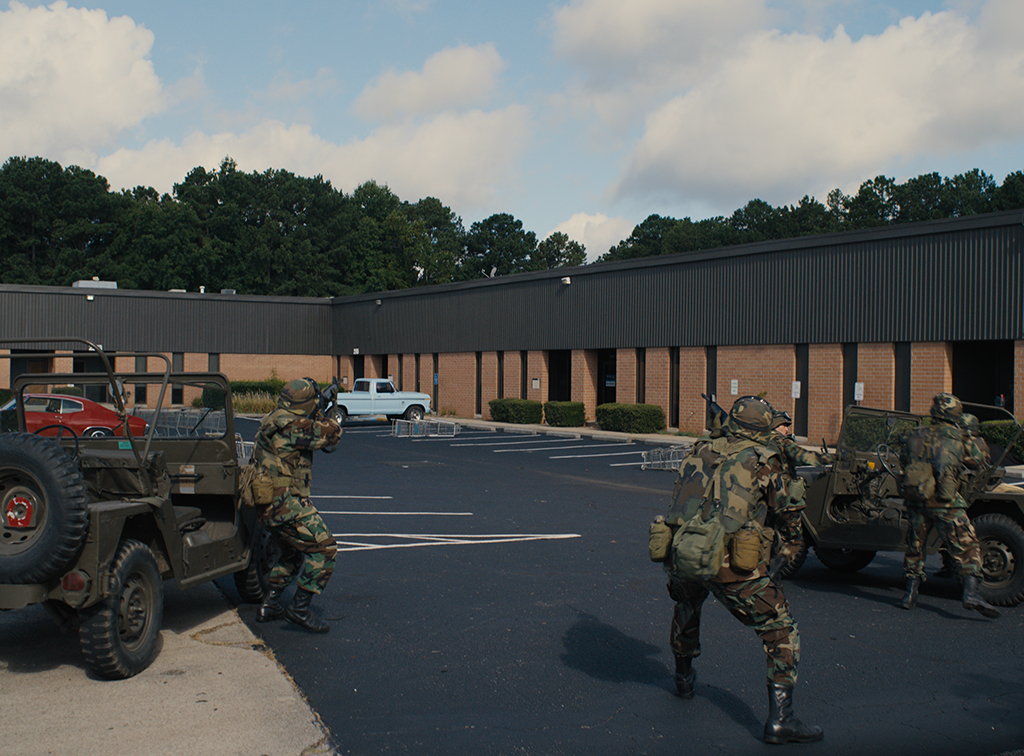
Balancing the intensity of the creature attacks with a PG-13 rating presented an ongoing challenge for the creative team. From the opening sequence featuring a violent porch assault to relentless pursuits through strip-mall parking lots and residential backyards, the visual effects artists continually pushed the boundaries of permissible violence to maximize audience engagement without crossing into restricted content territory.
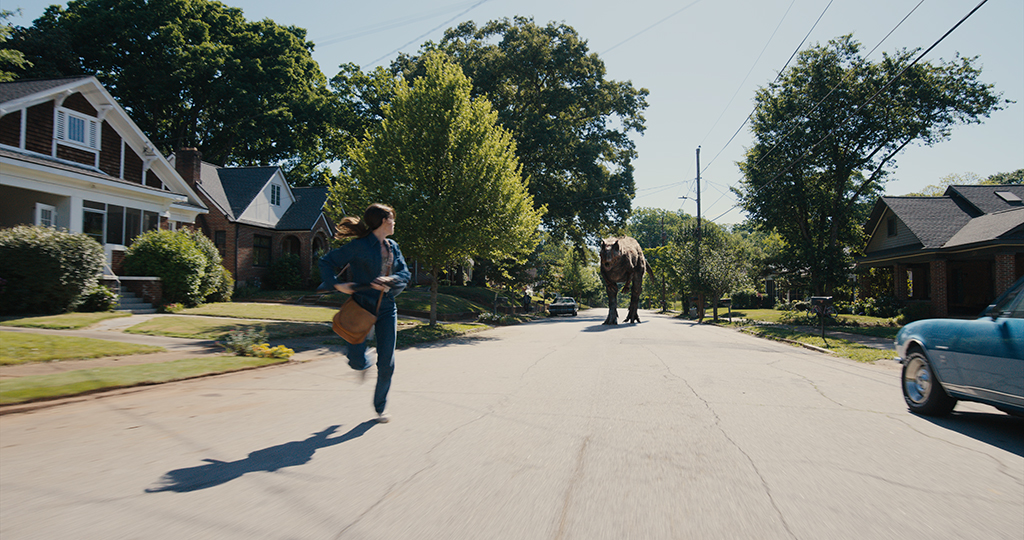
With roughly 700 visual effects shots executed primarily by ILM on a budget significantly lower than traditional dinosaur blockbusters, The End of Oak Street demonstrates how strategic storytelling, tight character-driven framing, and innovative real-time pre-visualization can redefine a well-worn cinematic genre. By treating prehistoric creatures not as magnificent spectacles to be admired, but as invasive, claustrophobic threats to middle-class domesticity, the film establishes a distinct and menacing new benchmark for modern creature features.